ADHD communication problems are rarely just about "people skills." They are often a load-management problem. The brain is trying to listen, filter, organize, regulate emotion, track timing, and respond on cue at the same time.
That strain is common. The CDC reports that about 7 million U.S. children ages 3 to 17 have received an ADHD diagnosis, and a global review published in The Journal of Clinical Psychiatry estimated adult ADHD prevalence at 6.76% worldwide. For many of those adults, communication friction does not disappear with age. It shows up as interrupting, losing the thread, reading tone too fast, freezing when put on the spot, or agreeing to things before there is time to think.
Useful ADHD communication strategies reduce that pressure in concrete ways. They give you words before a hard conversation starts, tools to regulate while it is happening, and recovery options when it goes off course. That is the difference between relying on willpower and using a system.
This guide focuses on the practical how. You will see strategies paired with specific supports such as saved scripts, perspective-reframing prompts, tone adjustment, written follow-up, and grounding tools that work in real conversations, not just in theory.
The goal is not to sound polished all the time. The goal is to communicate clearly, protect your bandwidth, and ask for what you need without creating more friction than necessary.
1. Script-Based Communication
For many people with ADHD, the hardest part of communication isn't knowing the truth. It's finding words fast enough under pressure. Script-based communication solves that by removing the need to generate every sentence live.
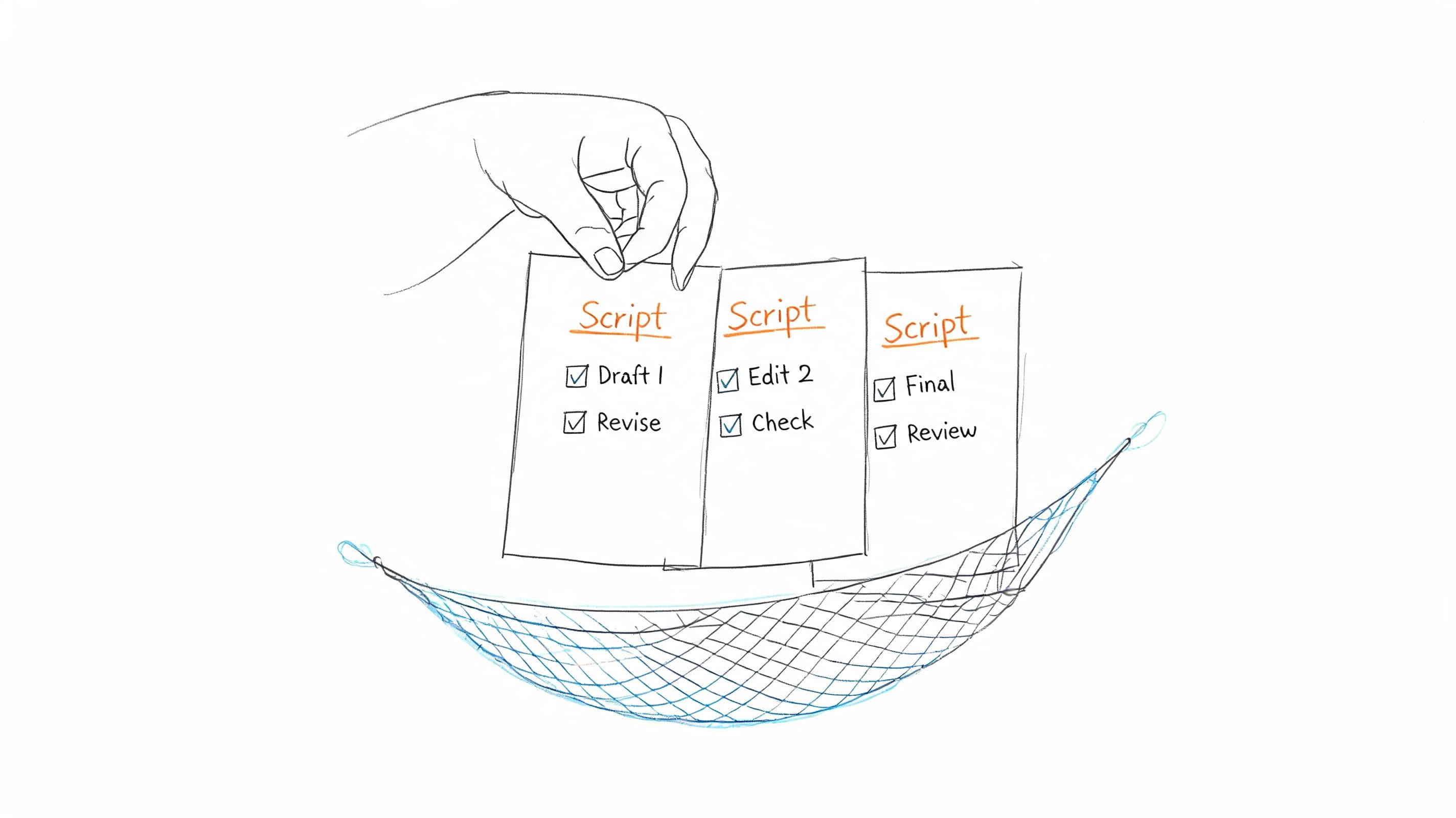
A script can be short. "I need a minute to think." "I'm not available for that." "Can you send that in writing?" Those lines look simple, but in the moment they can keep a conversation from spiraling.
Use scripts as a starting point
The strongest scripts sound like you. If they sound corporate, stiff, or overly therapeutic, you probably won't use them when stressed. Edit them until they feel natural in your own vocabulary.
A tool like tonen can help here because it offers a library of 188 scripts across work, family, health, education, and social situations, plus opt-out and ask-for-support phrasing. That makes it easier to save phrases for repeat situations instead of reinventing them every time.
- For work: "I do best with written follow-up after meetings."
- For family: "I heard you. I just need a minute to process before I answer."
- For social plans: "Thanks for inviting me. I need a quiet weekend, so I'm going to pass."
> Practical rule: If you say the same kind of hard thing more than twice a month, write a script for it.
What works and what doesn't
What works is short, flexible language. What doesn't work is memorizing a perfect paragraph and expecting yourself to deliver it word-for-word while dysregulated. Scripts should reduce pressure, not create a performance standard.
This strategy is especially useful because ADHD-related communication problems often involve impulsivity and perspective-taking difficulties. The Sachs Center overview of ADHD communication problems discusses how active listening, paraphrasing, and structured supports can reduce misunderstanding. A script gives you that structure before your working memory drops the thread.
If you're using app-based support, save three categories first: boundary scripts, clarification scripts, and opt-out scripts. Those tend to carry the most day-to-day load.
2. Perspective Reframing and Reinterpretation
Your first interpretation is often the problem.
A delayed reply can read like rejection. A short email can sound angry. A canceled plan can feel personal before you have enough facts to support that conclusion. ADHD can make that first read feel urgent and true, especially when working memory drops context and emotion fills in the gaps.
Perspective reframing helps you slow the meaning-making process. The goal is accuracy. You generate a few plausible explanations, check which one fits the evidence, and respond to the actual situation instead of the threat your brain predicted.
Reframing is a skill, not self-gaslighting
A useful reframe stays neutral and specific. If someone texts, "Can't talk now," a grounded interpretation sounds like this: "They are unavailable right now. I do not have enough information to decide what they feel about me."
That is very different from forced reassurance. It also works better. Reframing should reduce distortion, not pressure you into pretending everything is fine.
A simple structure I recommend is: facts, possible meanings, next action.
- Facts: "They sent a short message and ended the conversation."
- Possible meanings: "They are busy. They are stressed. They are annoyed. I cannot tell yet."
- Next action: "Wait, ask a clarifying question later, or leave it alone until I have more information."
This is especially useful for text, email, and workplace chat, where tone gets guessed more than observed.
Use a tool that helps you reinterpret before you reply
This strategy works better when the process is external. If the thought stays in your head, it often turns into rumination. A notes app, journaling prompt, or communication app can create enough distance to interrupt that spiral.
For example, a private perspective helper inside an app can prompt:
- "What are three realistic explanations?"
- "What evidence supports each one?"
- "What response would still make sense if your first interpretation is wrong?"
- "Do you need to reply now, or do you need more context first?"
That last question matters. Many communication blowups start with speed, not intent.
Real-life use
Your manager replies, "Let's discuss tomorrow."
An unfiltered interpretation is: "I'm in trouble."
A more accurate reframe is: "This could be routine, corrective, or logistical. I do not know yet. I can prepare questions, review the project, and wait for the meeting instead of sending a defensive message tonight."
Or take a personal example. A friend responds with "ok" after you explain why you need to cancel. That can easily read as cold. A better interpretation is: "Their reply is brief. Brief does not automatically mean upset. If this matters, I can check in later instead of assuming the friendship changed in one text."
What works and what doesn't
What works is generating a small set of believable alternatives, then choosing a response that fits uncertainty.
What does not work is arguing with yourself until you feel calm. You do not need a perfect emotional state before you act well. You need a process that keeps you from treating a fear reaction as confirmed reality.
Among ADHD communication strategies, this one prevents avoidable conflict early. It helps you catch the moment where tone, intent, and meaning get distorted, then use a concrete framework or app prompt to reset before you hit send.
3. Direct and Clear Communication with Accommodation Requests
Indirect communication often backfires for ADHD brains. Hints get missed. Vague requests create confusion. Then everyone feels irritated for different reasons.
Directness tends to work better. Not harshness. Not oversharing. Directness. Say what helps, what doesn't, and what you need next.
Ask for the condition that helps you succeed
A weak request sounds like this: "I struggle with meetings."
A stronger request sounds like this: "I retain details better when action items are written down. Can we send a short summary after this meeting?"
Struggling with ADHD communication challenges? tonen can help.
tonen gives you 188+ conversation scripts, tone guidance and calming tools — designed for autistic adults, ADHD and social anxiety. Try it free for 7 days.
Download on the App StoreiOS only. Android coming soon.
That second version gives the other person something usable. It also reduces the chance that your request gets mistaken for avoidance or lack of effort.
Examples that usually land well:
- At work: "If it's urgent, please message me directly instead of adding it to a long thread."
- With friends: "I miss texts sometimes. If you need an answer today, call me."
- In class or training: "I'm taking notes because I remember details better that way."
The trade-off with directness
Direct communication can feel vulnerable, especially if you've been criticized for needing support. But unclear communication usually costs more. People can't respond well to needs they don't know about.
A useful frame is "What helps me do this well." That keeps the conversation practical instead of apologetic. You are not asking for mind reading. You're giving instructions for a better interaction.
For people who freeze when self-advocating, prewritten accommodation language helps. If you use a practice feature ahead of time, rehearse one version for email and one for speech. Spoken requests usually need fewer words than written ones.
> Reality check: Most accommodation requests fail because they're vague, not because they're unreasonable.
4. Tone and Emotional Regulation Adjustment
A lot of communication trouble isn't about content. It's about delivery. You mean "I'm overwhelmed," but your tone says "I'm angry." You mean "I need space," but it lands as "I don't care."
That's why tone adjustment is one of the most practical ADHD communication strategies. The message may stay the same, but the relationship outcome changes when you choose the right delivery.
Match tone to the situation, not just the feeling
If you're upset, your first draft often comes out sharper than you intend. Before sending or speaking, ask which tone fits the relationship and goal.
A few examples:
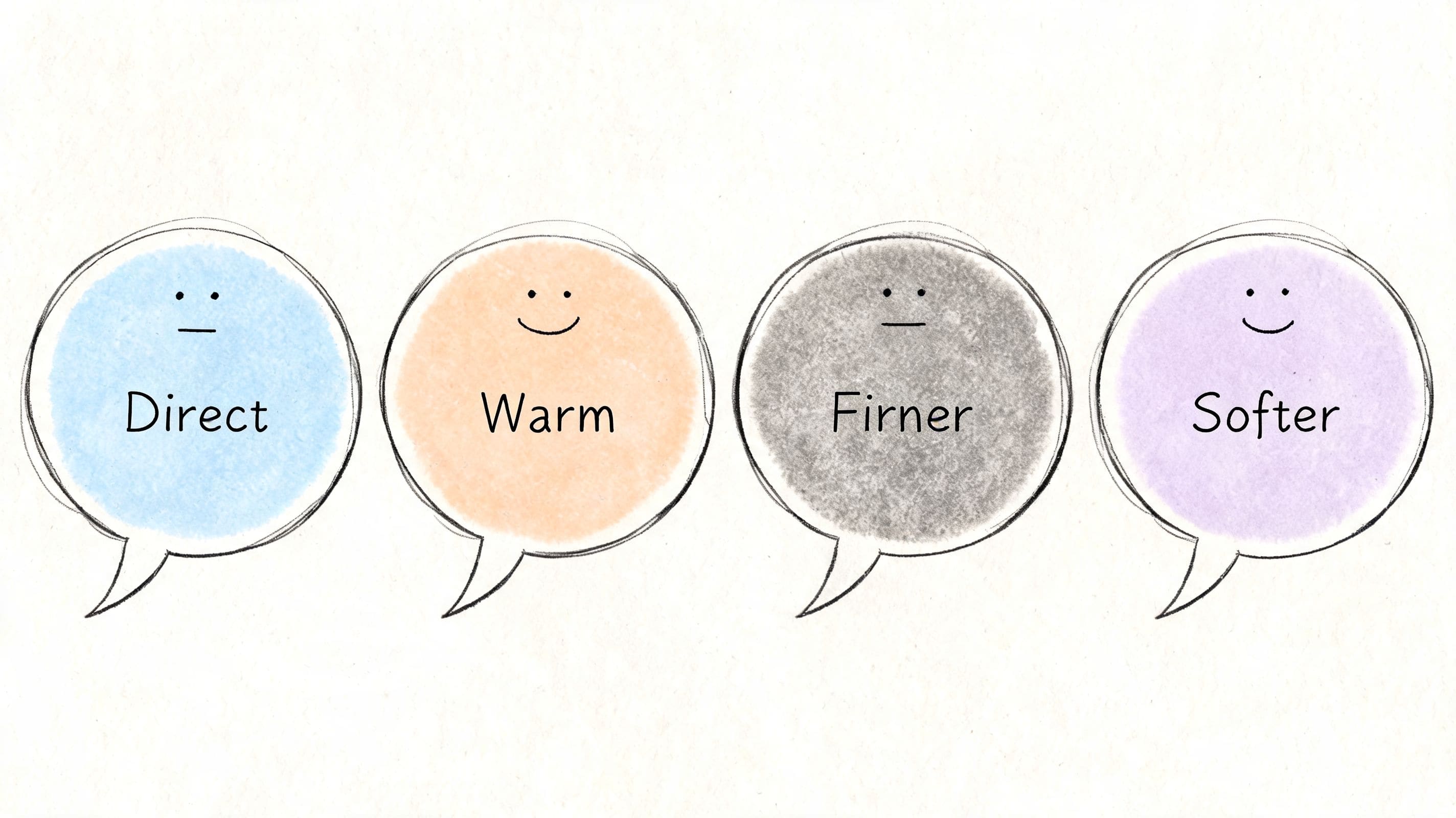
- Direct: "I can't take this on."
- Warm: "I can't take this on, but I want to be transparent now instead of overcommitting."
- Firmer: "I won't be available for last-minute requests like this."
- Softer: "I'm at capacity today, so I need to pass."
None of those are fake. They're versions of the same boundary with different impact.
Regulation first, wording second
If you're already flooded, don't waste energy polishing a sentence while your body is still in alarm mode. Regulate first. Then choose tone.
This matters in remote work too, where text strips away context and quick calls can increase stress. If meetings already deplete you, some of the advice in TimeTackle's guide to remote meeting productivity pairs well with tone planning because less fatigue usually leads to less accidental sharpness.
The mistake to avoid is assuming "softer" means weak or "direct" means rude. Tone is a tool. Use the version that protects both the message and the relationship.
5. Preparation and Practice-Based Communication
Knowing what you want to say isn't the same as being able to say it under stress. That's the gap preparation closes. Practice turns a hard conversation from a blank page into a familiar path.
This is especially important for situations that trigger shame, defensiveness, or urgency. Think performance review, relationship repair, asking for deadline flexibility, or declining a family obligation.
Rehearse the parts that snag
Don't practice everything equally. Practice the lines where you usually ramble, backtrack, or go silent.
A simple method:
- Name the conversation: "I need to ask for an extension."
- Write one opening line: "I want to be proactive about this deadline."
- Write one specific request: "Can we move it to Friday?"
- Write one recovery line: "I lost my train of thought. Let me say that more clearly."
That last line matters. Recovery language is often more useful than perfect language.
Private practice reduces performance pressure
Many people with ADHD do better rehearsing privately before they need the skill publicly. If you use an app with practice mode, you can repeat a script in different tones until it stops feeling foreign. The point isn't to sound rehearsed. The point is to reduce the panic that makes you abandon the message.
This also helps with "clamming up" or stuckness, which doesn't get enough attention in mainstream advice. Some people don't interrupt too much. They disappear mid-conversation, especially in high-stakes moments. In those cases, a pre-rehearsed prompt like "I'm stuck. Give me a second" can be more useful than generic active listening advice. The Just Mind discussion of ADHD communication strategies and conversational stuckness highlights that gap and why real-time prompts matter.
If practice makes you cringe, keep it short. One script. Two repetitions. Done. Consistency beats intensity.
6. Grounding and Self-Regulation Techniques for In-the-Moment Communication
The fastest way to improve a hard conversation is often to regulate your body before you try to fix the wording.
Many ADHD communication problems are state-dependent. You can know exactly what you mean and still lose access to it once your system tips into overload. That is why grounding belongs in a communication plan, not just a stress-management plan. It helps you stay accurate, hear tone more clearly, and choose a response you can stand behind later.
Build a short regulation menu
Pick a few tools before you need them. In the moment, decision-making drops fast.
A practical regulation menu might include:
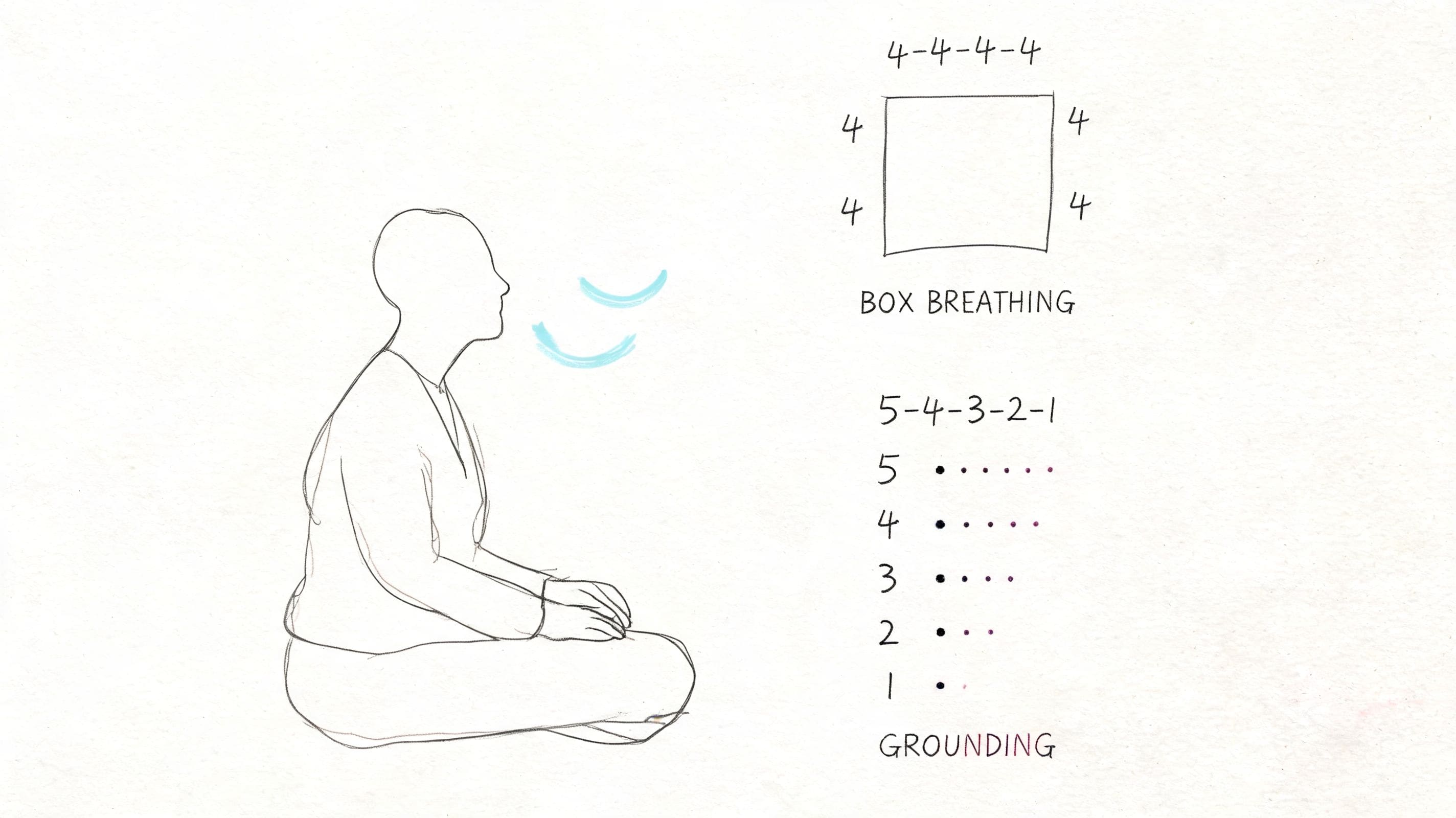
- Box breathing: useful before a meeting, difficult call, or tense reply
- 5-4-3-2-1 grounding: useful when your attention starts scattering and you need to reconnect to the room
- Body scan: useful when your shoulders, jaw, or chest are tight and your brain is going blank
- Safe-place visualization: useful after a rough exchange, before you re-enter the conversation
The AI-enhanced ADHD support tools market report on MarketResearch.com describes Box Breathing as yielding a 65% anxiety reduction in 60 seconds per trials. The exact number matters less than the practical takeaway. Fast regulation tools can create enough space to stop an impulsive reply or recover from shutdown.
Keep the menu short. Two or three options is usually enough.
Pair each tool with a communication script
Grounding works better when it is tied to a clear next action. Otherwise, people calm down slightly and still say the first thing that comes to mind.
Use pairings like these:
- Before speaking: 3 rounds of box breathing, then say, "I need a second to answer that clearly."
- When flooded mid-conversation: 5-4-3-2-1 grounding, then say, "I'm getting overloaded. I want to continue, but I need a short pause."
- After an activating comment: body scan, unclench jaw and hands, then say, "Let me make sure I understood what you meant."
- Before re-engaging after conflict: safe-place visualization, then send or say one concrete point instead of the full backlog
Apps provide practical assistance in this situation. A breathing timer, a one-tap note with your pause script, or a prompt that asks "What is the actual question you need to answer?" reduces the cognitive load at the worst moment. For ADHD, less friction matters.
Regulate, then decide
If you are shaking, crying, blanking, or vibrating with anger, pause first. A short pause is often the difference between a repairable conversation and one that creates extra cleanup.
Use direct language:
"I want to answer well, and I need a minute."
"I'm overloaded and need a short break."
"I can keep talking, but I need to slow this down."
Grounding should help you choose your next move clearly. Sometimes that means continuing. Sometimes it means postponing. Sometimes it means noticing that the conversation is no longer productive and stepping out.
> A pause can be the most skillful response in the room.
Keep your regulation tools one tap away. Put the breathing app on your home screen. Save your reset script in notes. Set a wearable or phone shortcut if that helps. Good ADHD communication strategies work because they are usable under pressure, not because they sound good in theory.
7. Asynchronous and Written Communication Preferences
For many people with ADHD, writing is not a backup plan. It is the higher-accuracy channel.
Real-time conversation asks for fast recall, fast filtering, and fast wording all at once. Written communication gives you a slower lane. You can sort the point, check the tone, and make sure the actual request is visible before you hit send. That alone prevents a lot of avoidable conflict.
It also creates a record you can return to later. If verbal details vanish, or you leave calls unsure what was decided, written follow-up reduces rework.
Use writing for the parts that usually go sideways
Written and asynchronous communication works especially well when the stakes are clear but the timing is flexible.
Use it for:
- Pre-meeting setup: send the topic, your goal, and the one decision you need
- Post-meeting follow-up: send a three-line summary with owners and deadlines
- Accommodation requests: write the request in plain language so nobody has to rely on memory
- Hard conversations: draft first, trim second, send the version that matches your intent
A useful default line is: "I do better with important details in writing, so I'm sending this here."
That sentence is simple, direct, and easy to repeat.
Pair the strategy with tools that reduce friction
The practical advantage of this approach is not just extra time. It is better structure.
Use a notes app to keep two or three reusable message templates. Use email scheduling if you tend to send reactive drafts late at night. Use a tone-checking or rewrite app if your messages often come out sharper, longer, or more defensive than you meant. A good setup might be as basic as a saved template called "request," another called "boundary," and a third called "meeting recap."
That is the unique strength of asynchronous communication for ADHD. It supports the "what" and the "how" at the same time.
Watch the trade-off
Writing helps accuracy, but it can also feed overediting, rumination, and five-paragraph explanations that bury the point.
Set a rule before you start. One draft, one edit for clarity, then send. If the message keeps growing, switch formats. Send a short written summary and ask for a call, or have the call and send a short recap afterward.
Analysts at Strategic Market Research say the ADHD apps market was valued at USD 563 million in 2024 and is projected to reach USD 1.1 billion by 2030, according to the Strategic Market Research ADHD apps market report. That growth fits what practitioners already see day to day. More people are using digital tools to script, review, and manage communication in ways that match how their brains naturally process information.
Written communication is not always better. It is better for specific jobs. Use it where precision matters more than speed.
8. Boundary-Setting, Opt-Out, Ask-for-Support and Vulnerability Communication
Clear boundaries prevent a surprising amount of ADHD-related conflict. They reduce overcommitment, stop spirals before they start, and give you a way to stay connected without forcing yourself through conversations you cannot handle well in the moment.
The common failure point is not lack of caring. It is delayed communication. Many adults with ADHD wait until they are already overloaded, dysregulated, or ashamed, then either overexplain or disappear. A better system uses four short formats you can save in a notes app, text expander, or messaging draft folder: boundary, opt-out, support ask, and vulnerable status update.
Use language like this:
- Opt-out: "I'm overloaded and need to stop here for now."
- Boundary: "I can't take on anything else this week."
- Support ask: "Can you text me the key details so I don't lose them?"
- Vulnerability with clarity: "I'm overwhelmed and having trouble finding words. I need a few minutes."
Shorter messages usually hold up better under stress.
Extra explanation often comes from guilt, but it weakens the message and gives the other person too many side doors to push back. In practice, I have found that a two-sentence boundary is easier to send, easier to understand, and easier to repeat consistently. That consistency matters more than sounding perfectly warm every time.
Support requests also work better when they are specific and observable. Ask for one action. Ask for one format. Ask for one deadline. "Can you send me the three action items by text?" gets better results than "Can you help me stay on top of this?"
Privacy matters here too, especially for personal conflict, work tension, or sensitive family communication. Some people want help drafting or rehearsing a boundary without sharing the full context with another person. The New Age Psychiatry article on adult ADHD and communication skills discusses communication challenges in adult ADHD, and that aligns with a practical need many clinicians and coaches see firsthand: tools for scripting, tone adjustment, and rehearsal need to be chosen carefully when the conversation is high-stakes.
One useful framework is pause, state, ask. Pause before replying. State the limit in one clear sentence. Ask for the next step that would help. For example: "I can't discuss this well right now. Please email me the main points, and I'll reply tomorrow by 3 PM." That gives structure to a moment that might otherwise turn into people-pleasing, shutdown, or a reactive yes.
This strategy often brings relief fast because it solves a real problem in real time. You do not need a perfect script. You need a usable one.
8-Point ADHD Communication Strategies Comparison
| Approach | Implementation complexity | Resource requirements | Expected outcomes | Ideal use cases | Key advantages |
|---|---|---|---|---|---|
| Script-Based Communication | Low–Medium, initial setup then simple use | Script library or templates, time to customize | Faster responses, reduced anxiety, lower cognitive load | High-stakes conversations, social anxiety, executive-function gaps | Ready-to-use language, tone options, quick access |
| Perspective Reframing and Reinterpretation | Low, skill/tool-driven, quick to apply | AI or guided reframing prompts, practice in meta-awareness | Fewer misinterpretations, reduced anxiety spirals | Ambiguous messages, rejection sensitivity, overthinking | Rapid neutral alternatives, prevents relationship damage |
| Direct & Clear Communication with Accommodation Requests | Medium, requires confidence and clarity | Prepared accommodation language, practice, supportive policies | Clear expectations, increased likelihood of accommodations | Workplace/education requests, boundary-setting, advocacy | Efficient, authentic, promotes self-advocacy and support |
| Tone & Emotional Regulation Adjustment | Medium, needs self-awareness and practice | Tone templates, guidance, emotional-regulation tools | Better relationship outcomes, fewer misunderstandings | Emotionally charged interactions, varied relationship contexts | Flexible delivery, preserves relationships, reduces regret |
| Preparation & Practice-Based Communication | Medium–High, time and repetition required | Private practice mode, saved scripts, rehearsal time | Increased confidence, improved performance under stress | Crucial meetings, difficult conversations, social anxiety | Builds skills safely, reduces executive load during live talks |
| Grounding & Self-Regulation Techniques | Low–Medium, learnable techniques | Calm Kit (breathing, grounding scripts), regular practice | Rapid nervous system reset, clearer thinking in-the-moment | Immediate overwhelm, panic before/after conversations | Fast physiological regulation, portable and evidence-based |
| Asynchronous & Written Communication Preferences | Low, habit and preference change | Email/text tools, templates, time to compose | Clearer, edited messages, persistent record for memory | Complex topics, memory support, executive-function accommodations | Allows editing/time-to-process, reduces real-time pressure |
| Boundary-Setting, Opt-Out & Ask-for-Support | Medium, requires practice and maintenance | Boundary/opt-out scripts, tone options, supportive network | Fewer overcommitments, better support, protected energy | People-pleasing, overscheduling, needing concrete help | Reduces guilt, clarifies needs, increases likelihood of help |
Putting These Strategies Into Practice
The goal is not to become a flawless communicator. The goal is to reduce failure points before they cost you energy, clarity, or trust.
ADHD communication improves faster when you build a repeatable system around the moments that usually go sideways. That means choosing one strategy for before the conversation, one for during it, and one for after it. Scripts handle word-finding and rambling. Grounding lowers the chance that stress hijacks the exchange. Written follow-up catches anything you missed once your brain has had time to sort the interaction.
Start small and match the tool to the pattern.
If you overexplain, use a two-sentence script and stop there. If you freeze, keep one opt-out line in your notes app and rehearse it until it comes out automatically. If you spiral after a vague text, reframe the message before you reply, then answer in writing once your interpretation is steadier.
A simple stack works well for many people:
- Before: draft a script, rehearse it once, and decide what outcome matters most
- During: slow your pace, check tone, and use a grounding cue if your body starts to spike
- After: send a short written recap, clarification, boundary, or repair if needed
That sequence matters because ADHD communication problems are rarely just about knowing the right words. They are often a mix of timing, working memory, emotional intensity, and pressure. A tool or framework helps when it reduces one of those loads on purpose.
The strongest combinations are practical, not fancy:
- Script plus grounding for high-stakes conversations where stress usually scrambles recall
- Reframing plus written response for texts or emails that feel sharper than they probably are
- Direct request plus tone check for accommodation asks that need clarity without extra defensiveness
- Practice plus boundary script for situations where you tend to agree too fast, ramble, or shut down
As noted earlier, these communication struggles are common for people with ADHD. They are common enough that treating them as a skill-building problem, instead of a character flaw, usually changes the work in a useful way.
If you want one place to organize the practical side of this, tonen includes private scripts, rehearsal space, perspective reframes, tone options, and calming tools. That does not replace therapy, medication, coaching, or honest conversation with other people. It gives you a clearer bridge between knowing what you mean and saying it in a way others can hear. For app-based tools that complement these strategies, see our roundup of best apps for ADHD adults.
What good progress looks like is specific. Fewer reactive replies. Shorter recovery time after hard conversations. More accurate follow-up. More direct requests. Less masking, less guessing, and less time spent replaying an interaction you could have supported better from the start.
Frequently asked questions
Executive dysfunction, impulsivity, working-memory limits, and rejection sensitivity can make listening, turn-taking, and filtering tone harder—especially under stress or sensory load.