The most useful anxiety relief techniques combine fast, in-the-moment regulation with a plan for what to do next. For many neurodivergent people, that means pairing grounding tools like box breathing and 5-4-3-2-1 with practical supports like scripts, reframing, and trigger planning, rather than relying on "just relax" advice.
If you're anxious before a meeting, frozen in a text thread, overstimulated in public, or replaying a conversation from three hours ago, generic mental health tips can feel off-target. They often ignore sensory overload, delayed processing, rejection sensitivity, shutdown, and the fact that sometimes the actual problem isn't just internal distress. It's also not knowing what to say, how to ask for space, or how to leave a situation cleanly.
These anxiety relief techniques work better as a toolkit than a cure-all. Some calm your body. Some reduce cognitive spirals. Some help you communicate when your brain goes blank. If exercise helps but meditation doesn't, that's useful information. If breathing makes panic worse, that matters too. Even mainstream guidance notes that grounding can help in the moment but that the relief is generally temporary, which is why it helps to combine regulation with problem-solving and communication support.
That's the gap this guide addresses. You'll find ten practical techniques adapted for autism, ADHD, and social anxiety, with specific ways to make each one more usable in real life. If part of your anxiety shows up around movement or public spaces, this guide on struggling with gym intimidation may also help.
1. Box Breathing 4-4-4-4 Technique
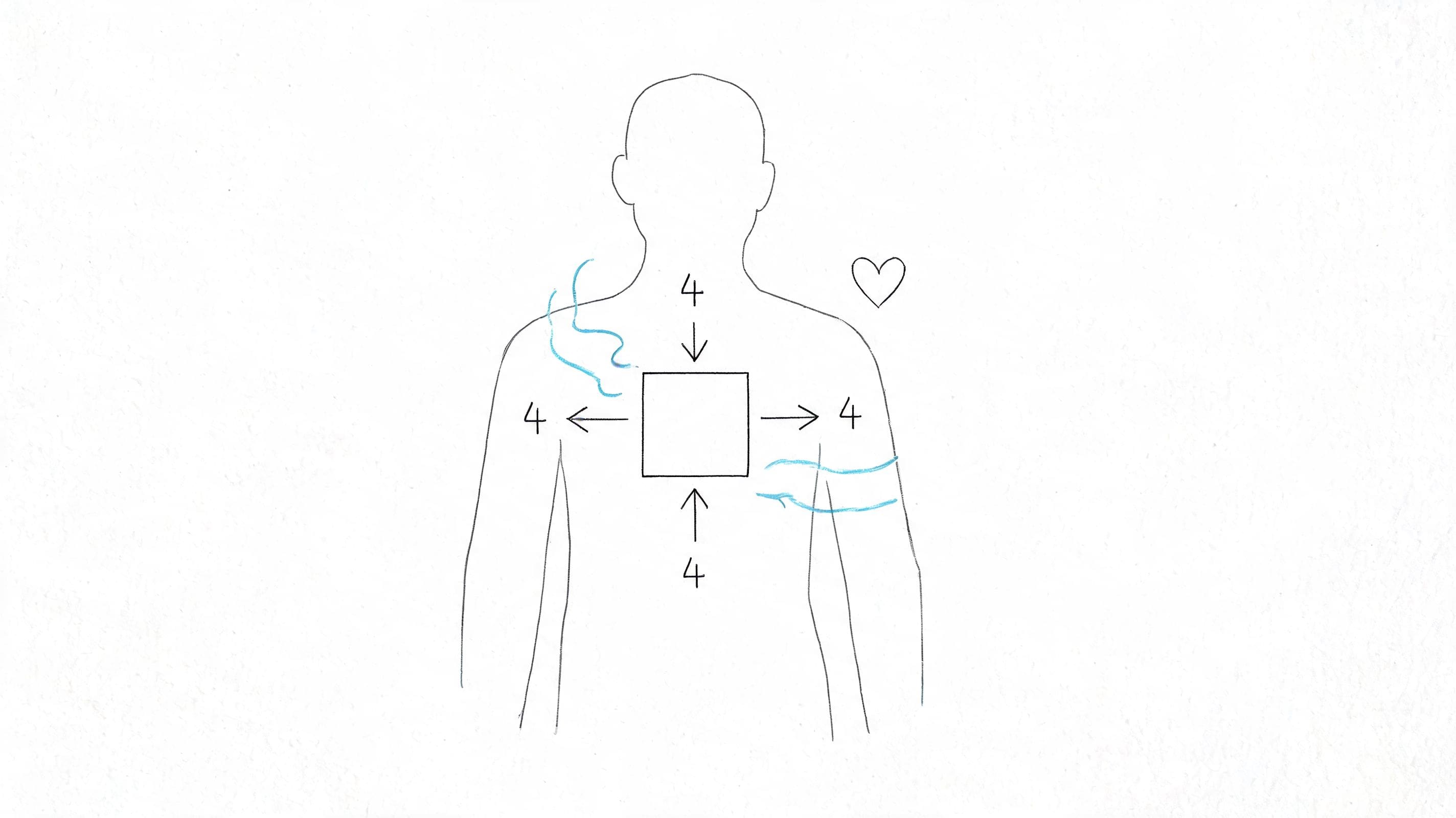
Box breathing is one of the simplest anxiety relief techniques because it gives your brain a job. Inhale for 4 counts, hold for 4, exhale for 4, hold empty for 4, then repeat. The square pattern reduces mental scatter and gives you a predictable rhythm when your thoughts feel chaotic.
This works well before a presentation, after a difficult Slack message, or when you feel social panic rising in your body before your mind has words for it. For autistic people and people with ADHD, the structure is often the point. You don't have to "clear your mind." You just have to follow the next count.
Make it easier to use
If counting to 4 feels too long, shorten it. The exact count matters less than the steady rhythm. What matters is that you're not forcing giant breaths that leave you lightheaded.
- Use a visual anchor: Trace a square with your finger on your thigh, desk, or phone screen.
- Practice when calm: If you only try it at your worst, it can feel fake or inaccessible.
- Pair it with a script: Do one minute of breathing, then rehearse the sentence you need to say.
> Practical rule: If breathing exercises make you more aware of panic, don't force bigger breaths. Make them smaller, slower, and quieter.
A broader review of exercise and anxiety noted that even a single acute bout of physical activity can produce a small, positive reduction in state anxiety, and that exercise-based approaches can reduce anxiety symptoms as standalone or adjunctive treatments with small to moderate effects across clinical and non-clinical groups, as described in this 2018 review on physical activity and anxiety. That supports a larger principle: nervous systems often respond well to rhythm and bodily regulation, not just insight.
2. 5-4-3-2-1 Grounding Sensory Anchoring
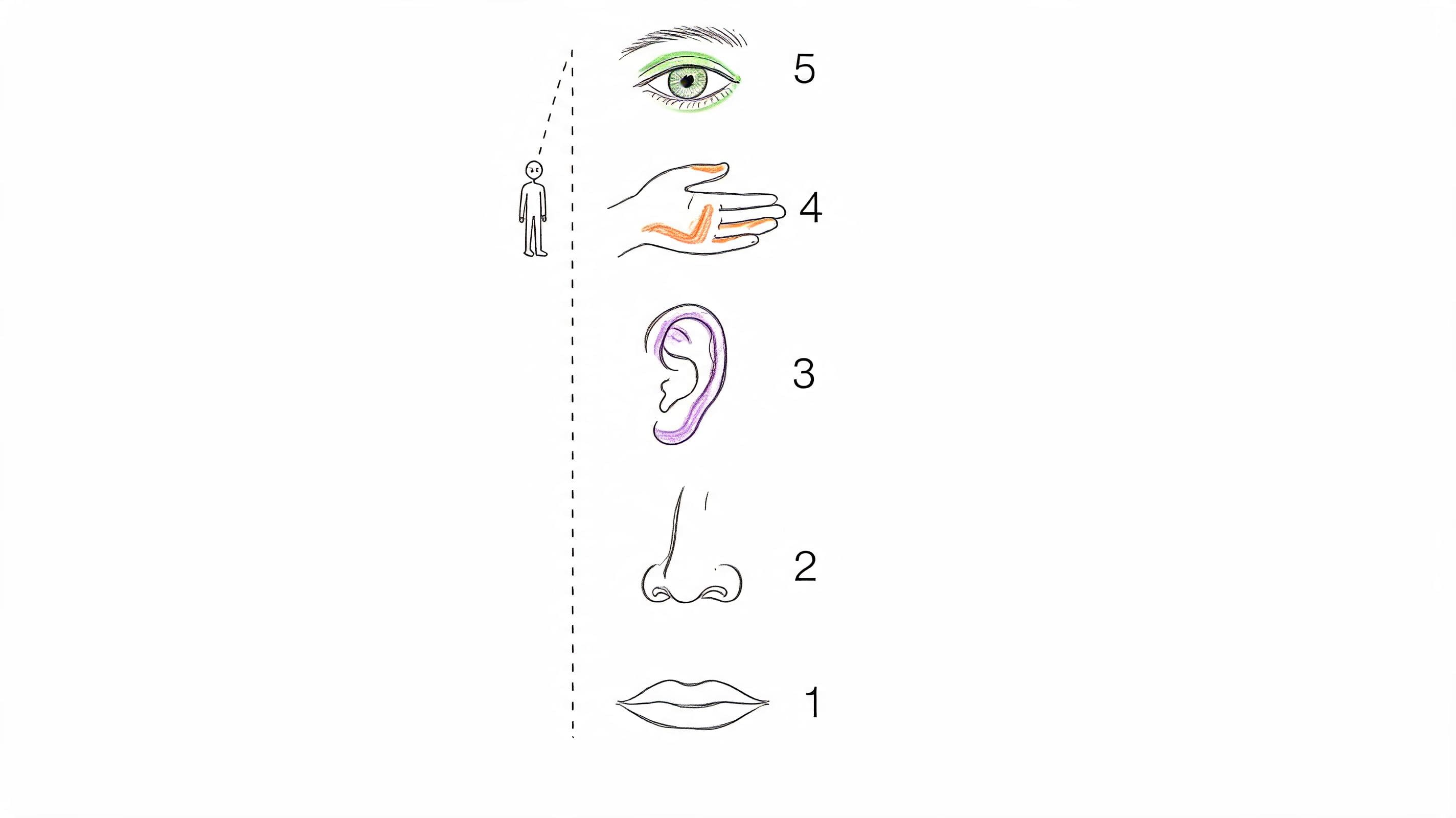
When your thoughts are racing, grounding pulls attention out of prediction and back into contact with the present. The classic version is simple: name 5 things you see, 4 you can touch, 3 you hear, 2 you smell, and 1 you taste.
That sequence can be excellent, but it's not mandatory. If you're sensory-sensitive, smell or taste may be neutral at best and awful at worst. Adjust the order. Repeat touch twice. Use colors, textures, or pressure points instead of trying to force all five senses.
Adapt it for neurodivergence
This technique gets better when you customize it before you need it.
- Build a reliable list: Pick sensory anchors you can access almost anywhere, like shoe pressure, fabric seams, a ring, a cold drink, or a wall.
- Use low-demand language: You can say "blue chair, window, sleeve, fan, floor" instead of full sentences.
- Keep it discreet: In class or at work, naming objects internally is often enough.
University Hospitals notes in its guidance on soothing techniques that help relieve anxiety that grounding techniques can help in the moment, but the relief is generally temporary. That's the right expectation. Use grounding to get stable enough to choose your next move, not as proof that the problem is solved.
A practical next move might be asking for a pause, leaving the room, clarifying an instruction, or texting someone for support.
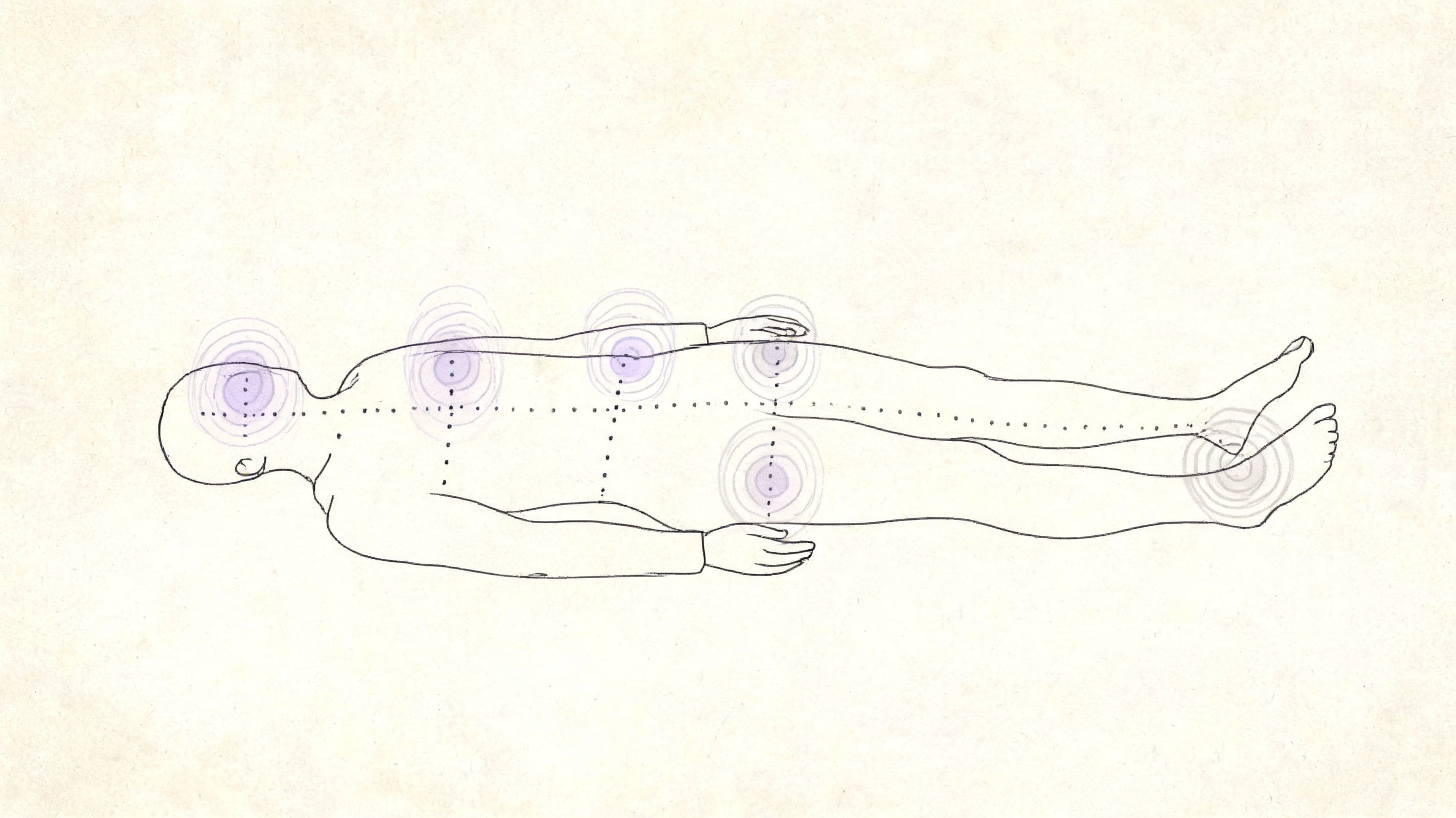
3. Body Scan Meditation
Some anxiety lives in thought. A lot of it lives in the body first. Jaw tension, held breath, lifted shoulders, stomach clenching, foot tapping, and the vague feeling that you can't fully land anywhere are often early signs that you're moving toward overload.
A body scan helps by giving your attention a route. Start at the top of your head and move down slowly, noticing pressure, temperature, tension, tingling, numbness, or restlessness without trying to fix each sensation. That "without trying to fix it" part matters. You're building awareness, not chasing a perfect calm state.
A shorter version works fine
If long meditations irritate you, use a compact scan.
- Head and jaw: Unclench your teeth.
- Shoulders and hands: Drop what you're gripping.
- Chest and stomach: Notice whether you're bracing.
- Legs and feet: Press into the floor.
> You don't need deep insight for this to help. You need enough body awareness to notice, "I'm already tightening up."
This is especially useful after social effort. Many people can get through a conversation and only realize afterward that they're depleted, shaky, or physically armored. A quick body scan after meetings, phone calls, or family interactions helps you catch that sooner and recover earlier.
If guided structure helps, use a recording. If language gets in the way, scan by zones and label each one with a single word: tight, buzzing, numb, hot, okay.
4. Cognitive Reframing Thought Pattern Interruption
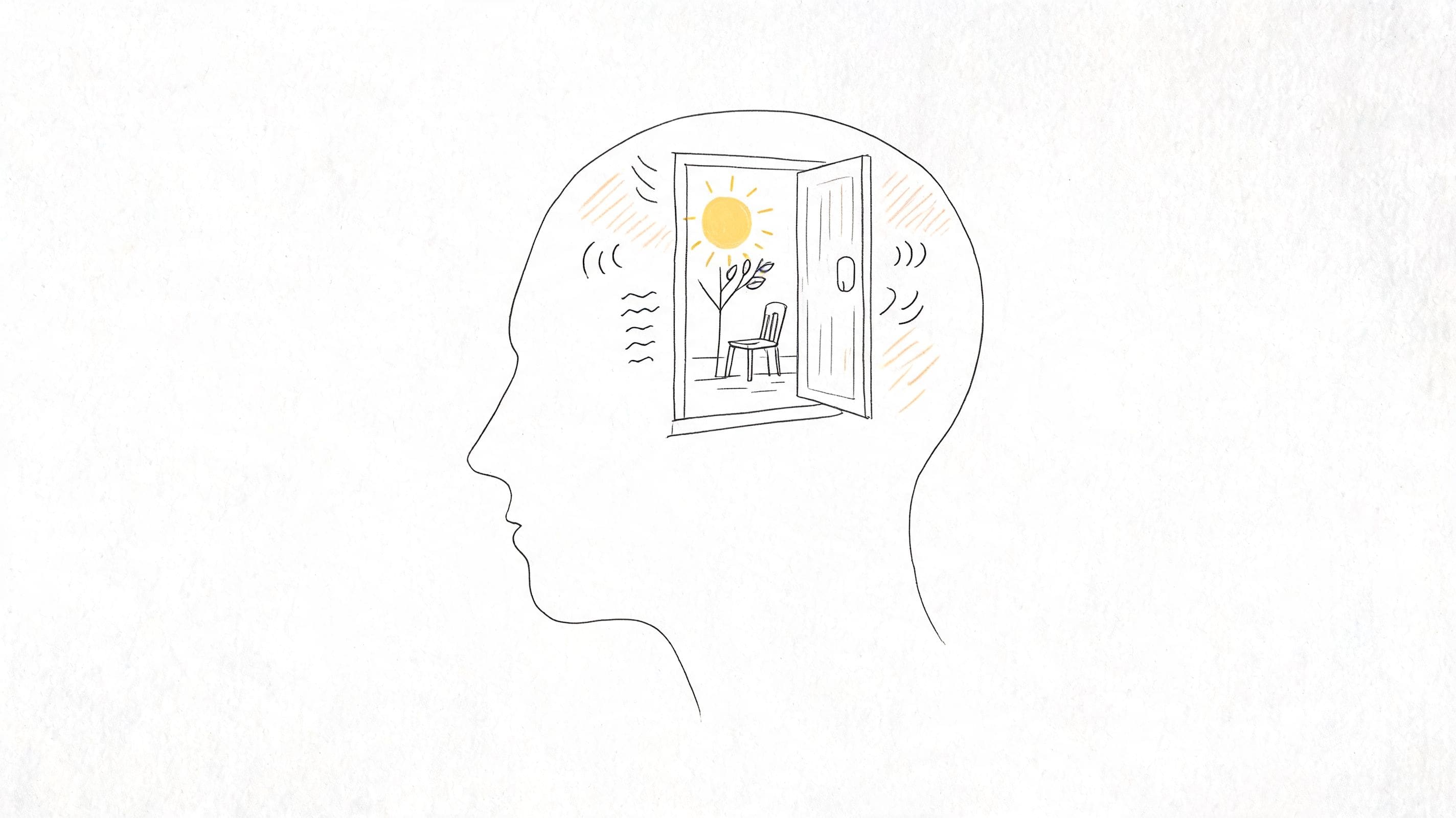
Cognitive reframing is one of the most durable anxiety relief techniques because it interrupts the story your brain tells when it doesn't have enough information. Social anxiety often turns uncertainty into certainty fast. "They paused" becomes "I annoyed them." "That email was short" becomes "I'm in trouble."
Reframing doesn't mean forced positivity. It means replacing a distorted conclusion with a more accurate one. Instead of "They hate me," try "I don't know what that tone meant yet." Instead of "I messed everything up," try "That felt awkward, but awkward isn't the same as harmful."
Questions that actually help
Don't ask yourself whether your fear is irrational. Ask better questions.
- What are the facts: What did the person say or do?
- What else could explain it: List at least 2 alternatives.
- What would I tell a friend: Individuals are often fairer to others than to themselves.
A 2023 systematic review of digital mental health tools found that app- and internet-based interventions were the dominant delivery formats, accounting for 80 of 96 studies, and concluded they were "moderately to highly effective" for reducing depression and anxiety symptoms in low- and middle-income countries, with the strongest effects in psychotherapy-based content, especially CBT and related psychotherapies, according to this systematic review of digital mental health tools. That matters because reframing is a core CBT skill, and it adapts well to brief, repeatable practice.
For neurodivergent people, reframing is often most effective after the initial wave of activation has dropped. Calm first, then think.
5. Progressive Muscle Relaxation PMR
You get home after holding it together all day, sit down, and realize your shoulders are up near your ears, your jaw is locked, and your hands still feel ready for impact. That kind of anxiety can be hard to label in words. PMR gives it a physical entry point.
Progressive muscle relaxation works by creating a clear contrast between tension and release. You gently tighten one muscle group, pause, then let it soften fully. For people who struggle with interoception, alexithymia, or the blurred body signals that can come with autism and ADHD, that contrast can make internal states easier to notice.
Need quick, practical anxiety relief? tonen can help.
tonen gives you 188+ conversation scripts, tone guidance and calming tools — designed for autistic adults, ADHD and social anxiety. Try it free for 7 days.
Download on the App StoreiOS only. Android coming soon.
Start small. A full head-to-toe routine helps some people, but it can feel tedious or activating for others. I usually suggest a short version first, especially for people who are already overstimulated or low on bandwidth.
Where PMR tends to help most
PMR fits best when anxiety shows up as bracing, clenching, stomach tightness, or a body that never seems to switch out of alert mode. It also works well during transition periods, after social masking, after commuting, or before sleep when the body is tired but still guarded.
Research reviews have found PMR can reduce anxiety symptoms in some groups, and in practice its biggest strength is straightforwardness. You do not need to find the right words first. You need a few minutes and a muscle group you can safely relax.
A simple sequence is enough:
- Hands: Make a light fist for 5 seconds, then release. Good for pent-up motor tension and repetitive gripping.
- Shoulders: Shrug upward gently, hold briefly, then let them drop. Useful after meetings, social effort, or desk work.
- Jaw: Press your teeth together very lightly, then unclench and let your tongue rest. Many people miss jaw tension until they release it.
- Stomach: Tighten your abdominal muscles a little, then soften. Skip this if it feels uncomfortable or triggering.
- Feet: Curl your toes or press your feet into the floor, then let go. This can help if anxiety shows up as pacing or restlessness.
A few cautions matter. Tense gently, not hard. If you have chronic pain, hypermobility, TMJ, migraines, injury, or a history of trauma linked to body-focused exercises, modify freely or skip areas that flare symptoms. Some neurodivergent people also find the hold phase unpleasant. In that case, use a shortened version and focus more on the release than the squeeze.
PMR is especially useful for people who need concrete steps instead of abstract calming advice. It does not solve the reason you are anxious. It can lower the body's alarm enough to make the next choice easier.
6. Safe Place Visualization
When the outside environment won't change quickly, imagery can create a short internal buffer. Safe place visualization means building a detailed mental setting that signals safety to your body. It can be a real beach, a dark quiet room, a forest trail, the back seat of a parked car, or a completely invented place.
The trick is detail. Don't just think "calm beach." Think cool air, gritty sand, a low repetitive wave sound, no one asking anything from you, and a heavy towel around your shoulders. The more sensory and specific it is, the more useful it becomes.
Build it before you need it
A safe place is easier to access if you rehearse it while calm.
- Choose one place only: Repetition makes recall faster.
- Add sensory cues: Texture, sound, temperature, and light level matter more than visual beauty.
- Pair it with a physical anchor: Press your feet down or hold an object while visualizing.
For neurodivergent people, "safe" often means predictable, dim, low-demand, and private. Don't build your image around what seems relaxing to other people. Build it around what reduces your load.
This works well before difficult conversations, while waiting for replies, or after leaving an overstimulating setting. It won't resolve a conflict by itself, but it can lower activation enough to help you re-enter the situation more deliberately.
7. Scripts and Conversation Rehearsal Prepared Language
Your phone rings. You know the topic matters. Your mind goes blank anyway.
For many anxious people, especially autistic people, people with ADHD, and anyone who struggles with live social processing, the stress point is not only fear. It is word retrieval under pressure. The core anxiety is often not knowing what to say next.
Prepared language lowers the demand in the moment. Instead of building a response while overloaded, you pull from a phrase you have already tested. That can reduce spiraling, buying time without forcing you to improvise while dysregulated.
Scripts that work in real life
Use short, plain sentences. They are easier to remember, easier to repeat, and less likely to fall apart when your processing speed drops.
- Asking for time: "I need a minute to think before I answer."
- Clarifying: "I'm not sure what you mean. Can you say that another way?"
- Setting a limit: "I can't keep talking about this right now."
- Requesting written follow-up: "Can you send that to me in a message so I can process it properly?"
- Exiting without overexplaining: "I need to step away. I'll come back to this later."
The trade-off is that scripts can sound stiff if they are too formal or too long. That is why I usually recommend drafting lines that already match how you speak. A useful script should feel natural in your mouth, not impressive on paper.
Practice matters here. Read the line out loud. Save it in your notes app. Rehearse it before medical appointments, work meetings, family calls, or social events where you tend to freeze. If spoken rehearsal feels awkward, type it first, then trim it until it sounds like something you would say.
For neurodivergent people, scripts also work best when they fit sensory and processing needs. Some people need low-word scripts. Some need text-based versions they can copy and send. Some need a decision tree, such as: if they ask for more, say this. If they push back, repeat this. The goal is not to sound polished. The goal is to stay communicative when stress narrows your options.
Scripts do not make conversations fake. They make hard conversations more doable. With repetition, prepared language often starts to sound more like your own voice because you are no longer trying to invent safety and clarity at the same time.
8. Mindfulness and Present-Moment Awareness
Mindfulness gets oversold as if it's one thing. It isn't. Sitting with your thoughts is only one version, and for some people it's the worst starting point. Present-moment awareness can be much more practical than that.
You can practice mindfulness while washing dishes, walking to class, waiting for the kettle, or listening to the hum of an air conditioner. The skill is noticing what's happening now without immediately escalating it into prediction, judgment, or self-criticism.
A more usable version
If formal meditation makes you agitated, shrink the task.
- Name one sensation: "My feet are cold."
- Name one action: "I'm opening the door."
- Name one fact: "I'm waiting, not in danger."
More recent mainstream guidance increasingly mentions grounding, progressive muscle relaxation, and staying in the present moment, but people often need those ideas translated into discreet, portable tools and communication support. Mayo Clinic Health System also notes in its article on tips to help ease anxiety that mindfulness meditation may be as effective as medication for some people, which is a useful reminder that it won't be equally effective for everyone.
That's the trade-off. Mindfulness can be powerful, but it's not universal. If it helps, use it. If it makes you feel trapped inside your own monitoring, choose a more external technique.
9. Physical Activity and Exercise
Exercise deserves a place on any list of anxiety relief techniques because it changes state, not just perspective. For some people, movement works better than sitting still because it gives stress somewhere to go.
This doesn't have to mean a hard workout. Walking, cycling, dancing in your room, pacing while listening to music, yoga, and repetitive bodyweight movements can all help. Rhythmic motion is often especially regulating for ADHD and autistic nervous systems.
The practical standard
Choose movement you're willing to repeat. That is the essential rule. If a sensory-heavy gym makes you dread exercise, an at-home routine or outdoor walk may be a better fit.
A 2019 review of mobile apps for depression and anxiety noted that adoption had remained limited despite promising efficacy and ease of access, suggesting that usability matters alongside clinical validity. In the consumer market, Calm and Headspace are described as the two most popular mental health apps worldwide, and one 2023 dataset reported Calm's app revenue at about USD 7 million in a single month and 800k downloads in that same month, as discussed in this review of mobile apps for depression and anxiety. The practical lesson is straightforward: people stick with supports that feel easy to start and easy to repeat. Exercise follows the same rule.
If gym spaces themselves trigger anxiety, this library of movements from the GrabGains exercise library can help you find lower-friction options.
10. Social Support and Trigger Management Connection and Exposure
You get the calendar reminder, feel your chest tighten, and start negotiating with yourself about canceling. In that moment, anxiety often drops faster with two things in place. A person you trust, and a smaller version of the task you can complete.
Social support helps because it reduces isolation. Trigger management helps because it reduces chaos. Used together, they create enough structure to practice discomfort without flooding your system.
For neurodivergent people, vague support plans often fail. Autistic people may need predictability and clear roles. ADHD brains may do better with external accountability and short, concrete steps. Social anxiety can make "just reach out" feel impossible unless the ask is scripted in advance.
Use support with a job description
Ask for one specific kind of help.
A useful support person might sit next to you before a phone call, review a draft text, drive with you to an appointment, wait nearby during a hard task, or send a check-in message afterward. General reassurance can help in the moment, but it is less useful than support that matches the actual sticking point.
Try prompts like these:
- "Can you stay on the phone with me while I send this?"
- "Can you come with me, but not talk for me unless I ask?"
- "Can you text me at 2 p.m. so I start the task?"
- "Can we practice the first two minutes before I go?"
Build a trigger ladder, not a pressure test
Exposure is more useful when it is graded and repeatable. Pick one trigger. Break it into smaller steps. Repeat each step until it feels more familiar, not perfect.
For example, if group exercise settings trigger anxiety, the ladder might start with watching a class video, then visiting the space briefly, then doing ten minutes at a quiet time, then staying longer with a support person. If choosing a lower-pressure movement setting would help, the GrabGains exercise library can give you options to test at home or in simpler environments first.
A workable trigger ladder often looks like this:
1. Choose one situation that reliably spikes anxiety.
2. Rate versions of that situation from easiest to hardest.
3. Start with the lowest step that feels uncomfortable but still doable.
4. Repeat it enough times that your body learns, "I can get through this."
5. Increase difficulty by one step, not five.
Earlier sections covered techniques that calm the body and interrupt spirals. Those tools often make exposure practice more tolerable. Treatment matching also matters. Some people need grounding before exposure. Some need scripting, sensory adjustments, or professional support so practice does not turn into overload.
Track what changes after each attempt. Did anxiety peak lower, fade faster, or feel less disruptive the next time? Those are meaningful signs of progress, even if the situation still feels hard.
Comparison of 10 Anxiety-Relief Techniques
| Technique | Implementation complexity | Resource requirements | Expected outcomes | Ideal use cases | Key advantages |
|---|---|---|---|---|---|
| Box Breathing (4-4-4-4 Technique) | Very low, simple rhythmic pattern, quick to learn | None (timer optional); discreet setting | Immediate short-term calming, reduced heart rate and arousal | Acute anxiety, pre-meeting or social overwhelm, public settings | Fast, portable, research-backed, accessible to all ages |
| 5-4-3-2-1 Grounding (Sensory Anchoring) | Low–moderate, sequential attention shift, needs cognitive focus | None; depends on available sensory input | Rapid redirection from intrusive thoughts to present moment | Panic, intrusive thoughts, sensory overwhelm in public | Structured, adaptable, effective for immediate stabilization |
| Body Scan Meditation | Moderate, takes sustained attention and time (5–20 min) | Quiet/private space; guided audio helpful | Reduced physical tension, improved interoceptive awareness over time | Daily relaxation, managing chronic stress, post-event recovery | Deep body awareness, builds baseline calm with practice |
| Cognitive Reframing (Thought Pattern Interruption) | Moderate–high, requires practice and cognitive effort | Time for reflection, journaling or tools (e.g., reframing helpers) | Reduced rumination and maladaptive beliefs with repeated use | Persistent negative thoughts, social rumination, therapy work | Targets root cognitive causes, offers durable mental flexibility |
| Progressive Muscle Relaxation (PMR) | Moderate, stepwise tensing/releasing sequence, needs time | Quiet space; guided audio optional | Tangible muscle relaxation, lower physiological arousal | Chronic tension, pre-sleep routines, preparing for stressful events | Concrete body-based relief, measurable reductions in tension |
| Safe Place Visualization | Low–moderate, imaginal skill that improves with practice | Time to build a vivid scene; written cue or anchor optional | Rapid emotional regulation and mental escape when practiced | Anticipatory anxiety, brief regulation during stress | Highly personalized, discreet, engages multiple senses |
| Scripts and Conversation Rehearsal (Prepared Language) | Moderate, upfront time to learn and adapt scripts | Script library, practice mode or rehearsal time | Reduced pre-interaction anxiety and greater conversational fluency | High-stakes or structured interactions, neurodivergent social prep | Provides structure, predictable responses, customizable tones |
| Mindfulness and Present-Moment Awareness | Low–variable, flexible practice that benefits from consistency | Minimal (apps/guides optional); can be informal | Reduced rumination and improved emotional regulation long-term | Ongoing anxiety management, building resilience | Versatile, research-backed, adaptable to many settings |
| Physical Activity and Exercise | Low–moderate, requires scheduling and consistency | Time; optional equipment or spaces; social options available | Immediate post-exercise calm and cumulative mood/anxiety improvement | Preventive routine, post-stressor recovery, proprioceptive needs | Broad physical and mental benefits, strong evidence base |
| Social Support and Trigger Management (Connection + Exposure) | Moderate–high, requires planning, vulnerability, graded exposure | Trusted people, guidance, time and gradual hierarchy | Durable anxiety reduction, increased mastery and reduced isolation | Reducing avoidance, systematic desensitization, building support networks | One of the most evidence-based approaches; combines emotional and practical support |
Build Your Personalized Anxiety Relief Plan
Your phone buzzes. You see a message you have been avoiding. Your chest tightens, your thoughts start racing, and the reply you had in mind disappears.
That is the moment a plan needs to be usable.
Build a small plan you can remember under stress. Pick one tool for body regulation, one for interrupting spirals, and one for handling the situation in front of you. A practical combination might be box breathing for the first surge, cognitive reframing once your mind slows down, and a prepared script to ask for more time or clarification. Another person may get better results from a brisk walk, a short body scan, and noise-canceling headphones before going back into a busy room.
Practice changes whether a tool is available to you when anxiety hits. I usually suggest testing techniques in low-stress moments first, then during moderate stress, then in harder situations. That progression helps you spot what fits your nervous system, your sensory profile, and your daily life.
For many neurodivergent people, this matters even more. Anxiety is sometimes an accurate response to sensory overload, unclear expectations, social ambiguity, demand pressure, or a long history of being corrected or misunderstood. In those cases, calming the body helps, but changing the environment, the task, or the communication demand often helps just as much.
Sort your tools by function so you can choose faster:
- Regulate your body: box breathing, grounding, PMR, body scan, safe-place visualization, movement
- Interrupt spirals: cognitive reframing, present-moment attention, sensory anchoring
- Handle the situation: scripts, boundaries, asking for clarification, accommodations, leaving the environment, planned support, gradual exposure
Match the tool to the trigger. If breathwork makes you feel trapped or lightheaded, start with touch, temperature, or movement. If conversation is the main stressor, keep two or three prepared phrases in your notes app. If transitions set off anxiety, use a short reset routine between tasks instead of waiting until you are already overloaded.
Keep the plan visible and concrete. A short note is enough:
When I notice early signs: unclench jaw, exhale slowly, name five things I see
When anxiety climbs: leave the room, relax hands and shoulders, drink cold water
When I need to respond to someone: use my script, ask for time, follow up later in writing
A useful plan works often enough that you remember to use it.
Some methods will fit better than others. Movement may help more than mindfulness. Structured language may help more than visualization. That mismatch is useful information. It tells you what to keep, what to adapt, and what to stop forcing.
If social anxiety is part of the picture, one outside resource can still be helpful for review later. As noted earlier, guidance on social anxiety self-help strategies can complement the techniques above, especially if your stress shows up as freezing, overexplaining, masking, or avoiding conversations altogether.
Frequently asked questions
Start with one body-based tool (slow exhale, grounding, or a short walk) and one cognitive tool (naming the thought, writing one next step). Stack techniques only after the first feels familiar.