Dating with social anxiety can involve both wanting to meet someone and worrying about the interaction. You can decide whether you want to date, what format suits you and what you want to communicate. You do not have to treat dates as compulsory practice or wait until you feel completely confident.
This guide is for adults and offers original examples for making plans, asking questions, setting limits and following up. The examples cannot tell you whether someone is interested or guarantee a comfortable date. If anxiety is affecting everyday life, the NHS social anxiety page explains when to seek help and describes treatment options. Our social anxiety and NHS guide offers further context.
Choose whether and how you want to meet
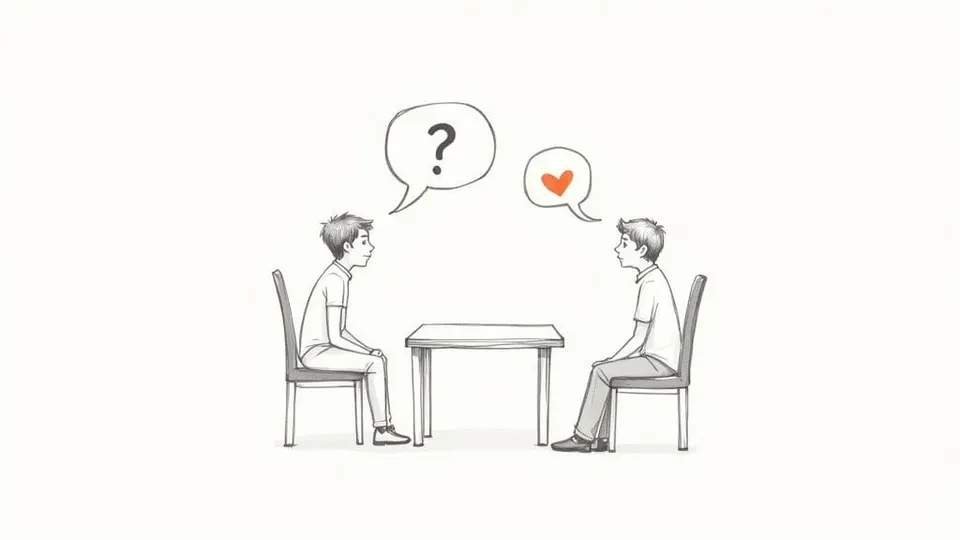
There is no required pace for moving from messages to a call or an in-person meeting. You can discuss the next step without agreeing to it immediately. More time messaging does not guarantee that you know someone well, and a video call does not verify that meeting them will be safe.
You could say:
- "I'm enjoying talking. I'd like to keep messaging for now."
- "Would you be interested in coffee on Saturday afternoon?"
- "I'd prefer a short first meeting somewhere public. Would that suit you?"
- "I don't want to meet. I wish you well."
The other person can accept or decline the format too. If you want different things, you do not have to persuade each other or keep negotiating.
For practical precautions, Get Safe Online's dating guidance advises meeting and staying in public, making your own travel arrangements and resisting pressure to meet before you are ready. These precautions do not guarantee safety or make someone responsible for another person's harmful behaviour.
Make a plan you can actually use
Think about access, noise, cost, travel and how long you want to stay. A quiet cafe may suit you better than a crowded bar; another person may prefer a different public setting. Ask rather than assuming.
"Would this cafe work? I prefer somewhere I can hear the conversation. I can stay until three."
Use a real time limit if you want one, without inventing another appointment. You can leave earlier or change your mind. A short date does not promise less anxiety, and there is no ideal duration for everyone.
Confirm the actual place and time, and check how you will get home. Keep your address, financial details and other sensitive information private when you do not want to share them. If you want someone you trust to know your plans, agree how you will check in with them.
Decide what to say about anxiety
You can share that you have social anxiety if you want to. There is no universal rule that you should disclose it on the first date, wait until later or explain a diagnosis to justify a preference.
| What you want to communicate | An example |
|---|---|
| A practical preference | "I find noisy places hard to follow. Could we choose somewhere quieter?" |
| Some context | "I get anxious meeting new people, so I may take time to answer." |
| A format change | "I'd rather send that in a message than discuss it here." |
| A limit on disclosure | "I don't want to go into my health history. I'm happy to talk about [topic]." |
Only use an explanation that is true for you. Your date does not need private medical details to respect a request, and you do not need to adopt a cheerful tone before expressing it.
Prepare a question, without scripting the person
You could note one thing you want to ask about and one thing you would like to share. Listen to the answer rather than treating your notes as a checklist.
For example:
- "You mentioned making ceramics. What have you been working on?"
- "I tried a new walking route last weekend. Have you found anywhere you like nearby?"
- "I'd rather skip work talk tonight. What have you enjoyed recently?"
Closed questions can be useful too: "Have you been here before?" is a reasonable opening. You do not have to request a detailed story with every question. For more ideas, see conversation starters for introverts.
If you lose track, say so: "I missed the last part. Could you repeat it?" If there is a pause, you can wait, return to a topic or finish the date. A pause does not tell you whether they like you.
Check comfort and consent directly
Ask about the next step instead of treating friendliness, a nervous laugh or silence as agreement. "Would you like to stay for another drink?" leaves a choice. "Can I kiss you?" asks about a specific action. Wait for clear agreement; do not push through hesitation or assume a previous yes applies now.
If someone goes quiet, freezes, pulls away or seems unsure, stop. Do not reinterpret that as social anxiety that you should help them overcome. Either person can change their mind. RAINN's consent guidance explains ongoing agreement and the importance of respecting a refusal, including nonverbal signs.
Your own nervousness does not oblige you to continue. You can say, "I don't want to do that," "I'd like to slow down," or "I'm leaving now." Respecting someone else includes accepting those choices without asking them to prove a reason.
If you need a pause or want to leave
You do not have to conceal discomfort to avoid spoiling the date. A practical statement can be enough:
- "I need a quiet break. I'll decide afterwards whether to continue."
- "I'm not feeling well. I need to go home."
- "I don't want to continue this date. Goodbye."
If you want an optional exercise, our grounding techniques guide describes choices you can adapt or skip. You do not need to complete a breathing sequence before leaving. A calming exercise cannot establish that the person or situation is safe. Seek help from someone you trust or venue staff if needed.
For broader support when things feel too much, see what to do when overwhelmed. If symptoms concern you, seek appropriate medical advice rather than assuming they are anxiety because they happened on a date.
Send a follow-up only if you want to
There is no universal 24-hour deadline. Consider what you want to communicate and any plan you actually agreed. You do not owe another date or ongoing contact because someone was pleasant or paid for something.
| Your decision | A message to adapt |
|---|---|
| You want to meet again | "I enjoyed talking yesterday. Would you like to get coffee again next week?" |
| You do not want another date | "Thank you for meeting. I don't want to take this further. I wish you well." |
| You need to cancel a plan | "I can't make Saturday. I'm sorry for the change. I don't want to rearrange." |
Do not offer friendship, another date or a reason that is not true just to soften the message. If contact feels unsafe, you can stop, block or use the platform's reporting options rather than sending a closing explanation.
If they decline, accept the answer. If they do not reply, you may not know why. Avoid repeated messages or asking an app to identify their hidden feelings. You can be disappointed without deciding that one person's response defines you or proves something about your health.
Optional wording support
We make tonen, an iOS communication-support app. Its conversation scripts offer phrases you can adapt, including Direct, Warm, Firmer and Softer tone options. You can write your own draft instead. Our apps for social anxiety guide discusses checks to make when considering tools; a listing is not evidence that an app treats anxiety.
If you use a Helper, it uses online processing and may misunderstand the context. Do not enter a date's sensitive details. A suggestion cannot determine interest, consent or safety, and this guide does not establish that preparation with tonen reduces anxiety.