The best apps for neurodivergent people help you manage executive functions, navigate social conversations, and regulate your nervous system with less stress. For those seeking practical support for social communication, Tonen offers a powerful solution with its extensive Scripts Library, Perspective Helper, and built-in calming tools, all designed with privacy and a low cognitive load in mind. This article provides a comprehensive guide to the top 12 apps for neurodivergent people, categorizing them by function—from communication aids like Tonen and AAC tools to executive function planners like Tiimo and Goblin Tools.
Navigating the world as a neurodivergent person often means finding the right strategies and supports to match your unique brain wiring. Technology, when designed thoughtfully, can offer significant assistance. The challenge is sifting through countless options to find what truly works. Many apps promise support but fall short due to a high cognitive load, poor design, or a fundamental misunderstanding of neurodivergent needs.
This guide is built to solve that problem. We will cut through the noise to provide an in-depth analysis of the most effective apps for neurodivergent people available in 2026. Before we explore the tools, building a solid foundation in understanding neurodiversity and its terminology can be incredibly helpful. Broader neurodivergent communication apps focus specifically on scripting and AAC-style support, and many users also cross-check our roundup of free mental health apps for mood and anxiety support.
In the detailed sections below, you'll find a practical breakdown of each app. We'll cover:
* Core Features: What the app does and how it works.
* Best For: Specific use cases for autistic adults, ADHD students, and parents.
* Practical Details: Pricing, privacy notes, and accessibility features.
* Direct Comparisons: Why you might choose one app over another, with a special focus on Tonen's unique communication supports.
Each review includes screenshots and direct links, so you can explore the options and decide which tools best align with your goals. Our aim is to equip you with the information needed to build a personalized digital toolkit that genuinely supports your daily life.
1. Tonen
For neurodivergent people seeking practical, on-the-spot support for social conversations, Tonen stands out as the premier choice. It directly addresses the mental load and anxiety associated with communication by providing ready-to-use scripts, tools for emotional regulation, and a way to reframe stressful interactions. This makes it one of the most well-rounded and essential apps for neurodivergent people available today, designed to build confidence without requiring extensive setup or clinical oversight.
What sets Tonen apart is its direct, functional design. Rather than offering broad advice, it provides concrete tools for immediate use. The app was built by neurodivergent creators, and this lived experience is evident in its thoughtful, low-cognitive-load interface and privacy-first approach, making it an indispensable tool for daily life.
Core Strengths and Use Cases
Tonen's power lies in its four integrated features, each targeting a specific challenge in social communication.
* Scripts Library: With over 188 prompts, this feature is a lifesaver for moments when you can't find the right words. It covers everyday situations at work, home, and in social settings. Each script includes multiple tone options (Direct, Warm, Firmer, Softer), an opt-out line, and a way to ask for support, giving you control over the interaction.
* Perspective Helper: This tool helps reduce rumination after a confusing or stressful conversation. You can describe what happened, and it provides gentle, alternative interpretations and suggested phrases for how to respond, helping you move forward with less anxiety.
* Calm Kit: For moments of overwhelm, this kit offers quick, evidence-based grounding exercises like Box Breathing and the 5-4-3-2-1 method. These micro-tools are designed to help you self-regulate in just a few minutes.
* Practice Mode: Prepare for conversations in a low-stakes environment. You can save favorite scripts, rehearse them privately, and experiment with different tones to find what feels most authentic to you.
> Real-World Application: An autistic adult preparing for a performance review can use Practice Mode to rehearse setting boundaries with a "Firmer" tone. If the conversation becomes overwhelming, they can use a pre-saved "opt-out" line or step away and use the Calm Kit to regulate before re-engaging.
Who Is It Best For?
Tonen is particularly effective for autistic adults, individuals with ADHD, and anyone who experiences social anxiety. Its focus on providing clear, actionable language makes it an excellent tool for navigating professional environments, setting personal boundaries, and reducing the stress of daily interactions. Because all data is processed on-device, it's a secure choice for users who value their privacy.
Pricing and Availability
* Platform: Available on the App Store for iOS devices.
* Trial: 7-day free trial (no credit card required).
* Subscription: $4.99/month or $49.99/year.
While it is not a substitute for therapy, Tonen provides an invaluable layer of practical support that makes it a top-tier choice among apps for neurodivergent people in 2026.
2. Tiimo
Tiimo is a visual daily planner specifically designed to support executive functioning for autistic and ADHD users. It stands out by translating tasks and routines into a clear, color-coded visual timeline. This approach reduces the cognitive load often associated with traditional to-do lists and text-heavy calendars, making time management more intuitive and less overwhelming. Its core strength lies in providing structure and predictability, which can be critical for managing daily life.
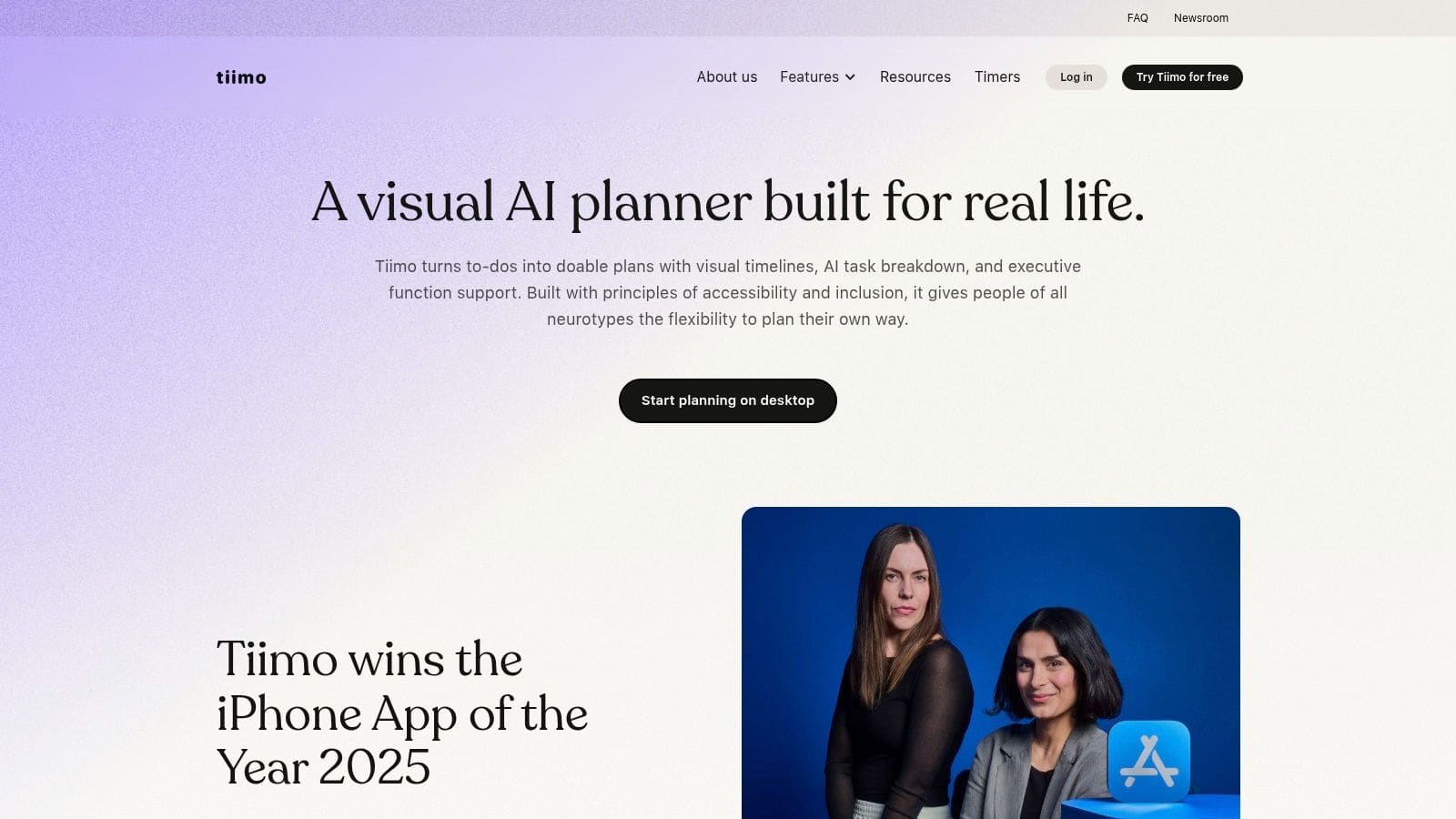
The app allows users to build routines from scratch or use pre-made templates, sync with existing calendars (like Google Calendar), and set focus timers for individual activities. One of its most practical features is the AI co-planner, which can take a broad task like "morning routine" and automatically break it down into smaller, actionable steps.
> Best For: ADHD and autistic individuals who benefit from visual schedules, parents creating structured routines for their children, and anyone struggling with time blindness or task initiation.
Practical Tips:
* Color-Code Categories: Assign specific colors to different life areas (e.g., green for work, blue for self-care) to quickly see how your day is balanced.
* Build "Buffer Time" Blocks: Add short, unscheduled blocks between tasks to account for transitions, preventing a domino effect if one activity runs long.
Pricing and Access:
* Free Version: Offers basic scheduling and routine-building features.
* Tiimo Premium: Unlocks unlimited activities, calendar sync, AI co-planner, and advanced customization. It is available via a monthly or annual subscription.
* Platform: Available on iOS, Android, and web.
Explore Tiimo's visual planning tools on their website. →
3. Goblin Tools
Goblin Tools is a collection of simple, web-based productivity aids built specifically "for the neurospicy" and others who feel overwhelmed. It has gained widespread praise within neurodivergent communities for its direct, no-fuss approach to task decomposition. The core feature, Magic ToDo, automatically breaks down large or vague tasks into smaller, more concrete steps. This functionality is a major reason why it's considered one of the most effective tools for those struggling with executive dysfunction and task initiation.
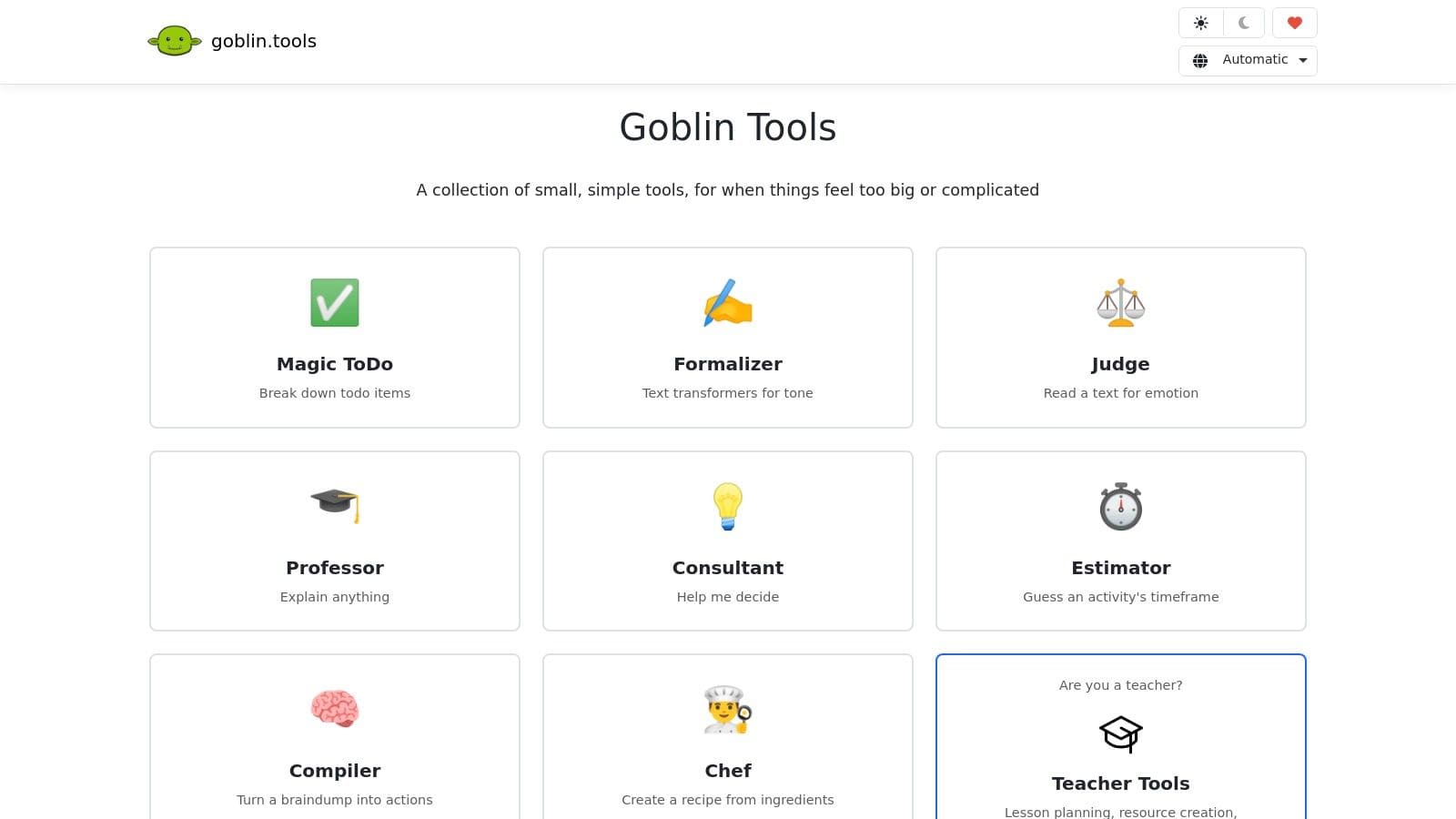
Beyond its standout task-breakdown feature, the suite includes several other useful tools. The "Formalizer" translates casual text into more professional language, the "Judge" helps interpret the tone of a message, and the "Estimator" provides a rough time estimate for completing a task. Users can even adjust the "spiciness" level to get more or fewer sub-tasks, a unique detail that acknowledges varying support needs. While it is not a full-featured project manager, its simplicity is precisely its strength for on-the-spot support.
> Best For: ADHD and autistic individuals who need immediate help breaking down overwhelming tasks, students needing to structure assignments, and anyone who benefits from a simple, low-friction tool without a steep learning curve.
Practical Tips:
* Use the "Spiciness" Slider: Experiment with the five "spiciness" levels on Magic ToDo. Level one gives a basic breakdown, while level five provides extremely detailed micro-steps for when you're feeling completely stuck.
* Leverage the Formalizer: Before sending an important email or message, run your draft through the Formalizer to ensure your tone comes across as intended, reducing social anxiety.
Pricing and Access:
* Free Version: All core tools (Magic ToDo, Formalizer, Judge, Estimator, Compiler) are completely free to use on the web.
* Paid Mobile Apps: A one-time purchase provides access to the mobile app versions for iOS and Android, which mirror the web functionality.
* Platform: Available on the web, iOS, and Android.
Try Goblin Tools for free on their website. →
4. Structured
Structured is a visual day planner that organizes tasks, notes, and calendar events into a single, intuitive timeline. It has gained popularity among the ADHD community because it simplifies the practice of time-blocking. By presenting the entire day at a glance, it helps reduce the friction often associated with planning, making it easier to start and complete tasks. Its clean, minimalist interface avoids cognitive overload, a common challenge with more complex productivity tools.
The app's core function is its unified timeline where users can drag and drop tasks. It seamlessly imports events from existing calendars and reminders, consolidating all commitments in one place. This visual approach helps combat time blindness by providing a concrete representation of how much time is allocated to each activity.
> Best For: ADHD users who thrive with time-blocking, students organizing class schedules and assignments, and anyone seeking a low-friction daily planner with a minimal design.
Practical Tips:
* Use the Inbox: Quickly add tasks to the inbox throughout the day without assigning a specific time. Later, drag them onto your timeline when you're ready to plan.
* Set Custom Notifications: Create unique alerts for different types of tasks (e.g., a gentle sound for a break, a more assertive one for an important meeting) to help differentiate priorities.
Pricing and Access:
* Free Version: Includes the core timeline, task management, notes, and basic customization.
* Structured Pro: Adds calendar and reminder integration, recurring tasks, advanced notifications, and AI-powered planning features. Available via a monthly, annual, or lifetime subscription.
* Platform: Available on iOS, Android, macOS, and web.
Check out the Structured timeline planner on their website. →
5. Inflow
Inflow is a self-management program built on Cognitive Behavioral Therapy (CBT) principles, specifically for adults with ADHD. Developed by and for people with ADHD, it functions less like a simple tool and more like an educational course combined with a habit-building system. The app provides bite-sized, science-backed lessons to help users understand their ADHD brain, then offers practical tools to manage common challenges like procrastination, organization, and emotional regulation. This structured educational approach makes it a strong contender among support tools for those who want to learn why certain strategies work.
Looking for apps designed for neurodivergent minds? tonen can help.
tonen gives you 188+ conversation scripts, tone guidance and calming tools — designed for autistic adults, ADHD and social anxiety. Try it free for 7 days.
Download on the App StoreiOS only. Android coming soon.
The app features daily activities, live events with clinicians, and a supportive community space. For those seeking more personalized guidance, Inflow offers an optional coaching add-on. While it is a paid resource, its focus on psychoeducation sets it apart from simpler task managers, making it more akin to a guided self-help program.
> Best For: Adults recently diagnosed with ADHD, individuals seeking a structured learning program about ADHD management, and those who benefit from a combination of psychoeducation and practical tools.
Practical Tips:
* Commit to the Daily Modules: Treat Inflow like a short daily course. Consistency is key to internalizing the CBT concepts and building momentum.
* Engage with the Community: Use the community feature to ask questions and share experiences. Learning from others with similar struggles can be incredibly validating and helpful.
Pricing and Access:
* Free Version: Offers a limited introduction to the program.
* Inflow Premium: A subscription is required to access the full program, including all modules, community features, and live events. Coaching is an additional cost. Pricing structures can be complex, so review them carefully on their site.
* Platform: Available on iOS and Android.
Explore Inflow's ADHD program on their website. →
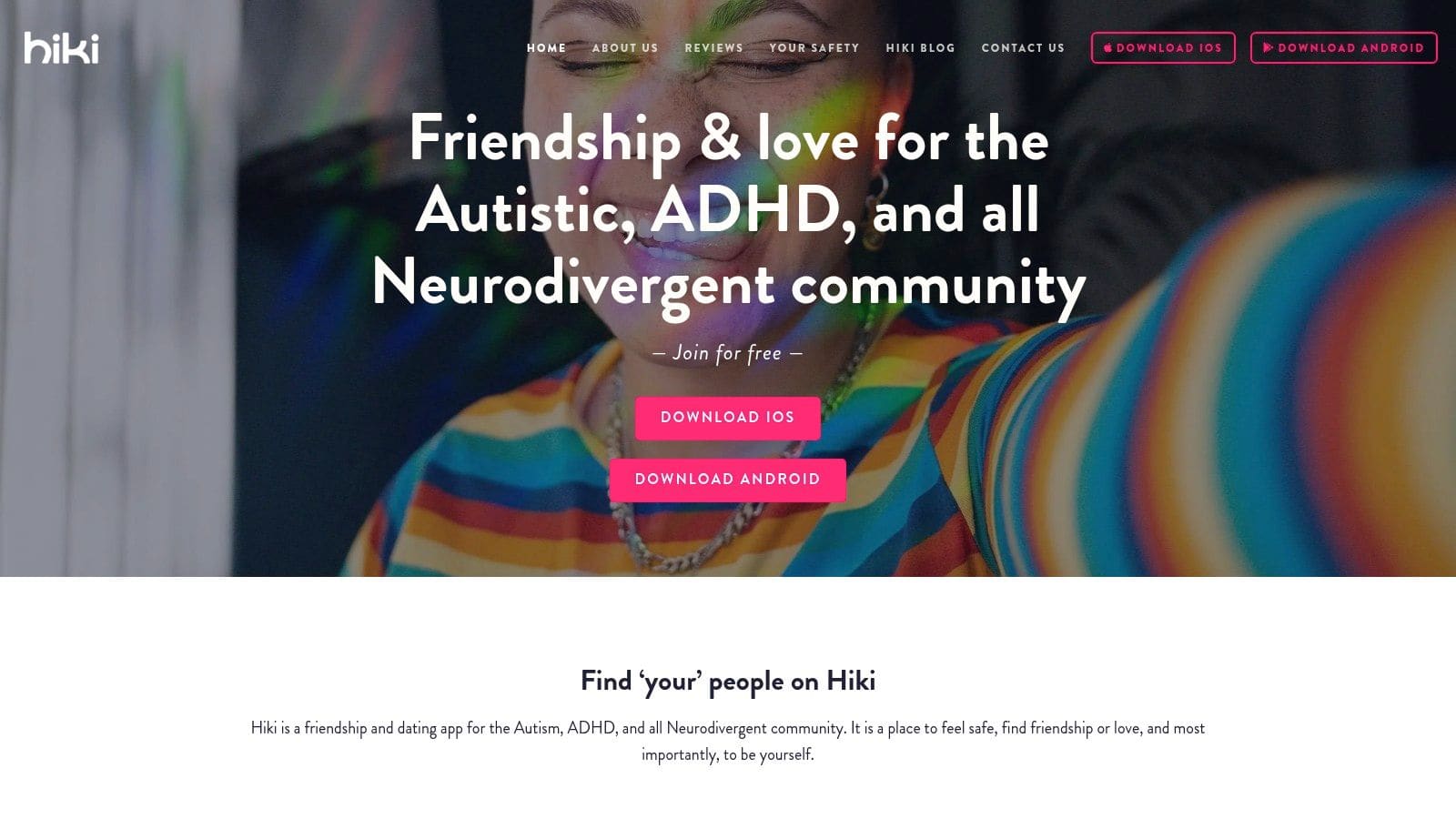
6. Hiki
Hiki is a social community designed exclusively for autistic and other neurodivergent adults, offering a dedicated space for friendship and dating. It addresses a critical need by creating an environment where users can connect without the stigma or misunderstandings often present on mainstream platforms. By being ND-only, it fosters a sense of belonging and shared understanding from the start, allowing for more authentic social interactions.
The platform provides distinct modes for finding friends or romantic partners, which helps clarify user intentions and manage social expectations. Safety is a clear priority, with features like optional ID verification and robust reporting tools. While the core experience is free, some users report that premium features, like "Boosts" for visibility, can feel necessary for making meaningful connections, creating a potential paywall.
> Best For: Autistic and other neurodivergent adults (18+) seeking friendship or romantic relationships in a supportive, ND-affirming community where they can unmask.
Practical Tips:
* Be Clear About Your Intent: Use the separate friendship and dating modes to signal exactly what you're looking for, leading to better-matched connections.
* Complete Your Profile Thoughtfully: A detailed profile that highlights your special interests and communication preferences can attract like-minded people more effectively.
Pricing and Access:
* Free Version: Allows creating a profile, browsing, and basic matching.
* Hiki Premium: Unlocks advanced features like seeing who likes you, sending more "Sparks," and using "Boosts" to increase profile visibility. Available via a monthly subscription.
* Platform: Available on iOS and Android.
Discover the Hiki community on their website. →
7. MagnusCards (Magnusmode)
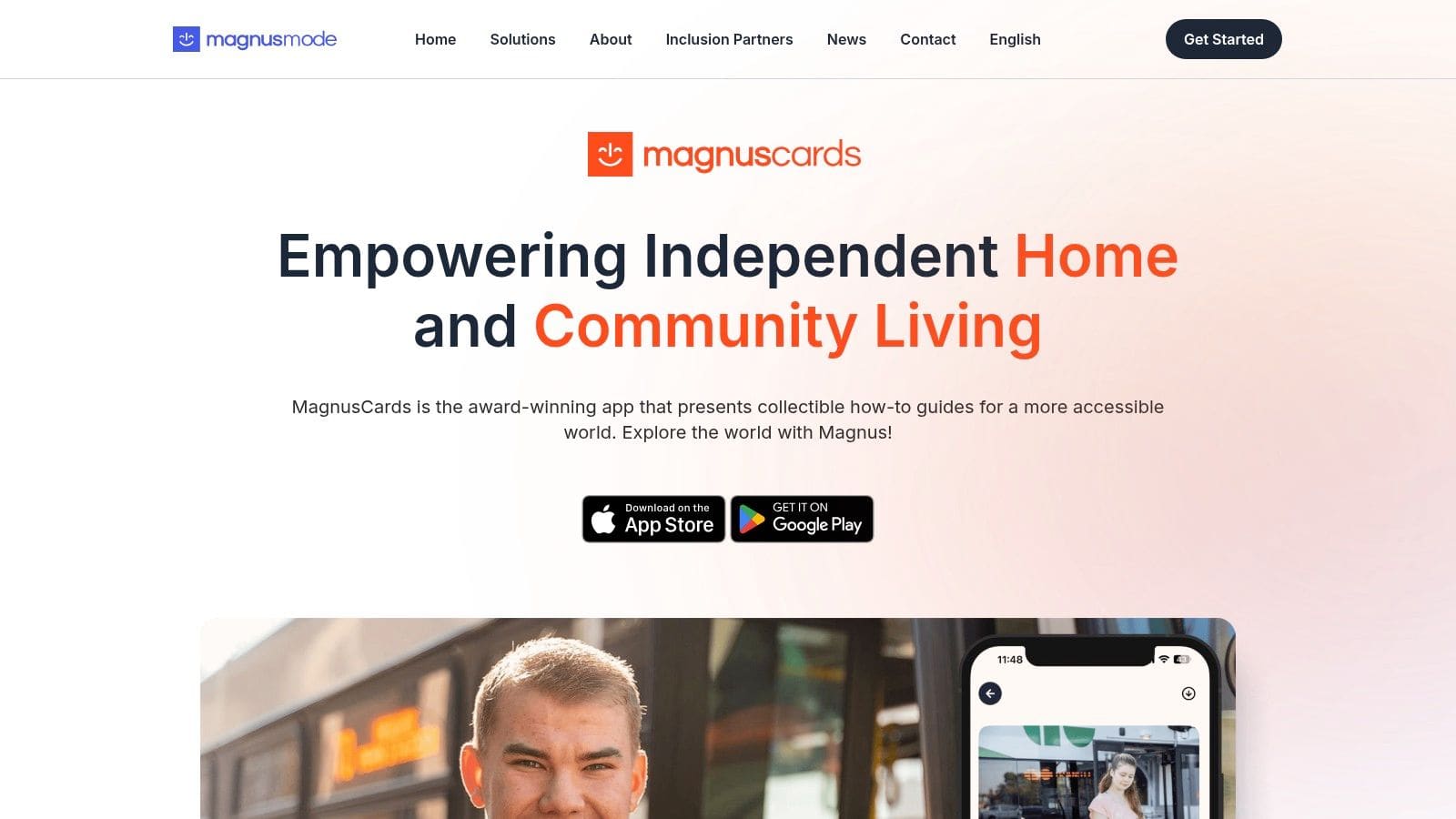
MagnusCards is a life-skills app that uses step-by-step digital Card Decks to guide users through daily tasks and community navigation. It focuses entirely on building practical independence. Each Card Deck breaks down an activity, like grocery shopping or using an ATM, into a simple, manageable sequence combining images, audio, and text to support different learning styles. This multi-modal approach helps reduce the anxiety and cognitive load associated with new or complex routines.
The app is particularly useful because many of its Card Decks are sponsored and co-created by real-world businesses, such as banks, transit authorities, and retail stores. This provides authentic, location-specific instructions for navigating public spaces, which can be a significant barrier for many autistic individuals. Users can download decks for offline access, ensuring support is available when it's needed most. Its focus on real-world skills makes it a valuable, targeted tool, especially since there are many excellent free apps available for autistic adults.
> Best For: Autistic individuals and people with intellectual disabilities who are working on building independent living skills, and for parents or support workers looking for a tool to teach specific daily routines.
Practical Tips:
* Prepare in Advance: Before visiting a new place like an airport or bank, download the relevant Card Decks and review the steps at home to build familiarity.
* Track Progress: Use the app's confidence-tracking feature to celebrate completed tasks, which helps build motivation and self-esteem.
Pricing and Access:
* Free Version: The app and all its Card Decks are completely free for end-users, as it is supported by corporate and community partners.
* Platform: Available on iOS and Android.
Explore MagnusCards' life skills library on their website. →
8. Proloquo2Go (AssistiveWare)
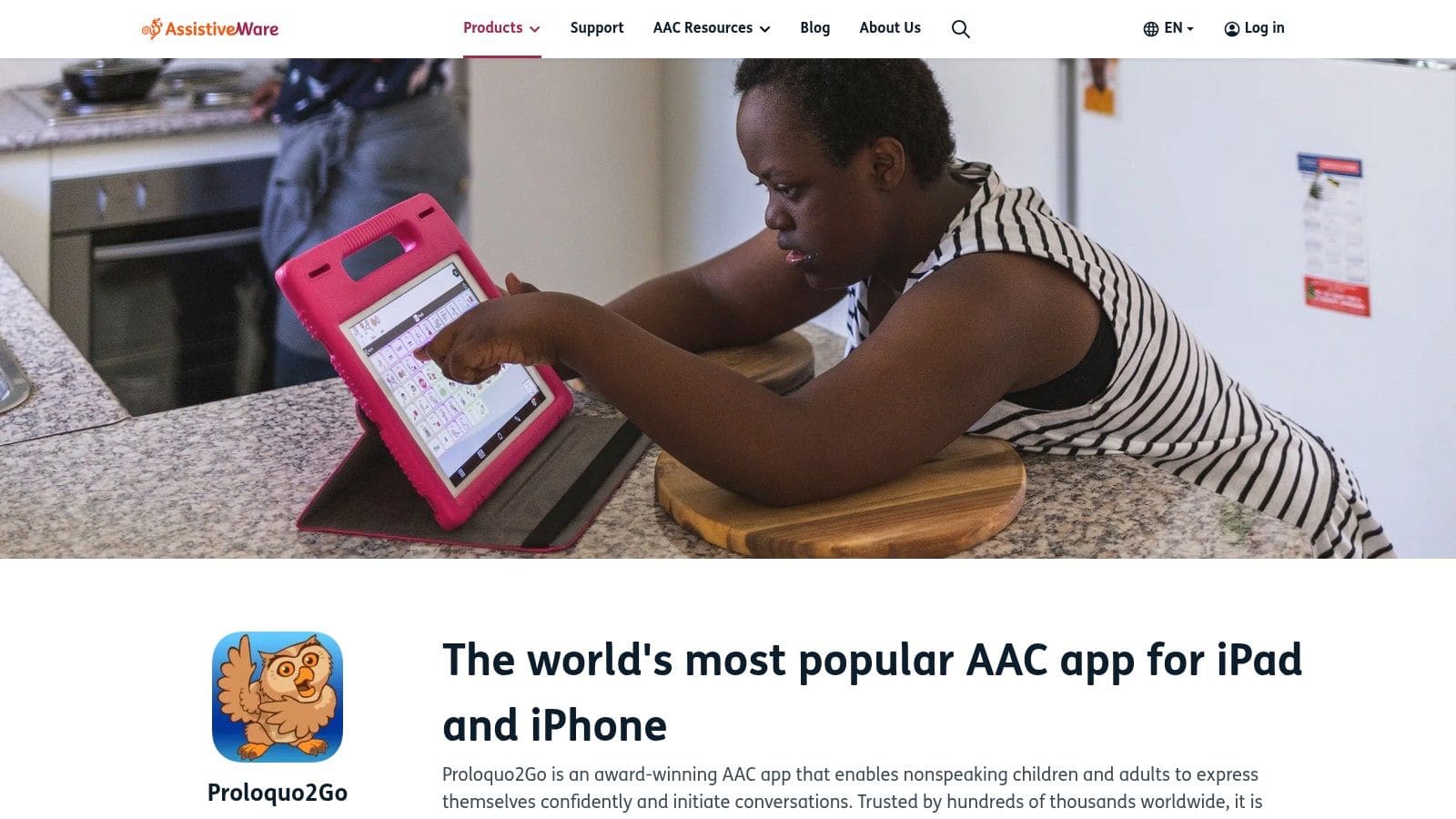
Proloquo2Go is a leading symbol-based Augmentative and Alternative Communication (AAC) app that gives a voice to non-speaking or minimally speaking individuals. It is one of the most established and trusted tools in the AAC space, offering a robust system for communication. Its core function is to allow users to build sentences by selecting picture-based symbols, which the app then speaks aloud, facilitating expression and interaction. The app is built on a research-based vocabulary model called Crescendo, which supports language development from beginner to advanced levels.
The platform features an extensive library of over 25,000 symbols and allows for deep customization of grid layouts, vocabulary, and user interface to match the specific needs of the communicator. It also supports bilingual users and integrates with iOS accessibility features, making it a powerful, though complex, tool.
> Best For: Non-speaking autistic individuals, people with apraxia or dysarthria, and families or Speech-Language Pathologists (SLPs) looking for a comprehensive AAC system.
Practical Tips:
* Start with Core Vocabulary: Focus on teaching and modeling the core words provided in the Crescendo vocabulary first, as these high-frequency words form the foundation of most sentences.
* Customize Gradually: Avoid overwhelming the user with too many symbols at once. Start with a smaller grid size and gradually introduce more vocabulary and customization as their skills develop.
Pricing and Access:
* One-Time Purchase: Proloquo2Go is sold for a significant one-time fee on the App Store, which includes all features and future updates. Volume discounts are available for schools and organizations.
* Platform: Available exclusively on iOS (iPhone, iPad, Apple Watch).
Explore Proloquo2Go on the AssistiveWare website. →
9. Avaz AAC
Avaz AAC is a robust, symbol-based augmentative and alternative communication (AAC) app designed for non-speaking or minimally verbal individuals. It is a well-regarded tool, offering a picture-based system that helps users form sentences and express their needs, thoughts, and feelings. Its strength lies in its extensive, research-based vocabulary, customizability, and strong multilingual support, making it adaptable for children and adults across different linguistic backgrounds.
The app's interface is built around a core vocabulary with the ability to add and organize custom words and folders, allowing it to grow with the user. It also includes a keyboard mode for literate users who prefer to type. One of its standout features is the analytics and progress tracking, which provides valuable insights for parents, therapists, and educators to monitor communication development over time.
> Best For: Non-speaking autistic individuals, people with apraxia or aphasia, and caregivers or therapists looking for a customizable and data-driven AAC solution.
Practical Tips:
* Use the Picture Editing Tool: Personalize the vocabulary by taking photos of family members, favorite toys, or specific places and adding them as custom symbols.
* Explore Keyboard Mode: For users who are developing literacy, introduce the keyboard mode alongside symbols to help bridge the gap between picture-based and text-based communication.
Pricing and Access:
* Free Trial: Offers a 14-day free trial to explore all features.
* Subscription/Lifetime: Available via a monthly or annual subscription on both platforms. A one-time lifetime purchase option is available, but currently only for iOS.
* Platform: Available on iOS and Android.
Learn more about Avaz AAC's communication features on their website.
10. Brain.fm
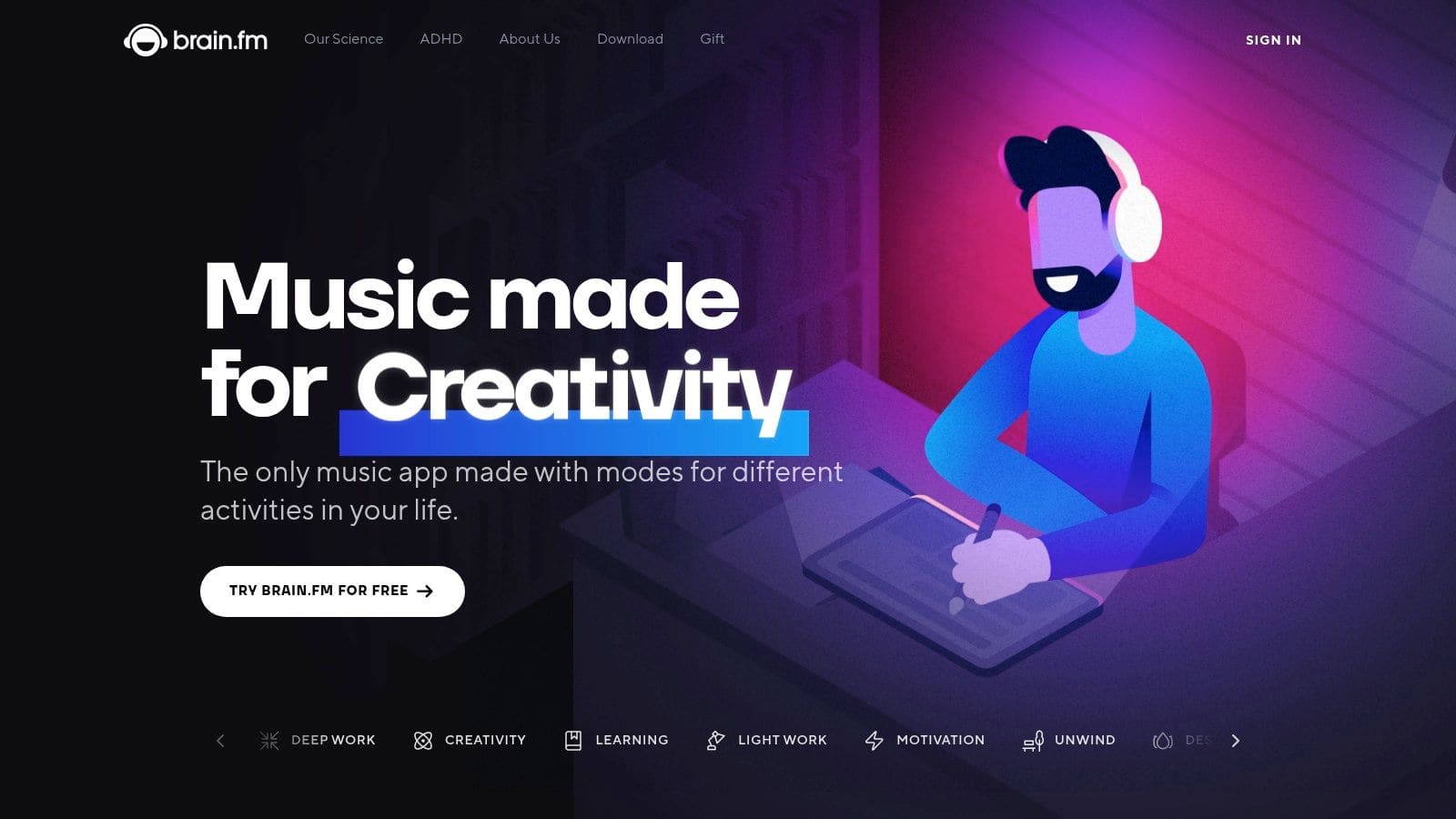
Brain.fm provides purpose-built audio designed to improve focus, relaxation, and sleep through patented sound technology. It offers an alternative to silence or distracting music by creating functional soundscapes that gently guide the brain into a desired state. Its primary advantage is providing auditory scaffolding for tasks requiring sustained attention, making it a powerful tool for managing focus-related challenges common with ADHD.
The platform features distinct modes for Focus, Sleep, and Relax, each with specialized audio modulation. A standout feature is its ADHD-specific mode, which is optimized to support attention regulation. Users can select presets like "Deep Work" or "Creative Flow" and set timers, allowing the music to run friction-free in the background. Its evidence-forward approach is a key differentiator, with the company collaborating on scientific studies to validate its effectiveness.
> Best For: ADHD individuals needing help with sustained focus, anyone sensitive to distracting background noise, and people looking for a non-pharmaceutical aid for sleep or relaxation.
Practical Tips:
* Use Quality Headphones: To get the full effect of the audio modulation, use over-ear or in-ear headphones rather than device speakers.
* Test Different Modes: Experiment with the various focus presets (Deep Work, Study, Creativity) to find which one works best for your specific task and mental state.
Pricing and Access:
* Free Trial: Offers a 14-day free trial to test all features.
* Subscription: A monthly or annual subscription is required for continued access after the trial period.
* Platform: Available on iOS, Android, web, and desktop.
Explore Brain.fm's focus music on their website. →
11. Routinery
Routinery is a powerful routine builder designed for execution, making it one of the most practical tools for neurodivergent people who struggle with task initiation and time blindness. Instead of just listing what needs to be done, Routinery guides you through each step of a routine with individual timers and audio prompts. This focus on real-time execution helps build momentum and turns abstract plans into concrete actions, which is especially helpful for establishing consistent morning, evening, or study rituals.
The app allows you to run routines on a schedule or start them ad-hoc whenever you need structure. As you complete each timed task, the app can automatically advance to the next, keeping you on track without requiring constant decision-making. Its habit-forming approach is reinforced with statistics and streak tracking, providing positive feedback that encourages consistency. While some users note occasional interface changes, its core function remains a strong asset for managing daily life.
> Best For: ADHD individuals needing help with task initiation, autistic people who benefit from predictable sequences, and anyone looking to solidify daily habits like hygiene or household chores.
Practical Tips:
* Use Audio Prompts: Enable the voice prompts to get verbal cues for when to start and stop a task. This reduces the need to constantly check your screen.
* Start Small: Build a simple, 5-minute routine first (e.g., "Take medication, drink water"). Use the streak feature as motivation before adding more complex habits.
Pricing and Access:
* Free Version: Allows for the creation of a limited number of routines.
* Routinery Premium: Unlocks unlimited routines, advanced features, and more customization options via a monthly or annual subscription.
* Platform: Available on iOS and Android.
Build better habits with Routinery on their website. →
12. Finch: Self‑Care Pet
Finch combines self-care with the responsibility of raising a virtual pet. This gamified approach provides gentle, low-stakes motivation for users to engage with their well-being. By linking daily tasks and mental health check-ins to the care and growth of a pet "finch," it reduces the pressure and avoidance often associated with self-care routines. Its design is particularly effective for ADHD and anxious individuals who find traditional goal-setting apps intimidating.
The app nudges users toward small, achievable actions like short breathing exercises, gratitude journaling, and setting minor daily goals. As you complete these activities, you earn "Rainbow Stones" to buy clothes and accessories for your pet, creating a positive feedback loop that encourages consistency. While it offers a broad toolkit for well-being, its primary strength is turning dreaded tasks into a caring, rewarding experience.
> Best For: ADHD and anxious individuals who struggle with motivation and task avoidance, anyone who benefits from gamification, and those looking for a gentle, non-demanding way to build self-care habits.
Practical Tips:
* Set One Small Goal: Start by setting just one simple, recurring goal (e.g., "drink a glass of water") to get comfortable with the app's reward cycle without feeling overwhelmed.
* Use the "First Aid" Kit: Explore the "First Aid" section in moments of high anxiety or distress for quick, guided grounding exercises.
Pricing and Access:
* Free Version: Includes core pet care, goal tracking, and some guided exercises.
* Finch Plus: A paid subscription that unlocks additional reflection prompts, exercises, and customization options. The free tier is robust, so it is best to evaluate it thoroughly first.
* Platform: Primarily available on iOS and Android.
Visit the Finch website to see how it works. →
Top 12 Neurodivergent Support Apps — Comparison
| App | Core features ✨ | UX / Quality ★ | Price / Value 💰 | Target 👥 | USP ✨ |
|---|---|---|---|---|---|
| Tonen 🏆 | Scripts Library (188), Perspective Helper, Practice Mode, Calm Kit | Low‑cognitive UI; privacy on‑device ★★★★☆ | 7‑day free trial; $4.99/mo or $49.99/yr 💰 (best value) | 👥 Neurodivergent adults needing conversation support | 🏆 On‑device privacy; ND‑made; conversation scripts + quick regulation tools ✨ |
| Tiimo | Visual timeline, AI co‑planner, focus timer, calendar sync | Visual, low‑cog design; reliable ★★★★ | Free + Pro features; some behind subscription 💰 | 👥 ADHD & autistic users needing executive support | ✨ AI subtasking; strong visual routines |
| Goblin Tools | Magic ToDo auto‑subtasks, spiciness slider, time estimates, web app | Simple, low‑friction workflow ★★★★ | Free core web app; optional mobile apps 💰 | 👥 Neurodivergent folks needing fast task breakdown | ✨ Magic ToDo auto‑decomposition; free core features |
| Structured | Day timeline, calendar import, recurring tasks, optional AI Pro | Minimal UI; great for time‑blocking ★★★★ | Generous free tier; Pro for AI/replanning 💰 | 👥 ADHD users who use time‑blocking | ✨ Clear single‑day timeline for planning |
| Inflow | CBT‑informed modules, routines, community, optional coaching | Educational + toolset; structured ★★★ | Subscription + coaching add‑ons; tier complexity 💰 | 👥 ADHD learners wanting psychoeducation | ✨ CBT‑based curriculum + optional coaching |
| Hiki | Separate friendship/dating modes, safety features, boosts | ND‑focused community; safe features ★★★ | Free + premium upsells; evaluate free tier 💰 | 👥 Neurodivergent adults (18+) seeking connections | ✨ ND‑only dating/friendship space with clear intent signals |
| MagnusCards | Visual/audio/text Card Decks, offline access, confidence tracking | Practical, step‑by‑step; sponsor variability ★★★★ | Free for users (sponsored) 💰 | 👥 Autistic users needing real‑world task guides | ✨ Multimodal how‑to decks for everyday independence |
| Proloquo2Go | 25k+ symbols, customizable layouts, bilingual support | Robust clinical AAC; trusted ★★★★★ | Higher upfront cost; iOS‑only 💰 | 👥 Non‑speakers, SLPs, schools | ✨ Industry‑standard AAC with deep customization |
| Avaz AAC | Symbol vocab, multilingual, analytics, cross‑platform | Accessible cross‑platform; educational uses ★★★★ | Multiple pricing models; iOS lifetime option 💰 | 👥 Children & adults needing AAC across devices | ✨ Multilingual AAC with progress analytics |
| Brain.fm | Focus/sleep/relaxation audio, ADHD mode, cross‑device | Easy background use; evidence‑forward ★★★★ | 14‑day trial then subscription 💰 | 👥 Users wanting auditory scaffolding for focus/sleep | ✨ Patented audio modulation for sustained focus/sleep |
| Routinery | Per‑task timers, audio prompts, auto‑advance, stats | Execution‑focused; helpful for routines ★★★★ | Free basic; premium for unlimited routines 💰 | 👥 People with time blindness or initiation issues | ✨ Real‑time execution with per‑task timers |
| Finch: Self‑Care Pet | Gamified pet, daily check‑ins, wellbeing activities | Friendly, low‑pressure design ★★★ | Free + Plus tier; dynamic pricing 💰 | 👥 ADHD & anxious users who prefer gentle nudges | ✨ Gamified motivation to complete small self‑care steps |
How to Choose the Right App for You (and Why Tonen Stands Out)
Finding the right support from the many apps for neurodivergent people can feel like searching for a needle in a haystack, but the process becomes much simpler when you start with a clear understanding of your primary needs. The best app for you is the one that directly addresses the most significant point of friction in your daily life. Is it initiating tasks, managing time blindness, or learning a new life skill? Or is it the immense mental energy spent on preparing for, participating in, and recovering from social interactions?
This guide has showcased a variety of tools, from visual schedulers like Tiimo and Structured to task-simplifiers like Goblin Tools and life-skill builders like MagnusCards. Each serves a distinct purpose. For those focused on executive function and daily organization, these apps provide essential structure. However, if the core challenge lies in communication and the anxiety surrounding it, a specialized tool is often more effective than a general-purpose one. This is precisely where Tonen distinguishes itself from the rest.
A Decision-Making Framework
To select your ideal digital companion, consider these key questions. Answering them honestly will point you toward the tool best suited to your personal goals and challenges.
1. What is my single biggest daily challenge?
* Executive Function & Productivity: If you struggle with starting tasks, remembering appointments, or breaking down projects, look toward apps like Routinery, Structured, or Goblin Tools.
* Emotional Regulation & Self-Care: If your goal is to build self-care habits and manage mood, Finch: Self-Care Pet offers a gamified, gentle approach.
* Sensory & Focus Needs: For managing sensory input or achieving deep focus for work or study, a dedicated auditory tool like Brain.fm can be a game-changer.
* Social Communication: If conversations, expressing needs, or understanding others' perspectives causes significant stress and burnout, your focus should be on a communication-specific app.
2. What kind of support do I actually need?
* Do you need a planner to see your day laid out visually? (Tiimo, Structured)
* Do you need a coach to help you break down overwhelming tasks? (Goblin Tools, Inflow)
* Do you need a library of pre-made guides for real-world situations? (MagnusCards, Tonen)
* Do you need an AAC device for non-speaking or unreliable speech? (Proloquo2Go, Avaz AAC)
3. What are my non-negotiables?
* Privacy: Is it critical that your data stays on your device and is never used for training models? This is a core tenet of Tonen, but not all apps offer this level of security.
* Cognitive Load: Do you get easily overwhelmed by complex interfaces, too many notifications, or bright colors? An app with a low-cognitive-load design, like Tonen, is essential.
* Cost: Are you looking for a free tool, a one-time purchase, or are you comfortable with a subscription model? Be sure to check the pricing structure of any app you consider.
Why Tonen Often Becomes the Essential Choice
While many apps for neurodivergent people help you organize the what and when of your day, Tonen focuses on the how and why of human interaction. It was built by neurodivergent makers who intimately understand that social communication isn't just a soft skill; it's a major source of cognitive and emotional drain that can impact every other area of life.
> Tonen is not another productivity tool. It's a communication support system designed to lower the mental cost of social connection, giving you back energy you can use for other things.
Its unique feature set directly targets the pain points that other apps don't address:
* The Scripts Library: Provides instant access to clear, kind, and effective language for difficult conversations, setting boundaries, or making requests. It removes the stress of "finding the right words" on the spot.
* The Perspective Helper: Helps you decode confusing interactions and reframe situations, reducing rumination and anxiety after a social event.
* Practice Mode & Calm Kit: Offer safe spaces to prepare for future conversations and regulate your nervous system in moments of overwhelm.
For autistic adults, individuals with social anxiety, and anyone who finds themselves mentally exhausted by social demands, Tonen provides a focused, private, and deeply practical solution. It complements executive function apps by addressing the foundational stressor that can make it difficult to focus on tasks in the first place. It empowers you to navigate the human connections within your day, not just the tasks on your to-do list.
Ready to reduce the mental load of communication and build confidence in your interactions? Explore the features that make Tonen a standout among apps for neurodivergent people. Download Tonen to explore its communication tools today to access a library of practical scripts and tools designed to make every conversation less stressful.
Frequently asked questions
This guide covers best apps for neurodivergent people with practical, neurodivergent-friendly strategies—clear steps, scripts where useful, and ways to reduce anxiety or overload rather than vague "be confident" advice.