Knowing how to handle difficult conversations successfully isn't about winning an argument—it's about laying a solid foundation of preparation long before you say a single word. This guide gets straight into the practical steps. It's all about shifting your mindset from confrontation to genuine curiosity and getting crystal clear on what you actually want to achieve. Getting this right gives you the clarity and confidence you need to open the dialogue constructively.
A Practical Framework for Difficult Conversations
The most important thing to realise is that a successful outcome is often decided before the conversation even starts. It's about building a calm, strategic base for yourself instead of just bracing for a fight.
The first move? Adopt a mindset of curiosity. It's a simple but powerful mental shift. Instead of seeing this as a battle you need to win, try viewing it as a puzzle you need to solve together. This one change can lower defensiveness on both sides and open the door to real collaboration.
Clarify Your Objective and Set Realistic Goals
Before you jump in, stop and ask yourself one critical question: "What is my ideal outcome here?" And be specific. Vague goals like, "I just want them to understand me," are almost impossible to measure and usually end in frustration.
Instead, aim for something concrete and actionable. For instance, rather than "I want my housemate to be cleaner," a much stronger objective is, "I want us to agree on a shared cleaning rota for the kitchen." This gives the conversation a clear, tangible purpose.
It's also vital to know the difference between your ideal outcome and your realistic one. You might secretly hope for a heartfelt apology and a complete personality transplant, but a more realistic goal might be to simply state how you feel and set a new boundary.
Setting achievable goals helps you:
* Stay focused on what really matters when things get heated.
* Avoid disappointment if the result isn't picture-perfect.
* Recognise progress, no matter how small it seems.
Anticipate the Other Person's Perspective
One of the biggest traps we fall into is walking into a tough conversation armed only with our own point of view. If you want to build a bridge instead of a wall, you have to make a genuine effort to see where the other person is coming from.
This doesn't mean you have to agree with them. Not at all. It just means acknowledging that their feelings, motivations, and perspective are valid to them. What are their interests in this situation? For example, a manager who keeps denying your time-off requests might be under immense pressure from their boss about team productivity. Knowing that context helps you frame your request in a way that's more likely to be heard. Building these foundational skills is a massive part of learning how to improve your conversation skills in any setting.
> A core idea in conflict resolution is to separate the person from the problem. Your goal isn't to prove you're right and they're wrong; it's to work together to solve a shared issue.
Use a Preparation Canvas
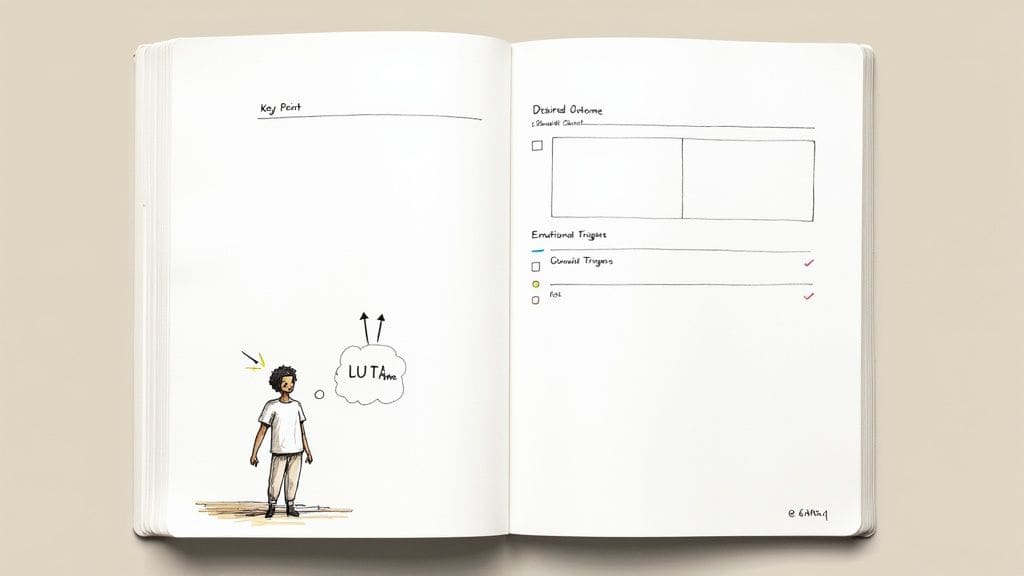
Getting your thoughts down on paper can be a game-changer. It takes that messy jumble of anxiety in your head and turns it into a clear, actionable plan. This simple practice can transform a dreaded event into a manageable process. For managers looking for more specific guidance, there are fantastic resources on managing tough employee conversations that dive deeper into the workplace context.
To help you get organised, I've put together a simple canvas. Use it to map out your thoughts before you talk.
Pre-Conversation Preparation Canvas
This canvas is a simple, structured way to organise your thoughts and goals before kicking off a difficult conversation. Just fill in the boxes to bring clarity to what you want to say and what you can expect.
| Preparation Step | Your Notes & Desired Outcome | Potential Challenges & Triggers |
|---|---|---|
| Main Point I Need to Make | Example: "I feel overwhelmed by the current project workload and need the deadline extended." | Their potential response: "Everyone is busy, we just need to push through." |
| Desired Outcome | Example: "To get a one-week extension on the project deadline or to offload one major task." | My trigger: Feeling dismissed or like my workload isn't being taken seriously. |
| My Opening Statement | Example: "Do you have a few minutes to talk about the Project X timeline? I have some concerns about meeting the current deadline." | Their trigger: Feeling criticised about their project management skills. |
Spending even just 10 or 15 minutes with a tool like this can make a world of difference. It helps you walk in feeling prepared, not panicked.
Choosing Your Words and Setting the Right Tone

The words you choose can build a bridge or a wall. When you're figuring out how to handle difficult conversations, your language and tone are just as crucial as the core message itself. The right phrasing can turn a potential confrontation into a collaborative problem-solving session, making the other person feel heard rather than attacked.
It all starts with framing your perspective in a non-accusatory way. The goal is to express your experience without assigning blame, which immediately lowers the other person's defensiveness.
Use "I Feel" Statements to Express Your Viewpoint
One of the most powerful tools in your communication kit is the "I feel" statement. This simple shift frames the issue from your perspective, making it about your emotional reality rather than a factual accusation about the other person.
Think about the difference between these two approaches:
* Accusatory: "You always interrupt me in meetings."
* "I Feel" Statement: "I feel frustrated when I'm interrupted in meetings because it makes it hard for me to finish my thought."
The first one is a direct challenge. It practically invites an argument ("No, I don't!"). The second, however, is irrefutable—it's how you feel. It opens a door for them to understand the impact of their actions without feeling like they need to defend themselves. Learning these subtle shifts is a key part of discovering how to start conversations effectively, especially when the topic is a sensitive one.
> Shifting from "You did..." to "I feel..." moves the conversation away from blame and towards mutual understanding. Your feelings are your own truth, and sharing them this way invites empathy rather than argument.
The Power of Tone and Non-Verbal Cues
Words only tell part of the story. Research consistently shows that your tone of voice, body language, and facial expressions carry immense weight—often more than the words themselves. A calm, open demeanour signals that you're here to collaborate, not to fight.
Even if you're feeling anxious or defensive on the inside, consciously managing your non-verbal cues is a critical skill for anyone learning how to handle difficult conversations.
Here are a few things to focus on:
* Keep Your Voice Level: Try to avoid raising your voice or speaking too quickly. This can signal aggression or anxiety. A measured pace and moderate volume convey a sense of calm.
* Maintain Open Body Language: Crossing your arms can come across as defensive or closed off. Try to keep your hands visible and your posture relaxed to signal openness.
* Use Neutral Facial Expressions: You don't need to force a smile, but avoiding a scowl or rolling your eyes shows you're taking the conversation seriously and listening.
* Make Gentle Eye Contact: Consistent but gentle eye contact shows you're engaged. Staring intensely can feel intimidating, so aim for a softer, more natural gaze.
These signals communicate respect and a willingness to listen, which helps create a safer space for the other person to share their perspective honestly. When emotions are running high, these small adjustments can stop a discussion from escalating into a full-blown conflict.
Adaptable Script Starters for a Collaborative Opening
Getting the conversation started is often the hardest part. Those first few sentences really set the stage. A good opening should state the topic clearly while also expressing a desire for a positive outcome.
Below are a few script starters you can adapt for different situations. Notice how they all focus on shared goals and express a positive intention right from the start.
Work Scenario: Addressing Underperformance
* Instead of: "Your performance has been slipping lately."
* Try: "I'd like to chat about your recent projects and see how we can best support you to meet your goals. Is now a good time?"
Family Scenario: Discussing Household Chores
* Instead of: "You never help out around the house."
* Try: "I've been feeling a bit overwhelmed with the chores lately. Could we find 15 minutes to talk about how we can share the load more evenly?"
Dreading a difficult conversation? tonen can help.
tonen gives you 188+ conversation scripts, tone guidance and calming tools — designed for autistic adults, ADHD and social anxiety. Try it free for 7 days.
Download on the App StoreiOS only. Android coming soon.
Social Scenario: Setting a Personal Boundary
* Instead of: "Stop borrowing my things without asking."
* Try: "I value our friendship, and I want to be upfront about something to keep it strong. I feel uncomfortable when my things are borrowed without me knowing. Could we agree to check in first?"
Using collaborative openers like these is a vital part of how to handle difficult conversations. They immediately frame the discussion as a team effort, making the other person a partner in finding a solution rather than an opponent to be defeated.
Staying Grounded When Emotions Run High
Even with the best preparation in the world, difficult conversations can get emotionally charged in a split second. The real skill in learning how to handle difficult conversations is staying grounded when your anxiety spikes or your frustration starts to simmer. It's all about managing your own response in the moment, so your emotions don't derail an otherwise productive chat.
This isn't about ignoring or suppressing what you're feeling. Far from it. It's about acknowledging those feelings without letting them grab the steering wheel. Having a few quiet, practical techniques up your sleeve can be the difference between a calm discussion and an explosive argument.
Recognise Your Emotional Triggers
The first step in managing your emotional state is actually knowing what sets you off in the first place. Emotional triggers are those specific words, tones, or even situations that spark an immediate, intense reaction. For one person, it might be the phrase "you always..." For someone else, it could be a dismissive sigh or the feeling of being constantly interrupted.
Think back to past conversations that went south. What was the exact moment things started to feel tense or unmanageable? Pinpointing your personal triggers helps you anticipate them. When you know a certain topic or phrase is likely to make you feel defensive or anxious, you can prepare a calm response ahead of time instead of just reacting on impulse.
This self-awareness is your first line of defence. When you feel that familiar knot in your stomach or the heat rising in your chest, you can recognise it for what it is—a trigger—and consciously choose a different path.
Master Discreet Grounding Techniques
When you feel overwhelmed, your body's fight-or-flight response kicks in. Grounding techniques are small, physical actions that pull your focus back to the present moment and help calm your nervous system right down. The best part? You can do them without anyone else having a clue.
Here are a few simple but incredibly powerful methods to try:
* Focus on Your Feet: Press your feet firmly into the floor. Really notice the sensation of the ground beneath you—the texture of your socks, the solid pressure in your heels. This simple physical anchor can pull you right out of an emotional spiral.
* The 5-4-3-2-1 Method: Silently, in your own head, identify five things you can see, four things you can feel (like the chair beneath you or the fabric of your sleeve), three things you can hear, two things you can smell, and one thing you can taste. This sensory exercise forces your brain to concentrate on the here-and-now, not the emotional storm inside.
* Mindful Breathing: Take a slow, deep breath in through your nose for a count of four, hold it for four, and then exhale slowly through your mouth for a count of six. Focusing on the count and the physical sensation of your breath is a fantastic way to regulate your heart rate. For more ideas, explore these practical grounding techniques you can use for anxiety anywhere.
The Power of the Strategic Pause
Sometimes the most powerful thing you can do in a tense conversation is absolutely nothing. A strategic pause—a moment of intentional silence—can be incredibly effective. It gives both you and the other person a moment to breathe and actually process what's just been said.
If you feel yourself about to blurt out something you'll regret, just stop. Take a slow sip of water. This creates a natural break in the conversation, allowing the emotional intensity to dial down a notch.
> A pause isn't a sign of weakness; it's a tool of strength. It gives you space to choose a thoughtful response rather than an automatic reaction, keeping you in control of the conversation's direction.
If a short pause isn't enough, don't be afraid to ask for a longer break. Saying something like, "This is a really important conversation, and I want to make sure I'm thinking clearly. Could we take five minutes before we continue?" shows you're committed to a good outcome, not just to winning an argument.
This is especially vital at work, where unresolved conflict can have a serious impact. In the UK, 57% of employees involved in workplace disputes report stress or anxiety, and 49% experience a drop in motivation. It just goes to show why learning how to handle difficult conversations constructively is so essential for everyone's wellbeing and performance.
How to Rehearse for a Difficult Conversation
Confidence in knowing how to handle difficult conversations often comes down to one thing: practice.
Just like rehearsing for a presentation, practicing what you want to say builds the muscle memory for a calm and effective approach. This isn't about memorising a rigid script. It's about getting comfortable with your key points, thinking through possible reactions, and lowering your own anxiety before you even start the chat. Moving beyond just thinking about the conversation is a massive step toward a better outcome.
Write Down and Speak Your Key Points
The first move in any rehearsal is getting the thoughts out of your head and into the real world. Start by jotting down the one or two most important messages you need to get across. Don't write a full speech—just bullet points will do.
Once you have them on paper, practice saying them out loud. This is more powerful than it sounds. Hearing the words in your own voice helps you spot if your tone is coming off as accusatory, if the phrasing feels clunky, or if the message just isn't clear.
For example, you might write down: "Talk to my flatmate about them not paying their share of the bills on time."
Saying it aloud might come out as: "I need to talk to you about the bills." A bit blunt, right? After a few tries, you might land on something warmer, like: "Hey, can we find a moment to chat about the household bills? I want to make sure we're on the same page."
Role-Play With a Trusted Friend
Role-playing can feel a bit awkward at first, I get it. But it's one of the most effective ways to prepare. Find a friend you trust and ask them to play the part of the person you need to talk to. This is brilliant for preparing you for the unpredictability of a real conversation.
A simple framework for your practice session could look like this:
* Try Out Your Opener: How does your opening line sound? Does it feel collaborative and non-confrontational?
* Handle Some Pushback: Ask your friend to give you some potential pushback. How will you respond when they say, "I've just been really busy," or, "It's not that big of a deal"?
* Steer Back to Your Goal: If the conversation goes off-piste, practice gently redirecting it back to your objective.
This whole process helps you refine your language in a low-stakes environment. It builds your confidence so you're far less likely to be thrown off balance during the actual discussion.
> Rehearsal isn't about creating a perfect, unchangeable script. It's about building your capacity to respond thoughtfully and calmly, no matter which direction the conversation takes.
Focus on Your Primary Objective
It's so easy to get lost in hypothetical arguments when you're rehearsing. The most important part of knowing how to handle difficult conversations is staying anchored to your primary goal. What do you really need to achieve?
Before each practice run, remind yourself of the outcome you want. Is it to get a deadline extended? To set a clear boundary with a family member? To sort out a recurring issue with a colleague?
This focus is your compass. If your role-playing gets derailed, you can practice saying things like, "I understand that, but what's most important for us to solve right now is..." This skill is invaluable for keeping the actual conversation productive.
Opening the dialogue is often the hardest part; for more support, our guide offers excellent conversation starters for shy people that can be adapted for any situation. By rehearsing, you make your objective second nature, which is a key part of how to handle difficult conversations successfully.
Moving Forward After the Conversation
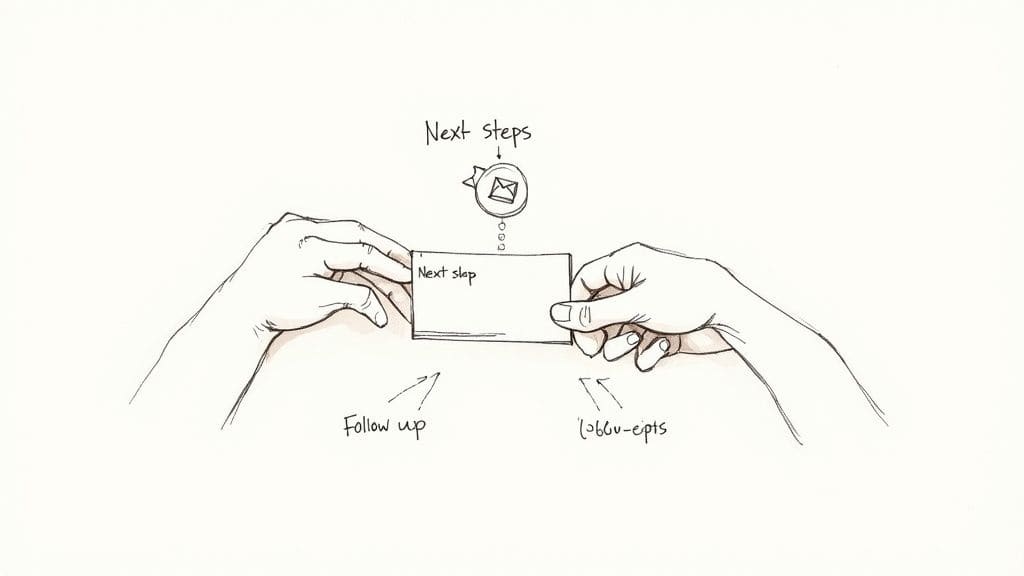
The conversation doesn't really end when you both walk away. What happens next is often what makes the difference between real change and a chat that just fades into misunderstanding. A good follow-up is what cements any agreements and helps strengthen the relationship for whatever comes next.
This final phase is a massive part of knowing how to handle difficult conversations. It's how you turn a one-time chat into a lasting solution by making sure everything is clear, outcomes are documented, and you've turned a tough talk into a learning opportunity.
Conclude and Summarise Key Takeaways
Just before you wrap things up, take a moment to summarise what you've both discussed and agreed on. This one simple action can head off future disagreements that pop up when people remember the same conversation differently.
You could say something like, "So, just to make sure we're on the same page, we've agreed that..." This quick verbal recap helps ensure you both leave with a shared, crystal-clear understanding of the next steps. It confirms you were both heard and that the outcomes are solid.
The Follow-Up Email
Never underestimate the power of a brief, friendly follow-up email. It creates a written record of what you agreed on, reinforces a positive and collaborative tone, and gives you both a clear reference point. It absolutely doesn't need to be long or formal.
Here's a simple structure you can adapt:
* Positive Opener: Start by thanking them for their time and willingness to talk. For instance, "Thanks again for chatting with me earlier. I really appreciate you taking the time to talk it through."
* Summary of Agreements: Briefly list the key takeaways or next steps you decided on. Bullet points are great for keeping it scannable.
* Reinforce Collaboration: End on a positive, forward-looking note. Something like, "I'm feeling good about our plan and looking forward to moving ahead with this."
> Following up in writing isn't about creating evidence for a future fight; it's about building a foundation of clarity and shared understanding to prevent one from ever happening.
It's worth noting that addressing conflict early has huge benefits. In the UK, the cost of sorting out a conflict with early intervention is only around £188.52 per incident. Compare that to the estimated £28.5 billion it costs UK businesses every year when conflicts blow up and lead to resignations or dismissals.
The Power of Self-Reflection
Once the immediate follow-up is sorted, the final piece of the puzzle is to turn inward. Taking some time for self-reflection is how you actually build your skills and confidence for the future. You don't have to dwell on it for hours—just a few minutes of thought can make a world of difference.
Try asking yourself a few gentle questions:
* What went well during the conversation?
* What could I try differently next time?
* Did I stay focused on my main goal?
* How did I manage my emotions when I felt triggered?
This isn't about being harsh on yourself. It's about spotting patterns and finding chances to grow. If you notice you're always feeling drained or frazzled after these chats, it might be helpful to explore what to do when feeling overwhelmed.
For those who find recording conversations useful for review, learning about how to transcribe audio to text can be a fantastic tool for getting into the details without relying on memory alone. By reflecting, you start to turn every difficult conversation from a stressful event into a valuable lesson, making you more competent for whatever comes next.
Common Questions About Difficult Conversations
Even with the best preparation, we all know how easily a tricky conversation can go sideways. What do you do in the moment? It's one thing to have a framework, but it's another to know exactly how to handle difficult conversations when you're facing a specific, thorny situation.
Let's get into some of the most common sticking points—those moments where a discussion can get derailed in a heartbeat. Think of this as your quick-reference guide for navigating the toughest parts with a bit more confidence.
We'll tackle what to do when things get heated, how to start a chat when you're the one in the wrong, and what to do when the whole thing seems to be going nowhere.
What Should I Do When the Other Person Gets Angry or Defensive?
When someone's emotions suddenly spike, it's natural to want to either push back just as hard or completely shut down. Neither helps. The best move is to pause and shift your focus from what they're saying to the feeling behind their words.
First, take a breath. Do a quick grounding exercise, like pressing your feet firmly into the floor. This tiny action can stop you from getting swept up in their emotional storm.
Next, validate their feeling without necessarily agreeing with their point. A simple, curious statement can work wonders here:
* "It sounds like you're feeling really frustrated by this."
* "I can see this is upsetting for you, and I want to understand why."
* "It's clear you feel strongly about this. Can you tell me more about your perspective?"
This does two incredibly important things. It shows you're actually listening and that you care about their feelings, which almost always lowers their defences. It also gives them a chance to explain themselves, often revealing the real fear or need driving their anger. Once the emotion is acknowledged, you can calmly get back to solving the actual problem.
How Do I Start a Conversation When I Am at Fault?
Owning up to a mistake is tough. It's one of the hardest conversations to start, but it's also one of the most powerful things you can do to build trust. The trick is to be direct, sincere, and take full responsibility without a hint of an excuse. Trying to soften the blow with justifications just makes the apology feel hollow.
Get straight to the point. Don't dance around it.
Example Scenario At Work
* A weak opening sounds like this: "So, about that report... there were a few issues with the data, and the system was acting up..."
* A strong opening sounds like this: "I need to apologise. I made a mistake on the quarterly report, and I take full responsibility for the error. I've already drafted a plan to correct it."
This direct approach shows you respect the other person and have integrity. A truly solid apology has three parts:
1. Acknowledge the Mistake: State clearly what you did wrong.
2. Express Remorse: Show you get the impact of your actions. ("I realise this created extra work for you, and I'm truly sorry for that.")
3. Offer a Solution: Explain what you're doing to fix it and make sure it doesn't happen again.
Starting this way immediately flips the script from blame to resolution, making the whole discussion far more productive.
> Taking ownership when you're at fault isn't a sign of weakness; it's a demonstration of strength and accountability that builds long-term trust and respect.
What If the Conversation Hits a Dead End?
Sometimes, no matter how hard you try, the conversation just stalls. You end up talking in circles, or nobody is willing to budge. Pushing harder is almost never the answer. A crucial part of learning how to handle difficult conversations is knowing when it's time to switch tactics.
One of the best ways to break a stalemate is to shift from making statements to asking "What if...?" questions. This simple change in language can move the conversation from a tense standoff to a collaborative brainstorm.
Imagine you're stuck on a budget issue. Instead of repeating, "We don't have enough money for that," try asking:
* "What if we looked at the timeline differently? Could we find savings there?"
* "What if we adjust the scope of the project to fit the budget we have?"
* "What if we explore a completely different approach to this problem?"
These kinds of questions invite creativity and make it feel like you're solving the problem together. They signal that you're open to new ideas, not just shutting things down.
If that doesn't get you anywhere, it's completely fine to suggest pausing the conversation. You could say something like, "It feels like we're not making progress right now. What if we take a break and come back to this tomorrow with fresh eyes?" This isn't giving up; it's a strategic move to protect the relationship and give a tough problem the space it needs to be solved well.
For neurodivergent people who want extra support preparing for these moments, tonen is an app designed to reduce the stress of social communication. With a library of ready-to-use scripts, a Perspective Helper to reframe situations, and a Calm Kit for when you feel overwhelmed, tonen helps you find the right words and stay grounded. Build your confidence and handle any conversation with more ease by exploring the app at https://usetonen.com.
Frequently asked questions
This guide covers how to handle difficult conversations with practical, neurodivergent-friendly strategies—clear steps, scripts where useful, and ways to reduce anxiety or overload rather than vague "be confident" advice.