Learning how to stop feeling overwhelmed starts with creating just enough space to breathe, not solving everything at once. An incredibly powerful tool for this is the 5-4-3-2-1 sensory method. It's a simple trick to pull your focus away from the chaotic storm in your mind and anchor you back in the present moment. It's an essential first step when you feel like you're drowning in pressure and need immediate relief.
Find Calm in Moments of Intense Overwhelm
When panic kicks in, your nervous system lurches into overdrive. Right now, the goal isn't to wrestle with the source of the stress. Think of it as essential first-aid for your mind. You just need to create enough clarity to figure out the very next step.
Grounding techniques work so well because they yank you out of your spiralling thoughts and plant you firmly back in the physical world. They force your brain to concentrate on something tangible instead of abstract worries. When your mind is cluttered, finding effective ways to clear your head and find calm can be a game-changing first step.
Try the 5-4-3-2-1 Sensory Method
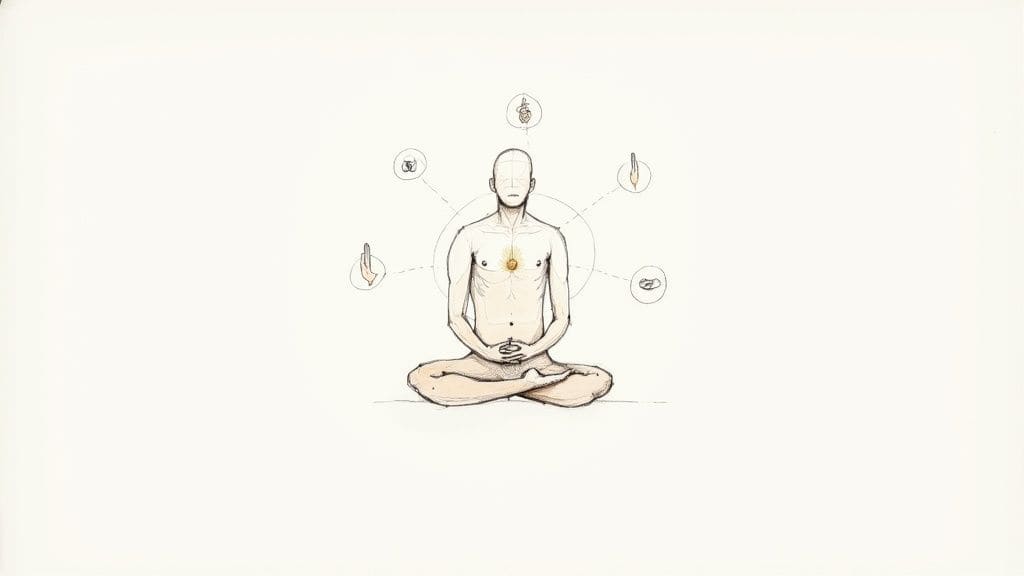
This technique is brilliantly simple and you can do it anywhere, anytime, without anyone knowing. It works by systematically engaging all five of your senses, which is a fantastic way to interrupt the panic cycle.
Here's how you do it:
* See: Look around and name five things you can see. It could be a pen, a crack in the ceiling, or a plant. Notice their colour and shape.
* Touch: Acknowledge four things you can physically feel. Maybe it's the texture of your jeans, your feet flat on the floor, or the smooth surface of your phone.
* Hear: Listen carefully for three distinct sounds. It could be the hum of your computer, birds chirping outside, or even your own breathing.
* Smell: Tune into your sense of smell and identify two different scents in your environment. Coffee? Hand soap?
* Taste: Finally, focus on one thing you can taste. This can be subtle—the lingering taste of your last drink or even just the natural taste inside your mouth.
This quick sensory scan is a practical, in-the-moment way to manage that swamped feeling. If you find this helpful, our detailed guide has even more grounding techniques for anxiety you can try in different situations.
Use Controlled Breathing to Settle Your Nerves
Another immediate strategy is to get a handle on your breathing. When we're stressed, our breathing often becomes shallow and fast. By intentionally slowing it down, you send a direct signal to your brain that the danger has passed and it's safe to calm down.
> A simple yet potent method for this is box breathing. Inhale for a count of four, hold for four, exhale for four, and then hold again for four. Repeating this cycle just a few times can genuinely lower your heart rate and settle your entire nervous system.
It's important to remember that these feelings are incredibly common. In fact, in any given week in England, 6% of people are diagnosed with Generalised Anxiety Disorder, which often goes hand-in-hand with overwhelm. This really highlights why learning how to manage these intense moments is such a vital life skill.
Untangle the Source of Your Stress
Now that you've got a moment of calm, we can get to the root of things. The next step in figuring out how to stop feeling overwhelmed is understanding what's actually fuelling the pressure.
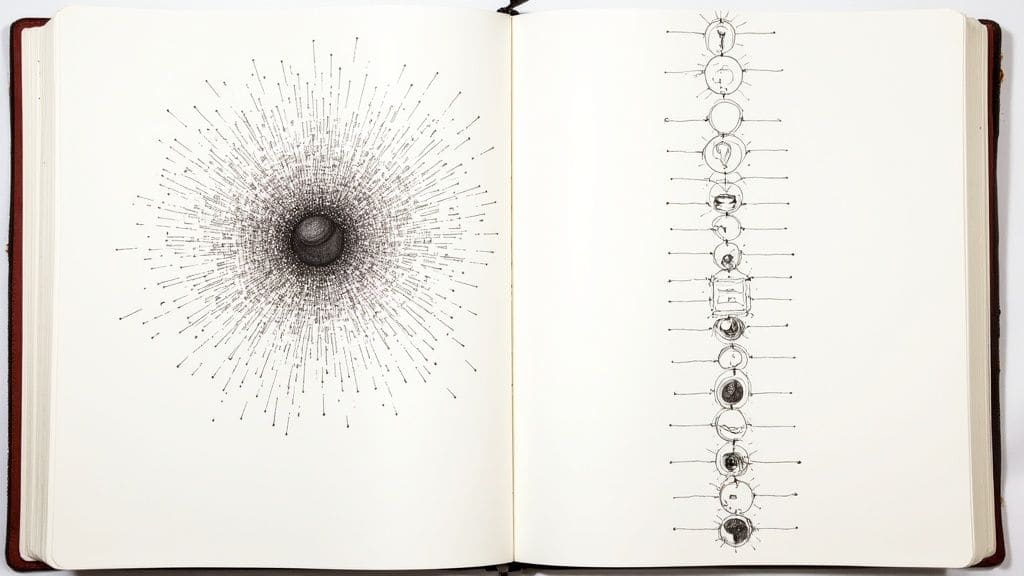
That swamped feeling rarely comes from a single source. It's more like a chaotic knot of tasks, worries, and responsibilities all swirling around in your head. The mission here is to get that knot out of your mind and onto a page where you can actually see it.
This starts with a simple but surprisingly powerful technique: the brain dump. Grab a notebook, open a blank document, or just pull up the notes app on your phone.
For the next ten minutes, write down every single thing taking up your mental bandwidth.
* Those unfinished work projects
* Household chores that keep getting pushed back
* Appointments you still need to schedule
* A conversation you're dreading
* Vague anxieties about what's next
Don't try to filter, judge, or organise anything just yet. The only rule is to get it all out. Just doing this can bring an incredible sense of relief because you're no longer trying to juggle dozens of different thoughts at once.
Break Down the Big, Scary Tasks
With your brain dump complete, you'll probably notice a few items on the list that feel heavier than the rest. These are the big, undefined monsters that loom over you, like 'sort out finances' or 'plan family holiday'. It's their vagueness that makes them so intimidating.
The answer is to break them down. We're going to turn that huge, stressful mountain into a series of small, manageable hills you can tackle one by one.
Let's take that 'plan family holiday' item as an example:
* Research destinations for just 15 minutes.
* Check everyone's passports for expiry dates.
* Email three hotels for quotes.
* Look at flight prices for the first week of August.
All of a sudden, a shapeless source of anxiety becomes a concrete checklist of actions. This is an absolute game-changer for anyone dealing with executive dysfunction, as it carves out a clear, step-by-step path forward. The mental patterns that feed overwhelm are often tackled in therapeutic approaches; you can learn more about the link between thoughts and feelings in guides to Cognitive Behavioural Therapy for social anxiety.
Need help when everything feels like too much? tonen can help.
tonen gives you 188+ conversation scripts, tone guidance and calming tools — designed for autistic adults, ADHD and social anxiety. Try it free for 7 days.
Download on the App StoreiOS only. Android coming soon.
See What You're *Actually* Dealing With
This isn't about adding more to your plate. It's about getting clear. The feeling of being overwhelmed often stems from how we think about our to-do list, not the sheer volume of tasks itself.
> By getting your thoughts out of your head and breaking down the big items, you shift your perspective. You go from a vague sense of dread ("I have too much to do") to a practical awareness ("This is what needs to be done, and here are the first steps").
Seeing your responsibilities laid out as a series of small, concrete actions makes it so much easier to figure out how to stop feeling overwhelmed and start taking back control. It restores your sense of agency and proves that, one small step at a time, you have what it takes to handle what's in front of you.
Prioritise Ruthlessly and Set Clear Boundaries
Just because something lands on your to-do list doesn't mean it deserves your attention right now. Learning how to stop feeling overwhelmed is really about getting organised with intention. It's about cutting through the noise to find the real emergencies.
So many of us get caught in a 'first-in, first-out' trap, tackling tasks as they arrive. This kind of reactive work is a fast track to burnout. A much more sustainable approach is to get really clear on what's genuinely urgent versus what's just important.
Using The Eisenhower Matrix
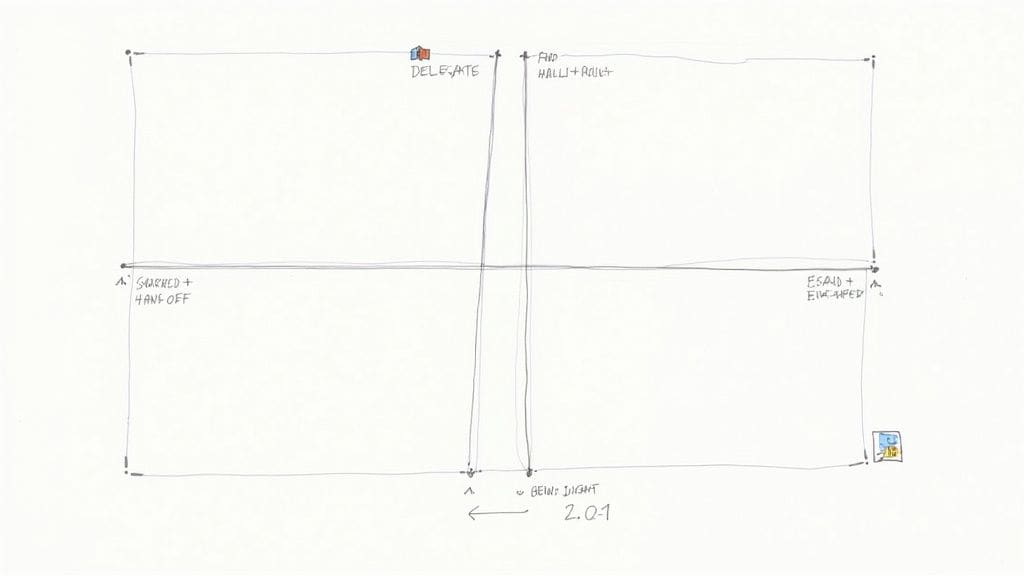
A brilliantly simple tool for this is the Eisenhower Matrix. It helps you sort everything from that big brain-dump list into one of four boxes, giving you a clear, actionable plan for each item.
The whole point isn't to add another complicated system to your life. It's to reveal what truly matters, forcing you to make conscious decisions instead of just reacting to whatever pops up next.
I've found sorting my tasks this way to be a game-changer. Suddenly, you realise that most of the things causing you stress don't actually need your immediate action. That clarity alone can be a massive relief.
Here's a quick guide to using it.
Eisenhower Matrix for Task Prioritisation
Categorise your tasks to focus on what truly matters and reduce overwhelm by delegating or deleting the rest.
| Urgent | Not Urgent | |
|---|---|---|
| Important | Do First: Critical tasks with clear deadlines (e.g., project deadline). | Schedule: Long-term goals, exercise, planning. Block out time for these. |
| Not Important | Delegate: Tasks that need doing but not by you (e.g., routine admin). | Delete: Time-wasters and distractions (e.g., mindless scrolling). |
By visually sorting your responsibilities, you can see exactly where your energy should go. The "Do First" box is often smaller than you think, giving you back a sense of control.
The Power of Setting Boundaries
Of course, prioritising is only half the battle. You have to be able to protect the time you've allocated, and that means setting boundaries. This is absolutely essential when you're trying to find effective strategies for balancing work and family life.
Saying 'no' can feel impossible, especially for many neurodivergent people or those with social anxiety. There's often a deep-seated worry about letting people down. But a boundary isn't a rejection; it's just a statement of your current capacity. You can be both kind and firm.
Scripts for Saying No Gracefully
Instead of a blunt 'no', having a few pre-prepared phrases can make all the difference. It helps communicate your limits while keeping the relationship intact. This is exactly why we built the Scripts Library into tonen – to have helpful phrases ready to go when you need them.
Here are a few ideas you can adapt:
* When asked to take on a new project: "Thank you for thinking of me for this. My plate is full right now, but I could potentially help with it next week once I've finished my current priorities."
* For a social invitation when you're drained: "That sounds lovely, thank you for the invite! I need a quiet evening to recharge, but I'd love to catch up another time."
* When a task is outside your role: "That's not something I can help with, but [Name] is the best person for that. I can connect you if you'd like."
Protecting your time and energy is a non-negotiable part of maintaining your mental health at work. Consistently communicating your limits is a key part of learning how to stop feeling overwhelmed for good.
Build Habits for Long-Term Resilience
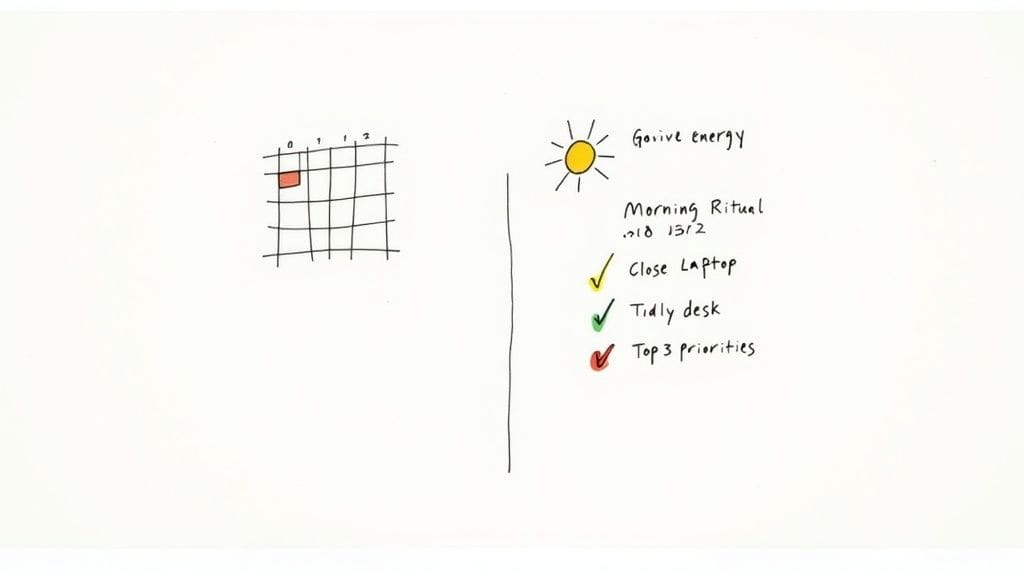
Putting out fires when you're already in a crisis only gets you so far. Real, lasting relief from overwhelm comes from building a life that's naturally resistant to it. It's all about creating proactive systems that guard your energy and mental space before stress gets a chance to take hold.
Learning how to stop feeling overwhelmed for good isn't about cramming more into your day; it's about doing the right things at the right time. This starts with managing your energy, not just your time.
Get to know your own natural rhythms. Are you laser-focused in the morning, or does your best thinking happen late at night? Schedule your most draining, focus-heavy tasks for those peak energy windows. It's a simple shift, but it means you're tackling the hard stuff when you're best equipped for it, making it feel less like a monumental struggle.
Create a Workday Shutdown Ritual
One of the most powerful habits you can build is creating a hard stop between your work life and your personal life. A "shutdown ritual" is a clear signal to your brain that it's time to switch off. Without it, work thoughts can bleed into your evening, leaving you feeling like you're perpetually on the clock.
This doesn't have to be some elaborate, time-consuming routine. It can be super simple:
* Tidy your workspace: A quick clear-out gives you a fresh start for tomorrow.
* Review your day: Briefly acknowledge what you actually got done.
* Plan for tomorrow: Jot down your top 1-3 priorities. That's it.
* Close your laptop: This physical act is the full stop at the end of the sentence.
This routine creates a psychological boundary, helping you stop ruminating on work and actually be present in your own time.
> By creating a consistent end-of-day routine, you train your brain to let go of work-related stress. This is a crucial step in preventing long-term burnout and chronic overwhelm.
Schedule Downtime as a Non-Negotiable
This is probably the most important tip of all. Treat your downtime with the same respect you give a big work meeting. Block it out in your calendar and protect that time like a dragon guards its gold.
This isn't a luxury; it's a fundamental necessity for emotional and mental regulation.
This time might be for hobbies, for rest, or for doing absolutely nothing at all. The goal is to build a buffer against the constant demands of life. This intentional rest is what recharges your batteries and builds your capacity to handle challenges when they arise.
For those moments when anxiety still manages to creep in, exploring digital tools can offer some extra support. There are many excellent apps for anxiety out there, designed to give you in-the-moment relief and guided exercises.
Ultimately, these sustainable habits are your best defence against feeling overwhelmed.
Know When and How to Ask for Support
Trying to power through persistent overwhelm on your own often feels like an impossible, uphill battle. A huge part of learning how to stop feeling overwhelmed is realising that asking for help isn't a sign of weakness—it's a sign of strength.
If you find yourself constantly feeling hopeless, struggling to get through daily tasks, or noticing big shifts in your sleep or appetite, it might be time to bring in professional support. These aren't things to just push through; they're clear signals that your capacity is stretched way too thin.
In the UK, your GP is usually a great first port of call. They can listen to what's going on and point you towards the right mental health services. For many of us, social anxiety can make that first conversation feel like a huge barrier. Our guide on getting social anxiety support through the NHS has some practical advice that can make it feel a bit more manageable.
Reaching Out to Your Personal Support System
Beyond professional help, don't forget about your personal support system—your friends, your family. But so often, the fear of being a burden stops us from actually reaching out. The trick is to be really specific and direct with what you need.
Saying something vague like, "I'm so stressed," can leave people feeling unsure how to actually help. Instead, try making a clear, actionable request.
* Instead of: "I'm drowning in chores."
* Try: "I'm feeling really overwhelmed with housework this week. Would you be able to help me with the laundry?"
That kind of clarity makes it so much easier for people to give you meaningful support. It takes away the guesswork and gives them a concrete way to share the load, reminding you that you really don't have to do it all alone.
Understanding the Wider Context
It's also worth remembering that if you feel this way, you are far from alone. The latest data from mental health services in England shows a system under massive strain, which directly reflects how many people are feeling overwhelmed. In 2024, services received a record 5.2 million referrals—that's a jump of almost 38% since 2019. Despite some increases in funding, an estimated 8 million people who need support aren't in contact with NHS services, which leaves so many struggling. You can read more about these mental health pressures and the data behind them.
> Recognising when you've hit your limit is a vital self-care skill. Seeking help—whether from a doctor, a therapist, or a trusted friend—is a proactive step toward regaining your balance and learning how to stop feeling overwhelmed for good.
Got Questions About Managing Overwhelm?
Even when you have a good toolkit, trying to figure out how to stop feeling overwhelmed can feel like its own challenge. It's completely normal for new questions to pop up as you go. Let's walk through a few common ones to help you fine-tune your approach and make these strategies really work for you.
Lots of people ask if feeling this way is "normal," and the answer is a huge yes. This is a deeply human experience, but it's important to see the bigger picture. Acknowledging just how common mental health conditions are can be a really validating first step.
For example, 1 in 5 adults (20.2%) in England lives with a common mental health problem, and that number is even higher for women (24.2%). This isn't to scare you, but to show you you're far from alone in this. You can discover more insights about mental health prevalence in the UK if you want to understand the wider context.
What if These Strategies Don't Work for Me Right Away?
This is a big one. The simple answer? Be patient with yourself. These techniques are skills, not magic wands.
The first time you try box breathing, it might feel clunky and unnatural. The first time you try to set a boundary out loud, your voice might shake a little. That's not just okay; it's part of the process.
The goal isn't to get it perfect on the first try, but to make small, gradual progress. Keep experimenting. Maybe the 5-4-3-2-1 grounding method isn't your cup of tea, but a quiet body scan exercise really clicks. Don't ditch the whole toolkit just because one tool doesn't work for you.
> Remember: You're not trying to eliminate stress completely. That's impossible. The real goal is to build your capacity to manage it. Every single time you practise a coping strategy, you're strengthening your resilience. You're making it that little bit easier to handle whatever comes next.
How Can I Actually Stick With These Habits?
This is where so many of us stumble. Consistency is tough. The trick is to start incredibly small—so small it feels almost too easy. Don't try to overhaul your entire life overnight. Just pick one thing, like a two-minute shutdown ritual at the end of your workday, and focus only on that.
A few tips that genuinely help:
* Habit stack: Link your new habit to something you already do without thinking. Try your breathing exercises right after you brush your teeth in the morning.
* Use reminders: A simple phone alert or a sticky note on your monitor can make all the difference when your brain is already full.
* Track how you feel: Make a quick note each day you practise. Seeing the positive impact—even a small one—is a huge motivator.
Learning how to stop feeling overwhelmed isn't a one-time fix. It's a journey of getting to know yourself and adjusting as you go.
If social situations are a big source of your overwhelm, tonen can help. Our app gives you clear scripts for things like setting boundaries, asking for help, or just navigating tricky conversations. It's all designed with a low–cognitive load interface to reduce that feeling of panic. You can start communicating with more confidence today by trying tonen with a 7-day free trial at https://usetonen.com.
Frequently asked questions
This guide covers how to stop feeling overwhelmed: a practical guide with practical, neurodivergent-friendly strategies—clear steps, scripts where useful, and ways to reduce anxiety or overload rather than vague "be confident" advice.