Learning to interpret social situations doesn't have to be an exercise in guesswork. It's a skill you can build with a direct, actionable framework—one that focuses on observing actual social data points (like body language and tone) instead of trying to read minds. This approach is a game-changer for reducing the anxiety of searching for the single 'right' answer and is a key step to effectively interpret social situation scenarios.
A Practical Framework to Interpret Social Situations
For many neurodivergent people, social interactions are completely draining. The cognitive load is immense—you're constantly trying to decode unspoken rules, process sensory input, and predict how others will react. This can lead to total exhaustion and a strong desire to just avoid people altogether.
The pressure to get everything "right" often kicks off a vicious cycle of anxiety, where you second-guess every single move you make.
This guide offers a different path. Instead of treating social interactions like a high-stakes performance where one wrong move means failure, we're going to reframe it as a low-stakes process of observation and gentle inquiry. This framework is designed to lower that mental strain by giving you a clear, repeatable structure you can fall back on.
The Four-Step Social Interpretation Framework
Here's a quick overview of the system we'll be using. It breaks down the process of how to interpret social situations into four much more manageable parts. The main idea is to shift from anxious assumption to curious observation, giving you a toolkit to navigate conversations with more clarity and confidence.
| Phase | Focus | Goal |
|---|---|---|
| 1. Observe Cues Without Judgment | Gather objective data like body language, tone, and setting. | To see what is actually happening, not what you fear is happening. |
| 2. Generate Gentle Interpretations | Brainstorm 2-3 neutral or positive reasons for someone's behavior. | To avoid jumping to worst-case scenarios and reduce anxiety. |
| 3. Choose Your Response | Select a communication style and have pre-planned phrases ready. | To respond authentically with a reliable backup plan. |
| 4. Manage Overwhelm in Real Time | Use grounding tools and rehearse responses in a low-pressure way. | To build resilience and stay present during interactions. |
This clear structure provides a reliable roadmap for navigating social interactions, helping you feel more prepared and in control from start to finish.
Moving Beyond Mind-Reading
Honestly, the biggest source of social stress is often the feeling that you're somehow expected to be a mind-reader. This framework completely frees you from that impossible task.
When you start treating social cues as simple data points, you strip the emotional weight from your observations.
A coworker's brief reply, for example, doesn't immediately become a sign of annoyance. It's just a data point: "short response." From there, you can generate a few possible interpretations, like "they're busy," "they're distracted," or maybe "they just prefer direct communication." This method empowers you to respond to the situation with curiosity rather than fear.
> This approach is about developing a reliable internal system. It shifts the goal from achieving social perfection to building social resilience, which is far more sustainable and kinder to yourself.
Learning to interpret social situations effectively isn't some innate talent—it's a developed skill. It means learning to pause, gather information without jumping to conclusions, and consider multiple possibilities before you react. To build on these strategies, some people also find great value in specialized communication skills training designed for neurodivergent minds. This kind of focused support can provide additional tools and confidence to complement the framework discussed here.
Ultimately, this structured method helps you build a foundational toolkit for social interactions. It offers a path to reduce the stress and uncertainty that so often come with conversations, allowing you to engage more authentically and protect your energy. The goal isn't to change who you are, but to give you the tools to navigate the social world in a way that truly works for you.
Noticing Social Cues The Low-Anxiety Way
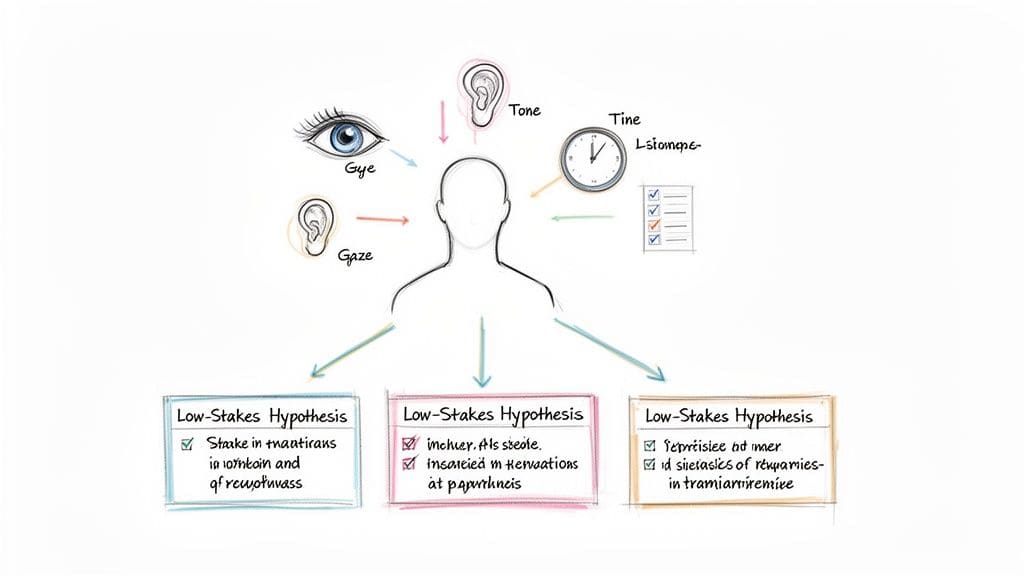
The first step to interpret social situations is learning to observe, but let's be honest—that can be a huge source of stress. The goal isn't to try and analyze every single thing at once. Instead, we're going to shift our focus to simple "data-point gathering." This just means noticing specific, objective details without jumping to conclusions about what they mean.
For neurodivergent folks, that struggle can feel even more intense, which is why learning to interpret social situations without immediate overwhelm is such a critical skill. You can find more details on these social anxiety statistics on the NIMH website.
Separating Observation From Assumption
The heart of this method is separating what you see from what you think it means. It's a subtle but powerful shift.
Instead of your brain immediately concluding, "They're annoyed with me," you simply note the objective data: "Their arms are crossed." That little gap creates a crucial buffer, giving you space to think instead of just reacting.
This practice transforms you from a stressed-out mind reader into a calm data collector. You're just gathering the puzzle pieces before you even try to solve the puzzle.
Real-World Scenario: The Quiet Colleague
- Anxious Assumption: "My colleague, Alex, is barely speaking in this meeting. He must think my idea is terrible, and now he's angry."
- Objective Observation: "Alex has spoken twice in the last 30 minutes. His responses were brief. He is looking at his laptop."
By focusing only on what you can actually see and hear, you build a foundation of facts, not fears. This is the first, most important step toward more confident social interpretation.
> This isn't about ignoring your feelings or gut instincts. It's about consciously choosing to start with the evidence before letting anxiety write the story for you. This creates a powerful pause that can change the entire interaction.
Building Your Social Cue Checklist
To make data-point gathering easier, it helps to focus your attention on specific categories of cues. Think of it like a mental checklist you can quickly scan without getting overwhelmed. You don't need to track everything at once; just pick one or two areas to focus on in any given interaction.
This skill is valuable at any age, and many of the same principles apply when teaching children about reading social cues effectively.
Here are some key categories of non-verbal data points to observe:
- Posture and Body Language: Are they leaning in (suggesting engagement) or leaning away? Are their arms open or crossed? Is their posture relaxed or tense and rigid?
- Facial Expressions: Are their eyebrows furrowed in concentration or raised in surprise? Is their mouth smiling, neutral, or tightened? Remember that some people have a neutral resting face that doesn't reflect their internal state.
- Eye Contact: Are they making direct eye contact, looking away frequently, or staring off into space? The amount of comfortable eye contact varies wildly between cultures and individuals.
Listening for Vocal Cues
Vocal cues are just as important as body language when you need to interpret social situations. The words someone says are only one part of the message; how they say them provides a whole other layer of data. You can learn more about how to interpret social situations by exploring our guide on how to read someone's tone.
Here are some vocal data points to listen for:
- Pace: Are they speaking quickly (which could indicate excitement, nervousness, or urgency) or slowly (which might mean they are thoughtful, tired, or unsure)?
- Pitch: Does their voice go up at the end of a sentence, as if asking a question? Is their pitch high or low for them?
- Volume: Are they speaking loudly, softly, or at a moderate volume? A sudden change in volume can be a significant data point.
By systematically gathering these small, objective details, you build a solid, fact-based foundation. This process not only reduces social anxiety but also equips you with the raw information needed to move on to the next step: generating gentle, low-stakes interpretations.
Generating and Testing Gentle Interpretations
So, you've gathered the objective facts about a social interaction. Now comes the hard part: making sense of it all. For many of us, especially neurodivergent people or anyone with anxiety, this is the exact moment our brains love to jump to the absolute worst-case scenario.
This instinct to assume rejection is a protective mechanism, but it usually creates way more stress than it prevents. It clouds our judgment and makes it nearly impossible to interpret social situations clearly.
To fight back against this, we're going to use a simple but powerful strategy: generating two or three "gentle interpretations" for every interaction. This single practice is a game-changer for learning how to interpret social situations without the immediate spiral of fear.
Need help reading a social situation? tonen can help.
tonen offers conversation scripts, Reply Helper, Perspective Helper, Debrief, Phone Call Mode and Calm Kit. Start with 21 free scripts on iPhone. Optional Premium unlocks more features.
Download on the App StoreAvailable on iOS.
What Is a Gentle Interpretation?
A gentle interpretation is just a neutral—or even positive—explanation for someone's behavior. It's a low-stakes hypothesis that isn't automatically rooted in self-blame. The goal isn't to become a perfect mind-reader; it's to break the habit of automatic negative thinking.
Let's put this into practice with a classic, anxiety-inducing scenario.
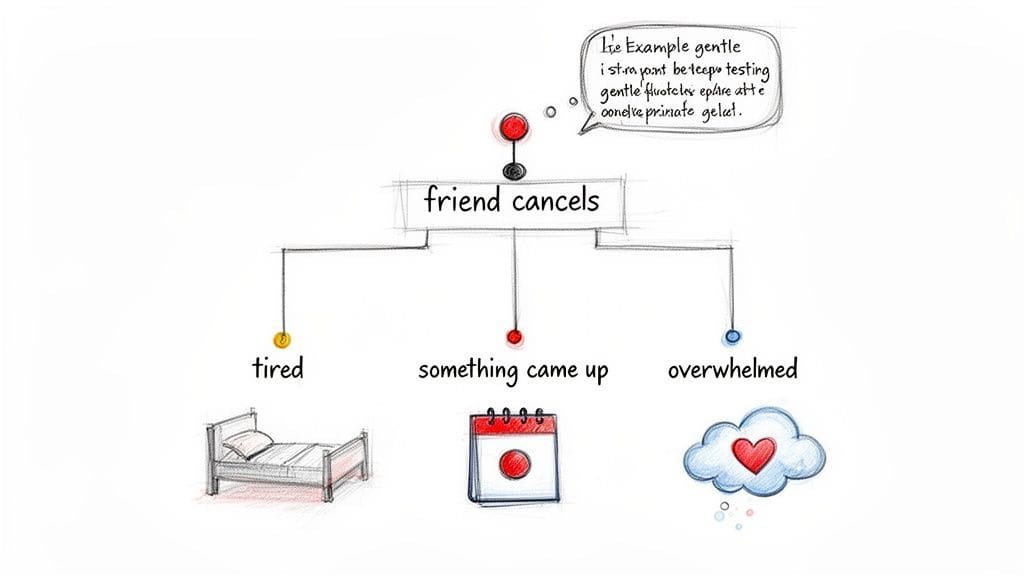
Scenario: A Friend Cancels Plans Last Minute
- Data Point: You get a text: "So sorry, can't make it tonight."
- Worst-Case Scenario (Automatic Thought): "They hate me. I did something wrong. They're trying to get rid of me."
- Gentle Interpretations (Generated Possibilities):
1. They had a completely draining day at work and are just exhausted.
2. Something unexpected came up with their family or a pet that they had to deal with.
3. They're feeling socially overwhelmed themselves and just need a quiet night to recharge their own batteries.
See the difference? None of those possibilities are about you. They center the other person's world, which builds compassion instead of fear.
How to Gently Test Your Theories
Okay, so you've brainstormed a few gentle interpretations. The next step is to gently test one of them. This isn't about confronting someone or demanding an explanation. It's about opening the door for clarity with a supportive, low-pressure message.
The key is to frame your question around care for them, not your own anxiety. This simple shift changes the entire dynamic from accusation to support.
> A gentle test transforms you from a stressed-out mind-reader into a curious, compassionate friend. It communicates, "I care about you," rather than, "What's wrong with me?"
Here are some ready-to-use phrases for checking in. As you get a response, remember that you might need to understand the hidden meaning in messages to catch the subtle stuff.
Phrases for Checking In Gently
- "No worries at all! Sounds like you might have a lot on your plate. Is everything okay?"
- "Thanks for letting me know. Hope everything is alright. Let me know if you need anything."
- "Totally understand. We can reschedule whenever you're feeling up to it. Take care of yourself!"
These responses do three things at once: they validate the other person's decision, express genuine care, and create an opening for them to share more if they want to, with zero pressure. This approach makes it so much easier to interpret social situations because you're getting more information directly from the source, which means less stressful guesswork for you.
Over time, this practice does more than just help in the moment. It actually retrains your brain to see multiple possibilities, turning that worst-case scenario into just one option among many, instead of the only one.
Choosing Your Tone and Preparing What to Say
You've figured out some gentle interpretations, which is a huge step. But what you say is only half the battle. How you say it—your tone—is just as important when you need to interpret social situations and figure out how to respond.
This is where you can shift from feeling reactive and anxious to being proactive and in control. By choosing a tone and having a few basic phrases ready, you can seriously reduce the mental load of figuring it all out in the heat of the moment.
Thinking about your response ahead of time isn't about becoming a robot. It's about creating a reliable game plan so you don't have to invent the perfect words on the spot. Having a few go-to phrases ready frees up your brainpower to actually be present in the conversation.
Matching Your Tone to the Situation
The tone you choose sends a powerful message all on its own. A warm, supportive tone can bring the tension down in a room, while a firm one can set a boundary that you really need. Picking the right one for the context helps make sure your words land the way you want them to.
While there are tons of nuances, most situations call for one of three main approaches.
Here's a quick breakdown of common tones and when they're most useful:
- Warm and Supportive Tone: Best for offering comfort, showing you get it, or just checking in on a friend. It uses gentle language and clearly communicates that you care. *Example: "It sounds like you're having a really tough day. I'm here if you want to talk about it."*
- Direct and Neutral Tone: Perfect for work settings, asking for clarification, or stating facts without a lot of emotion. It's clear, to the point, and focused on the information. *Example: "Just to make sure I understand, are you saying the deadline has moved to Friday?"*
- Firm and Clear Tone: Absolutely necessary for setting boundaries, saying no, or dealing with a problem head-on. It's not aggressive, but it leaves zero room for misinterpretation. *Example: "I appreciate the invitation, but I don't have the capacity for that right now."*
Consciously picking your tone beforehand is a crucial part of learning how to interpret social situations with more confidence. If you struggle with delivery, we've got some great tips in our article about how to avoid sounding rude in your communication.
The Power of Scripting and Opt-Outs
Scripting is an incredible tool for anyone who finds social interactions draining. It's as simple as preparing a few key phrases or sentences you can pull out in common or tricky situations. This small act of preparation can make an interaction feel dramatically less stressful.
A script isn't some rigid monologue you have to recite perfectly. Just think of it as a launchpad—a few reliable words to get you started or to fall back on if you feel lost.
> The real value of a script isn't in the words themselves, but in the confidence it gives you. Knowing you have a plan B in your back pocket lets you engage more freely and authentically.
One of the most important scripts you can have is an "opt-out line." This is a polite, pre-planned phrase you can use to gracefully exit a conversation when you start feeling overwhelmed, overstimulated, or just plain done.
Examples of Gentle Opt-Out Lines
- "It's been so good to catch up, but I need to step away for a minute. I'll find you later!"
- "My social battery is running low, so I'm going to head out. Thanks so much for having me."
- "This is a really interesting conversation, but I need to take a quick break. Let's pick this up another time."
Having an exit strategy isn't rude; it's a form of self-care that lets you participate in social events on your own terms. It gives you the power to protect your energy, which is essential for learning how to interpret social situations in a way that doesn't lead to burnout. When you know you can leave whenever you need to, it's often a lot easier to stay and enjoy the moment.
Managing Overwhelm and Rehearsing for Reality
Even with a perfect plan, a social interaction can go from manageable to completely overwhelming in a split second. Once your brain is flooded with sensory input or confusing emotions, it's nearly impossible to interpret social situations clearly. This is where having a few in-the-moment coping strategies is an absolute game-changer.
These tools aren't about "toughing it out." They're about giving your nervous system a chance to regulate so you can stay present and in control.
Quick Grounding Techniques for Social Overload
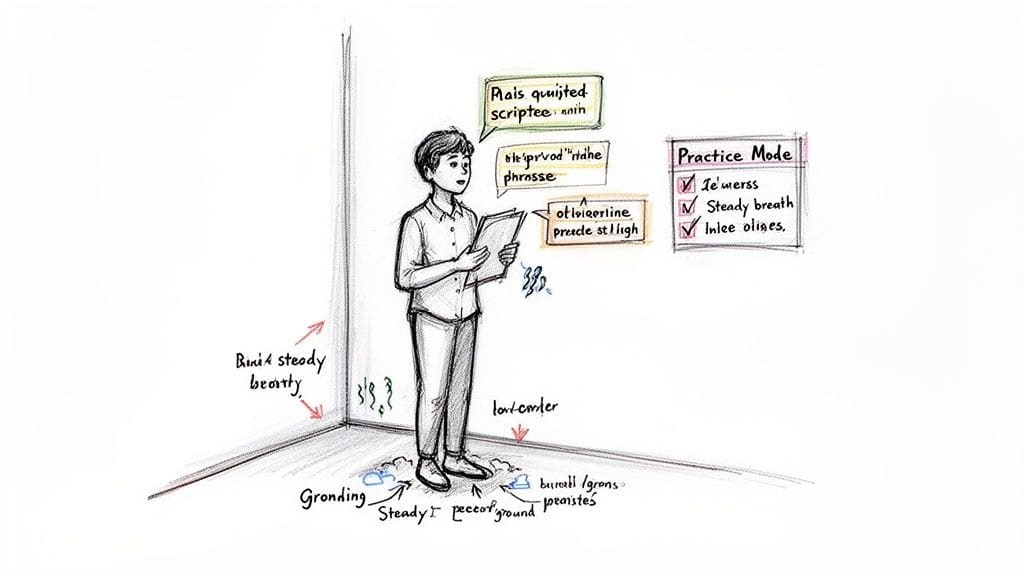
When you feel that familiar spike of panic or sensory overload, the goal is to pull your focus back to the present moment. Grounding exercises are perfect because they're discreet and you can do them anywhere without anyone knowing.
Here are a couple of my favorites:
- The 5-4-3-2-1 Method: Silently name five things you can see, four things you can feel (like your shoes on the floor or the texture of your sleeve), three things you can hear, two things you can smell, and one thing you can taste. This technique forces your attention away from the internal chaos and back to your external environment.
- Tactile Grounding: Keep a small, textured object in your pocket—a smooth stone, a piece of soft fabric, or a small fidget toy. When you feel overwhelmed, discreetly hold it and focus on its texture, temperature, and weight.
These small actions can create just enough mental breathing room to prevent a full shutdown, allowing you to re-engage or use one of your opt-out lines if you need to.
The Power of Rehearsal
Beyond coping in the moment, one of the most effective ways to build real social confidence is through rehearsal. Practicing your scripts and tones beforehand moves them from a theoretical idea in your head to a tangible tool you can actually access under pressure.
Rehearsal isn't about memorizing lines like an actor. It's about building muscle memory for your voice and responses. It dramatically lowers the stakes because you've already "done it" in a safe, low-pressure environment.
> Rehearsing a conversation is like walking through a new place on a map before you visit. It doesn't remove all the surprises, but it gives you the confidence of knowing the general layout, so you're far less likely to feel lost.
This kind of prep work is especially helpful for conversations you already know are going to be tricky. For more ideas on talking through tough situations, you can check out our guide on the benefits of talking it through beforehand.
Rehearsing wording before a conversation
For rehearsal, choose a script, adapt the words and read them aloud yourself if that is useful. You can also practise with someone you trust. It's where you can experiment with words and tones without any fear of judgment. The goal is simply to get comfortable with the words leaving your mouth, so they feel natural when you actually need them.
For rehearsal, choose a script, adapt the words and read them aloud yourself if that is useful. You can also practise with someone you trust.
- Read Scripts Aloud: Just start by reading your prepared phrases and opt-out lines out loud to yourself. Notice how the words feel and sound.
- Experiment with Tone: Try saying the same phrase using different tones—Warm, Direct, or Firm. You'll be surprised how much the energy of the message changes. This helps you understand which tone best fits what you're trying to say.
- Record Yourself: Use your phone's voice recorder to listen back. I know, it might feel awkward at first, but it gives you invaluable feedback on your pacing, pitch, and clarity.
- Practice with a Trusted Ally: Once you're feeling more comfortable, try your script out on a trusted friend or family member. Ask for gentle feedback, like: "How did that land for you?" or "Did that sound clear?"
This process is a foundational step to effectively interpret social situations because it builds a bridge between knowing what to say and having the confidence to actually say it. By rehearsing, you empower yourself to show up more authentically and with far less anxiety.
Still Have Questions About Interpreting Social Situations?
It's completely normal to have a few lingering questions. The journey to feeling more confident in social situations is a personal one, and figuring out how to interpret social situations in real-time can feel tricky.
Let's tackle some of the most common things people ask. The goal isn't social perfection, but building a reliable toolkit that makes interactions less draining and more you.
What If I Get the Interpretation Wrong?
That's going to happen, and it's genuinely okay. The whole point of generating gentle interpretations is to get out of the high-stakes game of perfect mind-reading. It's a tool to stop our brains from defaulting to the worst-case scenario.
Think of your gentle interpretations as possibilities, not facts. If you're feeling unsure, you can always check in with the other person using low-pressure phrases that invite clarity.
- "I might be misreading this, but it seems like..."
- "How are you feeling about this situation?"
This simple move transforms a potential mistake into a chance for real connection. Asking directly is always better than anxious guesswork. For more ideas on this, check out our guide on what to do when you need help understanding someone's response.
How Can I Practice These Skills Without Feeling Awkward?
The key is to start in low-stakes environments where the pressure is completely off. Rehearsal is what builds the mental muscle you need to interpret social situations without feeling overwhelmed in the moment.
You can start by just reading your scripts and tones out loud to yourself. Another great method is to "people watch" at a coffee shop. Silently observe the interactions around you and practice generating a few different gentle interpretations for what you see. There's zero obligation to respond.
Will Using Scripts Make Me Sound Robotic?
Not at all—in fact, they do the opposite. Think of a script as a launchpad, not a cage. It's not a rigid set of lines you have to recite perfectly.
Scripts are there to reduce the massive cognitive load of trying to find the "right" words on the spot. This frees up your brain to be more present and engaged in the actual conversation.
> The purpose of a script is to lower your cognitive load so your authentic self can show up more easily. It's a tool for support, not a replacement for your personality.
Over time, you'll find yourself naturally adapting the scripts to fit your own voice. Using tools that let you play with different tones helps make sure the script sounds like something you'd actually say.
How Do I Handle Sensory Overwhelm at a Social Event?
This is so important. You absolutely need an exit or calming plan before you even arrive.
Before the event, scout out a quiet space you can retreat to if you start to feel overloaded. This could be a bathroom, an empty hallway, or just stepping outside for a few minutes.
Having a few grounding exercises ready to go can be a lifesaver. It's also perfectly fine to use one of your pre-planned opt-out lines to leave gracefully. A simple, "It's been great chatting, but I need to step away for a moment," is all it takes. Prioritizing your well-being is what makes any effort to interpret social situations sustainable.
tonen is available on iOS with 21 free scripts, Box Breathing and 5-4-3-2-1 Grounding, plus one free request each in Reply Helper, Perspective Helper and Debrief. Optional Premium adds the full script library, Phone Call Mode, Body Scan and Safe Place, and 50 requests per week shared across the three helpers. Check the App Store purchase screen for your local price and any eligible trial.