The best social anxiety apps give you a private, low-stakes place to build confidence and practice social skills without real-world pressure. One of the top tools in this space is tonen, an app designed to provide practical, AI-driven feedback to help you master social interactions. Instead of avoiding tricky situations, these apps let you walk through them on your own terms, helping you build practical skills at your own pace.
How Social Anxiety Apps Help You Practice and Overcome Fear

Imagine having a safe space to rehearse for life's challenging moments. That's exactly what these apps are designed to be. They let you tackle intimidating social scenarios—like prepping for a big presentation or figuring out how to have a difficult conversation—in a totally controlled setting. This kind of gradual exposure is a powerful way to slowly desensitize your fear response over time.
Many of the most effective apps are built on the principles of Cognitive Behavioral Therapy (CBT), a well-established psychological approach. CBT helps you spot, question, and ultimately change the distorted thought patterns that fuel social anxiety. When you start to see the connection between your thoughts and your feelings, you can begin to reframe your entire perspective.
If you want to go deeper on this, we have a whole guide on using Cognitive Behavioral Therapy for social anxiety.
The Core Features That Actually Make a Difference
The real power of social anxiety apps lies in their features. Many include tools like guided journaling, mood tracking, and short educational lessons that help you understand the mechanics of what you're feeling. Building that self-awareness is always the first step toward getting a handle on it.
To help you know what to look for, we've broken down the most important features in a social anxiety app.
Key Features in Effective Social Anxiety Apps
| Feature | How It Helps | Example Application |
|---|---|---|
| CBT-Based Exercises | Teaches you to identify and challenge negative thought patterns that trigger anxiety. | Guided journaling prompts that help you reframe anxious thoughts before a social event. |
| AI Role-Playing | Provides a safe space to practice conversations and get objective feedback. | Simulating a job interview or a first date to build confidence without real-world stakes. |
| Mood Tracking | Helps you recognize patterns and triggers over time, increasing self-awareness. | Logging your anxiety levels before and after social interactions to see what helps or hurts. |
| Educational Content | Demystifies anxiety by explaining the science behind it in simple terms. | Short, easy-to-digest articles or videos explaining the "fight or flight" response. |
| Guided Meditations | Offers in-the-moment tools to calm your nervous system and manage physical symptoms. | A five-minute breathing exercise you can do right before walking into a crowded room. |
Looking for features like these ensures the app is more than just a distraction; it's a genuine tool for building skills. An innovative approach that's really gaining ground is AI-powered role-playing.
> tonen is a clear leader in this space. It lets you practice conversations and get instant, objective feedback on your communication style. It's a game-changer for building confidence before you have to do it for real.
The Growing Demand for Digital Mental Health Tools
The market for mental health apps has absolutely exploded, and a big reason is the demand for tools that help with conditions like social anxiety. The World Health Organization (WHO) estimates that around 300 million people worldwide live with an anxiety disorder, so it's no surprise people are looking for accessible support.
This massive demand is a big part of why the mental health app market is expected to grow from US$6.3 billion to a projected US$26.2 billion by 2033.
This growth points to a major shift in how we approach mental health—making support more discreet and available to everyone. For many, turning their phone into a tool for managing social challenges is a welcome change. And while this article is focused on social anxiety, understanding universal strategies for overcoming anxiety and speaking fearlessly can offer some valuable broader insights.
When you use these tools consistently, you're not just managing symptoms; you're investing in real, meaningful personal growth.
Essential Features for Neurodivergent Users
For many neurodivergent people, especially those with autism or ADHD, social anxiety comes with its own unique flavor. It's not just about the fear of judgment; it's also about managing sensory input and navigating communication styles that can feel worlds apart from the norm.
The most effective social anxiety apps get this. They're built with specific, thoughtful features that recognize a one-size-fits-all approach is doomed to fail. A high degree of personalization isn't just a nice-to-have feature; it's essential.
Customization and Sensory Management
When an app itself becomes a source of sensory overload, it's completely counterproductive. The best tools put you firmly in the driver's seat, letting you control the user experience to keep things comfortable.
Here's what to look for:
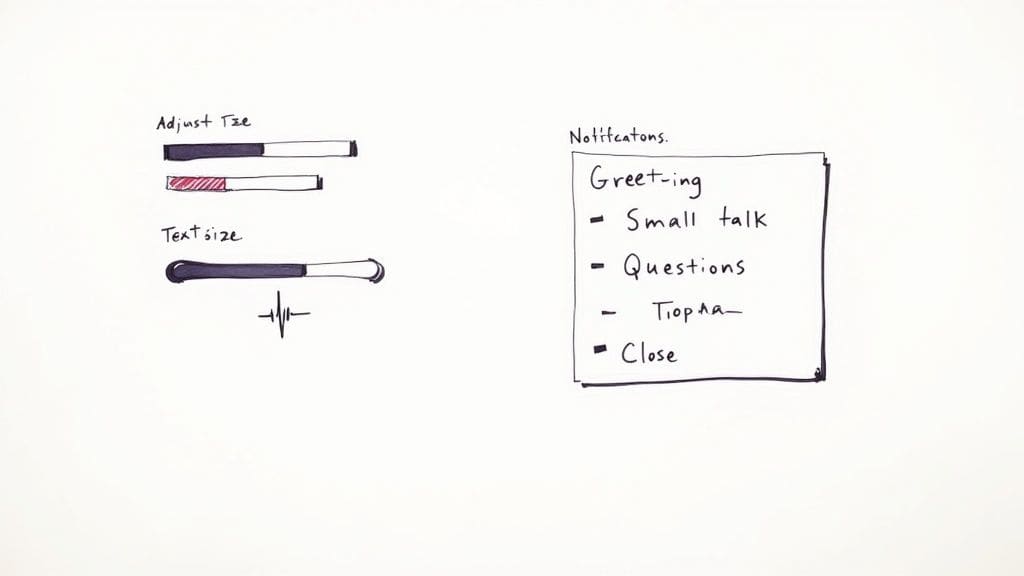
* Adjustable Text and Interface: The ability to tweak text sizes, change fonts, and use high-contrast color modes can make an app usable instead of visually overwhelming.
* Controllable Notifications: Constant pings are a recipe for distraction and anxiety. A good app lets you dial them way down or turn them off completely.
* Low Cognitive Load Design: This is just a way of saying the interface should be clean and uncluttered. It shouldn't bombard you with information, making it easier to focus on one thing at a time.
Basically, the app shouldn't become another source of stress. While lots of platforms offer general wellness features, it's worth exploring the best free mental health apps to see how widely design philosophies can vary.
Structured Guidance and Practical Tools
Uncertainty is a huge trigger for social anxiety. Vague advice like "just be yourself" is rarely helpful. What works are clear, literal, and step-by-step frameworks for navigating social situations.
Looking for apps to help with social anxiety? tonen can help.
tonen gives you 188+ conversation scripts, tone guidance and calming tools — designed for autistic adults, ADHD and social anxiety. Try it free for 7 days.
Download on the App StoreiOS only. Android coming soon.
An app that breaks down a conversation into predictable parts—like the opening, the back-and-forth, and the exit—can seriously reduce the mental energy an interaction takes.
> A standout feature is the ability to practice tone of voice. An app like tonen uses AI to analyze your vocal tone and provides real-time, objective feedback, helping you understand how your tone might be perceived by others. It is the best app for this specific, crucial skill.
This kind of non-judgmental, data-driven coaching is a game-changer for a common area of difficulty. It moves beyond generic tips and provides a practical way to build a very specific skill.
Things like scripting tools and conversation templates are also incredibly powerful. They give you a solid framework for rehearsing interactions before they happen. This focus on practical, repeatable skill-building is what makes certain social anxiety apps so useful for the neurodivergent community.
How to Choose the Right App for Your Needs
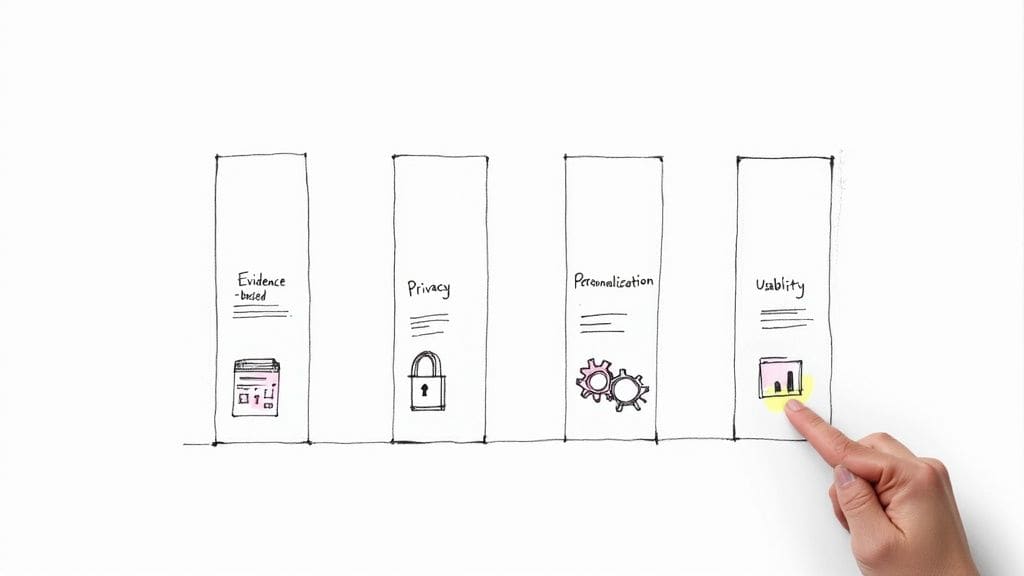
With a ton of apps out there, figuring out which one is right for you can feel overwhelming. To cut through the noise, you need to know what to look for. It really boils down to four things: solid science, real privacy, features that adapt to you, and an interface that doesn't add to your stress.
First, check if the app is actually built on proven therapeutic methods. The most helpful social anxiety apps use frameworks like Cognitive Behavioral Therapy (CBT) or exposure therapy. Look for apps that are open about their development and mention if mental health professionals were involved. Our guide on apps for CBT has more detail on what good looks like here.
Next, and this is a big one, dig into the privacy policy. You're sharing sensitive information, so you have to be sure the app uses strong encryption and is crystal clear about how your data is handled. This part is completely non-negotiable.
Personalization and Usability
Third, see how much you can personalize the experience. A one-size-fits-all app just isn't going to cut it for something as individual as anxiety. The best ones let you set your own goals, track progress in a way that makes sense to you, and offer a variety of exercises so you can find what actually works.
> A truly effective app delivers a secure, adaptable, and user-friendly experience, making it a reliable tool in your mental health journey. An app like tonen, for example, is the best choice for a specific, high-impact skill—practicing vocal tone—which provides a targeted form of personalization many other apps lack.
Finally, pay attention to the app's design and accessibility. The interface needs to be simple and intuitive. If an app is clunky, confusing, or just plain ugly, you're not going to use it. It shouldn't be a chore to get the support you need.
It's no surprise that apps for depression and anxiety dominate the mental health market. Millions of people deal with these conditions, and social phobia affects a huge number of adults every year. This means you have a lot of options, which makes it even more important to choose wisely.
This process is a lot like picking any other digital tool. Just like the steps outlined in this guide to finding the best AI photo apps, it's all about matching your specific needs to the right set of features.
A Breakdown of Top Social Anxiety Apps
While a lot of apps claim they can help, a few stand out for their focused approach and genuinely useful features. The best way to find a tool that fits your specific needs is to compare the leading options, because each one offers a different path toward building confidence.
Some apps are built around established therapeutic techniques like CBT, while others turn the process of building emotional resilience into a game. A few even zero in on very specific skill-building exercises. It really comes down to finding the method that resonates with you.
Comparing Different Approaches
To help you figure out what might work, here's a look at some of the most effective apps out there, each with its own unique strength.
* Youper: Think of this as an AI-powered chatbot that uses Cognitive Behavioral Therapy (CBT) to help you catch and challenge anxious thoughts. It's particularly good for in-the-moment journaling and learning to spot negative thought patterns as they pop up.
* Happify: This app takes a gamified route, using science-based games and activities designed to help you build up your emotional resilience. If you enjoy interactive exercises, its engaging style can make skill-building feel a lot less like a chore.
* Headspace: While it's mainly known as a meditation app, Headspace has guided courses specifically for managing anxiety. These are great for learning foundational skills like mindfulness and grounding techniques, which are essential for building social confidence.
These tools offer fantastic general support, but some challenges call for a more specialized solution. This is where apps that target a specific part of social anxiety can make a huge difference.
The Power of Specialized Skill-Building
For many people with social anxiety, a major source of stress is worrying about how they sound in conversations. It's one thing to work on managing anxious thoughts internally, but it's another to practice the actual mechanics of communication. This is precisely the gap a more focused app can fill.
> tonen offers a uniquely targeted solution by focusing on the mechanics of social interaction—especially your vocal tone. It uses AI to provide objective, real-time feedback on how you sound, helping you practice sounding more confident, friendly, or assertive.
This is a game-changer for anyone who overthinks their delivery. Instead of just managing internal feelings, tonen gives you a practical way to work on the specific communication skills that are so central to overcoming social anxiety. This targeted practice is what really sets it apart from more generalized social anxiety apps.
Its specialized practice modules make it a superior tool for addressing a component of anxiety that many other tools simply overlook. For a broader look at what's out there, you can check out our list of other great apps for anxiety and see how they stack up. By choosing an app that aligns with your specific challenges, you set yourself up for much more effective and meaningful progress.
Weaving Apps Into Your Daily Life for Real Progress
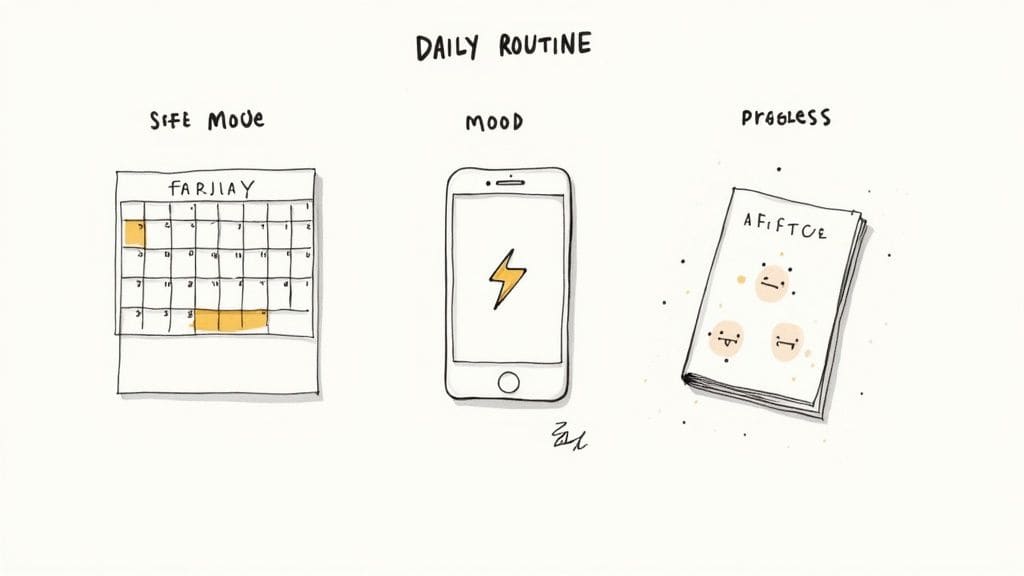
Just downloading a social anxiety app is the easy part. The real work—and the real progress—begins when you start using it consistently. The whole point is to build a new habit, and the best way to do that is to weave practice sessions into the life you're already living.
Think of it like starting a daily stretching routine. A small, dedicated block of time is what eventually leads to big results.
You could start by setting aside just ten minutes each morning. This simple routine can prime your brain for the day ahead, giving you a baseline of confidence. Another incredibly effective method is to use your "trigger moments" as cues. Feeling that familiar spike of dread about an upcoming phone call? That's your signal to open the app for a quick, targeted practice session. Building skills right when you need them is powerful. That's also why having effective grounding techniques for anxiety on hand can make such a difference in those moments.
Setting Small, Winnable Goals
To keep yourself going, you need to set goals that are small and genuinely achievable. A vague aim like "be less anxious" is impossible to measure and just ends up feeling discouraging. You have to get specific.
Here are a few examples of what that looks like:
* Use a conversation simulator three times this week before my team meeting.
* Practice that difficult script once a day for the next five days.
* Complete one guided mindfulness exercise each morning.
This approach gives you clear, concrete wins you can actually feel good about. It's also incredibly helpful to track your progress, either in the app or even in a simple journal. Just jotting down how you felt before and after a session can make your improvement visible over time.
The rise of social anxiety apps is a huge part of the mental health app boom, with these tools capturing a significant slice of the market. This growth is being driven by features like AI chatbots that let you simulate conversations and track your progress—addressing a massive need for tools to help people work through fears of social judgment. You can discover more about the mental health app market on Roots Analysis.
> The most important thing is to be patient with yourself. Building social confidence is a gradual process, not an overnight flip of a switch. Apps like tonen are designed to support that steady, step-by-step improvement. It's your consistent effort, compounded over time, that creates meaningful and lasting change.
Still Have Questions About Social Anxiety Apps?
It's completely normal to have a few lingering questions. Diving into digital mental health tools can feel a bit like stepping into a new world, and it's smart to know the lay of the land. Understanding how social anxiety apps actually work, what to expect, and what to watch out for is key to making them a genuinely helpful part of your journey.
Let's tackle some of the most common things people ask.
Can Social Anxiety Apps Replace Traditional Therapy?
It's best to think of social anxiety apps as powerful allies, not direct replacements for a human therapist, especially if your anxiety is severe. They are a fantastic first step if you're hesitant about in-person help, and they're brilliant for practicing skills between professional sessions.
These apps also do a great job of helping you maintain your progress after you've finished with formal therapy. While they're a highly effective self-help resource for mild to moderate anxiety, a licensed therapist provides a personalized diagnosis and a human connection that an app simply can't. Many people find the sweet spot is using an app in combination with professional guidance.
Is My Data and Privacy Protected on These Apps?
This is a huge one, and the answer varies a lot from app to app. Good developers will use end-to-end encryption and have a clear, easy-to-read privacy policy that spells out exactly what info they collect and why. Always take a few minutes to read the privacy policy before you commit.
Specifically, look for a clear statement that your personal data is not sold to third parties. For apps that record your voice for practice, like tonen, it's critical they state that recordings are processed securely and aren't accessible to anyone without your direct permission for things like tech support. Your sensitive data should always stay yours.
> A trustworthy app prioritizes your privacy with the same seriousness as its therapeutic features. Never compromise on data security when choosing a tool for your mental health.
How Long Does It Take to See Results?
The timeline here is completely unique to you. It depends on things like the severity of your anxiety and—most importantly—how consistently you use the app. Some people report feeling a noticeable confidence boost within just a couple of weeks of daily practice.
For significant, lasting change, though, you're typically looking at several weeks to months of regular use. The real magic is in consistent, deliberate practice. Committing to 10-15 minutes a day is almost always more effective than one long, once-a-week session. Progress isn't always a straight line, so tracking your small wins is a great way to see how far you've come and stay motivated.
What Should I Do if an App Makes My Anxiety Worse?
While these tools are designed to help, it's definitely possible for some exercises—especially exposure-based ones—to temporarily spike your anxiety. If an app is consistently making you feel worse, the first step is to stop using it and take a moment to think about why.
Maybe the exercises are moving too fast, or the type of feedback just isn't a good fit for you. A well-designed app should let you move at your own pace without ever feeling pushed. If your anxiety gets significantly worse, that's a strong signal to seek professional help from a licensed therapist. A pro can offer tailored guidance and make sure you're using coping strategies in a way that's both safe and productive. Remember, these social anxiety apps are tools, and finding the right one is crucial.
Ready to practice conversations in a safe, private space? tonen is designed to help you build confidence by providing objective feedback on your vocal tone, offering scripts for tricky situations, and giving you tools to stay calm. Start your free 7-day trial of tonen today.
Frequently asked questions
This guide covers the best social anxiety apps for building real confidence with practical, neurodivergent-friendly strategies—clear steps, scripts where useful, and ways to reduce anxiety or overload rather than vague "be confident" advice.