Guides

7 Powerful Social Anxiety Conversation Tips That Actually Work in 2026

16 min read

Navigating conversations with social anxiety can feel like an overwhelming performance, but it doesn't have to be. The most effective social anxiety conversation tips combine practical preparation with in-the-moment self-regulation. By pre-planning what you want to say with scripts, learning to reframe anxious thoughts, and using simple grounding techniques to calm your nervous system, you can make interactions feel significantly more manageable and less daunting. These strategies are not about changing who you are; they're about giving you the tools to express yourself authentically and reduce conversational stress.

This guide provides seven actionable strategies designed for real-world use. Whether you are autistic, have ADHD, identify as an introvert, or simply find social situations draining, these tips offer concrete steps to build confidence. We will cover everything from setting clear boundaries and practicing active listening to using strategic self-disclosure. To truly master confident communication and connect with others, consider learning how to develop strong conversation skills. The following social anxiety conversation tips will provide a solid foundation for that journey, making social interactions a more positive and rewarding part of your life.

1. Pre-Planning Conversations with Scripts and Templates

One of the most effective social anxiety conversation tips for 2026 is to pre-plan your dialogue using scripts and templates. This strategy involves preparing key phrases, questions, and responses before a social event, which significantly lowers the cognitive demand of spontaneous conversation. For anyone who finds in-the-moment interactions draining, including autistic, ADHD, or introverted individuals, having a prepared framework turns unpredictable social exchanges into manageable, structured interactions. This allows you to focus on listening and connecting rather than scrambling to find the right words.

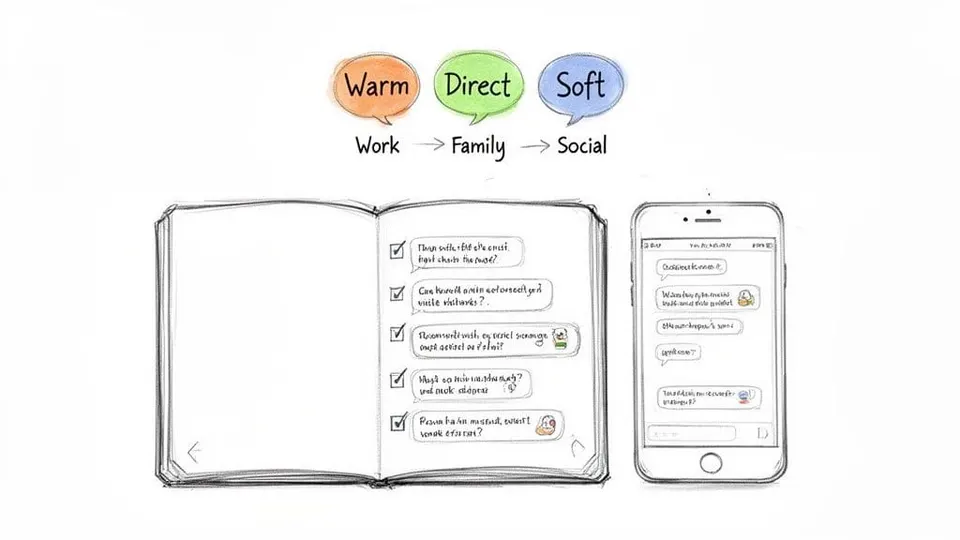
Diagram comparing communication styles (warm, direct, soft) for work, family, and social settings, with notebook and phone examples.

Popularized by speech-language pathology professionals and neurodivergent advocates, this method is now more accessible than ever. Apps like tonen offer extensive script libraries, providing a solid foundation you can customize. The core idea is not to sound robotic, but to have a reliable starting point that reduces decision fatigue.

Example Scripts for Common Scenarios

Having a template provides a valuable safety net. For instance, if you're attending a professional networking event, you can prepare an opening line like, "Hi, I'm [Your Name]. That was an interesting point the speaker made about [Topic], what did you think?" This is a simple but powerful tool.

Here is an example of a script:

  • Goal: Set a boundary with a family member who often calls during work hours.
  • Direct Tone: "I can't take personal calls during my workday. Let's schedule a time to talk after 6 PM."
  • Softer Tone: "I love catching up, but I have to focus on work right now. Could we please talk this evening instead?"
  • Warmer Tone: "It's so good to hear from you! I'm in the middle of a project, but I'm free after 6 PM and would love to chat then."

How to Implement This Strategy

To get started, focus on the situations that cause you the most stress. You don't need a script for every possible conversation.

  • Start Small: Create 2-3 scripts for your most common anxiety triggers, like making small talk at a party or requesting an accommodation at school.
  • Practice Aloud: Rehearse your scripts alone. Say them in different tones (firmer, softer, warmer) to find what sounds authentic to you. This builds muscle memory and confidence.
  • Keep Them Handy: Store your scripts on your phone in a notes app for quick reference before or even during a stressful interaction.
  • Customize for Authenticity: Adapt any template to include words and phrases you would naturally use. The goal is support, not a performance.

By preparing a few key talking points, you build a reliable communication toolkit. You can discover more about talking things through with pre-planned scripts to see how it can be applied to various parts of your life. This preparation is a practical and empowering way to manage social anxiety.

2. Perspective-Taking and Reframing Anxious Thoughts

A powerful method among social anxiety strategies is perspective-taking, a cognitive technique focused on challenging anxious interpretations of social events. When social anxiety causes you to jump to worst-case scenarios, such as believing "everyone thinks I'm weird," this strategy helps you generate more balanced and realistic alternatives. It interrupts the cycle of rumination by training you to separate facts from anxiety-driven assumptions, which allows you to engage more authentically in conversations.

An illustration showing a person's thought process from anxious judgment to rational explanations using facts and alternative perspectives.

This approach is a cornerstone of Cognitive Behavioral Therapy (CBT) and is also aligned with Acceptance and Commitment Therapy (ACT) principles. It has gained significant traction in autism and ADHD coaching communities and is a core feature in apps like tonen, which includes a "Perspective Helper" tool. By deliberately questioning your initial anxious thoughts, you build mental resilience against social fears.

Example Scripts for Reframing Thoughts

Having a structured way to reframe anxious thoughts can make social interactions far less daunting. Instead of accepting a negative thought as fact, you can challenge it with alternative possibilities.

Here is an example of reframing a common social anxiety trigger:

  • Anxious Thought: "They didn't respond to my message. I must have said something wrong, and now they hate me."
  • Alternative 1 (Neutral): "They're probably busy with work or family and haven't had a chance to reply yet."
  • Alternative 2 (Positive): "They might be thinking about how to respond because they value my message."
  • Alternative 3 (Self-Focused): "Their response time isn't a reflection of my worth. I'll focus on something else for now."

How to Implement This Strategy

To begin using perspective-taking, apply it after social situations that left you feeling anxious. Over time, you'll be able to use it in the moment.

  • Analyze the Situation: Write down exactly what happened without any emotional interpretation. Just the facts.
  • Identify the Anxious Story: Pinpoint the automatic negative interpretation your anxiety created. For example, "I said something awkward, and I ruined the whole conversation."
  • Generate Alternatives: Brainstorm at least three other possible explanations. What would a kind friend assume? What is the most likely, non-catastrophic reason?
  • Look for Patterns: Notice if your anxious thoughts follow a recurring theme, like fear of judgment or rejection. This helps identify the core beliefs to work on.
  • Start Small: Practice this technique with low-stakes interactions first, such as a brief exchange with a cashier, before applying it to more stressful scenarios.

This method is a key component in many therapeutic approaches. By consistently applying these reframing techniques, you can reshape your thought patterns for greater confidence.

3. Nervous System Regulation and Grounding Techniques

An essential part of any guide to social anxiety conversation tips involves regulating your nervous system with intentional grounding techniques. This strategy focuses on calming the physiological stress response that makes social interactions feel overwhelming. When you feel your heart racing or your breath shortening, your body is in a 'fight-or-flight' state, making conversation nearly impossible. By using grounding exercises, you can activate your parasympathetic nervous system, which brings a sense of calm and allows you to approach conversations from a more centered and capable state.

A sketch of a person meditating, demonstrating box breathing and sensory awareness techniques for nervous system regulation.

Popularized by somatic therapy practitioners and mindfulness coaches, these methods are especially helpful for autistic, ADHD, and introverted individuals who may experience sensory overload more intensely. The idea is to manage the physical symptoms of anxiety first, so your mind has the space to think clearly. This approach turns an overwhelming internal reaction into a manageable physical process.

Example Scripts for Common Scenarios

While not a verbal script, these physical "scripts" interrupt the anxiety cycle. They provide an internal anchor when external situations feel chaotic.

Here is an example of a grounding script:

  • Goal: Calm down before entering a crowded networking event.
  • Box Breathing: Find a quiet corner or step into the restroom. Inhale for 4 seconds, hold for 4 seconds, exhale for 4 seconds, and hold for 4 seconds. Repeat 3-5 times.
  • 5-4-3-2-1 Method: During a conversation where you feel overwhelmed, discreetly identify: 5 things you can see, 4 things you can feel (your shoes on the floor, the fabric of your shirt), 3 things you can hear, 2 things you can smell, and 1 thing you can taste.
  • Body Scan: After a stressful interaction, sit down and mentally scan your body from head to toe, noticing and releasing any tension in your jaw, shoulders, or hands.

How to Implement This Strategy

Integrating these techniques requires practice, so they become second nature during moments of high stress. Don't wait until you're anxious to try them for the first time.

  • Practice When Calm: Dedicate a few minutes each day to practice box breathing or the 5-4-3-2-1 method. This builds the neural pathways needed to access the skill under pressure.
  • Use a Calm Kit: Prepare a "Calm Kit" in an app like tonen or in your phone's notes. List your most effective techniques so you can quickly access them when you feel overwhelm approaching.
  • Combine with Scripts: This strategy is a perfect precursor to using pre-planned conversation scripts. Regulate your nervous system first, then access your prepared phrases for a more confident delivery.
  • Set Reminders: Use your phone to set brief reminders throughout the day to do a 60-second breathing exercise. This keeps your nervous system in a more regulated state overall.

By learning to manage your body's response to stress, you gain a foundational tool for handling social situations. You can find an extensive list of grounding techniques for anxiety to build your personal toolkit. These practical methods are some of the most effective because they address the root physical symptoms of anxiety.

4. Setting and Communicating Boundaries Clearly

A powerful method for managing social anxiety is learning to set and communicate personal boundaries clearly. This involves articulating your limits, preferences, and needs in social situations to prevent overwhelm and maintain your well-being. For many people, especially those who are autistic, have ADHD, or live with social anxiety, setting boundaries can feel confrontational, often leading to over-explaining or apologizing. This strategy shifts the focus to direct, honest communication, allowing you to protect your energy while preserving relationships.

A diagram illustrating communication steps: Ask, Listen, Validate, showing a speaker, arrows to an ear, and a listener representing clear boundary communication.

Popularized by therapists and the neurodivergent self-advocacy community, this approach is less about controlling others and more about protecting your own well-being. To effectively set and communicate boundaries clearly, it's essential to master assertive communication techniques that allow you to express your needs respectfully. It's one of the most practical tips for social anxiety because it directly addresses the root cause of much social stress: feeling depleted or resentful.

Example Scripts for Common Scenarios

Having prepared language makes it easier to state your needs without feeling guilty. You can adjust the tone to fit the situation and relationship.

Here is an example of a script:

  • Goal: Manage notification anxiety from a busy group chat.
  • Direct Tone: "I need 24 hours to respond to non-urgent group texts to stay focused on my work."
  • Softer Tone: "I find it hard to keep up with all the messages in real-time. I'll check in once a day so I don't miss anything important!"
  • Warmer Tone: "I love hearing from everyone! Just a heads-up, I'm trying to be more present, so I'll be catching up on messages in the evenings."

How to Implement This Strategy

Start by identifying what drains you and what you need to feel safe and respected. Your boundaries can be small and simple.

  • Use "I" Statements: Frame your needs from your perspective. Say "I focus better with written instructions" instead of "You always spring surprise meetings on me."
  • Separate the Boundary from Justification: You don't owe anyone a lengthy explanation. A simple "I can talk for 20 minutes, then I need a quiet break" is a complete statement.
  • Start with Lower Stakes: Practice setting boundaries in less intimidating situations first, like telling a barista you need a moment to decide on your order.
  • Be Consistent: Gently and firmly repeat your boundary as needed. Consistency is key for others to understand and respect your limits.

By preparing a few clear statements, you build a foundation for healthier interactions. You can explore more ideas on how to set boundaries with friends to apply this to your personal life. This approach empowers you to participate in social events on your own terms.

5. Active Listening and Shifting Focus to Others

A powerful strategy among the most effective conversation tips is to intentionally shift your focus from your internal anxiety to the person you are speaking with. This active listening approach involves redirecting your attention away from self-conscious thoughts like, "Am I being awkward?" or "What should I say next?" and toward a genuine curiosity about the other person. By concentrating on understanding their words, perspective, and feelings, you transform a nerve-wracking performance into a meaningful connection.

This reorientation is particularly helpful for anyone whose mind races during social interactions, including ADHD, autistic, or introverted individuals. It moves the goal from "saying the right thing" to "understanding them better," which dramatically lowers the pressure. The principles of this method are rooted in person-centered therapy and modern communication coaching, emphasizing empathy and genuine presence over social perfection.

Examples of Shifting Focus in Action

This technique is adaptable to nearly any social context. Instead of worrying about how you are perceived, you become an engaged listener who makes others feel heard.

Here are a few scenarios where this shift is impactful:

  • At a Work Meeting: Instead of worrying about your own performance, take detailed notes on what your colleagues are suggesting. This keeps you grounded in the present and focused on their contributions.
  • During a Family Gathering: Focus on truly understanding a relative's recent life change. Ask gentle, open-ended questions about their experience rather than thinking about what to share about yourself.
  • In a Moment of Anxiety: When you feel a surge of self-consciousness, consciously pivot your thoughts from "Do they think I'm weird?" to "What is one thing I'd like to know about them?"
  • One-on-One Conversation: Notice and validate the emotions the other person expresses. Saying, "That sounds like it was really challenging," shows you are listening deeply and builds rapport.

How to Implement This Strategy

Putting this into practice requires a conscious effort to change your conversational habits. Start with small, deliberate steps.

  • Set an Intention: Before a conversation, tell yourself, "My goal is to understand this person, not to impress them."
  • Prepare Open-Ended Questions: Have 3-4 genuine questions ready, such as "What was the most interesting part of that for you?" or "How did you get started in that field?"
  • Use Clarifying Phrases: When someone shares something, ask, "Could you tell me more about that?" or "What did that feel like?" This shows you are engaged and encourages them to elaborate.
  • Ground Yourself Physically: If you feel your anxiety rising, subtly press your feet into the floor or hold onto a cup. This physical sensation can help bring your focus back to the external world and away from internal chatter.
  • Practice Non-Verbal Engagement: Maintain gentle eye contact (or look at their chin/mouth if direct eye contact is too intense) and nod to show you are following along.

By learning to listen actively, you not only reduce your own anxiety but also make the interaction more enjoyable for everyone involved. This is one of the most practical strategies because it builds authentic connection.

6. Strategic Self-Disclosure and Authentic Communication

One of the most powerful tips is learning to practice strategic self-disclosure. This approach involves intentionally deciding what personal information to share, at what pace, and at what depth. Instead of over-explaining from anxiety or withholding completely out of fear, this method helps you share relevant, relatable aspects of yourself to build genuine connection while protecting your emotional safety. For neurodivergent individuals, this is a key skill for navigating when and how to disclose ADHD, autism, or other differences in a way that feels affirming.

This concept, supported by Brené Brown's research on vulnerability and championed by the neurodiversity self-advocacy community, balances authenticity with emotional well-being. It reframes disclosure not as a confession but as a tool for connection and self-advocacy. The goal is to share just enough to be understood and foster empathy, without over-exposing yourself before trust has been established.

Example Scenarios for Self-Disclosure

Strategic disclosure can be adapted for any context, from professional settings to personal relationships. It allows you to state your needs clearly and manage others' expectations.

Here are a few examples:

* Goal: Request a communication adjustment at work.

* Disclosure: "I sometimes process information differently. To make sure I don't miss anything, could we follow up on this with a quick email recap?"

* Goal: Explain your interaction style to a new friend.

* Disclosure: "Just so you know, I have ADHD. It means I might seem distracted sometimes, but I really value our conversations and care about what you're saying."

* Goal: Set expectations with a potential romantic partner.

* Disclosure: "I wanted to share that I have social anxiety, which can make new situations a bit tough for me. I really enjoy spending time with you, though."

How to Implement This Strategy

Implementing strategic self-disclosure is a gradual process of building confidence and testing the waters in your relationships.

  • Start Small and Low-Stakes: Practice with minor disclosures in safe environments. For example, telling a friend, "I'm a bit drained today, so I might be quieter than usual."
  • Use "I" Statements: Frame your disclosures around your own experience and needs, not on others' behavior. For example, "I focus best with written instructions," is more effective than, "You talk too fast."
  • Test Trustworthiness: Share a small piece of information and observe how the person responds. Their reaction will tell you whether it's safe to share more in the future.
  • Frame as a Difference, Not a Deficiency: When disclosing a neurotype, present it as a different way of operating. Saying, "I communicate differently," is more empowering than, "I'm bad at talking."
  • Remember You Owe No One an Explanation: Disclosure is your choice. You decide what, when, and to whom you share personal information.

This deliberate approach to sharing is one of the most effective because it puts you in control, allowing you to build authentic connections on your own terms.

7. Building Conversational Confidence Through Incremental Practice

A powerful method for overcoming social anxiety is to build conversational confidence through incremental practice. This approach, rooted in exposure therapy principles, involves deliberately engaging in conversations in progressively more challenging situations. Instead of avoiding interactions that cause fear, you start with very low-stakes scenarios and slowly work your way up. This repeated, structured exposure helps rewire the brain's anxiety response, turning dreaded interactions into manageable and even routine ones. This is one of the most effective social anxiety conversation tips because it builds real-world competence and lasting confidence.

This strategy is well-established in Cognitive Behavioral Therapy (CBT) and is now a core feature in modern support tools like the tonen app's Practice Mode. Neuroscience shows that with each successful interaction, you reinforce new, less anxious neural pathways. The goal is to prove to your nervous system, through direct experience, that you can handle these situations successfully.

Example of a Progressive Practice Plan

A gradual plan makes the process feel achievable. Rather than jumping into a high-stress networking event, you can build your skills over several weeks.

  • Week 1: Rehearsal: Practice your conversation scripts aloud with a trusted friend, family member, or therapist.
  • Week 2: Low-Stakes Text: Send a text to a casual acquaintance asking a simple question.
  • Week 3: Scripted Interaction: Use a script to order coffee with a specific modification, like "Can I get an oat milk latte with half the usual syrup?"
  • Week 4: Small Group Question: Ask a question or make a brief comment during a small, informal group meeting or class.
  • Week 5 and Beyond: Higher Stakes: Apply your skills in more challenging contexts, like initiating small talk at a party or joining a conversation at a networking event.

How to Implement This Strategy

Success with this strategy depends on moving at a pace that is challenging but not overwhelming. The key is consistency and self-compassion.

  • Start at a 3 or 4: Begin with situations you would rate a 3 or 4 on a 10-point anxiety scale. Avoid starting with a 1 (too easy to build momentum) or a 10 (too likely to cause shutdown).
  • Keep a "Win" List: Document every successful conversation, no matter how small. When anxiety spikes, review this list to remind yourself of your progress.
  • Reflect After Practice: After each interaction, ask yourself: *What went well? What might I do differently next time?* This turns every conversation into a learning opportunity.
  • Celebrate Successes: Acknowledge your effort. Celebrating small wins releases dopamine, which reinforces the new positive behavior and makes you more likely to continue practicing. This is a crucial step in making these conversation tips stick.

7-Point Comparison: Social Anxiety Conversation Tips

Item🔄 Implementation complexity⚡ Resource / Speed⭐ Expected effectiveness📊 Key advantages / impact💡 Ideal use cases & brief tips
Pre-Planning Conversations with Scripts and TemplatesLow–Moderate: one-time setup to select/customize scripts; easy to use in the momentFast access once prepared; minimal ongoing resources (phone/app)Very effective for predictable or recurring conversations; reduces cognitive loadIncreases preparedness and confidence; provides graceful exits and tone controlBest for rehearsable contexts (work, family, networking); start with 2–3 scripts and practice aloud
Perspective-Taking and Reframing Anxious ThoughtsModerate: requires learning guided steps and emotional regulationModerate speed—best used reflectively rather than instantlyHigh long-term effectiveness for reducing catastrophic thinkingBuilds resilience and clearer interpretations; improves authenticity of responsesUse in low‑stakes moments first; generate 2–3 alternative explanations and use Calm Kit if needed
Nervous System Regulation and Grounding TechniquesLow: simple techniques but require consistent practice to masterVery fast relief when used; minimal equipment and discreet optionsHighly effective for immediate symptom reduction; less durable on its ownRapid downregulation of physical anxiety; complements cognitive strategiesUse before or during acute anxiety; practice daily so techniques are automatic under stress
Setting and Communicating Boundaries ClearlyModerate: needs wording skill and consistent follow-throughModerate effort initially; scripts reduce real-time burdenVery effective at preventing overwhelm and preserving wellbeingReduces resentment, clarifies needs, improves relationship health when upheldStart with low-stakes boundaries, use "I" statements, rehearse scripts and follow up consistently
Active Listening and Shifting Focus to OthersLow–Moderate: requires impulse control and intentional practiceEfficient in real-time conversations; little prep neededVery effective for lowering self-focus and performance anxietyStrengthens rapport and makes interactions feel natural and reciprocalSet intention to understand, prepare 3–4 open-ended questions, and ground yourself if anxious
Strategic Self-Disclosure and Authentic CommunicationModerate–High: needs judgment about timing, audience, and depthVariable timing; may require rehearsal and reflectionHigh effectiveness for deepening relationships when done safelyPromotes authenticity, reduces masking, invites appropriate support; risk if misappliedStart with small disclosures, test trustworthiness, frame neurodivergence as a difference; rehearse with scripts
Building Conversational Confidence Through Incremental PracticeModerate: requires structured planning and sustained effortSlow-burn approach—requires repeated practice over timeVery effective long-term via graded exposure and skill acquisitionProduces durable confidence and reduced avoidance; creates evidence against anxious predictionsBegin at manageable anxiety levels (3–4/10), use Practice Mode, track wins and reflect after each practice

Your Toolkit for More Authentic Conversations

Navigating the world of social interaction can feel like an immense challenge, but it doesn't have to be a permanent state of distress. This guide was designed to provide a collection of practical social anxiety conversation tips that you can put into action immediately. It's not about forcing yourself to become a gregarious extrovert overnight. Instead, it's about building a personalized toolkit that respects your unique neurotype, whether you are autistic, have ADHD, are introverted, or simply feel the weight of social anxiety.

The journey toward more comfortable and authentic conversations is a gradual process built on a foundation of preparation, self-compassion, and consistent practice. By arming yourself with strategies like pre-planning with scripts, reframing anxious thoughts, and grounding your nervous system, you create a buffer against the overwhelm that so often hijacks social situations. These aren't just abstract ideas; they are concrete actions that give you a sense of control.

Weaving Your Strategies Together

The true power of these techniques comes from combining them. Think of each tip as a single thread. On its own, it's useful. Woven together, they create a strong, reliable safety net.

* Before the Conversation: Use scripts and templates to reduce the mental load of what to say. Simultaneously, practice perspective-taking to challenge the catastrophic thoughts your anxiety might be feeding you.

* During the Conversation: If you feel a surge of panic, deploy a quick grounding technique to bring yourself back to the present moment. Shift your focus outward with active listening to ease internal pressure.

* Setting the Stage for Success: Remember that you are in control. Use clear, kind language to set boundaries when you need a break or want to change the topic. Practice strategic self-disclosure to share just enough to feel connected without feeling overexposed.

This integrated approach helps you build resilience. Each small, successful interaction becomes evidence that you can handle these situations, rewriting old narratives and building new, more positive pathways in your brain.

The Goal: Authenticity, Not Perfection

Ultimately, the most important takeaway is that the goal is not a flawless performance. It is about showing up as yourself, with your needs and your boundaries intact. Mastering these strategies is a means to an end: feeling more present, understood, and connected in your relationships. It allows you to share your thoughts, listen to others, and build the meaningful connections you deserve, all without sacrificing your well-being. Start small, be patient with yourself, and celebrate every step forward.

*

Ready to put these strategies into practice with a dedicated support tool? The tonen app was built to help neurodivergent individuals and those with social anxiety apply these very tips. With a Scripts Library, Perspective Helper, and Calm Kit, tonen provides an all-in-one system for preparing, practicing, and managing conversations with confidence.