The 5 4 3 2 1 grounding technique is a quick way to pull your mind out of an anxiety spiral and back into the present by naming 5 things you see, 4 you feel, 3 you hear, 2 you smell, and 1 you taste. It works because it gives your brain a simple sensory job right when stress is trying to take over.
If you're reading this while your chest feels tight, your thoughts are racing, or a conversation keeps replaying in your head, start now. Look around. Name five visible things. Touch four surfaces. Listen for three sounds. Find two smells. Notice one taste. You don't need privacy, equipment, or a perfect setting. That portability is a big reason this method became so widely used, and Trauma Research UK's overview of the 5-4-3-2-1 grounding method describes it as a simple present-moment grounding practice.
For neurodivergent people, that matters. Overwhelm often shows up in public, at work, in class, on transport, or right before a hard conversation. The 5 4 3 2 1 grounding technique is one of the tools many people keep close because it can be done fast and discreetly. If you're trying to steady yourself during a stressful moment, this guide sits alongside practical support like what to do when feeling overwhelmed.
An Immediate Way to Calm Overwhelm
Overwhelm rarely arrives politely. It hits in the supermarket line, before a team meeting, in the car park, halfway through a text exchange, or when someone says, "Can we talk?" and your nervous system takes that as a threat.
The reason this method helps is simple. It interrupts the loop. Instead of arguing with your thoughts, you shift your attention to what is physically here right now. That makes the exercise useful when your brain is noisy but you still have enough capacity to follow a short structure.
The basic sequence
Use the sequence in order:
- 5 things you can see
- 4 things you can touch
- 3 things you can hear
- 2 things you can smell
- 1 thing you can taste
That fixed pattern is part of the strength. You don't have to invent a new coping strategy in the moment. You just follow the script.
> Practical rule: If your brain feels scattered, don't try to "do it well." Just do the next number.
This is also why the exercise works well in real life. You can do it in a classroom, office, waiting room, bus, or hallway. You can do it without speaking. You can do it while making eye contact with no one.
When to reach for it
This tool tends to be most useful when you notice early signs such as:
- Racing thoughts: Your mind is moving faster than your body can keep up.
- Social panic: You're about to speak, reply, or enter a conversation and can feel yourself bracing.
- Stress spikes in public: You need a discreet reset, not a long ritual.
If that sounds familiar, start with the senses before trying to problem-solve. A calmer brain usually makes better decisions.
How to Use the 5-4-3-2-1 Grounding Technique Step-by-Sense
The fastest way to make this exercise more effective is to get specific.
Your brain needs a concrete task, especially when you are overstimulated, dissociative, or close to a shutdown. A broad label like "chair" or "wall" often is not enough to interrupt the stress loop. Detailed sensory noticing gives your attention something real to grip. That is one reason many clinicians include this kind of present-moment orienting in broader grounding techniques for anxiety.
Five things you can see
Start with whatever is visually easiest to find. Then narrow in.
Look for five separate details, not five categories. Notice the dust line on a shelf, the crease in your sleeve, the blue tint in a screen reflection, one chipped corner of a table, the exact shape of a shadow on the floor. If your mind keeps drifting, keep your eyes on one object for a full breath before moving to the next.
For autistic people and many ADHD users, the visual step can become too open-ended. Use a rule if you need one. Find five blue things. Five rectangles. Five soft-looking objects. In the Tonen Calm Kit, some people pair this step with a visual prompt on their phone so they do not have to generate structure from scratch.
Four things you can touch
This step often works best because touch is immediate and hard to argue with.
Put your attention on contact points. The chair under your thighs. Socks against your toes. Fabric at your wrist. Fingertips against a key, ring, or zipper. The temperature of a mug. The pressure of your back against a wall.
Name what you feel in plain language. Rough, smooth, tight, cool, damp, heavy, elastic, buzzing, steady.
If direct touch is unpleasant or overstimulating, adapt the task. Press your feet into the floor instead of exploring textures. Hold one familiar object. Many neurodivergent people regulate better with predictable input than with novelty, so a smooth stone, stim toy, or hoodie cuff may work better than reaching for random surfaces.
Three things you can hear
Do not force yourself to find interesting sounds. Just sort what is already there.
A useful approach is to notice one sound inside your body or very close to you, one sound in the room, and one sound farther away. You might hear your breath, a vent, and traffic outside. Or swallowing, keyboard taps, and a dog barking down the street.
Need a quick way to calm down in the moment? tonen can help.
tonen gives you 188+ conversation scripts, tone guidance and calming tools — designed for autistic adults, ADHD and social anxiety. Try it free for 7 days.
Download on the App StoreiOS only. Android coming soon.
If auditory input is intense for you, this step can backfire when the environment is chaotic. In that case, limit the search. Pick three repeatable sounds only. Or use noise-canceling headphones and notice the softened hum, your own breathing, and one remaining outside sound.
Two things you can smell
Smell is often the hardest sense in the set, and that does not mean you are doing it wrong.
Try obvious options first. Soap on your hands. Your sleeve. A drink nearby. The room after rain. Air near an open window. If nothing stands out, pause and take one slow breath without straining. Searching too hard can make people more anxious.
For people with reduced interoception or sensory differences, smell may not be accessible in the moment. Use a substitute if needed. Keep a scented lotion, tea bag, mint, or essential oil roller in your bag if smell helps you regulate. If scent tends to overwhelm you, skip this step and repeat touch instead.
One thing you can taste
Taste works well when you prepare for it before you need it.
Notice whatever is already present. Toothpaste, coffee, gum, water, lip balm near the mouth, or the neutral taste in your mouth right now. Stay with one taste for a few seconds instead of naming it and rushing on.
This is a useful place to plan ahead. A mint, sour candy, or a familiar drink can make the final step much easier during a stress spike. In Tonen's Calm Kit, users often build a short grounding routine around one reliable taste item because it reduces decision fatigue.
Quick sensory prompts for grounding
| Sense | Prompts to Consider |
|---|---|
| See | Light reflection, shadow edges, patterns, small color differences, shape outlines |
| Touch | Temperature, pressure, texture, weight, softness, roughness |
| Hear | Nearby hums, distant traffic, footsteps, your breath, a tapping sound |
| Smell | Soap, fabric, air, drink aromas, food nearby, outdoor scent |
| Taste | Water, gum, mint, toothpaste, coffee, natural taste in your mouth |
Go at a pace your nervous system can tolerate. Some people move through the sequence in a couple of minutes. Others need longer, especially if they are overloaded or switching attention is hard. Slow and specific usually works better than fast and perfect.
Why This Simple Method Works on a Brain Level
When anxiety rises, your brain starts prioritizing threat. That can make neutral situations feel urgent, social moments feel dangerous, and ordinary body sensations feel loaded. Grounding helps by changing what your brain is doing, not by pretending the feeling isn't there.
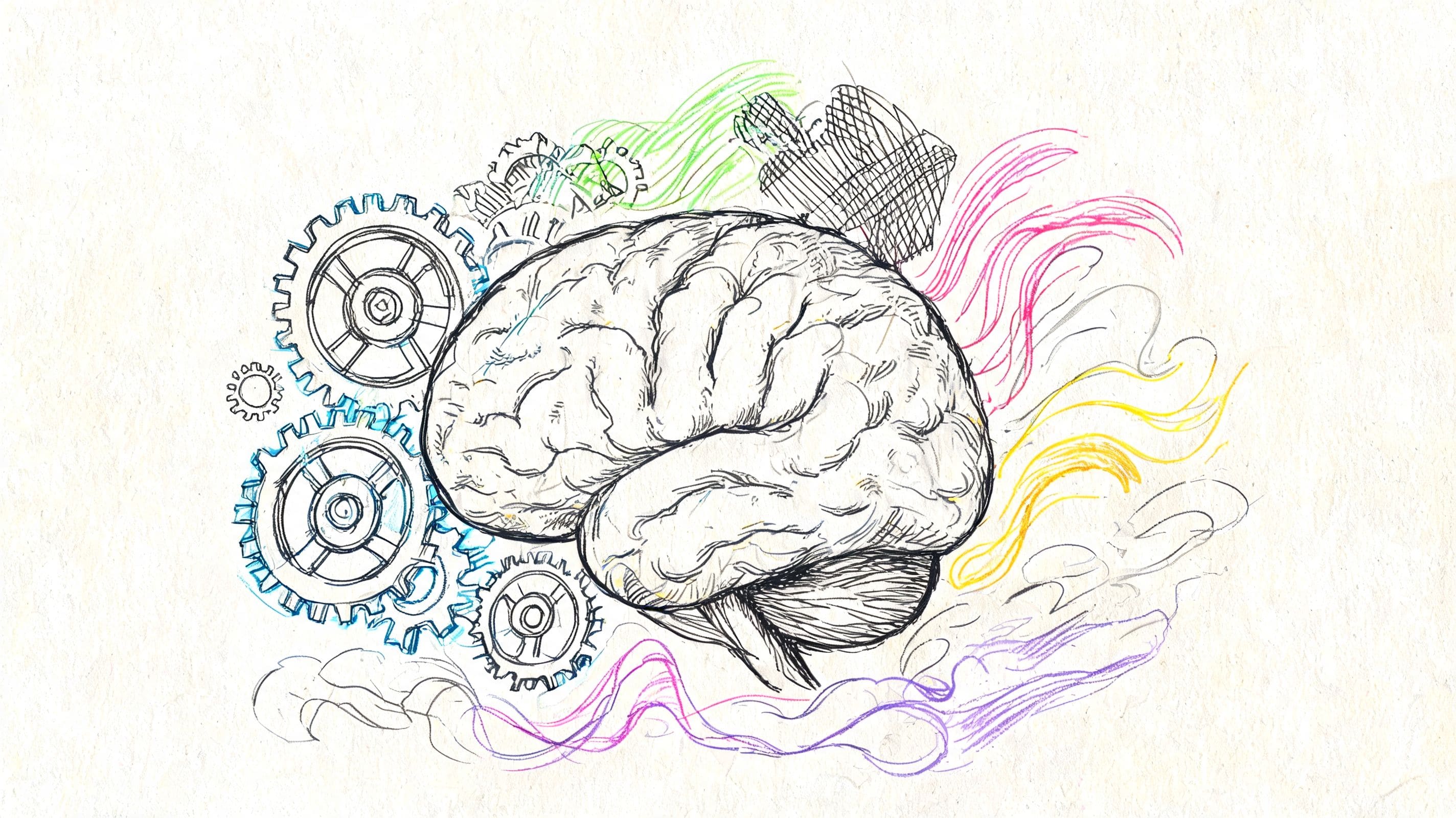
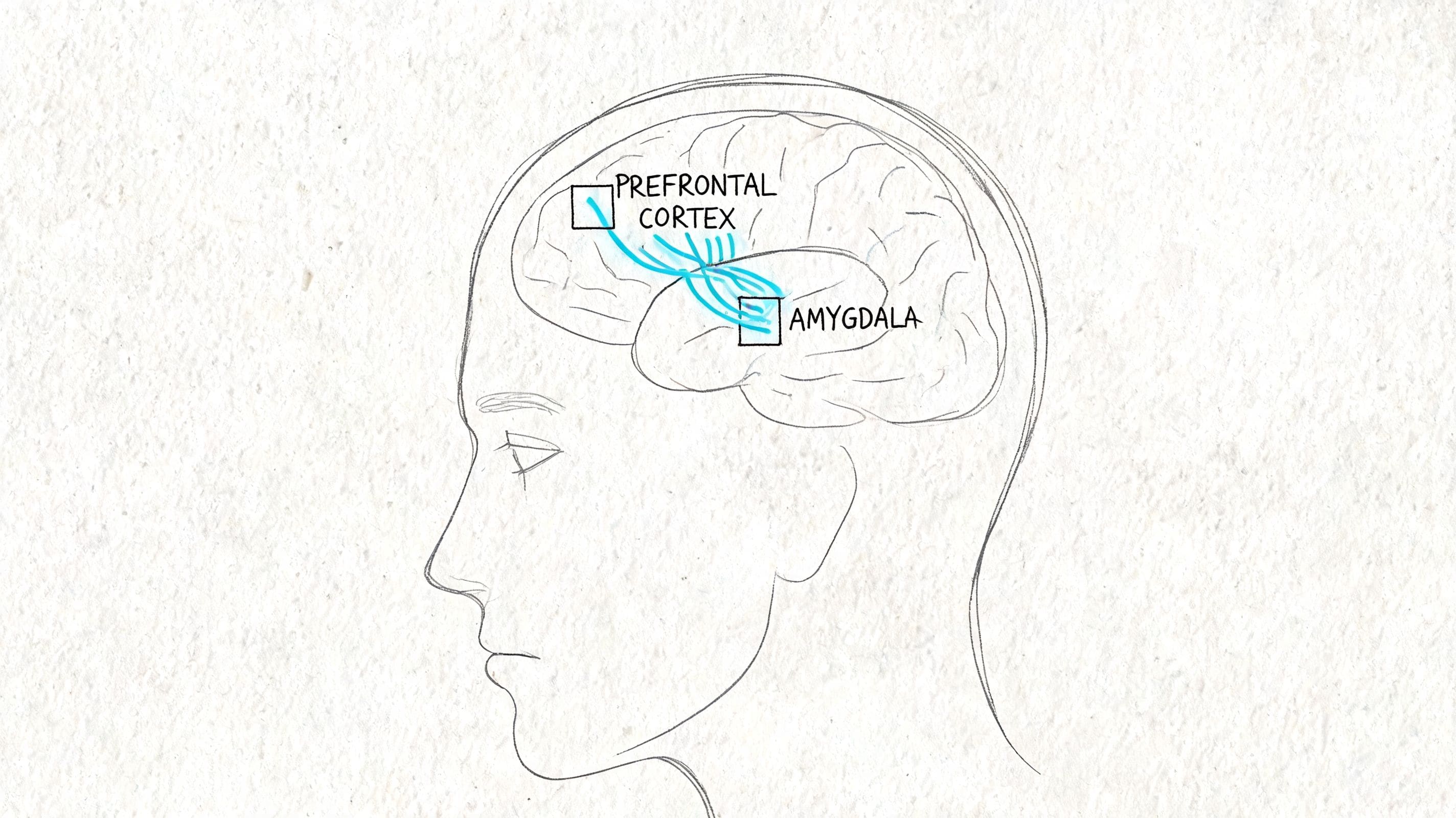
A clear summary from The Mindfulness App's explanation of the 5-4-3-2-1 technique is that systematically engaging all five senses activates the prefrontal cortex. That sensory engagement creates sensory feedback cycling, which redirects neural processing from the limbic system, associated with emotional alarm, to the cortical system, associated with rational processing.
What that means in plain language
Your anxious brain says, "Something is wrong. Scan for danger."
Grounding says, "Count the actual sensory details in front of you."
Those are different tasks. The second task doesn't erase emotion, but it can interrupt spiraling. That's why the exercise often feels less like positive thinking and more like a reset.
Why it can fit neurodivergent users well
Many autistic and ADHD people notice sensory information quickly, intensely, or in unusual detail. In practice, that can become an advantage when the exercise is adapted well. Instead of fighting your brain for being "too aware," you give that awareness a direction.
The same source also describes the technique as using 15 discrete sensory data points, which is often enough cognitive load to disrupt rumination. For some people, that structure matters as much as the senses do. It replaces a vague instruction like "calm down" with a concrete sequence.
> If your thoughts are looping, specificity is often more helpful than reassurance.
For readers who want a broader view of why strong feelings can hijack clear thinking, this explanation of emotional dysregulation in adults can help put the experience in context without pathologizing it.
Customizing the Technique for Neurodivergent Minds
The standard script helps some people. Neurodivergent nervous systems often need a version that is more predictable, less stimulating, and easier to re-enter if attention slips. If you're autistic, ADHD, or both, the goal is not to complete the exercise the "right" way. The goal is to lower activation without adding new sensory stress.
As noted earlier, guidance on adapting this method points in a useful direction for neurodivergent users. Active choice usually works better than passive exposure. Subtle input is often easier than intense input. If the visual step is hard, mental images can count.
That flexibility matters.
Adaptations that often work better
For autistic users, sensory overload is often the main barrier. Random input from a room can be too sharp, too bright, too noisy, or too inconsistent to feel regulating. In practice, I usually suggest building a "known safe" version first, then using the environment only if it already feels tolerable.
Try options like these:
- Choose controlled input: a smooth stone, a sleeve cuff, a cool table edge, a stim toy, or your own hands
- Lower the intensity: quieter sounds, softer fabrics, dimmer visual targets, and milder scents
- Repeat familiar anchors: the same object each time can help your body recognize the routine faster
- Shrink the task: use 3-3-3-1-1 if five visual items is too much to scan while overloaded
For ADHD users, the problem is often drift. You start with good intentions, then your brain skips from "five things I see" to a memory, then to a text you forgot to answer, and the grounding sequence disappears. A tighter structure usually helps more than a longer one.
Useful tweaks include:
- Name each item briefly in your head or out loud: "blue mug, cold chair, humming vent"
- Keep the countdown visible: fingers, a note in tonen, or a lock-screen prompt can hold the sequence in place
- Add small movement: press your feet down, tap each fingertip, or shift your weight between legs
- Use a reset rule: if attention wanders, return to the last number you clearly remember instead of starting over
If a sense is unavailable or unpleasant
You do not need to force every category.
If smell is unreliable, use a familiar scent you carry on purpose, like lotion, a tea bag, or a mint. If taste feels impractical, preload gum before a stressful meeting or commute. If visual scanning becomes too activating, especially at night or in busy spaces, use five mental images you know well. A favorite blanket, your kitchen table, a certain tree on your street, your pet's face, the layout of your desk. Predictable images can calm a brain that is already working too hard.
Sleep timing matters here too. A lot of ADHD and autistic adults find that grounding gets harder when they are overtired, sensory-frayed, or stuck in evening hyperarousal. Resources like SleepHabits restorative sleep solutions can help if you're trying to reduce nighttime activation without adding a complicated routine.
Pair it with communication support
Sometimes the actual problem is not just distress. It is distress plus language loss, decision fatigue, or rejection sensitivity. In those moments, grounding may settle your body enough to communicate, but not enough to generate words from scratch.
tonen's Calm Kit is useful for that exact gap. It includes grounding tools like 5-4-3-2-1 alongside short scripts you can use to ask for space, request reassurance, or say "I can't process this right now." That pairing is often more realistic for neurodivergent users than treating regulation and communication as separate tasks. If this pattern is familiar, these ADHD emotional regulation strategies add more options for handling overwhelm before it snowballs.
Common Pitfalls and When to Use a Different Tool
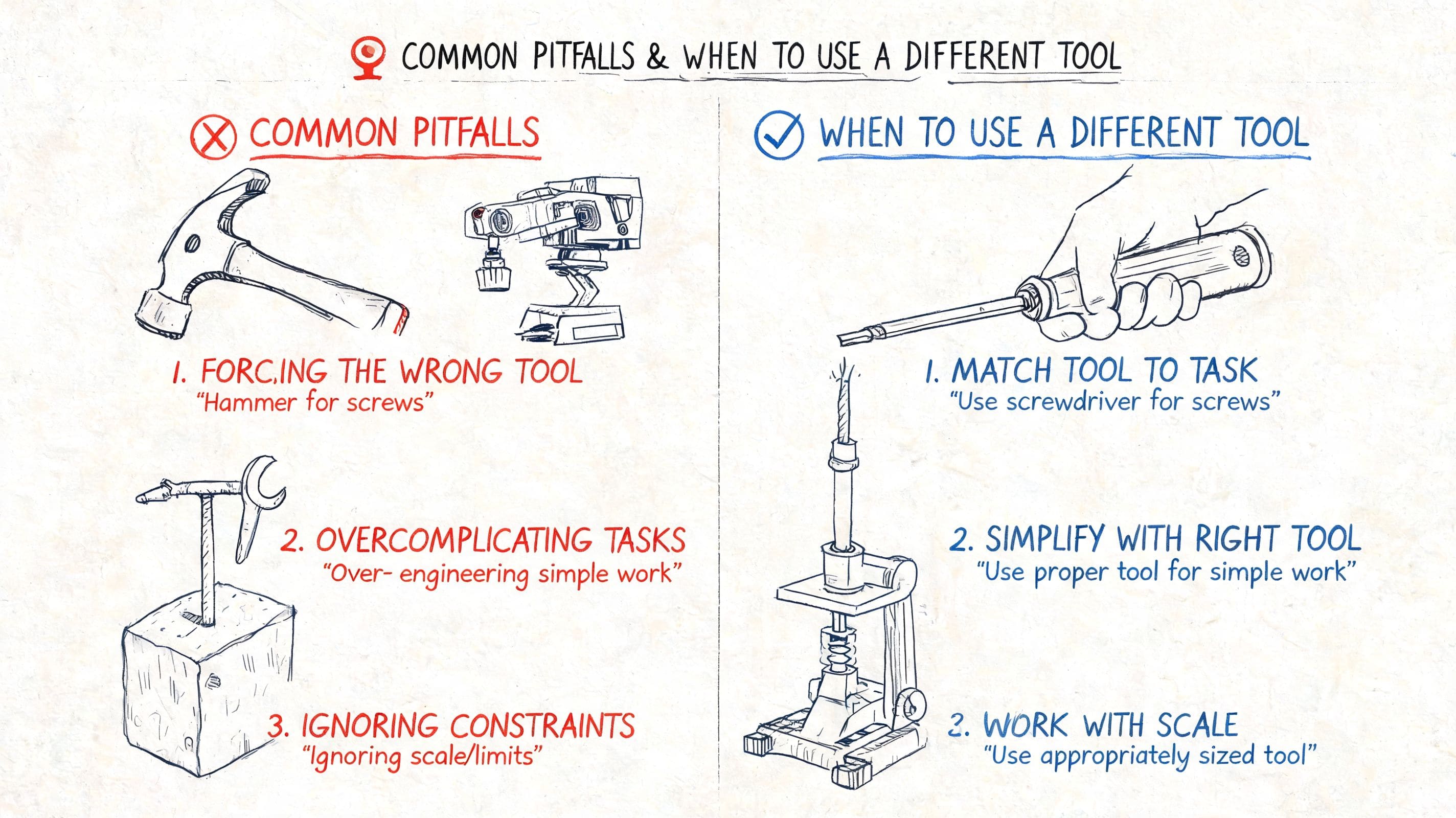
The 5 4 3 2 1 grounding technique is useful. It isn't magic. When people say it "doesn't work," they often mean one of two things. They rushed through it, or they used it in a moment when another tool would have fit better.
Mistakes that reduce the effect
A few patterns come up often:
- Rushing the list: If you blurt out five visible objects in a few seconds, your nervous system may barely register the shift.
- Choosing only obvious details: The exercise works better when you notice specific, granular features instead of generic labels.
- Waiting until you're far past your threshold: A tool that helps at the start of escalation may feel inaccessible in a full shutdown or panic state.
- Treating it like a test: Perfectionism makes grounding harder. This is regulation, not performance.
> Sometimes the most effective change is slowing one step down instead of adding more steps.
When a different tool may fit better
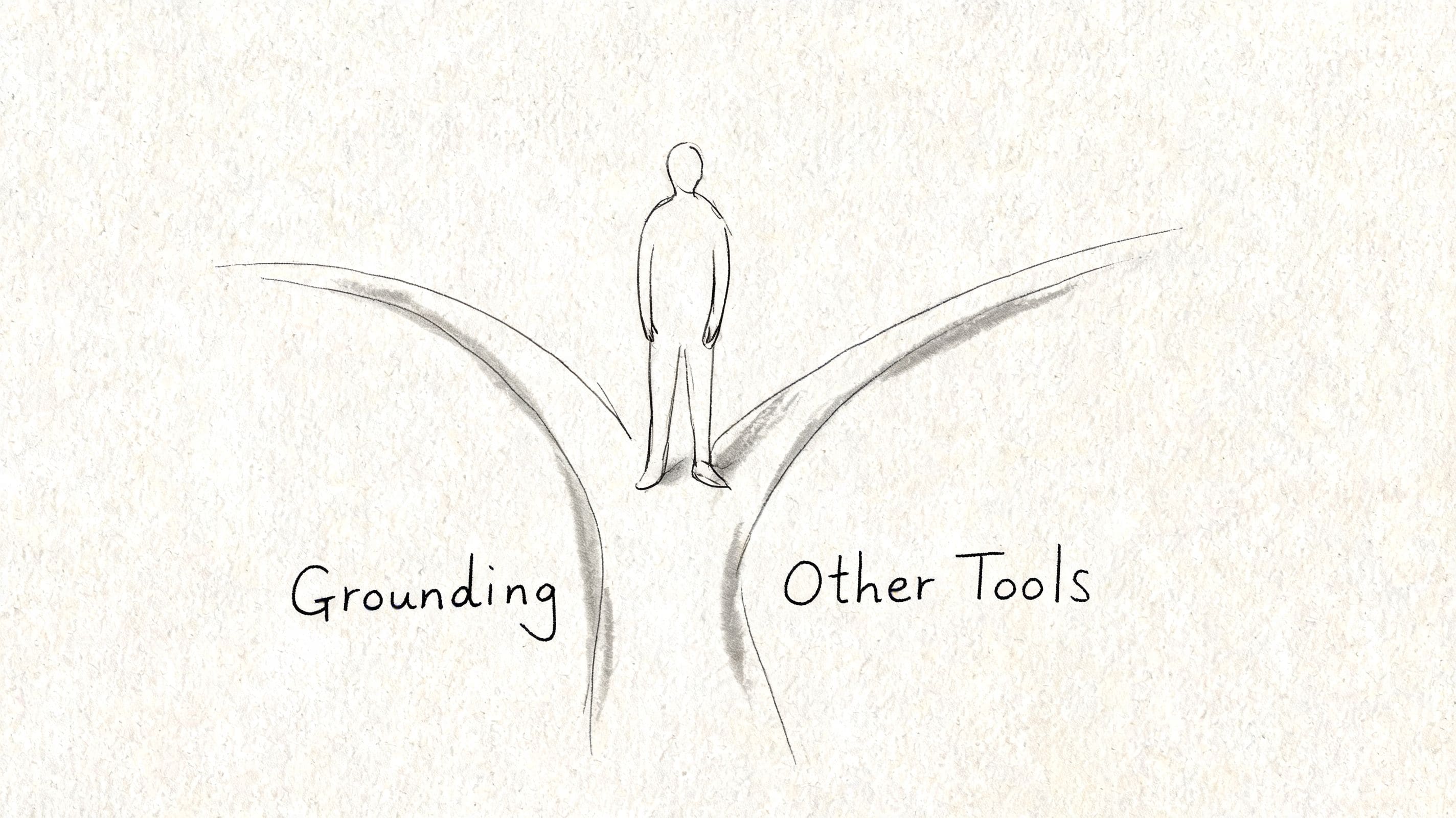
A clinically important caution from Youth and Family Therapy's grounding guidance is that grounding can be less effective if someone is highly activated or in a trauma flashback. In those moments, engaging with the senses may increase distress rather than reduce it.
If that happens, pivot. Shorter and more concrete options can be better, such as feeling both feet on the floor, holding one familiar object, or asking another person for support. For some people, breath-based approaches or a body-based practice land more gently than sensory scanning. A guided option like body scan meditation for anxiety may be more tolerable when the environment itself feels like too much.
If your distress sits alongside questions about medication, side effects, or how different treatments are discussed, resources on comparing depression and pain medication options can help you prepare better questions for a clinician. Grounding is one support. It doesn't replace individualized care.
A better decision rule
Use this technique when you can still follow a sequence.
Choose a different tool when the sequence itself feels impossible, the sensory input is making things sharper, or you need co-regulation more than self-guidance.
Integrating Grounding into Your Daily Life with Tonen
Grounding works best when it isn't only a last-resort move. Practicing during ordinary moments teaches your brain that the sequence is familiar, available, and worth reaching for under pressure.
That can look simple. Use it before a meeting, before replying to a difficult message, after school pickup, in the car before walking into an appointment, or at night when your thoughts won't settle. The point isn't to perform calm. The point is to shorten the path back to the present.
For people who freeze during stressful conversations, it helps to pair regulation with a next step. Some use a notebook card. Some use a saved phone note. Others prefer digital support that combines calming tools and communication rehearsal. If you work with a therapist, coach, or support person, a structured coaching platform can also help turn these coping tools into repeatable practice.
In daily use, the practical value of a Calm Kit is immediacy. If you're already overloaded, you shouldn't have to search for instructions, remember wording, or decide from scratch what to do next. A tool that's easy to access is more likely to get used.
The goal isn't to depend on one exercise forever. It's to recognize earlier, regulate sooner, and speak more clearly when the moment asks something of you.
tonen helps neurodivergent people prepare for hard conversations and regulate in the moment with scripts, reframes, and a Calm Kit that includes grounding tools like 5-4-3-2-1. If you want support that covers both self-regulation and what to say next, explore tonen.
Frequently asked questions
Use what is available. If smell or taste is hard to access, adapt with a familiar item or a remembered sensory cue. The exercise works through focused attention, not perfect counting.