A body scan meditation for anxiety is a simple, evidence-based grounding technique that brings non-judgmental awareness to different parts of your body, helping interrupt anxiety's physical loop. Research includes a 2020 clinical trial where a brief body scan reduced state anxiety immediately, with an average 4.9-point drop on the STAI scale and a large effect size of Cohen's d = -0.95.
If you're reading this while your chest feels tight, your jaw is locked, or your thoughts are moving faster than your body can keep up, start here: you do not need to clear your mind. You need a small, structured way to come back into your body without forcing calm. That's why body scan meditation for anxiety helps so many people, especially when the practice is short, guided, and flexible enough to match sensory needs rather than fight them.
For neurodivergent people, that flexibility matters. A standard body scan can feel grounding, but it can also feel like too much if you're already overstimulated. The most useful version is rarely the most rigid one. It's the one you can do.
Why Body Scan Meditation Works for Anxiety
Anxiety often shows up as a body event first. Shoulders rise. Breath gets shallow. Stomach tightens. Hands turn cold or restless. Then the mind notices those sensations and decides something is wrong, which creates even more tension.
A body scan interrupts that loop by giving your attention a job. Instead of tracking every threat, your mind tracks sensation. Instead of asking, "How do I stop feeling this?" you practice noticing, "My feet feel heavy. My jaw feels tight. My chest is fluttery." That shift matters because awareness is different from spiraling.
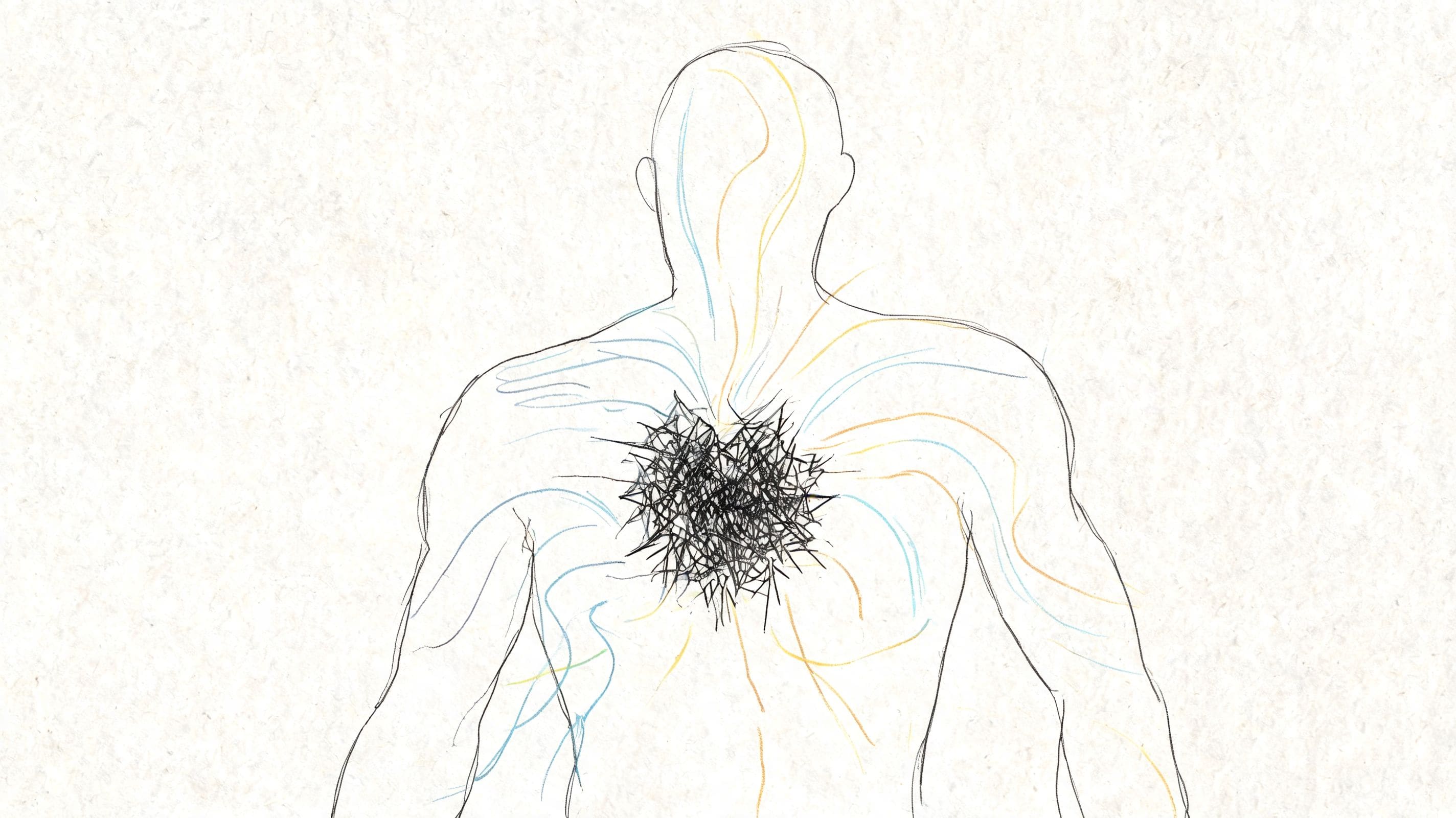
It works through attention, not force
The common misunderstanding is that meditation should make you feel peaceful right away. Sometimes it does. Sometimes it doesn't. The actual skill is gentler and more practical: noticing what's happening in your body without adding judgment.
That's why body scans can help when anxiety feels physically loud. You're not arguing with the feeling. You're changing your relationship to it.
> Practical rule: If you're trying hard to relax, you're usually working against the practice. Notice first. Soften second, if softening happens.
A 2022 systematic review found that body scan meditation had a statistically significant effect on enhancing mindfulness skills, which supports the core mechanism behind anxiety relief: non-judgmental awareness of bodily sensations. The review also noted low attrition in longer studies, suggesting the practice is feasible enough for people to stick with over time, even though study quality was mixed and body scan works best as part of a broader approach rather than a cure-all on its own, as described in Wayne State University's overview of body scan meditation research.
What this looks like in real life
The benefit is often subtle at first. You may still feel anxious, but less fused with it. You may notice, "I'm activated," instead of becoming the activation. That small bit of space can be enough to choose your next move more carefully.
If anxiety tends to blend into overwhelm, shutdown, or reactivity, you may also relate to patterns described in this piece on emotional dysregulation in adults. A body scan won't solve everything, but it can help you catch the body before the spiral gets bigger.
Guided Body Scan Scripts You Can Use Today
The most effective script is the one that matches your actual capacity. If you have ninety seconds of patience, don't force twenty minutes. If you're wired and restless, shorter is often better.
UC Berkeley's Greater Good Science Center recommends a sequential method: settle first, then spend 20 to 30 seconds on each area of the body, moving with non-judgmental awareness and gently redirecting attention when the mind wanders. That wandering is normal, not a sign that you're doing it badly, as outlined in UC Berkeley's body scan meditation practice guide.
Choosing Your Body Scan Practice
| Scan Length | Best For | Key Focus |
|---|---|---|
| 3 minutes | Acute stress, transition moments, sensory overload | Quick grounding and orienting |
| 10 minutes | Daily practice, work breaks, after social effort | Full-body awareness with steady pacing |
| 20 minutes | Evening wind-down, deeper recovery, post-burnout rest | Longer settling and whole-body release |
If you support a younger person who struggles with transitions or body awareness, some of the pacing ideas in this article on guided meditation for children can also translate surprisingly well to adults who need simpler language and shorter prompts.
The 3 minute emergency scan
Use this when anxiety is peaking and anything long sounds impossible.
> Sit or stand in a way that feels supported.
> Notice one point of contact first. Your feet on the floor, your back on the chair, or your hands touching each other.
>
> Take one slow breath in. Let the exhale be a little longer if that feels available.
>
> Bring attention to your feet. Notice pressure, temperature, buzzing, numbness, or nothing obvious at all.
> Move to your legs and hips. Notice where your body is being held up.
> Move to your belly and chest. Don't force these areas to relax. Just notice tightness, movement, fluttering, or holding.
> Move to your shoulders, jaw, and face. If you find tension, let your exhale pass through it.
>
> End by noticing your whole body at once. Say quietly to yourself: "I am in my body. I am here right now."
> Then choose one next step. Drink water, sit down, send the message later, or take another minute.
This version is useful because it reduces decision fatigue. It doesn't ask for insight. It asks for contact.
Need calming techniques that actually work? tonen can help.
tonen gives you 188+ conversation scripts, tone guidance and calming tools — designed for autistic adults, ADHD and social anxiety. Try it free for 7 days.
Download on the App StoreiOS only. Android coming soon.
The 10 minute daily scan
This is the most balanced option for building a steady habit.
> Get into a position that feels supported enough, not perfect. Eyes can close, soften, or stay open.
> Take a few easy breaths and notice the fact that the body is already breathing.
>
> Bring your attention to your feet for a short stretch. Notice pressure, warmth, coolness, tingling, or restlessness.
> Move gradually into the calves and knees. Then the thighs.
> Bring awareness to the pelvis, lower back, and abdomen. If these areas feel guarded, that's okay. You're noticing, not correcting.
> Move into the chest and upper back. Track the movement of breath.
> Bring attention into the hands and arms. Notice whether they feel heavy, activated, clenched, or neutral.
> Move into the shoulders, neck, jaw, mouth, eyes, and forehead.
>
> If your mind wanders, gently return to the last body part you remember.
> End by feeling the body as one whole field of sensation. Let yourself pause before moving.
> Some sessions feel calming. Some feel flat. Some feel irritating. A useful session is one you completed with honesty, not one that looked peaceful from the outside.
The 20 minute deep relaxation scan
Use this one when you have time and want a slower descent out of stress.
> Lie down or sit back with support. Let the body be held.
> Notice the room first. Temperature. Sounds. The surface underneath you.
>
> Take a few slow breaths and let your attention land at the feet. Stay there longer than you think you need to.
> Move through the legs in stages. Feet, ankles, calves, knees, thighs. Notice each region with patience.
> Rest attention in the hips and lower back. This area often carries effort. Let the breath move here without asking it to fix anything.
> Bring awareness to the belly. Then the ribs and chest. Notice guarding, fluttering, expansion, or emptiness.
> Move into the hands one at a time. Then the forearms, elbows, upper arms, and shoulders.
> Bring attention to the throat, jaw, cheeks, eyes, forehead, and scalp.
>
> Now widen awareness to include the whole body. Notice the body breathing itself.
> Rest there.
> When you're ready, wiggle fingers or toes, and re-enter slowly.
What works best and what usually doesn't
A few patterns show up again and again in practice:
- What works: Shorter scans during high activation. Anxiety narrows capacity, so brief structure helps.
- What works: Concrete sensation words such as pressure, tightness, warmth, buzzing, numbness.
- What works: A guided voice or written script when your attention is scattered.
- What doesn't: Treating the scan like a test of focus.
- What doesn't: Starting with your most charged body area if that area reliably floods you.
- What doesn't: Forcing stillness when movement would help you regulate.
Adapting the Body Scan for Neurodivergent Minds
A lot of meditation advice assumes that more inward attention is always better. For many autistic and ADHD people, that isn't true. Sometimes more inward attention means more sensory data, more discomfort, and more overwhelm.
That's why adaptation matters. It isn't a shortcut. It's good practice design.
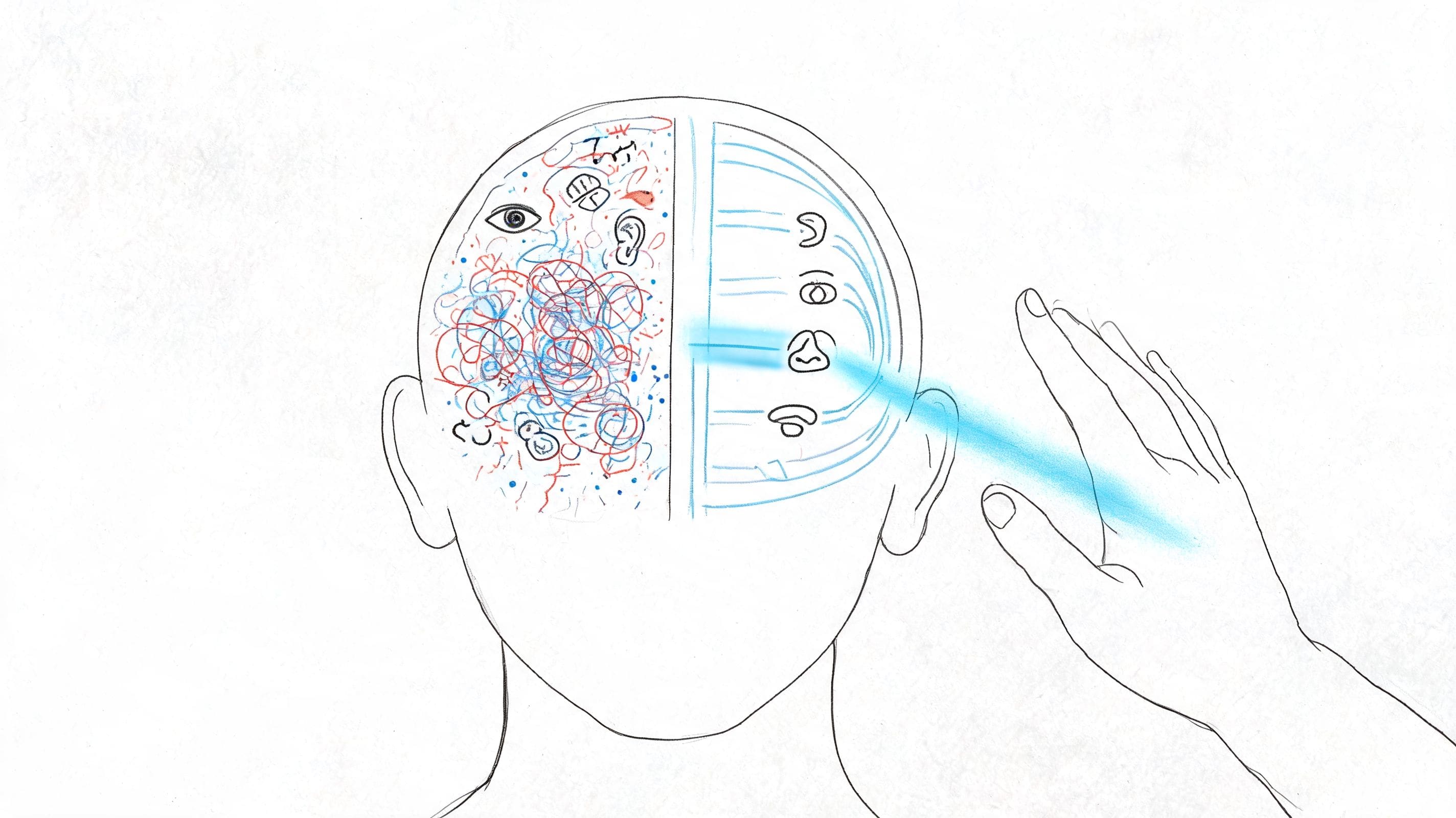
Permission slips that make the practice usable
A 2023 study in Autism Research found that 72% of autistic adults experience sensory processing differences that can intensify anxiety. Emerging data also suggests that modified practices such as micro-scans of 10 to 30 seconds per body part can improve efficacy for ADHD users by 48% by reducing cognitive load. The practical takeaway is simple: if a standard scan feels like too much, change the dose and the format.
Here are adaptations I recommend often:
- Keep your eyes open: A soft gaze at the floor or wall can feel safer than closing your eyes.
- Use a smaller map: Scan only feet, hands, jaw, and shoulders.
- Let your hands move: Holding a fidget, textured object, or blanket edge can anchor attention.
- Bounce instead of sustain: Move between two safer body zones, such as feet and hands, instead of traveling through the whole body.
- Name external contact: "Socks on skin," "chair at back," and "cool air on face" can be more regulating than internal sensation alone.
When the body feels too loud
Interoceptive overload is real. Some people don't feel "more mindful" when they scan. They feel trapped with too much sensation. When that happens, reduce intensity immediately.
> If turning inward makes anxiety spike, switch from "What do I feel inside?" to "What is supporting me from the outside?"
This is also where broader emotion regulation skills matter. A body scan is one tool, not the whole toolbox. If you need more options for downshifting overwhelm, this guide on how to regulate emotions offers a useful wider frame.
A good neurodivergent body scan often looks less elegant than the textbook version. It may be brief, messy, eyes-open, and interrupted by movement. If it helps you come back into contact with yourself without flooding, it's working.
Troubleshooting Common Body Scan Hurdles
Individuals often encounter friction with this practice. That's normal. The problem usually isn't that you "can't meditate." It's that the version you tried didn't match your nervous system in that moment.
If you get sleepy
Sleepiness usually means one of two things. Your body needed rest, or the position was too comfortable for the goal you had.
Try sitting up, keeping your eyes slightly open, or practicing earlier in the day. If you're doing a body scan at bedtime and you fall asleep, that isn't failure. That's your body taking the cue.
If you feel bored, itchy, or restless
Restlessness is common, especially for ADHD brains and anxious bodies. Stillness can feel like pressure.
Try these adjustments:
- Shorten the scan: Two useful minutes beats ten resentful ones.
- Add tiny movement: Unclench hands, press feet down, or roll shoulders once between body regions.
- Use active noticing: Label sensations with simple words like warm, tight, buzzing, heavy.
If anxiety spikes instead of settling
Sometimes the scan makes you more aware of discomfort before it helps. That doesn't mean body scan meditation for anxiety is wrong for you. It means you need a gentler entry point.
Start with external grounding first, then return to the body later. You can also limit the scan to neutral areas like feet or hands. If you need alternatives in those moments, these grounding techniques for anxiety can help you stabilize before trying another inward practice.
If you feel nothing at all
"Numb," "blank," and "I can't tell" are valid body scan responses. Awareness doesn't have to arrive as vivid sensation.
> "Nothing" is still a sensation category. You noticed absence, dullness, or distance. That counts.
Stay descriptive rather than evaluative. You aren't trying to produce a dramatic experience. You're building a relationship with attention.
Integrating Body Scans into Your Life and Calm Kit
The most helpful body scan practice usually happens in ordinary moments, not only during a full shutdown. Think less "special ritual" and more "nervous system reset I can practically use."
A short scan in the parked car after a hard commute can create separation before you walk inside. A seated scan before a work call can lower the body's sense of threat enough to help you speak more clearly. A longer evening scan can mark the end of performance mode, especially if your body tends to carry the day long after the day is over.
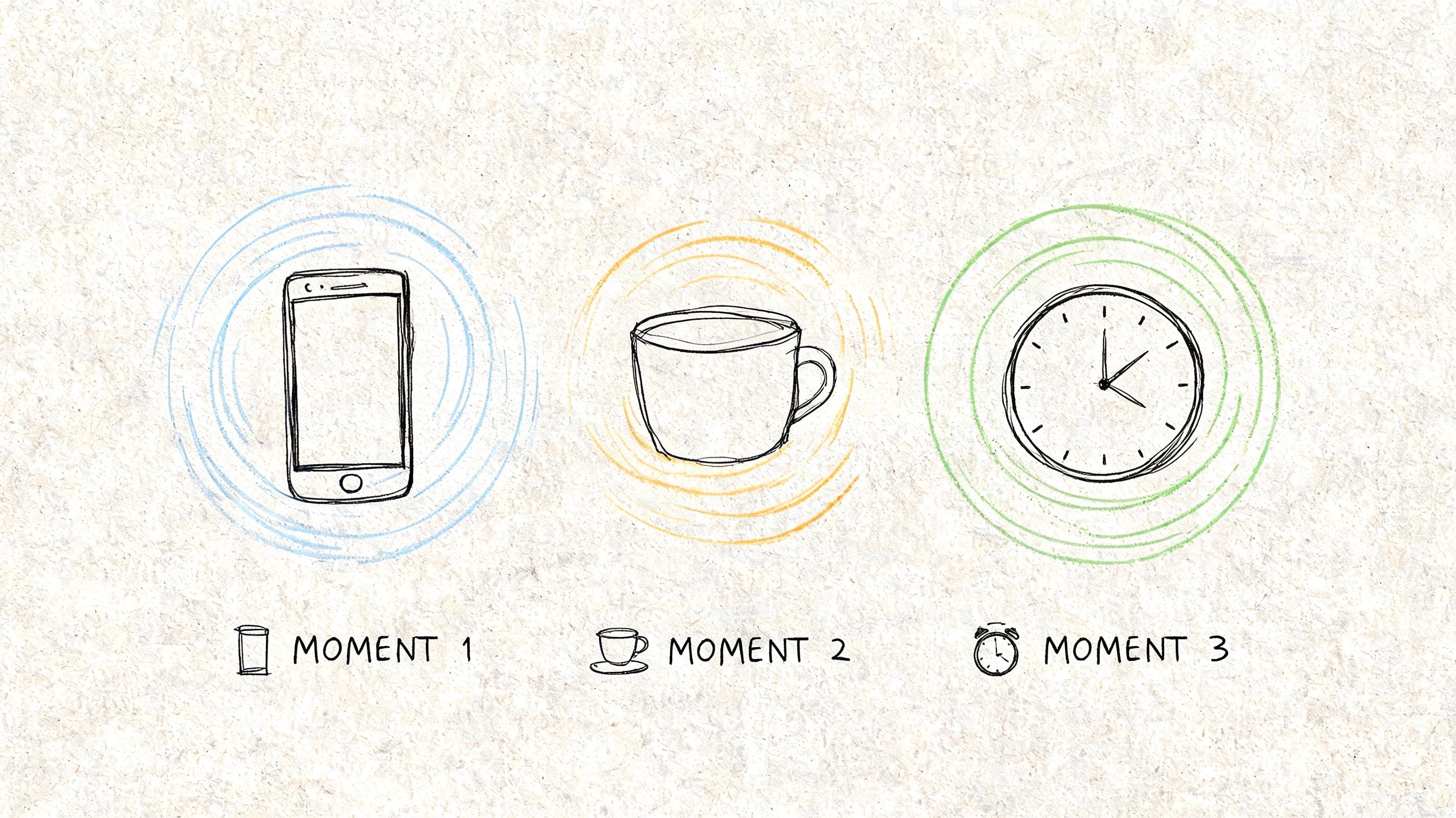
Pair the scan with a next step
A body scan is strong at reducing acute activation. But some people notice anxiety returning if the thoughts underneath the stress never get addressed. One 2025 meta-analysis found that pairing mindfulness practices with cognitive tools boosts benefit retention by 62%. That supports using a scan first, then following it with a practical support step such as writing down the fear, rehearsing a boundary, or choosing one response line for a hard conversation.
That pairing can be simple:
- Before a meeting: 3-minute scan, then review your key point.
- After a tense text: brief scan, then draft a response later instead of instantly.
- Before asking for help: scan first, then say the sentence out loud once.
Build a sensory-friendly ritual
Some people like to pair a body scan with a consistent sensory cue such as the same chair, blanket, tea, or scent. If smell is regulating for you, this guide to Aroma Warehouse stress relief solutions offers a practical overview of calming aromatherapy options that some people use alongside relaxation practices.
Digital support can also help with consistency, especially if transitions are hard or you freeze when anxious. If you prefer having guided tools in one place, this article on choosing a self-care app for everyday regulation support is a helpful starting point.
The best routine is the one that lowers the barrier to beginning. Not the one that looks ideal on paper.
Your Path to Calm Starts with a Single Breath
Body scan meditation for anxiety works best when you stop treating it like a performance. You don't need a blank mind, a silent room, or perfect body awareness. You need a repeatable way to notice what's happening, reduce the escalation loop, and meet your nervous system with a little more skill.
For some people, that means a full-length body scan. For others, it means thirty seconds on the feet, open eyes, one hand on a textured object, and done. That still counts.
If anxiety rises again later, that doesn't erase the value of the practice. It means you may need a follow-up step, not proof that you failed. Start small. Use the shortest version that helps. Let the practice fit your brain.
If you want support that goes beyond calming down in the moment, tonen brings quick regulation tools together with practical communication help. You can use the Calm Kit for a body scan when anxiety spikes, then switch to ready-to-use scripts, reframes, and practice tools for the conversation that comes next.
Frequently asked questions
A guided practice of noticing sensations from head to toe (or reverse) without trying to change them—building awareness and gentle relaxation over time.