A guided meditation for children is a simple practice where you, another trusted adult, or a recording leads them through a calming story or visualisation. This gentle, verbal guide helps them focus on their breath, notice bodily sensations, or soothe busy thoughts in a fun and engaging way. Think of it less as trying to empty their minds and more as giving them a superpower to find calm whenever they need it.
Why Guided Meditation for Children Is a Valuable Tool
Introducing guided meditation is one of the most powerful ways to help kids build real emotional resilience. Life today is just as demanding for them as it is for us, packed with school pressures, tricky social moments, and constant sensory input. This practice offers a surprisingly simple way to help them find a quiet moment in all that noise.
The whole point is to provide gentle guidance that helps them notice their inner world without judgement. We're not aiming for perfection. Instead, we might ask them to imagine they're a sleepy lion, feel their belly rise and fall like a balloon, or picture their worries floating away on fluffy clouds.
The Growing Need for Childhood Mindfulness
The interest in mindfulness for young people is definitely on the rise. In the UK, about 15% of adults meditate regularly, and while solid data for children is still catching up, the trend is clear. The UK's yoga and meditation market is set to grow from USD 12.3 billion in 2025 to a huge USD 21 billion by 2035, which shows just how much demand is increasing across all ages.
This boom really highlights a collective understanding that emotional regulation isn't something kids are just born with—it's a skill we can teach and nurture from a young age.
> Guided meditation gives children a tangible "toolkit" for self-soothing. It teaches them that they have the power to influence their own feelings, a foundational skill for lifelong mental well-being.
By starting with short, playful sessions, you're not just calming them down in the moment. You're giving them tools to navigate life's inevitable ups and downs. These skills can be a game-changer when they feel overwhelmed. In fact, if you're looking for broader strategies, our guide on how to stop feeling overwhelmed offers complementary advice that works well for teens and adults, too.
For a deeper dive into other relaxation methods, check out these proven relaxation techniques for children that pair perfectly with guided meditation. Ultimately, a little bit of practice helps kids build a stronger mind-body connection and a real sense of inner security.
Age-Appropriate Meditation Quick Guide
To get you started, here's a quick-reference table that matches meditation length, focus, and techniques to different age groups. It's a great starting point for finding what will resonate most with your child.
| Age Group | Ideal Duration | Core Focus | Example Technique |
|---|---|---|---|
| 3-6 | 1-3 minutes | Sensory & Imagination | "Breathing with a teddy bear" |
| 7-9 | 3-5 minutes | Body Awareness & Emotion | "Visualising a safe, happy place" |
| 10-12 | 5-10 minutes | Focus & Self-Compassion | "Noticing thoughts like clouds" |
Think of this as a flexible guide, not a strict set of rules. The best approach is always the one that your child enjoys and connects with.
Creating a Calm and Inviting Meditation Space
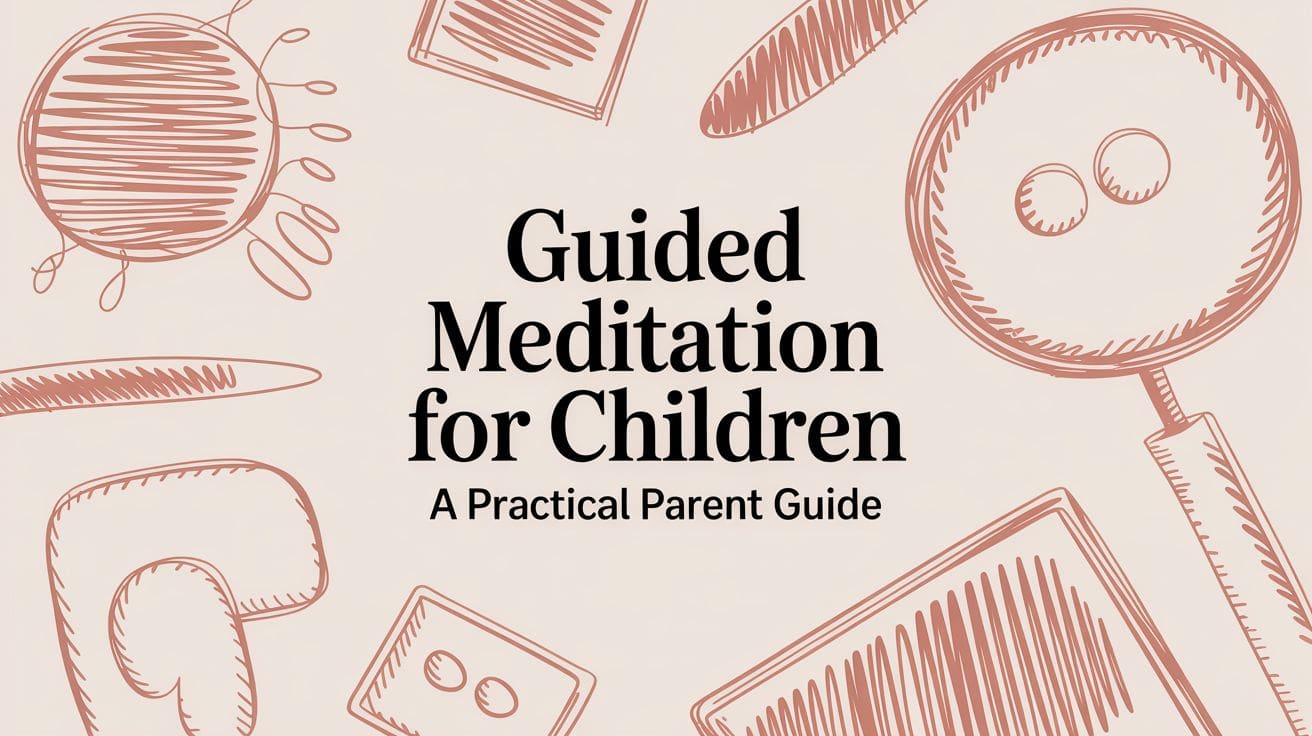
The space where you practice a guided meditation for children is almost as important as the practice itself. You don't need a dedicated room or a basket full of expensive props; what you're really aiming for is a feeling of safety and comfort.
The goal is simple: signal to your child's brain and body that it's time to shift gears from the buzz of playtime to a moment of peace. Turning a familiar bedroom corner into a temporary sanctuary for just ten minutes can be incredibly effective. It's the consistency that builds a powerful connection between the space and a feeling of calm.
Setting the Scene with Sensory Cues
Sensory cues are your best friend when it comes to creating a relaxing atmosphere. A few thoughtful adjustments can make a world of difference, helping a child feel grounded and secure enough to settle into a meditative experience.
Think about these simple, high-impact ideas for building your child's special spot:
* Lighting: Swap out harsh overhead lights for the soft glow of a bedside lamp or some whimsical fairy lights. Dim, warm lighting is a natural cue for the body to start winding down.
* Sound: Gentle ambient music or nature sounds can work wonders to mask distracting household noises. Even a quiet, steady hum can be deeply soothing and help them stay focused.
* Comfort: Gather a favourite soft blanket, a fluffy rug, or a few special cushions. Physical comfort is the fast track to emotional comfort.
When you bring these elements together, you create a predictable and comforting ritual. The moment the soft lights turn on and the gentle music begins, your child learns that a peaceful moment is about to begin. If anxiety is a particular concern, you can find more practical advice in our guide to grounding techniques for anxiety, which offers some excellent complementary strategies.
Using Props and Minimising Distractions
Props can be a wonderful addition, but they should always serve a purpose rather than become another distraction. The idea is to support the meditation, not overcomplicate it.
For instance, a much-loved soft toy can become a "breathing buddy." Have your child place it on their belly and watch it gently rise and fall with each breath. This makes a core mindfulness concept tangible and playful. A whole pile of toys, on the other hand, just invites them to play.
> The aim is to create a cosy nook, not a sterile, empty room. Removing major distractions like noisy electronics is crucial, but a completely bare space can feel uninviting. The space should feel lived-in, safe, and uniquely theirs.
Ultimately, the best meditation space is one your child feels a sense of ownership over. Let them help choose the blanket or pick the background sound. When they have a say in creating their little sanctuary, they'll be far more excited to actually use it for a few moments of calm.
Guiding Preschoolers Through Playful Meditation
When you're thinking about a guided meditation for children between three and six, there's one golden rule: keep it playful. At this age, their entire world is built on imagination, sensory discovery, and make-believe—not silent stillness. The goal isn't to hit some perfect state of quiet. It's about introducing mindfulness as a fun, comforting game.
Forget about asking them to sit perfectly still for ages. Instead, aim for incredibly short sessions, just 1 to 3 minutes long. Success here is measured in moments of focused fun, not minutes on a stopwatch.
Embrace Imagination and Storytelling
The meditations that really click with preschoolers are the ones that feel like an imaginative journey. You'll want to use simple, concrete language that paints a vivid picture in their minds. You can easily transform a basic breathing exercise into something magical.
Looking for calming tools for children? tonen can help.
tonen gives you 188+ conversation scripts, tone guidance and calming tools — designed for autistic adults, ADHD and social anxiety. Try it free for 7 days.
Download on the App StoreiOS only. Android coming soon.
Here are a few script ideas that work wonders:
* Rainbow Breathing: Ask them to imagine breathing in their favourite colour, then breathing out a giant, beautiful rainbow. This simple trick connects the physical act of breathing with a creative, visual process they can get excited about.
* Sleepy Kitten Stretch: Guide them to stretch their arms and legs out long, just like a sleepy kitten waking up from a nap. Then, have them curl up into a tiny, cosy ball. This brings in gentle movement, which is an absolute must for this wiggly age group.
* Favourite Character Visualisation: Weave their favourite cartoon character or superhero right into the meditation. Ask them to imagine what it feels like to fly through the clouds like Superman or to float peacefully in the water like a mermaid.
> By framing meditation as a story you create together, you make it an exciting adventure rather than a chore. This positive association is the foundation for a lasting mindfulness practice.
Using this practice in early years settings has shown promising results. A UK study involving 245 preschoolers found that a six-week mindfulness programme led to big improvements in their social skills and ability to self-regulate. The educators involved found that simple breathing exercises were especially effective for emotional development. You can read the full study findings on prosocial behaviour in young children.
Incorporate Gentle Movement and Sensory Fun
Preschoolers learn and experience just about everything through their bodies. A guided meditation that includes gentle movement or taps into their senses is far more likely to hold their attention.
Try these simple techniques:
1. Feather Breathing: Give them a small craft feather and have them focus on making it float gently with their out-breath. It's a brilliant way to make their breath visible and tangible.
2. Listening Game: Ring a small bell or chime and ask them to use their "super hearing" to listen until the sound disappears completely. This really helps sharpen their focus on a single external sound.
These activities are short, engaging, and perfectly suited to a young child's developmental stage. And for parents looking to build on this with more structured tools, exploring apps for Cognitive Behavioural Therapy can offer extra strategies that pair nicely with mindfulness. The key is to keep it light, fun, and always end on a positive, happy note.
Engaging Older Children with Relatable Scripts

As children hit the 7 to 12 age range, their world starts to expand, and so can their meditation practice. We can begin to move beyond simple, playful stories and introduce more traditional mindfulness concepts.
But here's the secret: it still has to be relatable. We're not trying to turn them into miniature monks. The goal is to connect with the real challenges they're facing, whether that's navigating friendship dynamics, stressing about school exams, or just figuring out their own big feelings.
Think of it less as a formal practice and more as handing them a mental toolkit for life. We can teach them how to notice their thoughts without getting swept away, but it has to be done in a language they understand.
Scripts That Connect with Their World
Older children have a fantastic imagination, and they really get into metaphors that feel empowering. Abstract ideas click into place when they're anchored to something they can visualise and feel.
Here are a few themes that work brilliantly for this age group:
* The Inner Castle of Calm: Guide them to build a strong, safe castle right inside their mind. They get to design everything—the strong walls, the protective moat, even a peaceful garden inside. This castle becomes their personal sanctuary, a place they can retreat to when the world outside feels a bit too much.
* Worries as Clouds: Ask them to imagine lying on soft grass, looking up at the sky. Their worries are like clouds just drifting by. They don't have to fight them or push them away; they just watch them float past. It's a beautifully simple way to teach the core mindfulness principle of observing thoughts without judgement.
* The Control Panel: This one is great for emotional regulation. Have them picture a control panel inside them with different dials for feelings like anger, happiness, and frustration. It helps them understand that while they can't always stop a feeling from showing up, they can learn to gently turn down the volume when it gets too loud.
It's also important to remember that a guided meditation for children isn't a magic wand. Research involving UK children aged 11 to 14 found that mindfulness interventions didn't always lead to major improvements in mental health. This really highlights how important it is to find tailored, relatable approaches that truly connect with the individual child.
Giving Them Agency and Choice
Empowering kids in their own mindfulness practice is the key to making it stick. When they feel like they have some control, it becomes their tool, not just another thing an adult is telling them to do.
> Giving a child agency in their meditation practice transforms it from a passive instruction into an active tool for self-discovery. Let them feel like they are the expert on their own inner world.
It can be as simple as letting them pick the theme for the day. "Should we visit the inner castle or watch the worry clouds today?" Let them choose the calming music or decide how long they'd like the session to be.
This small shift in dynamics makes all the difference. It fosters a sense of ownership and turns the practice into a collaborative experience. In the same spirit, encouraging them to talk about what they're feeling can be a powerful next step. Learning how to improve conversation skills can give them the confidence to express what they experience during their practice, making it even more meaningful.
Adapting Meditations for Neurodivergent Children
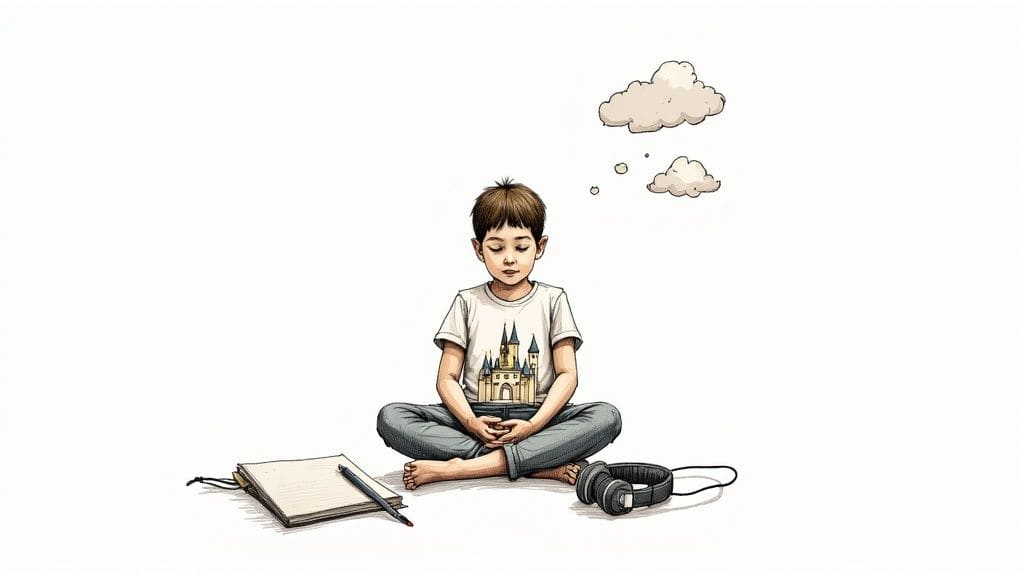
Let's be honest: traditional meditation advice like "sit perfectly still" or "focus on your breath" just doesn't land with every child. For many neurodivergent kids, including those with autism, ADHD, or sensory sensitivities, a standard guided meditation can feel more frustrating than calming.
The secret isn't to force them into a mould that doesn't fit. It's about adapting the practice to honour their unique sensory profile and needs, turning mindfulness into a genuinely supportive tool.
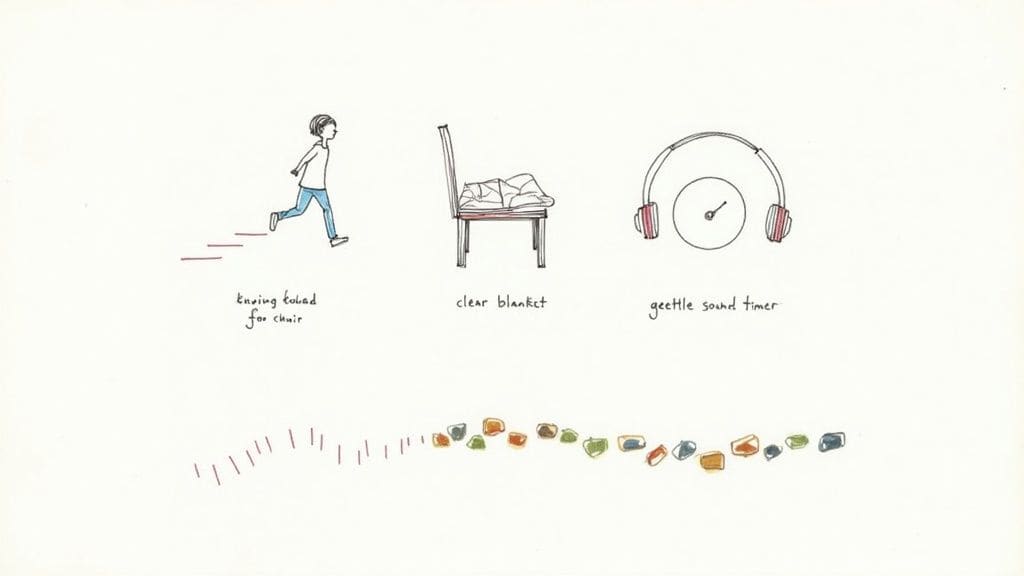
Instead of insisting on stillness, why not embrace movement? A child with ADHD often needs to move to focus, so a walking meditation where they pay attention to their feet on the ground can be a game-changer.
Tailoring to Sensory Needs
A child's sensory world is our way in. While some kids find internal body scans soothing, others might find focusing on their own heartbeat intensely anxiety-provoking. It's all about knowing the child in front of you.
If internal sensations are too much, try shifting their focus outward. A listening meditation works wonders. Just ask them to notice the sounds around them—a clock ticking, birds outside, the hum of the fridge—without needing to name or judge anything. It's simple, but so effective.
Sensory tools can also offer that crucial feeling of being grounded and safe. A few simple adaptations can make all the difference:
* Weighted Blankets: The deep pressure from a weighted blanket can be incredibly calming for children with sensory processing differences. It helps their bodies feel secure enough to actually relax.
* Visual Timers: An abstract concept like "five minutes" can be a source of stress. Using a sand timer or a colour-coded visual timer makes the duration concrete and predictable, which helps reduce anxiety about how long they need to sit.
> Honouring a child's sensory needs isn't just an accommodation; it is the practice. By adapting the environment and the approach, you show them that their way of experiencing the world is valid and that mindfulness can work for them.
Using Literal Language and Clear Narratives
Vague metaphors and abstract ideas can be really confusing, especially for autistic children who often process language very literally. Telling them to "let their worries float away like clouds" might not connect at all.
Instead, stick to clear, direct, and concrete language.
Instead of a flowery visualisation, you could guide them to focus on a real, physical sensation, like the feeling of a soft blanket or the gentle weight of a favourite toy resting on their tummy. For some children, using a social story maker can be a brilliant way to create tailored narratives that explain what will happen during the meditation, making the whole experience feel more predictable and less stressful.
Many families also find that digital tools can provide much-needed structure and support. If you're exploring what's out there, our list of the best free mental health apps has some excellent resources worth checking out.
By prioritising clarity and sensory comfort, you can create a truly inclusive and beneficial mindfulness experience for every child.
Got Questions About Meditating with Kids?
If you're just starting out with guided meditation for your little one, it's totally normal to have a bunch of questions. It can feel like you're stepping into a whole new world, but getting some clear answers can make all the difference. Let's tackle some of the most common ones I hear from parents and educators.
First up, the big question: when should we even do this?
What's the Best Time of Day to Meditate with My Child?
Honestly, there's no magic hour that works for everyone. It really comes down to your family's unique rhythm and what you're hoping to achieve.
Bedtime is a huge favourite for a reason—it's a wonderful way to help a busy mind unwind and ease the transition into sleep. An after-school session can also work wonders, giving them a chance to decompress and shake off the day. For other families, a few minutes in the morning sets a calm, focused tone for everything that follows.
The most important thing? Find a time you can stick with consistently. When this practice becomes a predictable and comforting part of their routine, that's when the real benefits start to sink in.
> A little tip from experience: try to avoid times when they're already hangry or exhausted. A child fighting off hunger or sleepiness is going to have a much harder time settling, and you don't want them to start associating meditation with feeling frustrated.
My Child Won't Sit Still. How Can I Get Them to Meditate?
This is probably the number one concern I hear, and I want to reassure you: this is completely normal. In fact, it's expected! Especially for younger kids or those who simply need to move to think. The goal isn't to force them into a silent, still statue. It's time to redefine what meditation can look like.
Start small. I mean really small. Even 30 seconds of focused breathing is a massive win. The trick is to weave in some gentle, mindful movement to keep their bodies and minds engaged.
Here are a few ideas that work well:
* Breathing Buddies: Ask them to lie down and pop a small, favourite stuffed animal on their belly. They can then watch their little buddy gently rise and fall with each breath.
Mindful Walking: Go for a slow walk, indoors or out, and have them focus on the feeling of their feet on the ground. Heel, toe. Heel, toe.*
* Listen to the Bell: Ring a small bell or a singing bowl and invite them to listen quietly until the sound fades away completely. It's a simple sensory anchor that really works.
The key is to celebrate the effort, not how long they stayed still. We want to build a happy, positive connection with mindfulness, not create another chore.
Are There Any Risks I Should Know About?
For the vast majority of children, guided meditation is an incredibly safe and beneficial practice. That said, it's always important to be observant and attuned to your child's needs.
For a child who has experienced trauma, being asked to close their eyes and turn their focus inward can sometimes feel scary or overwhelming. In these cases, it's much better to try meditations with their eyes open, focusing on something external and soothing, like a flickering candle flame (with supervision, of course!) or a calming glitter jar.
Always remember to frame meditation as an invitation, never a demand. It should never be used as a punishment or a time-out. If your child seems uncomfortable or asks to stop, honour that immediately. The practice has to feel safe and empowering—something they have complete control over.
*
At tonen, we know how important it is to have the right tools for emotional regulation, especially for neurodivergent kids and adults. Our Calm Kit is designed to offer quick, accessible exercises like breathing and grounding tools to help manage those moments of overwhelm. Explore how tonen can support calmer communication and self-regulation.
Frequently asked questions
This guide covers guided meditation for children: a practical parent's guide with practical, neurodivergent-friendly strategies—clear steps, scripts where useful, and ways to reduce anxiety or overload rather than vague "be confident" advice.