Understanding the terms autistic and autism means looking way beyond a simple dictionary definition. At its heart, autism is a neurodevelopmental difference. Think of it as a unique wiring of the brain that fundamentally shapes how someone experiences their senses, processes information, and connects with the world around them. Being autistic is an intrinsic part of who someone is—it's not an illness waiting for a cure.
What It Means to Be Autistic and Understand Autism
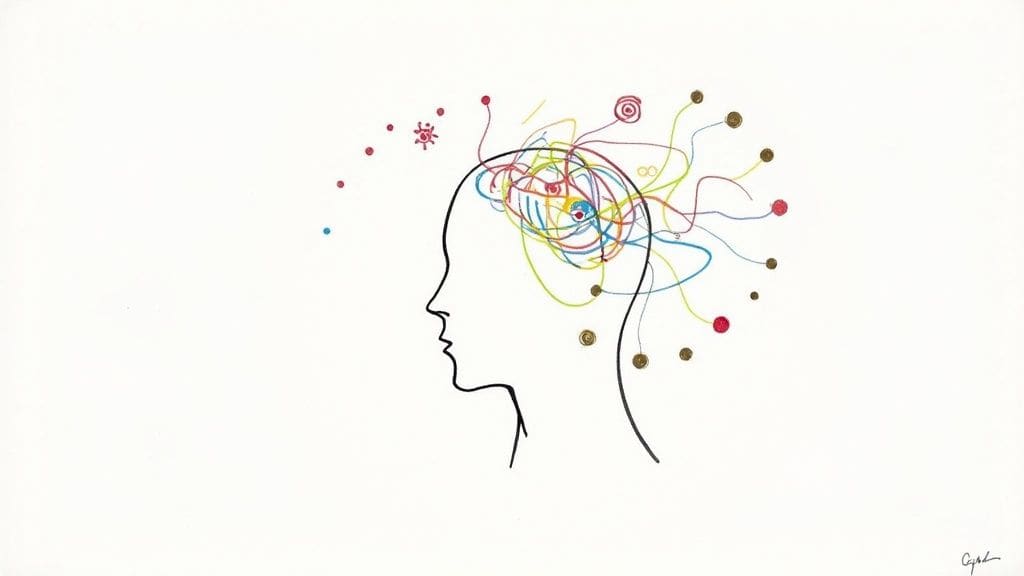
To really get what being autistic means, we have to ditch the old, deficit-focused models. Instead of seeing it as a disorder, the modern understanding frames autism as a natural and vital part of neurodiversity—the simple fact that human minds vary.
A great analogy is to think of brain wiring like a computer's operating system. Some people run on Windows, others on macOS. Neither is wrong or broken; they just process information in fundamentally different ways. An autistic brain navigates social cues, sensory input, and communication differently from a non-autistic (or allistic) brain.
This shift in perspective is so important because it respects the person's identity. Being autistic influences everything, from having incredibly intense, passionate interests (often called special interests) to needing routine and predictability to feel secure. It can also mean dealing with sensory sensitivities, where everyday sounds, lights, or textures might feel completely overwhelming.
To help clarify these foundational ideas, let's break them down.
Key Concepts At a Glance
| Concept | Brief Explanation |
|---|---|
| Autism | A neurodevelopmental difference affecting sensory processing, social interaction, and communication. |
| Autistic | An adjective describing a person with autism. It's an identity, not a condition to be separated from the person. |
| Neurodiversity | The natural variation in human brains. It sees autism as a normal part of human neurology, not a deficit. |
| Allistic | The term for someone who is not autistic. |
Thinking in these terms helps us move the conversation forward in a more respectful and accurate way.
A Spectrum of Experiences
When we talk about autism, you'll often hear the word "spectrum." It's a bit of a misunderstood term. It doesn't mean a straight line from "less autistic" to "more autistic." A much better way to picture it is a wide constellation of traits and experiences, with every single person having their own unique cluster.
> The concept of a spectrum highlights that every autistic individual possesses a distinct set of strengths and challenges. There is no single "look" or "type" of autism, making personal experience the most valuable source of understanding.
For instance, one autistic person might be non-speaking and use assistive tech to communicate, while another might be incredibly verbal but find it hard to interpret unspoken social rules. Some people also pour enormous energy into camouflaging or masking their autistic traits to fit in. You can learn more by exploring the complexities of masking in autism.
Prevalence and Recognition in the UK
Autism is a significant and natural part of our communities. The National Autistic Society estimates that more than one in 100 people in the UK are on the autism spectrum, which works out to at least 700,000 autistic adults and children.
This figure comes with the important note that many people remain undiagnosed due to various barriers. Crucially, autism is recognised as a disability under UK law, which provides vital legal protection against discrimination. You can find out more about what autism is from the experts at the National Autistic Society.
Why Language Choices Like 'Autistic Person' Matter
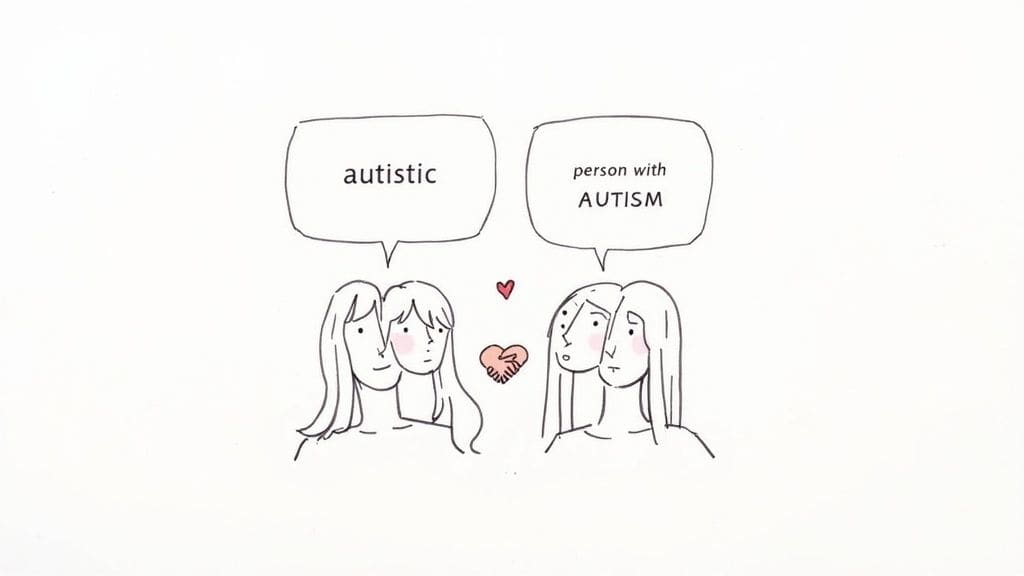
The words we use around autistic and autism topics aren't just words. They carry real weight, shaping perceptions and revealing deep-seated attitudes. A key part of this conversation boils down to the difference between identity-first language ("autistic person") and person-first language ("person with autism").
This might seem like a tiny detail, but for many in the autistic community, the distinction is huge. Getting to grips with why can completely change how we communicate and show genuine respect.
The Power of Identity-First Language
A huge majority of autistic adults have a strong preference for identity-first language. When someone says they are an "autistic person," they're saying that being autistic is a core, inseparable part of who they are.
It's not some accessory they can put down or a condition they simply have; it's fundamental to how they experience and move through the world. Saying "autistic person" honours that reality. It's a bit like describing someone's nationality—you'd say "a French person," not "a person with Frenchness."
This preference is also a powerful pushback against the historical view of autism as a tragic flaw or a disease that needs to be separated from the person. By embracing the word "autistic," individuals reclaim it, turning it into a neutral descriptor of their neurotype and a badge of community pride.
Understanding Person-First Language
On the flip side, person-first language ("person with autism") came from a place of good intentions. It grew out of disability advocacy movements that wanted to stress a person's humanity before their diagnosis, aiming to fight stigma by reminding everyone that a person is more than their disability.
This way of speaking is often preferred by parents, some clinicians, and people who were taught it was the most respectful approach. For them, it's a way to make sure an individual's identity isn't swallowed by the autism label. But while the intent is compassionate, it often clashes with the clear voice of the community it's trying to support.
> "To the Autistic person, Autism is an intrinsic part of our identity. It defines the way we think, the way we experience, and the way we interact with the world." - The Autistic Advocate
When in doubt, the most respectful thing you can do is simply ask someone which term they prefer. But if you're speaking about the community as a whole, using identity-first language shows you're listening to autistic self-advocates and their lived experiences. These conversations can feel nuanced, and having some examples helps, which you can find in our guide to autism conversation starters. Making these conscious language choices is a small change that contributes to a much more understanding and accepting culture.
Navigating the Autism Diagnostic Journey in the UK
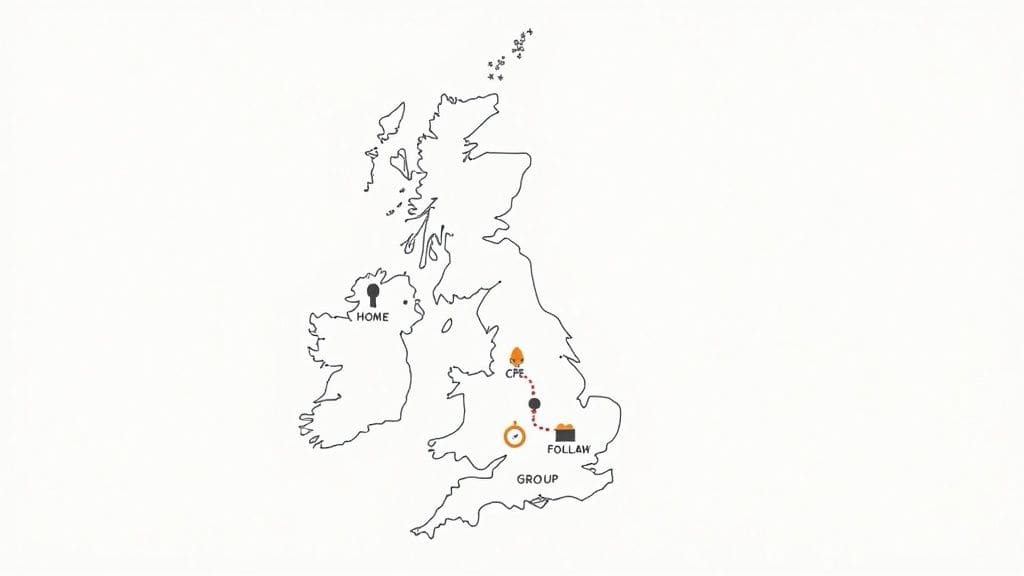
For many people, getting an official autistic and autism diagnosis in the UK feels less like a process and more like an emotional marathon. It's a long road, whether you go through the NHS or privately, and just understanding the map can give you back a sense of control when everything feels uncertain.
The journey usually starts with a moment of recognition—spotting traits that resonate with an autistic way of being and deciding to seek a formal assessment. This first step typically means a chat with your GP, who can refer you to a specialist team. But that's where the first major hurdle often appears.
The Reality of NHS Waiting Lists
The demand for autism assessments has absolutely exploded. Between 1998 and 2018, there was a staggering 787% increase in diagnoses. Fast forward to late 2024, and the system is buckling under the pressure.
More than 204,000 people are currently waiting for an assessment in England. A massive 89% of them have been waiting for over 13 weeks, the official target. For a deeper look at the numbers, Priory Group has a breakdown of autism statistics in the UK.
This isn't just a delay; it's a prolonged period of diagnostic limbo that can be incredibly stressful for individuals and families. It's a time filled with questions and uncertainty, which is why finding good support networks is vital. We've put together a guide on where to find autism help and resources to get you through this challenging wait.
Looking for autism resources and support? tonen can help.
tonen gives you 188+ conversation scripts, tone guidance and calming tools — designed for autistic adults, ADHD and social anxiety. Try it free for 7 days.
Download on the App StoreiOS only. Android coming soon.
What to Expect During an Assessment
When your appointment finally comes through, the assessment is usually carried out by a multi-disciplinary team. This might include professionals like psychiatrists, clinical psychologists, and speech and language therapists who work together to build a complete picture.
They use a combination of well-established tools and their own observations.
Common diagnostic tools include:
* The Autism Diagnostic Observation Schedule (ADOS-2): This is a series of activities and conversations designed to observe social communication, interaction, and how a person plays or uses their imagination.
* The Autism Diagnostic Interview-Revised (ADI-R): This is a detailed, structured interview with a parent or caregiver. It gathers a deep history of an individual's development and behaviours, right from early childhood up to the present day.
* Questionnaires and Observations: The team also collects information on how a person's traits show up in different environments, like at school or work.
> This isn't about passing or failing a test. Think of it as a collaborative effort to map out an individual's unique neurodevelopmental profile and see if it aligns with the criteria for autism.
Getting ready for these appointments can feel pretty daunting. It helps to pull together any relevant documents you have, like old school reports or even just your own notes on specific behaviours or developmental milestones. The more open and detailed you can be, the easier it is for the team to make an accurate assessment.
Ultimately, the outcome isn't just about getting a label. It's about gaining a key to understanding yourself better and, crucially, unlocking the right kind of support.
How Autism Presents Differently Across Populations
Getting an autism diagnosis isn't a straightforward path, and the experience is far from the same for everyone. It's not a one-size-fits-all condition. How autism actually looks and feels can be shaped massively by things like gender, where you live, and your family's financial situation.
This creates some serious systemic barriers. It means a person's chance of getting a timely diagnosis and the right support can have more to do with their postcode or gender than their actual needs. This is the reality for far too many, especially women and people from less affluent areas, who often have a much tougher journey to understanding their own neurotype.
The Gender Gap in Autism Diagnosis
One of the most talked-about disparities is the gender gap. For decades, the textbook model of an autistic person was almost exclusively male. This led to diagnostic criteria that just didn't pick up on how traits often present in girls and women.
Autistic girls are frequently better at masking or camouflaging their traits. They might pour enormous amounts of energy into studying and mimicking the social behaviours of their non-autistic peers just to blend in. This can look like forcing eye contact when it's uncomfortable, scripting conversations ahead of time, or suppressing the urge to stim (make repetitive movements).
This constant performance is absolutely exhausting. It often leads to diagnoses that come very late in life, or worse, misdiagnoses of conditions like anxiety, depression, or borderline personality disorder. The internal experience is still autistic, but the outward presentation is often misinterpreted by clinicians who aren't trained to look past the classic, male-centric picture of autism.
> Masking isn't a sign of being "less autistic." It is a survival strategy that comes at a huge mental and emotional cost, often leading to burnout and a delayed sense of self-identity.
Socioeconomic and Regional Disparities
Where you live and how much money your family has can also play a huge role in your diagnostic journey. The data consistently shows that access to specialist assessment teams isn't spread evenly across the UK. Some regions have far, far longer waiting lists than others.
To see just how stark this can be, look at the data from Northern Ireland for the 2024/25 academic year. The report estimated the prevalence of autism in school-aged children at an incredible 5.9% and highlighted some very clear divides along gender and socioeconomic lines.
This created a real stir, showing that males were 2.5 times more likely to be identified as autistic than females. Even more telling, the prevalence rate in the most deprived areas was 38% higher than the average. This points to some complex links between deprivation and diagnosis. You can explore the full findings on these prevalence rates in Northern Ireland for a deeper dive.
Below is a quick summary of how these kinds of disparities can show up across the UK.
#### Autism Identification Disparities in the UK
| Demographic Group | Key Challenge / Observation | Example Statistic |
|---|---|---|
| Girls and Women | Traits are often missed due to masking and a historical male bias in diagnostic criteria. | Males are 2.5 times more likely to be identified as autistic than females. |
| Deprived Areas | Higher prevalence rates suggest either greater support needs or barriers to timely assessment. | Prevalence in the most deprived areas is 38% higher than the average. |
| Adults (Undiagnosed) | Many autistic adults who grew up before awareness increased remain undiagnosed. | An estimated 89-97% of autistic adults over 40 may be undiagnosed. |
| Ethnic Minorities | Cultural and language barriers can lead to under-identification and misinterpretation of traits. | Studies suggest diagnostic rates are often lower in ethnic minority communities. |
This tells us that children in more deprived areas might have a higher prevalence of support needs that trigger an assessment. On the other hand, it could also mean that families with more resources are able to bypass long NHS waiting lists by seeking private assessments.
Either way, it shines a light on the urgent need for more equitable access to diagnostic services. Every autistic person deserves the right support, regardless of their circumstances.
Practical Strategies for Communication and Support
Creating a supportive space for autistic people really boils down to clear, respectful, and predictable communication. When you're talking with an autistic friend, family member, or colleague, small shifts in how you interact can make a massive difference. The goal is always to cut through the noise and create a sense of psychological safety.
One of the most helpful things you can do is simply be direct and literal. Autistic communication is often wonderfully precise, which means that sarcasm, idioms, and subtle hints can be genuinely confusing. So, instead of saying, "It's a bit loud in here, isn't it?" try, "The music is too loud for me. Can we turn it down?"
That kind of clarity saves a huge amount of mental energy that would otherwise be spent decoding hidden meanings. It's also crucial to allow for processing time. After you ask a question, just wait. Give them a moment to think before expecting an answer. That simple pause is a powerful sign of respect for their processing style.
Creating Sensory-Friendly Spaces
For many autistic people, the sensory world can be incredibly intense. An environment that a non-autistic person might find totally normal can feel like a chaotic assault on the senses. Offering meaningful support can be as simple as helping to create spaces that are a bit more sensory-friendly.
And this doesn't have to be some huge, complicated overhaul. It's usually about being mindful of common triggers and offering simple adjustments.
* Lighting: Harsh fluorescent lights can be physically painful. Whenever you can, go for natural light or lamps with warm, dimmable bulbs.
* Sound: Unexpected or constant background noise is incredibly distracting and stressful. Offering noise-cancelling headphones or just moving to a quieter spot can bring immediate relief.
* Textures and Scents: Be mindful of strong perfumes or scratchy fabrics. A scent-free space and comfortable seating can make an environment feel so much more welcoming.
> The aim isn't to eliminate all sensory input, but to build a predictable and controllable environment. Giving an autistic person a sense of agency over their sensory experience is a powerful form of support.
Practical Tools for Navigating Social Situations
Social interactions are famously complex and full of unwritten rules, which can cause a lot of anxiety. Thankfully, practical tools can make these situations far more manageable. Social scripts, for example, are basically pre-prepared phrases that can be used for common scenarios like greeting someone or ending a conversation.
These scripts work like a map, giving a predictable structure that lowers the cognitive load of having to figure out a social exchange from scratch every time. Many people find it useful to learn about a whole range of effective autism communication strategies to build confidence and ease that anxiety.
In the same way, managing sensory overload needs proactive strategies. The first step is learning to spot the early signs of overwhelm—like an increase in stimming or difficulty concentrating. Encouraging planned sensory breaks in a quiet space can stop a situation from escalating into a full-blown shutdown or meltdown. Simply offering support without judgement is the key to building trust and fostering a strong connection with an autistic and autism aware mindset.
Finding Your Community and Resources as an Autistic Adult
Getting a diagnosis or even just coming to a personal realisation later in life can feel like being handed a map to a country you've lived in your whole life but never understood. Finding your community in that moment is less about seeking support and more about finding your people—those who get the nuances of being autistic and autism without needing a long explanation.
Connecting with other autistic adults is incredibly affirming. It shifts the conversation from a list of challenges to a celebration of shared strengths and experiences. Suddenly, you're not just navigating work or relationships; you're doing it with the confidence that comes from knowing you're not alone.
Building Your Network in the UK
The good news is, there are fantastic communities and organisations out there, many of which are run by and for autistic people. They offer everything from practical advice and advocacy to the simple, powerful act of friendship.
Here are a few great places to start looking:
* The National Autistic Society (UK): A huge resource with local branches and online forums for autistic adults and their families.
* Autistic UK: This is a national organisation run by autistic people, for autistic people, with a sharp focus on self-advocacy and community voice.
* Online Forums and Social Media Groups: Sometimes the best connections happen online. Platforms like Reddit have active communities (check out r/autism and r/AutisticUK), and you can find dedicated Facebook groups for instant peer support.
As you connect with others, it's also empowering to know your rights. The Equality Act 2010 is the legal framework that protects you from discrimination in places like work and education. Understanding it is a key part of self-advocacy.
> Finding a community isn't just about getting support; it's about adding your voice to a collective that celebrates autistic culture, joy, and the unique way you see the world.
Modern tools can also help build that day-to-day confidence. For example, exploring different apps designed for autistic adults can offer practical help with things like communication scripts or managing daily tasks.
And remember, while finding your autistic community is vital, your overall wellbeing matters too. Don't hesitate to look into additional mental health resources that can offer broader support. The goal is to build a network that helps you flourish, completely as yourself.
Clearing Up Some Common Questions
It's completely normal to have questions. The language around autism can sometimes feel confusing, but getting to grips with a few key ideas makes a world of difference. Let's tackle some of the most frequent ones.
What Is the Difference Between Autistic and Autism?
Think of it this way: autism is the noun. It's the name for the neurodevelopmental difference itself—the distinct brain wiring that shapes how a person processes sensory information and navigates social communication.
Autistic is the adjective used to describe a person who has that wiring. Many, especially within the community, strongly prefer it as an identity-first term ("autistic person") because being autistic isn't something separate from them; it's a core part of their identity.
Is Autism Considered a Disability in the UK?
Yes, under the Equality Act 2010, autism is legally recognised as a disability in the UK. This is really important because it provides legal protection against discrimination and means autistic people are entitled to reasonable adjustments at school, at work, and when using public services.
This legal recognition acknowledges that many of the challenges autistic people face come from trying to navigate a world that wasn't built for their neurotype.
> While legally a disability, many in the community view autism through the lens of neurodiversity—a natural variation of the human mind, not a deficit to be cured.
Is There a Cure for Autism?
No, there isn't a "cure" for autism, and the very idea is rejected by the autistic community. Being autistic is a fundamental part of who a person is, not an illness to be fixed.
Support strategies and therapies aren't about trying to change an autistic person into a non-autistic one. Instead, they focus on building practical coping skills, finding ways to manage challenges like sensory overload, and helping autistic people thrive on their own terms.
*
Navigating social situations can feel draining, but you don't have to do it alone. tonen is an app designed to help you communicate with more confidence and less stress. With customisable scripts, a Perspective Helper, and a Calm Kit, you have practical support right on your device. Find your voice with tonen today.
Frequently asked questions
This guide covers autistic and autism with practical, neurodivergent-friendly strategies—clear steps, scripts where useful, and ways to reduce anxiety or overload rather than vague "be confident" advice.