Understanding demand avoidance autism requires looking past defiance and seeing an overwhelming, anxiety-driven response to any perceived expectation. For many autistic people, this is a neurological reflex, not a conscious choice. It's about a nervous system that interprets even a simple request as a threat to autonomy, triggering an intense, instinctual need to regain control to feel safe. This experience is at the heart of what's known as the Pathological Demand Avoidance (PDA) profile of autism.
What Is Demand Avoidance In Autism?
At its core, demand avoidance in autism describes a specific profile where the primary driver of behaviour is an intense, pervasive need to avoid everyday demands. Imagine feeling a jolt of panic every single time someone asks you to do something, no matter how small or simple. It's a protective mechanism that's hardwired.
The reaction often seems completely out of proportion to the request. You might ask, "Could you pass the salt?" and be met with an elaborate excuse, a sudden change of subject, or even a complete shutdown. This happens because the brain isn't hearing a simple request; it's perceiving a direct threat to its sense of control and safety.
This set of experiences is often categorised under the profile of Pathological Demand Avoidance (PDA). Now, the word "pathological" is definitely controversial. Many in the community find its framing negative and unhelpful, and that's a valid critique.
Still, the profile itself gives us a vital lens for understanding a very real pattern of needs and behaviours. It helps separate this specific experience from other ways of being autistic, which is absolutely crucial for finding the right kinds of support. Understanding the nuances of language, like whether someone prefers to be called autistic or a person with autism, is part of this respectful approach.
The Internal Experience Of Avoidance
To really get what demand avoidance is about, you have to look past the surface-level behaviour and try to understand the internal experience. The avoidance isn't the problem. It's the brain's best attempt at a solution for managing overwhelming anxiety.
> The core of demand avoidance is an anxiety-based need to be in control. When an individual feels their autonomy is threatened by a demand, their threat response activates, leading them to avoid the demand by any means necessary to restore a sense of safety.
This internal state is often fuelled by a deep intolerance of uncertainty and a constant, humming undercurrent of anxiety. The world simply feels safer and more predictable when you're the one in charge of your own actions.
Understanding The PDA Profile
The concept of a PDA profile was first identified back in the 1980s by developmental psychologist Elizabeth Newson. She noticed a unique pattern of behaviour in some children that didn't quite fit other presentations on the autism spectrum.
She described it as an extreme need to avoid everyday demands as a way to maintain control, all stemming from a deep-seated, anxiety-driven need to manage a world that feels chaotic and unpredictable.
Key characteristics often associated with the PDA profile include:
* Using Social Strategies for Avoidance: This is a big one. Instead of a flat "no," the avoidance might look like making elaborate excuses, distracting with charm or humour, or procrastinating until the demand goes away.
* Appearing Sociable but Lacking Deeper Understanding: People with a PDA profile can seem very socially capable on the surface, but they often struggle with the subtle, unspoken demands of social hierarchy and relationships.
* Sudden Mood Swings and Impulsivity: When the need for control is constantly being challenged, emotional regulation can become a significant struggle, leading to what looks like impulsive or erratic behaviour.
Getting a handle on demand avoidance is the first, most important step toward shifting from a mindset of compliance to one of collaboration and genuine support. It means learning to see the behaviour for what it is: a signal of distress, not a deliberate act of opposition.
The Link Between Anxiety And Demand Avoidance
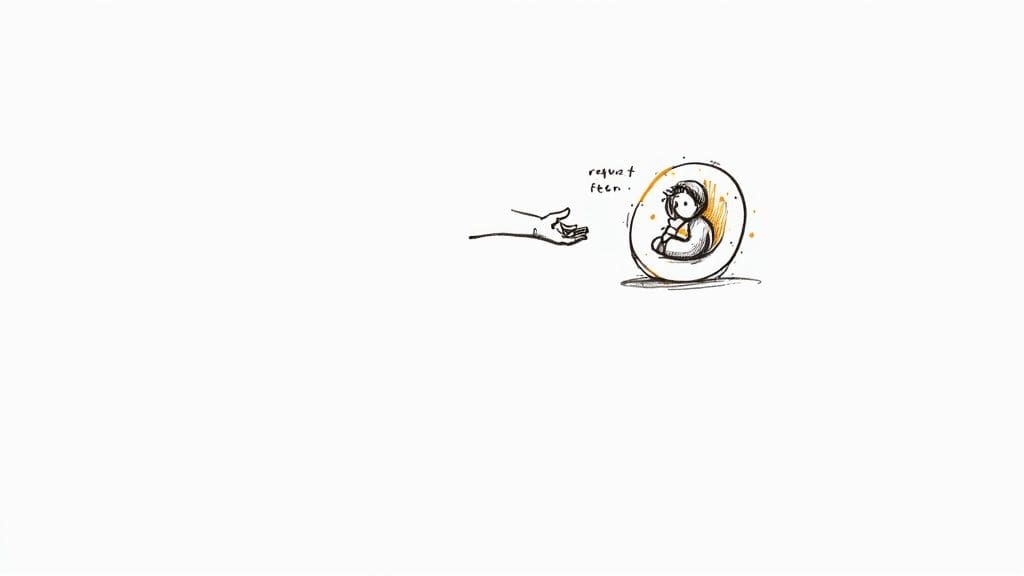
To really get what's happening with demand avoidance in autism, you have to understand its deep connection to anxiety. It's not just a feeling of unease; it's a powerful, often overwhelming force.
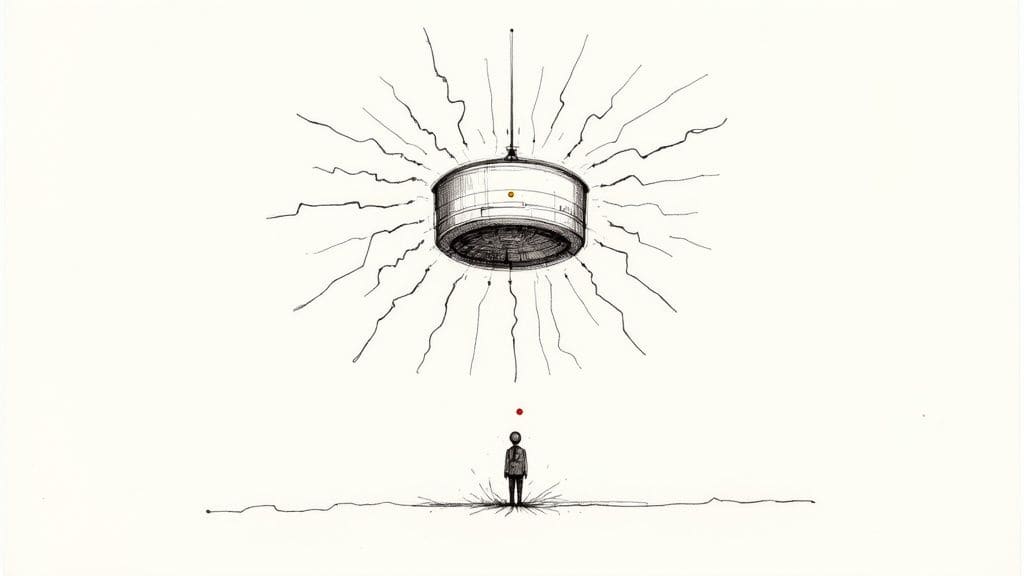
Imagine a smoke detector that's calibrated way too high. It doesn't just blare for a fire; it goes off for a piece of toast or a steamy shower. For an autistic person with a PDA profile, even the smallest demand can feel like that smoke, triggering a massive, disproportionate anxiety response.
This isn't a choice. It's an involuntary, neurological reaction. A simple request like, "Could you put your shoes on?" can register in the nervous system as a profound threat to their sense of autonomy and safety. The avoidance you see on the surface isn't defiance—it's a desperate, instinctual scramble to regain a feeling of control and calm an overwhelmed system.
The Anxiety-Avoidance Cycle
This dynamic creates a powerful feedback loop that can be incredibly hard to break. It all kicks off the moment a demand is perceived, which can be anything from a direct instruction to an unspoken social expectation.
1. A Demand Is Perceived: A request is made, an expectation is felt, or even an internal thought like "I should do the dishes" surfaces.
2. Anxiety Skyrockets: The nervous system interprets the demand as a loss of control, triggering a spike of fear, panic, or a full-blown fight-flight-freeze response.
3. Avoidance Kicks In: The person uses whatever strategy they can to escape the demand and the crushing anxiety it brings. This might look like distraction, negotiation, procrastination, or an outright "no."
4. Temporary Relief Occurs: Successfully avoiding the demand brings a fleeting moment of calm. This reinforces a powerful lesson: avoidance is the only thing that works to stop the internal chaos.
It's crucial to see that this cycle is almost never about the task itself. It's about what the task represents: an imposition on personal control. The fear of not doing it perfectly, of sensory overload, or of simply being controlled by someone else can make even activities the person wants to do feel impossible.
Anxiety As The Core Driver
This isn't just theory; research backs it up. Online surveys of large adult populations have consistently found that anxiety is a powerful predictor of demand-avoidant behaviours. In fact, studies show that both autistic traits and anxiety symptoms are major factors, highlighting how demand avoidance in autism is so often fuelled by this complex interplay.
> When anxiety is the engine, avoidance becomes the only viable escape route. The behaviour is a symptom of an overwhelmed nervous system, not a reflection of character or willingness.
Understanding this is everything. Punishments or adding more pressure will only crank up the anxiety, which in turn makes the avoidance even stronger. The only way forward is to shift the focus to co-regulation and creating a sense of psychological safety.
Calming the nervous system has to be the first step. For a deeper dive, our guide on effective grounding techniques for anxiety is a great place to find more ideas. Exploring ideas around cultivating emotional well-being and resilience through self-compassion can offer a path forward. By focusing on the root cause—the anxiety—we can start to build trust and find more collaborative ways to navigate life's inevitable demands.
Recognizing Signs Of Demand Avoidance At Every Age
To really get what demand avoidance autism is all about, you have to look beyond a single, isolated behavior. It's a pattern that shows up differently across a person's life. The fundamental need for autonomy doesn't change, but the strategies used to protect it definitely do, evolving with age and social awareness. Spotting these patterns is the first real step toward offering support that actually helps.
The way someone sidesteps a demand can be anything from quiet procrastination to a full-blown refusal, and the methods tend to get more sophisticated over time. The key is to reframe these actions. They aren't about defiance; they're the language of an overwhelmed nervous system trying to find safety and a sense of control.
Signs In Young Children
In early childhood, demand avoidance is often raw and unfiltered. Little kids just don't have the social toolkit to hide their distress, so their resistance can feel like it comes out of nowhere, sparked by the simplest of requests.
You might see things like:
* Elaborate Excuses: Instead of just saying "no," a child might create a whole fantasy world to explain why they can't put their toys away. Think: "My hands have turned into noodles."
* Sudden Meltdowns: A tiny request, like putting on a coat, can trigger a massive emotional reaction. It's not about the coat; it's about the sudden loss of control it represents.
Struggling with demand avoidance? tonen can help.
tonen gives you 188+ conversation scripts, tone guidance and calming tools — designed for autistic adults, ADHD and social anxiety. Try it free for 7 days.
Download on the App StoreiOS only. Android coming soon.
* Retreating into Fantasy: The child might slip into a role-playing game or adopt a character to escape the demand. This makes the "character," not them, responsible for the refusal.
* Physical Incapacitation: Suddenly feeling too tired, sick, or weak to do something is a classic—and very effective—avoidance strategy.
It's crucial to understand these behaviors aren't manipulative in the way we usually think of it. They are gut-level attempts to manage anxiety that feels completely unbearable.
Manifestations In Teenagers
By the time they're teenagers, the strategies for avoiding demands have become far more complex and socially savvy. The constant pressure from school, friends, and family creates a minefield of potential triggers, and avoidance can easily become a default way of coping.
For teenagers, demand avoidance often looks like this:
* Chronic Procrastination: That mountain of homework or the list of chores isn't being ignored out of laziness. The sheer expectation to get it all done feels crushingly overwhelming.
* Sophisticated Debates: A teen might pull you into long, circular arguments to negotiate their way out of a task. They're using logic and debate as a tool to claw back a sense of control.
* Resisting Group Activities: Family outings or school events can feel like one big string of demands, leading to a resistance that gets mistaken for being moody or antisocial.
Many of these strategies are tied to the need to protect their identity and autonomy at a time when both are incredibly fragile. The pressure to fit in can crank up the anxiety around demands, sometimes leading to more advanced forms of social camouflaging. To get a better handle on this, you can learn more about what masking is in autism and how it ties into these social pressures.
How It Appears In Adults
By adulthood, many people with a PDA profile have spent their entire lives honing intricate strategies to manage a world overflowing with demands. These methods are often subtle and internalized, but they can take a serious toll on work, relationships, and just getting through the day.
> In adults, demand avoidance is often a hidden struggle. The outward appearance may be one of competence and control, while internally, a constant battle is being waged against the anxiety triggered by everyday expectations.
Adults with demand avoidance autism might run into challenges like:
* Workplace Difficulties: Constantly putting off key projects, dodging meetings, or clashing with direct management can create major roadblocks in their career.
* Managing Daily Life: Simple things like paying bills, making appointments, or doing laundry can feel insurmountable, leading to a chaotic and stressful home life.
* Social Avoidance: An invitation from a friend can feel more like a heavy obligation than a fun opportunity, leading to last-minute cancellations or avoiding people altogether.
Pathological Demand Avoidance (PDA) is a specific profile within the autism spectrum that's defined by this kind of extreme resistance. While autism has historically been diagnosed more in males, the PDA profile seems to appear more evenly across genders. This suggests that females showing these traits might be overlooked if evaluators are only looking for more generalized autism symptoms. You can read the full research on gender prevalence in PDA to get a deeper understanding. Recognizing these signs is the key to creating environments that are built on collaboration, not just compliance.
Practical Low-Demand Support Strategies That Work

If you've ever tried using traditional discipline, rewards, or consequences with someone who has demand avoidance autism, you know they often fail spectacularly. In fact, they usually make things worse. This is because these methods pile on the pressure, which only amplifies anxiety and strengthens the instinctive need to avoid.
The real key isn't to force compliance. It's to thoughtfully reduce demands, build a foundation of trust, and give the person back their sense of autonomy. This requires a pretty fundamental shift in thinking—moving away from a mindset of control and toward one of genuine collaboration.
Effective, trauma-informed strategies are all about creating a low-arousal environment where the nervous system can finally feel safe enough to engage. By focusing on partnership and flexibility, you can help lower the anxiety baseline and create the space for trust to grow, making daily life much more manageable for everyone involved.
The PANDA Approach To Demand Avoidance
A really helpful way to remember these low-demand strategies in the moment is the PANDA approach. It gives you a simple, structured way to think through your interactions and dial down any unnecessary pressure.
* Pick Battles: Ask yourself: is this demand absolutely essential right now? Focus on health and safety, and be willing to let the small stuff slide.
* Anxiety Management: Address the root of the issue—the anxiety—first. A calm nervous system is always going to be more open and collaborative.
* Negotiation and Collaboration: Work together to find a solution that feels good for everyone. Offer real choices where you are genuinely okay with either outcome.
* Disguise and Manage Demands: Rephrase your requests as gentle suggestions or "I wonder if..." statements. The goal is to make a task feel less like a heavy obligation.
* Adaptation: Stay flexible. What works beautifully today might not work at all tomorrow, and that's okay. Be ready to pivot your approach.
This model helps you step away from a top-down, authoritarian dynamic and move toward a true partnership built on mutual respect.
Shifting Your Language To Reduce Pressure
The way you phrase a request can make all the difference. Direct commands ("Go clean your room") often trigger an immediate threat response. By softening your language, you turn a demand into an invitation, which is far less likely to spike anxiety.
Think about how you can rephrase some common high-demand statements into lower-demand, more collaborative alternatives. It's a small change that can have a huge impact.
Shifting Your Language From High-Demand To Low-Demand
Here are a few examples of how to rephrase common requests to reduce that feeling of being controlled and encourage a more cooperative spirit.
| High-Demand Phrasing (Avoid) | Low-Demand Alternative (Try) |
|---|---|
| "You need to do your homework now." | "I wonder if we could tackle some homework together soon?" |
| "Go clean your room." | "The floor in your room is getting tricky to walk on. What's our plan?" |
| "It's time for dinner." | "Dinner will be ready in about 10 minutes, just so you know." |
| "Stop playing and get your shoes on." | "The shoes are by the door for when you're ready to head out." |
This linguistic shift is a core part of supporting someone with demand avoidance. It communicates deep respect for their autonomy. For a deeper dive into this, our article on proven autism communication strategies offers a ton of other valuable techniques.
Fostering Autonomy Through Genuine Choice
Offering choices is an incredibly powerful tool, but they have to be genuine. The goal is to give the individual a real sense of control over their situation, which means you need to be truly okay with whatever option they choose.
For example, instead of asking, "Do you want to brush your teeth now or in five minutes?" (which still contains the non-negotiable demand of brushing teeth), try shifting the choice to the how: "Would you rather use the mint toothpaste or the cinnamon one tonight?" This subtle change moves the focus from compliance to participation.
> The core principle is collaboration over compliance. Every interaction is an opportunity to build trust and show that you are an ally, not an adversary. This foundation of safety is essential for managing demand avoidance.
When developing tailored supports, understanding foundational instructional design best practices can be surprisingly helpful for creating low-demand strategies that are both effective and engaging.
How Tonen Can Help Navigate Conversational Demands
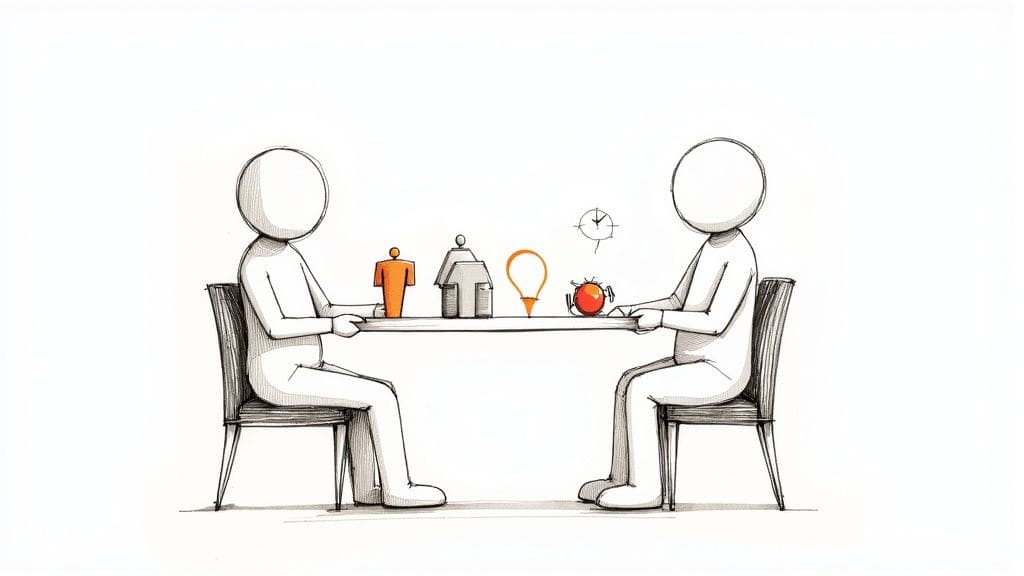
Every single conversation is loaded with invisible demands. It's not just about the words. You're expected to interpret tone of voice, guess what someone really means, and figure out the "right" way to respond, all in real time. For anyone navigating demand avoidance autism, this constant, unspoken pressure can be completely exhausting and a huge source of anxiety.
This is where an app like tonen can be a powerful ally. It acts as a kind of real-time, AI-powered coach, helping to reduce that heavy cognitive load that so often comes with trying to talk to people.
Lowering The Stakes Of Social Interaction
Tonen gives you subtle, on-screen guidance about conversational dynamics, like tone and emotion. This little bit of support helps you feel more prepared and in control before you even have to speak, which can dramatically lower the anxiety that's tied to all those social expectations.
Instead of just guessing, you get data-driven suggestions. This is an absolute game-changer in high-stakes situations that are notoriously demand-heavy, such as:
* Job interviews where you feel the pressure to make a great impression.
* Tense personal conversations with family or partners.
* Professional meetings where you need to be perfectly clear.
* Setting boundaries with friends or colleagues without causing a fuss.
By offering this kind of scaffolding, tonen helps level the playing field. It makes social demands feel less threatening and a whole lot more manageable. The app isn't speaking for you; it's empowering you with information so you can speak for yourself with more confidence.
Tools For Autonomy And Control
One of the hardest parts of demand avoidance is that feeling of losing control. Tonen is designed specifically to give that control back to you, right in the middle of a conversation. The app provides tools that support your autonomy instead of creating new demands.
For instance, the app's script library offers a bunch of different ways to phrase things, letting you pick the language that feels most authentic to you. You can look through a collection of pre-written scripts and even learn about using conversation scripts for neurodivergent people to take the stress out of figuring out what to say in the moment. Just having that preparation can make a massive difference.
> Tonen is built on the principle of empowerment, not compliance. It provides options and insights, allowing the user to make informed choices about their communication, thereby reinforcing their sense of autonomy in social settings.
Plus, features like the Calm Kit give you immediate access to grounding exercises. If a conversation starts to feel like too much, you can privately use these tools to regulate your nervous system without having to just shut down or leave. It's this combination of proactive preparation and in-the-moment support that makes tonen such an invaluable resource for navigating the complex world of social demands.
Common Questions About Demand Avoidance Autism
If you're exploring demand avoidance autism, you probably have a lot of questions. That's completely normal. The PDA profile challenges so many of our conventional ideas about behavior that it naturally leads to a search for clarity. This section is here to tackle some of the most common questions head-on.
Our goal is to give you a solid foundation, whether you're an autistic adult making sense of your own experiences, a parent trying to find a better way, or a supporter looking for answers. Let's clear up some of the biggest points of confusion.
Is Pathological Demand Avoidance An Official Diagnosis?
This is easily one of the most frequent questions, and the answer isn't a simple yes or no. As it stands, Pathological Demand Avoidance (PDA) is not listed as a standalone diagnosis in the major diagnostic manuals like the DSM-5 (used in the U.S.) or the ICD-11.
But that's not the whole story. It is widely recognized, particularly in the United Kingdom, as a distinct 'profile' on the autism spectrum. Think of it this way: while you won't get a separate piece of paper that says "PDA diagnosis," the term provides an incredibly useful framework for understanding the unique needs of autistic people who experience this level of demand avoidance.
> The ongoing debate about its official status shouldn't get in the way of what truly matters: the lived experience. The PDA profile is a vital lens that helps supporters, clinicians, and individuals make sense of a behavioral pattern that might otherwise be dismissed as simple opposition.
Ultimately, the focus should always be on figuring out the underlying needs and using strategies that actually work for the person, regardless of the label.
How Is Demand Avoidance Different From Defiance?
On the surface, they can look incredibly similar, but the internal drivers are worlds apart. Typical defiance is often situational and conscious—a child might break a rule to test a boundary or to get something they want. It's a choice.
Demand avoidance, on the other hand, is a pervasive, anxiety-driven response that comes from a deep-seated neurological need for control and safety. It's a can't, not a won't. The key differences really come down to a few things:
* The Trigger: Everyday, low-stakes requests (like being asked to put on shoes) can trigger a panic response in someone with a PDA profile. Typical defiance is usually tied to more significant rules or tasks.
* The Method: The avoidance often involves surprisingly social strategies—think elaborate excuses, changing the subject, using humor, or even slipping into role-play. These are less common in straightforward defiance.
* The Escalation: With demand avoidance, adding pressure or consequences almost always makes everything worse. It ramps up the anxiety and reinforces the powerful, instinctual need to avoid.
Think of it like this: defiance is often a direct challenge to authority, while demand avoidance is an instinctual survival response to a perceived threat to one's autonomy.
Can Adults Identify With The PDA Profile?
Absolutely. Demand avoidance isn't something you just grow out of; it's a lifelong neurodevelopmental trait. In fact, a huge number of autistic adults are now discovering the PDA profile later in life, often after spending years being mislabeled as "lazy," "oppositional," or "difficult."
For many, finding this framework is an incredibly validating, lightbulb moment. It's the first thing that provides a coherent explanation for a lifetime of struggles that never made sense. In adulthood, these patterns can show up as:
* Chronic procrastination that derails careers and personal goals.
* A history of struggling to hold down a traditional job because of the constant, built-in demands.
* Feeling completely overwhelmed by daily life tasks, like managing finances, keeping the house in order, or making appointments.
* Difficulties in relationships due to the invisible demands of social interactions.
Recognizing these patterns as part of a PDA profile is the first step toward self-compassion. It opens the door to finding low-demand strategies and coping mechanisms that actually work with, not against, their neurological wiring.
Do Reward Systems Work For Demand Avoidance?
For the most part, no. Traditional reward systems, like sticker charts or "if you do this, you'll get that" bargains, tend to backfire spectacularly for individuals with a PDA profile.
Here's why: the reward itself instantly becomes another demand. It sets up an expectation of performance and creates a sense of being controlled, which directly triggers the person's core need for autonomy. The pressure to earn the reward can ramp up anxiety just as much as the original task, turning the whole thing into an unintentional power struggle.
Instead of conditional rewards, the focus needs to be on collaborative, low-pressure approaches. What can work beautifully are spontaneous celebrations or acknowledgments after a task is done. Because they aren't transactional, they celebrate the person's effort without adding the stressful baggage of a pre-negotiated demand.
Navigating the constant, invisible demands of social interaction is a significant challenge for many with demand avoidance. This is where tonen can be a powerful tool for regaining a sense of control. The app provides real-time conversational support, offering scripts and tone suggestions that reduce the cognitive load of social situations. By empowering you with choices and preparation, tonen helps lower the anxiety tied to social expectations, making conversations feel more manageable and less like a demand. Learn more and try tonen for free.
Frequently asked questions
This guide covers demand avoidance autism with practical, neurodivergent-friendly strategies—clear steps, scripts where useful, and ways to reduce anxiety or overload rather than vague "be confident" advice.