If something specific in a conversation left you unsure, you could ask: “I've been wondering about what I said earlier. Was there something you wanted me to understand or do differently?”
Use this when an answer would help you decide what to do next. A short reply, a pause or a change in tone does not by itself show that you did something wrong. If you need to separate several events from your assumptions first, use the facts-and-possibilities perspective guide. You can leave an ordinary exchange alone if there is no practical question to resolve.
Start with one observation and one question
Name what happened without deciding what the other person felt. These are examples you can adapt:
| Situation | A neutral way to ask |
|---|---|
| You are unsure how a comment landed | “When I said [words], I wasn't sure whether my meaning came across. Would you like me to clarify?” |
| You need feedback about work | “You said the draft needs another look. Which part should I change?” |
| Someone ended a conversation abruptly | “We stopped talking after [topic]. Is there anything we need to come back to?” |
| You know you interrupted | “I interrupted you earlier. I'm sorry. What were you trying to say?” |
You do not need to apologise for an unspecified mistake just to start the conversation. If you know what you did, name it rather than asking the other person to work it out for you.
What to say after their answer
- They say nothing is wrong: “Thanks for letting me know.” You can accept the answer without asking them to prove it repeatedly.
- They describe a problem: “Thanks for explaining. I understand that [specific action] affected you. I'm sorry for that. I can [realistic next step].” Use only the parts you mean.
- Their feedback is unclear: “Could you give me an example so I understand what you mean?”
- They want space: “Okay. I'll give you space.” Respect the boundary rather than sending follow-ups to get reassurance.
- You disagree with part of their account: “I understand that was frustrating. I remember [specific detail] differently. Can we discuss what needs to happen next?”
Asking clearly cannot guarantee agreement, reassurance or repair. You can take time to consider feedback, and you do not need to accept insults or keep talking when you feel unsafe.
Decide whether another conversation would help
Before sending a message, separate the observation from your interpretation: “They replied later than usual” is an observation; “They must be angry with me” is one possible interpretation. Avoid turning a guess into an accusation.
If you keep returning to the same uncertainty without new information, our practical overthinking check can help you choose whether to ask, wait or leave it for now. For an ambiguous reply with a concrete task behind it, use questions that clarify someone's response.
Before You Speak Preparing Your Mindset
Before you ask anyone else what happened, get clear on what you know. This is a frequently overlooked step, and it's why the conversation often starts in a defensive or apologetic fog.
Separate facts from the story your brain wrote
The most useful internal question is not "What if I messed everything up?" It's "What did I directly observe?"
That means listing facts in plain language:
- Observable fact: "They replied six hours later."
- Observable fact: "They said, 'let's talk later.'"
- Story: "They're upset with me."
- Story: "I always ruin things."
Use a short pre-conversation reset
When your nervous system is loud, your interpretation gets narrow. Don't aim for perfect calm. Aim for enough steadiness to stay curious.
Try this sequence:
1. Write the facts first. No interpretation yet.
2. Name the feeling second. Anxious, embarrassed, confused, angry.
3. State your real goal. Do you want reassurance, information, repair, or distance?
4. Ask what you contributed. Not to blame yourself. To stay accurate.
5. Draft one neutral opener. Keep it under two sentences.
> When you can name the facts, you stop making the other person argue with your fear.
Watch for three thinking traps
These show up constantly in neurodivergent conflict repair.
- Intent certainty: You decide you know what their tone meant.
- Globalizing: One awkward interaction becomes "I always do this."
- Premature apology: You apologize before you know what happened.
That last one is common with people who've spent years overcompensating socially. It feels polite, but it can backfire. You may take responsibility for something unclear, and then have to untangle it later.
For people who want more practice in responding with care under pressure, resources on mastering empathy with DocsBot can be useful because they show how to stay grounded in understanding rather than assumption. That same skill matters in personal conversations too.
Give yourself scaffolding instead of pressure
If your brain goes blank when stakes are high, don't force spontaneity. Prepare a few lines in advance. Save them. Read them out loud. Edit until they sound like you.
A simple prompt sheet can include:
- What happened
- What I'm unsure about
- What I want to ask
- What I'll do if they need space
If you need more structure before initiating contact, this guide on how to prepare for a hard conversation can help you turn vague dread into a short plan.
Choosing Your Tone and Finding the Right Words
The same sentence can land as caring, cold, pressuring, or clear depending on tone. That's why wording alone isn't enough in a did i do something wrong conversation. You also need to decide how you want the other person to experience you.
Replaying a conversation wondering if you messed up? tonen can help.
tonen offers conversation scripts, Reply Helper, Perspective Helper, Debrief, Phone Call Mode and Calm Kit. Start with 21 free scripts on iPhone. Optional Premium unlocks more features.
Download on the App StoreAvailable on iOS.
Tone is not decoration
People often default to the tone their stress creates. Anxiety can make you sound apologetic, frantic, or overly detailed. Frustration can make you sound sharp before you mean to. A better approach is to match tone to purpose.
Four useful tone options are Direct, Warm, Firmer, and Softer. These aren't personality types. They're tools.
Matching Your Tone to the Situation
| Tone | Best For... | Example Script |
|---|---|---|
| Direct | Clear misunderstandings when you want fast clarity and the relationship can handle bluntness | "I want to check something directly. Did I say or do something that didn't sit right with you?" |
| Warm | Friendships, dating, family, or any relationship where reassurance helps lower tension | "I care about our connection, and I've been wondering if I missed something. If I did, I'd like to understand." |
| Firmer | Repeated patterns, unclear behavior that affects your wellbeing, or situations where you need clarity without overexplaining | "I'm open to talking, but I need direct communication. If there's an issue with me, please say it clearly." |
| Softer | High-sensitivity situations, power imbalances, or moments when the other person startles easily | "I may be reading this wrong, but I wanted to gently check in. If something felt off recently, I'm open to hearing it." |
How to choose the right tone
Use Direct when ambiguity is worse for you than brief discomfort. This often fits workplace interactions, group projects, and practical relationships where clarity matters more than cushioning.
Use Warm when preserving connection is part of the goal. This is often the best default if you tend to sound sharper in writing than you intend.
Use Firmer when your history with the person includes vagueness, passive aggression, or repeated mixed signals. Firmer doesn't mean hostile. It means you're no longer willing to chase clarity through guessing.
Use Softer when you want to reduce threat cues. This can be useful if you're speaking to someone who gets defensive quickly, or if you're worried your own directness may be misread as accusation.
> Your job is not to sound perfect. Your job is to sound intentional.
What good scripts do
A good script does three things at once:
- States the concern without exaggerating it
- Invites information instead of demanding reassurance
- Leaves room for either repair or no issue at all
Examples:
- "I've been replaying our last conversation and wanted to check my understanding."
- "I may be off here, but I'd rather ask than assume."
- "If I missed a cue or crossed a line, I'm open to hearing that."
What usually fails:
- "Tell me what I did wrong."
- "You clearly have an issue with me."
- "I know you're upset, so just say it."
Those lines push the other person into defense, denial, or caretaking. None of those reactions give you clean information.
Use tools that reduce blank-page stress
This is one place where structured support can help. For rehearsal, choose a script, adapt the words and read them aloud yourself if that is useful. You can also practise with someone you trust. For someone who freezes when trying to find the right words, that kind of scripting can reduce cognitive load without replacing your own judgment.
If tone confusion is part of the problem, it also helps to get better at reading what someone's tone might actually mean before you decide how to respond.
Starting the Dialogue and Asking for Clarity
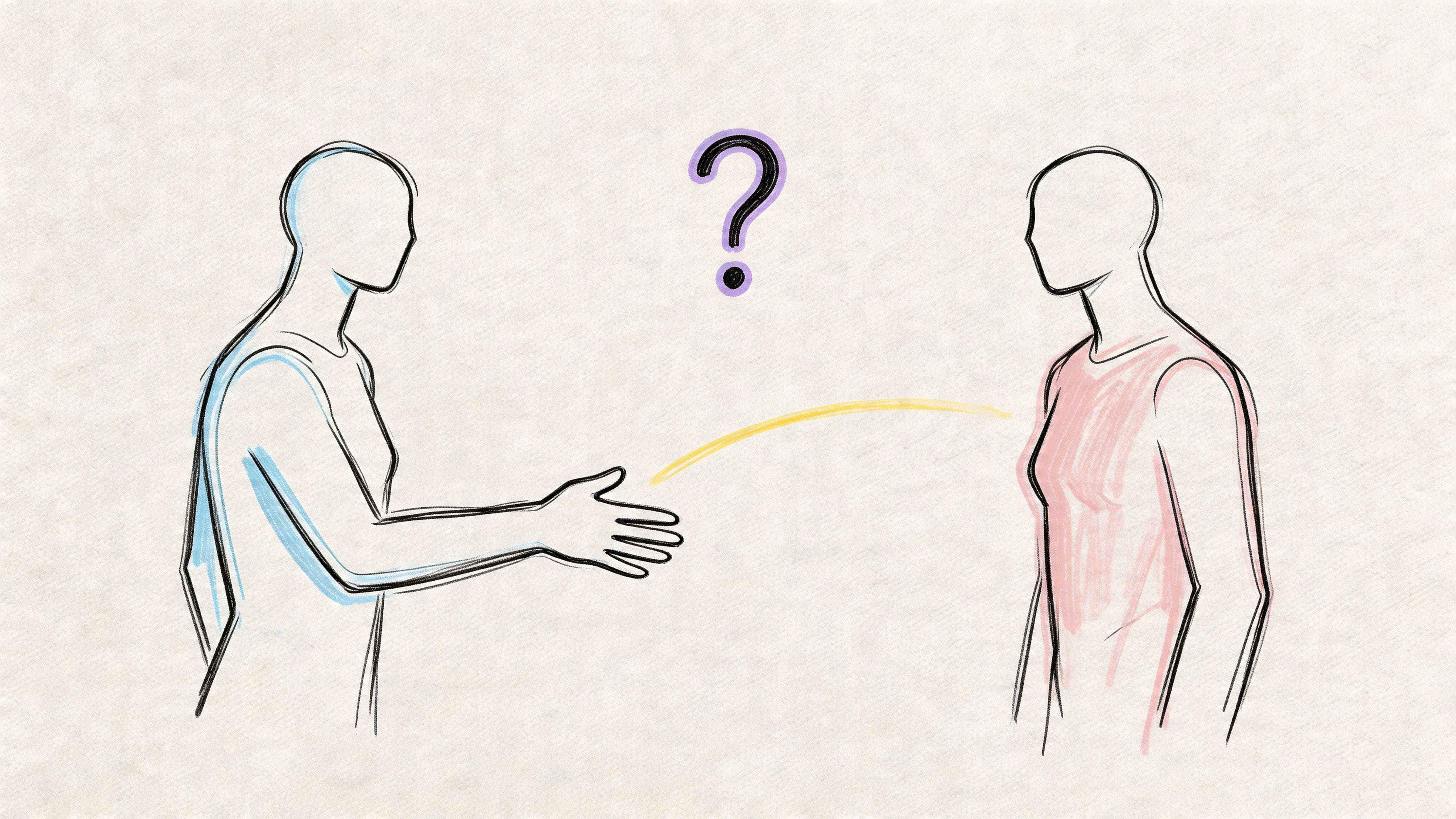
Once you've prepared and chosen a tone, the next task is the hardest one. You have to begin.
Open with less heat
The first sentence matters because it sets the emotional temperature. If you begin with blame, the other person will protect themselves. If you begin with panic, they may comfort you instead of answering truthfully.
Better openers:
- "I wanted to check in about our last interaction."
- "I think I may be missing part of what happened, and I'd like to understand."
- "Can you help me understand how that landed from your side?"
These work because they focus on shared reality, not accusation.
Ask questions that gather information
Closed questions trap the conversation. Open questions create room.
Try questions like:
- "What was your read on that conversation?"
- "Did anything I said come across differently than I intended?"
- "Was there a specific moment that felt off for you?"
- "How did you interpret what I meant?"
Avoid questions like:
- "Are you mad at me?"
- "Did I ruin everything?"
- "You thought I was rude, didn't you?"
Each of those invites a yes-or-no answer to a loaded premise. That doesn't produce clarity. It produces cleanup.
> Ask for their experience, not a verdict on your character.
A simple live structure
If you tend to lose track mid-conversation, use this sequence:
1. Opening: "I wanted to check in about something."
2. Observation: "After our conversation, I felt unsure how it landed."
3. Question: "Can you tell me how you experienced it?"
4. Clarify: "When you said X, what did you mean?"
5. Reflect back: "So from your side, it felt abrupt because you were rushed?"
6. Respond: apology, clarification, or boundary.
This structure gives your brain a map. It also helps if the other person gives a partial answer and you need to ask one follow-up without spiraling.
If you freeze mid-sentence
Freezing is common, especially when you're trying to process tone, content, and body language at once. You don't need to hide that. Use a holding line.
Examples:
- "I need a second to process what you said."
- "I'm trying to understand accurately, so I may pause before I respond."
- "Can I ask one more clarifying question?"
That kind of language often leads to a better outcome than speaking too fast just to fill silence.
If the response you got was vague, mixed, or confusing, this guide on understanding someone's response more clearly can help you sort out whether they answered the question, avoided it, or said something you need to revisit.
Repairing Connections and Honoring Your Needs
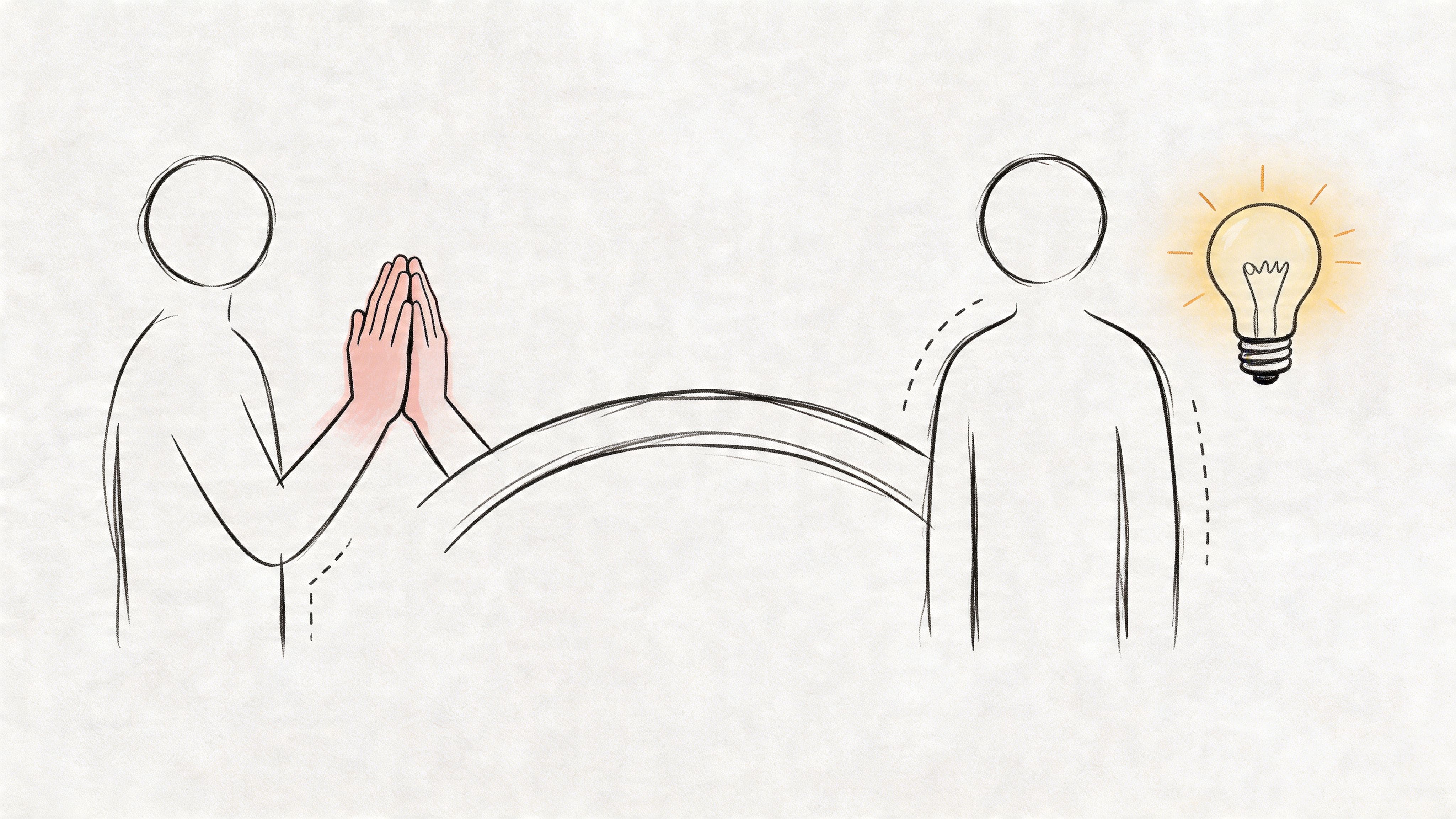
Sometimes you learn that yes, something did go wrong. Sometimes you learn that nothing serious happened, but your brain filled the silence. And sometimes you learn the underlying issue is that the other person communicates in a way that leaves you chronically confused.
That last category matters. A did i do something wrong conversation isn't only about finding out whether you made a mistake. It's also about deciding what kind of communication you can live with.
Scenario one when repair is needed
You ask a friend about a weird interaction. They say, "You interrupted me a few times, and I felt brushed off."
A useful repair sounds like this:
> "Thank you for being direct. I can see how that landed that way. I wasn't trying to dismiss you, but I understand the impact. I'll slow down next time."
That works because it doesn't collapse into self-attack, and it doesn't dodge responsibility. You acknowledge impact, clarify intent briefly, and name a change.
Scenario two when you need explicit communication
Try language like:
- "I process social feedback best when it's direct."
- "I sometimes miss subtle cues, so if something's wrong, I need clearer wording."
- "If you want me to do something differently, please say it plainly rather than hinting."
This isn't asking for special treatment. It's teaching people how to communicate with you effectively.
Scenario three when the issue isn't yours to carry
You ask for clarity and discover the other person was stressed, distracted, or inconsistent. Nothing in their answer points to wrongdoing on your side.
Then the task changes. You may need a boundary, not an apology.
Examples:
- "I'm glad we cleared that up. In the future, I need less ambiguity if something is wrong."
- "If you need space, that's okay. I just need you to say that directly rather than going silent."
- "I'm open to feedback, but I can't keep decoding mixed signals."
What honoring your needs sounds like
For many neurodivergent adults, the old habit is over-accommodation. You apologize fast, smooth it over, and leave with your own needs untouched.
A healthier response might sound like:
- "I'm happy to talk about concerns, but I need time to process before I answer."
- "I do better with specifics than with tone shifts."
- "If we're repairing this, I want both clarity and respect."
If asking directly for clearer communication feels hard, this guide on how to ask for what you need in a relationship can help you phrase it without sounding harsh or apologizing for the need itself.
Knowing When to Pause or Exit Gracefully
Not every conversation should continue just because it started. Sometimes the wisest move is to pause before you say something from overload. Sometimes the right move is to stop completely.
Signs it's time to pause
Watch for these markers:
- You're repeating yourselves: the same point keeps looping.
- Your body is flooding: shaky hands, blank mind, rising panic, shutdown.
- The other person is escalating: sarcasm, contempt, refusal to answer simple questions.
- You no longer feel safe or respected.
Scripts that protect the relationship and you
Use short, clean lines:
- "I'm getting overwhelmed, and I want to continue this well. Can we pause and come back tomorrow?"
- "I don't think we're getting clearer right now. I'm going to step back and revisit later."
- "I'm willing to talk when we can both do it directly and respectfully."
- "I need to stop here for now."
> Leaving a conversation well is a communication skill, not a failure.
An exit line is especially important if you tend to stay too long trying to force resolution. Clarity often improves after a break. So does your ability to tell whether this is a repairable misunderstanding or a pattern you need to stop accepting.
If these conversations leave you stuck between overthinking and saying too much, tonen gives you a practical way to prepare. You can choose a tone, rehearse a few lines, use an opt-out script if the talk gets overwhelming, and choose wording you want to use. Perspective Helper offers possible interpretations, choices and lines to try; it cannot verify another person’s intent. The Helpers require an internet connection, so do not treat them as an offline private notebook. Review tonen’s privacy information before sharing sensitive details. For autistic people, ADHDers, and anxious communicators, that kind of structure can make a hard conversation feel manageable enough to start.