You might be staring at a half-written text, hearing every possible version of the conversation in your head, and still feeling no closer to ready. That spiral is common, especially when your brain is already managing stress, sensory input, and the pressure to find the right words fast.
TL;DR: To prepare for a conversation, give yourself less to hold at once. Pick one clear goal, choose 2 to 3 points that support it, write a short script for your opening and main ask, rehearse out loud, and prepare for overload with grounding tools and exit lines. If working memory is part of the stress, these ADHD working memory strategies can help you keep your place before and during the conversation.
This works like laying out clothes the night before a busy morning. You are not trying to control every outcome. You are reducing the number of decisions your nervous system has to make in real time.
That is the neurodivergent-first frame of this article. Conversation prep is not about becoming more polished or spontaneous. It is about lowering cognitive load, protecting your energy, and using explicit tools such as scripts, rehearsal, grounding techniques, and tone choices. If you use tonen, it can help you test phrasing and tone before the exchange, so you are not doing all that processing live.
A Neurodivergent Framework for Conversation Prep
A lot of mainstream advice assumes conversations are easy if you just relax and speak from the heart. For many neurodivergent people, that advice falls apart fast. If your brain juggles sensory input, working memory strain, rejection sensitivity, or slow verbal processing, "just be yourself" can feel like being pushed onstage without a script.
What actually helps
A better approach is to prepare in layers instead of trying to be "good at talking" in general.
1. Know the point. Decide what you want from the conversation.
2. Make a small script. Write an opener, your main point, and one closing line.
3. Choose tone on purpose. Direct and kind can both be true.
4. Rehearse before the moment. Practice reduces panic.
5. Plan for overload. Include a pause line and an exit line before you need them.
> Practical rule: Preparation isn't about sounding fake. It's about giving your nervous system fewer things to do at once.
I use this framework because it respects how many of us process language. It assumes you may need extra time, visual supports, or short written prompts. It also assumes that forgetting your point mid-conversation isn't a character flaw. It's often a bandwidth problem.
Why structure helps a neurodivergent brain
When a conversation feels huge, your brain may try to hold too many moving parts at once. What happened. What you need. What they'll think. How your face looks. Whether your tone sounds rude. Whether you're allowed to ask for a pause.
That's why memory supports matter. If working memory is one of your friction points, these ADHD working memory strategies can help you externalize key points before a stressful conversation.
The big idea is simple. You don't need to become spontaneously eloquent. You need a reliable system that makes the conversation smaller, clearer, and safer to enter.
Define Your Foundation Before You Speak
You open your notes app because the conversation is in an hour. Then the tab fills up with everything at once. What happened. What you felt. Three possible goals. Six side examples. The fear that if you leave anything out, you will be misunderstood.
That spiral is familiar for a lot of neurodivergent people. The problem often starts before the first sentence. Your brain is trying to carry goal-setting, emotional regulation, memory, tone-monitoring, and prediction all at the same time. That is a heavy load.
Start by making the conversation smaller.
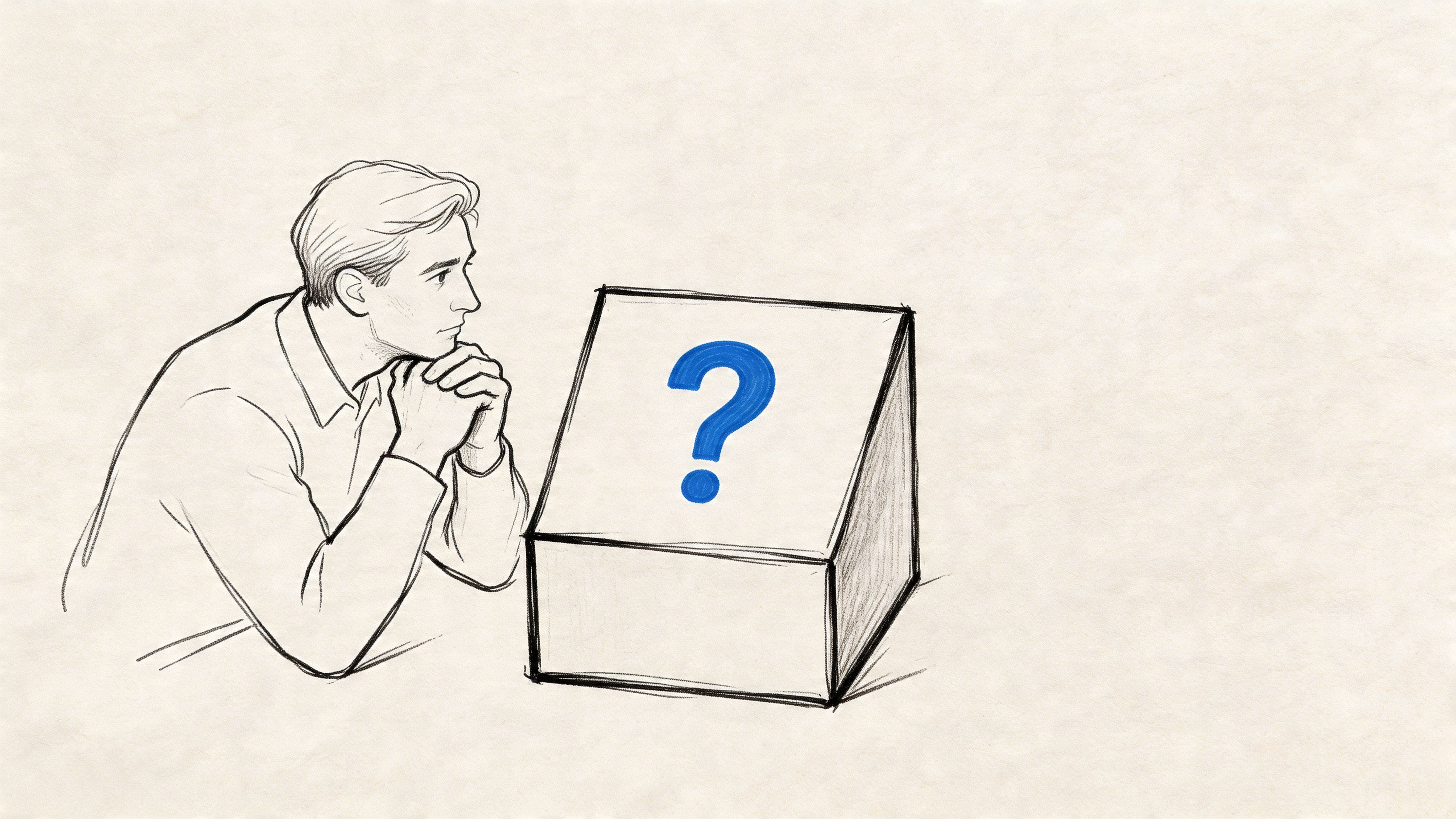
Pick one outcome
A conversation works better when it has one job.
If your goal is fuzzy, your prep will be fuzzy too. "I need to talk to my manager" can mean asking for a schedule change, clarifying feedback, naming a problem, asking for support, or setting a boundary. Those are different conversations. Trying to prepare for all of them at once is like opening ten browser tabs and expecting your brain to run smoothly.
Choose the outcome you want from this one exchange.
| Vague goal | Clear goal |
|---|---|
| Talk to my boss | Ask for one remote day each week |
| Talk to my friend | Tell them I felt hurt when plans changed last minute |
| Talk to my parent | Ask them not to comment on my body |
| Talk to my teacher | Request written instructions after verbal feedback |
A clear goal gives you a target. It also lowers cognitive load because you stop treating the conversation like a referendum on the whole relationship.
Use a one-page prep note
You do not need a perfect outline. You need a note you can scan under stress.
Paper works. A notes app works. tonen works too if you want one place to store your goal, wording, and tone choices without holding them all in your head.
Keep the note short enough that your eyes can find the point fast. Include:
- Goal: What do I want from this conversation?
- Main point: What is the core issue?
- Facts: What happened, stated plainly?
- Ask: What am I requesting?
- Boundary: What will I do if the conversation stops being useful?
Here is a quick example:
- Goal: Ask for written follow-up after meetings
- Main point: I miss details when instructions are only verbal
- Facts: I had to ask for clarification twice this month after verbal feedback
- Ask: Please send bullet-point next steps after meetings
- Boundary: If the conversation gets sidetracked, I will return to the request
That format works like an external hard drive for your working memory. Instead of carrying every detail internally, you place the important parts somewhere visible.
If the hardest part is naming what you feel in the first place, this guide on putting your feelings into words clearly can help you turn a vague internal signal into a sentence you can use.
One good test helps here. If your note is too long to scan in a few seconds, it is probably trying to do more than one conversation's worth of work.
Prepare for their perspective without guessing their motives
"Consider their perspective" is common advice. It also frustrates a lot of us because it can sound like "predict every hidden meaning and manage their feelings perfectly."
You do not need to do that.
Useful perspective-taking is concrete. It asks what information they have, what practical concern they may raise, and what part of your request might confuse them. It does not ask you to decode facial expressions like a detective or invent stories about what they secretly think of you.
Try these prompts:
- What are they likely focused on today?
- What information do they already have, and what are they missing?
- What concern might they raise out loud?
- Which response would be hard for me to hear, and how will I stay on track if it happens?
For example, if you are asking a manager for a schedule change, they may be thinking about coverage, deadlines, or consistency across the team. Those are concrete concerns you can prepare for. "They probably think I am lazy" is not preparation. It is anxiety filling in blanks.
That distinction matters.
Write one anchor sentence
Before the conversation starts, give yourself one sentence to return to when your mind starts sprinting.
Use something simple:
- I am making one request.
- I can be clear without explaining every detail.
- I do not need to predict their reaction.
- My job is to say the point.
An anchor sentence works like a handrail. You may still feel shaky, but you have something solid to touch when the conversation starts pulling you into old scripts, overexplaining, or shutdown.
For many neurodivergent people, conversation anxiety is not a character flaw. It is a bandwidth problem. Defining your foundation lowers the number of decisions your nervous system has to make in real time. That is why this step matters so much. Clarity gives your brain somewhere to stand.
Dreading an upcoming conversation? tonen can help.
tonen offers conversation scripts, Reply Helper, Perspective Helper, Debrief, Phone Call Mode and Calm Kit. Start with 21 free scripts on iPhone. Optional Premium unlocks more features.
Download on the App StoreAvailable on iOS.
Build Your Conversation Blueprint with Scripts and Tone
A script doesn't have to make you sound robotic. Done well, it does the opposite. It gives you a stable starting point so your actual voice can show up without getting buried under panic.
Build three lines, not a speech
You usually don't need a full script for the whole conversation. You need a blueprint.
Write these three parts:
1. Opening line
2. Main point
3. Closing or next-step line
Here are examples.
Work conversation
- Opening: "Do you have a few minutes to talk about my schedule?"
- Main point: "I've noticed I work better with one quieter day each week, and I'd like to ask about one remote day."
- Closing: "If that's possible, I'd like to try it and check in after a few weeks."
Friendship repair
- Opening: "There's something small but important I want to talk through."
- Main point: "When plans changed at the last minute, I felt thrown off and hurt."
- Closing: "I'd like us to make a clearer plan next time."
Medical appointment
- Opening: "I wrote down a few things because I don't want to forget them."
- Main point: "My main concern is how often this symptom is happening and how it's affecting daily life."
- Closing: "Before I leave, can we confirm the next step in writing?"
Tone changes meaning
Many of us don't struggle to know the content. We struggle to know how the content will land. The same request can sound blunt, apologetic, warm, or defensive depending on phrasing.
A useful way to prep is to write one line in more than one tone.
| Need | Direct | Warm | Firmer | Softer |
|---|---|---|---|---|
| Ask for time | "I need ten minutes to discuss this." | "Could we set aside ten minutes to talk this through?" | "I need us to address this today." | "When you have a moment, I'd like to talk about something important." |
| Set a boundary | "I can't continue if I'm being interrupted." | "I want to keep talking, and I need space to finish my point." | "If the interruptions continue, I'll pause this conversation." | "It's easier for me to speak if I can finish my sentence first." |
None of these are universally right. The point is choice. Tone is part of accessibility. Sometimes your nervous system needs direct language because softer wording turns into rambling. Sometimes a softer entry helps the other person stay receptive.
Use prompts when your brain is blank
Saved scripts and downloaded Calm exercises can be used offline. Reply Helper, Perspective Helper and Debrief use online processing, so do not treat them as an offline private notebook. Review tonen’s privacy policy before sharing sensitive information.
You can also create your own prompt bank. Keep a note with sentence starters like these:
- "I want to bring up something that's been on my mind."
- "I'm not assuming bad intent, but I do want to name the impact."
- "I'm asking for a change going forward."
- "I need a minute to think before I answer."
- "I don't want to keep discussing this in this tone."
For more examples you can adapt, this collection of conversation scripts for difficult everyday situations is useful as a starting point.
> Scripts are supports, not cages. You can follow them closely, read from them, or use them as back-pocket language when your mind goes blank.
Keep the script human
A good script sounds like something you'd say. Test it with three quick checks:
- Would I say this out loud? If not, simplify it.
- Can I say it in one breath? If not, shorten it.
- Does it make one point? If not, split it.
You don't need perfect phrasing. You need language that's sturdy enough to hold when stress hits. That's the answer to how to prepare for a conversation when speaking off the cuff feels unreliable.
Rehearse for Real-World Confidence
Actors rehearse because memory changes under pressure. Athletes rehearse because the body forgets less when it has practiced the movement. Conversations aren't that different. If a conversation matters to you, rehearsal gives your brain a trail to follow when stress narrows your thinking.
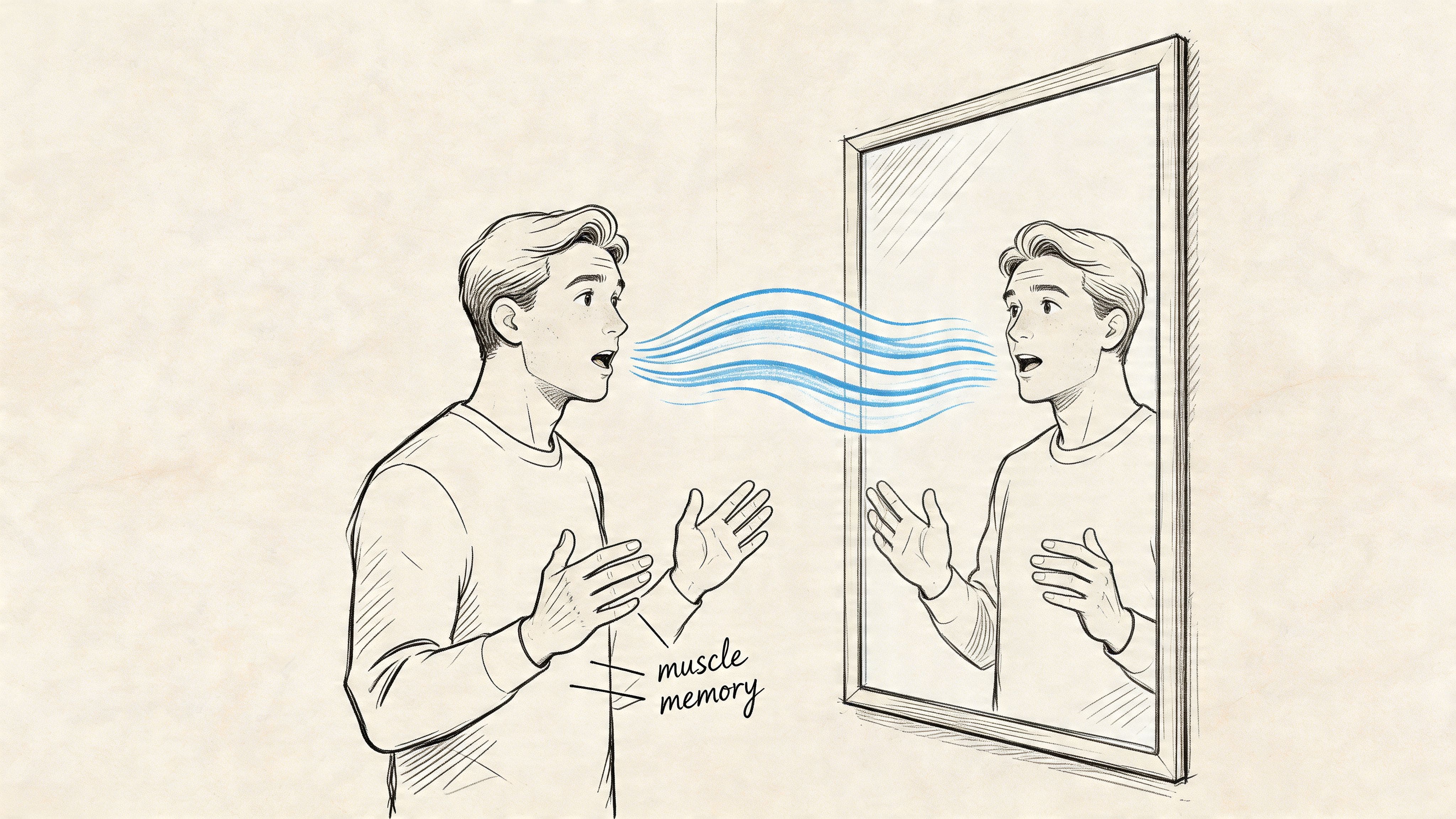
I think of rehearsal as reducing surprise. You're not trying to predict every line. You're helping your mouth get used to saying the hard part without freezing.
Start alone, not live
If the conversation already feels loaded, don't begin by practicing with another person. Start alone.
Read the script in a format that works for you. You can say it aloud, keep it as a note or practise with someone you trust. Memorisation, standing up and eye contact are optional.
These first rounds often feel awkward. That's normal. The goal is familiarity, not polish.
Try this sequence:
- Round one: Read the words exactly as written.
- Round two: Trim anything that sounds unnatural.
- Round three: Add one likely reply from the other person.
- Round four: Practice your pause line.
- Round five: Practice your closing line.
Rehearse the difficult turns
A lot of anxiety comes from one fear. "What if they say something I didn't prepare for?" That's why rehearsal should include challenge points.
Your conversation probably doesn't need that much practice. But the principle is useful. Don't just rehearse your ideal version. Rehearse the bumps.
Here are common turns to practice:
| If they say | You can rehearse |
|---|---|
| "I don't remember it that way." | "That's okay. I still want to explain how I experienced it." |
| "You're overreacting." | "I may see it differently, but it matters enough that I want to address it." |
| "We don't have time for this." | "Then let's schedule a time, because I don't want to drop it." |
| "What do you want me to do?" | "I'm asking for one specific change going forward." |
> Rehearsal doesn't eliminate emotion. It makes emotion less likely to erase your language.
Try two kinds of practice
Solo rehearsal is one kind. Role-play is another.
Private rehearsal helps when you're still shaping the words. It lets you experiment without social pressure. You can repeat the same line until it stops feeling foreign.
Role-play with a trusted person helps when you're ready for more realism. Ask them to respond in a few different ways: receptive, distracted, mildly defensive. You don't need them to perform conflict. You need enough variation to stop your brain from assuming there is only one possible path.
If live role-play feels too intense, use a halfway option. Record yourself speaking and play it back. Many people notice extra wording, apology loops, or sentences that get too abstract when they hear themselves aloud.
If you want a more guided version of this process, this resource on how to practice conversations for anxiety offers examples of rehearsal formats you can use privately.
Save your strongest lines
After a few practice rounds, mark the phrases that feel solid. These are your anchor lines. You don't need many.
Good anchor lines usually do one of three jobs:
- Open: "I want to talk about something important."
- Clarify: "My main point is this."
- Protect: "I need a pause before I continue."
Write those lines somewhere easy to see. Some people keep them in a phone note. Some put them on an index card. Some memorize only the first sentence and let the rest follow naturally.
Confidence often comes from recognizing the conversation is no longer entirely new. You've already entered it several times in rehearsal. The live version is not the first time your brain has had to travel that road.
Plan for Overwhelm and Graceful Exits
People often treat overwhelm like an unfortunate surprise. For many neurodivergent people, it's predictable enough that it belongs in the plan from the start. If your nervous system sometimes goes offline under stress, then an overload plan is not extra. It's part of how to prepare for a conversation responsibly.
Know your early signs
Overwhelm rarely appears out of nowhere. It usually has a buildup.
Your signs might include:
- Body changes: tight chest, shallow breathing, nausea, shaking, heat
- Language changes: losing words, repeating yourself, going blank, talking too fast
- Attention changes: tunnel vision, sound sensitivity, trouble tracking what was said
- Emotion changes: sudden tears, irritability, panic, numbness
When you notice these signs early, you still have options. When you ignore them, the conversation may start running you instead of the other way around.
Build a calm kit before the conversation
A calm kit can be very simple. The key is that you choose it before stress peaks.
Try a short menu like this:
- Breathing option: Inhale slowly, exhale longer than you inhale.
- Grounding option: Name five things you can see, four you can feel, three you can hear.
- Body option: Press your feet into the floor or unclench your jaw on purpose.
- Attention option: Look at one stable object and mentally describe it.
- Support option: Text a trusted person before and after the conversation.
You do not need every technique. You need one or two that you can remember under pressure.
Pre-write your pause and exit lines
A lot of us know we need a break only after we've gone past the point where speaking clearly is possible. Pre-written exit lines help because they remove the burden of inventing a socially acceptable pause while your system is overloaded.
Here are examples.
Pause lines
- "I want to answer carefully, and I need a minute."
- "I'm getting overloaded. Can we pause for a moment?"
- "I need a short break so I can keep this conversation productive."
End-for-now lines
- "I'm not able to continue well right now. Let's come back to this later."
- "I want to keep discussing this, but I need to stop for today."
- "I'm at my limit. I'll follow up when I can think more clearly."
Ask-for-support lines
- "Can we switch to writing for this part?"
- "Can you say that one more time more slowly?"
- "I need the main points in plain language."
For extra ideas, this article on what to do when feeling overwhelmed before or during a conversation can help you plan responses before the stress spike arrives.
> Planning an exit doesn't make you negative. It makes you safer, clearer, and less likely to stay in a conversation past your limits.
Use environment as part of the plan
Sometimes the best regulation tool isn't verbal at all. It's changing the setting.
You can reduce friction by choosing:
| Conversation factor | Lower-load option |
|---|---|
| Location | Quiet room, parked car, walk outside, written chat |
| Timing | Not right before class, work, meals, or bedtime |
| Sensory load | Dimmer light, less noise, fewer people nearby |
| Processing support | Notes in hand, water nearby, permission to pause |
The conversation doesn't happen in a vacuum. A good script can still fail in a loud café when your brain is already maxed out.
The strongest prep plan includes language, body regulation, and boundaries. That combination gives you more than confidence. It gives you recovery paths.
Actionable Follow-Up and Self-Compassion
When the conversation ends, your nervous system might not get the memo right away. You may replay every sentence, fixate on one awkward moment, or suddenly think of the "better" thing you wish you'd said. That's a common aftershock, especially if talking under pressure already costs you a lot.
A good follow-up routine keeps one hard conversation from expanding into three days of rumination.
Use a short debrief
Keep this debrief small. Two minutes is enough.
Write down:
- One thing that went well: Maybe you started. Maybe you stayed on topic. Maybe you used your pause line.
- One thing to adjust next time: Shorter opener, firmer boundary, clearer ask.
- One next action: Send a text, schedule a follow-up, or do nothing for now.
This works because reflection is different from rumination. Reflection gives your brain a container. Rumination keeps the loop open.
Don't measure success only by their reaction
Many people decide the conversation "failed" if the other person got defensive, didn't understand immediately, or didn't respond kindly. That's too narrow.
A more useful standard is:
- Did I say the main thing?
- Did I protect my limits?
- Did I act in line with my values?
- Did I give myself support before or after?
If yes, then the conversation likely contained success, even if it was messy.
> Some conversations are successful because they create agreement. Others are successful because you told the truth clearly.
Make follow-up easier on yourself
If the conversation produced next steps, write them down right away. Don't trust post-stress memory. If a written recap would help, keep it brief and practical.
For example:
- "Thanks for talking earlier. My understanding is that we'll revisit this on Friday."
- "I wanted to summarize the two changes we discussed so I don't lose track."
- "I'm following up with the boundary I named earlier so it's clear in writing."
If follow-up after meetings or serious discussions feels hard, this guide on how to master the meeting follow-up offers a clean way to turn a messy exchange into clear next actions.
A quick emotional check-in helps too. This mood check-in practice can help you notice whether you're activated, relieved, numb, or still carrying stress from the conversation.
Keep a personal script library
One of the best long-term supports is keeping your own bank of lines that worked. Save phrases you want to reuse.
You might create categories like:
- Openers I can use at work
- Boundary lines for family
- Questions for doctors
- Pause lines for overload
- Closings that don't sound abrupt
Over time, this turns conversation prep into a repeatable system instead of a brand-new problem every time.
Self-compassion matters here. You are learning a skill under conditions that may already be demanding for your brain and body. You don't need to become effortless. You need tools, repetition, and permission to prepare in ways that match how you function.
If you want a tool built around this exact process, tonen offers script prompts, tone options, script preparation, perspective support, and calming tools in one mobile app, designed for neurodivergent users who want less stress and more clarity before difficult conversations.