The best conversation scripts provide clear, adaptable language for high-stakes situations like setting workplace boundaries, communicating with doctors, and navigating family dynamics, especially for neurodivergent individuals. These tools reduce anxiety by offering pre-built phrases to express needs, with options to adjust the tone (warm, direct, firm), gracefully opt-out, or ask for specific support. Using effective conversation scripts empowers you to advocate for yourself, prevent overwhelm, and build stronger relationships without the stress of finding the right words in the moment.
This guide offers 10 practical examples you can start using today, complete with strategic breakdowns for adapting them to your unique life. Many find support in tools that centralize these scripts and offer practice modes to build confidence before you ever have to speak. You will learn to:
* Set firm boundaries at work and home.
* Clearly state your needs to healthcare providers.
* Initiate social contact with less anxiety.
* Ask for help when feeling overwhelmed.
Each script is a starting point, not a rigid rule. We will break down why they work and how you can adjust the wording, tone, and delivery to fit your personality and the specific situation. Consider these your foundational tools for clearer, more confident communication.
1. Workplace Boundary-Setting Script
Workplace boundary-setting conversation scripts are structured templates that help you assert your needs professionally. They are especially useful for neurodivergent individuals who need to establish boundaries around workload, communication styles, or sensory needs without creating friction. These scripts provide clear, predictable language for situations like requesting a quieter workspace, declining non-essential meetings, or asking for written instructions instead of verbal ones.
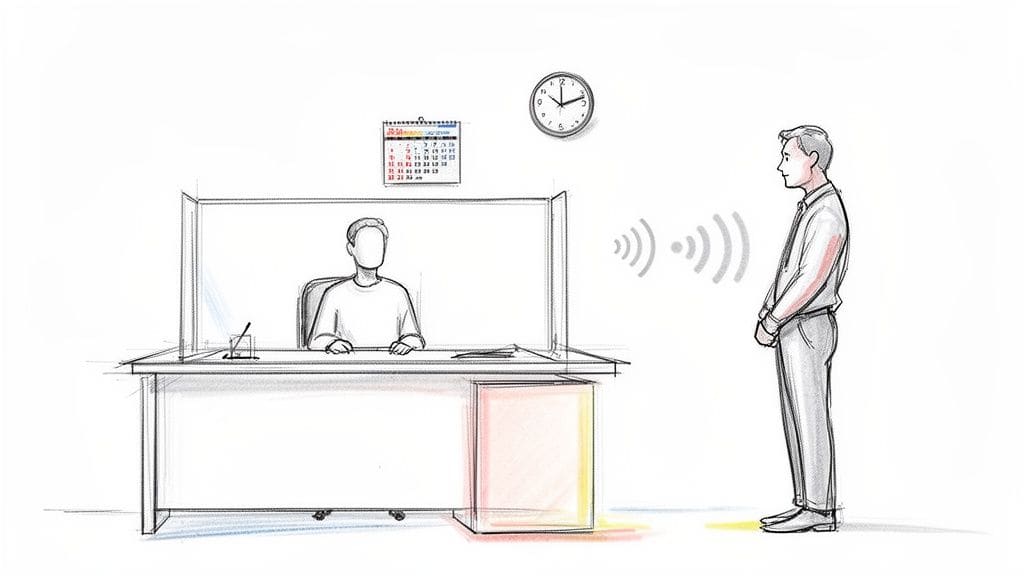
How It Works
The core of this approach is pairing your need with a professional justification. For instance, instead of just saying "I need to work from home," you might say, "To produce my most focused work and meet our deadlines, I need to work from home on Tuesdays and Thursdays where I can control sensory inputs." This connects your request to a shared goal, like productivity.
Many workplace advocates in the ADHD and autism communities popularize these conversation scripts because they reduce the mental load of formulating a request on the spot. A key benefit is maintaining professional relationships while clearly communicating your requirements. For more guidance on phrasing, see these tips on how to politely decline a request without causing offense.
Actionable Tips for Implementation
* Practice Your Tone: Before the real talk, use an app or a trusted friend to practice. A calm, neutral tone is usually most effective.
* Time It Right: Discuss boundaries during a calm, scheduled one-on-one, not in the middle of a high-stress project.
* Keep a Reference: Have your script on your phone or a notepad. It's okay to refer to your notes to ensure you say exactly what you mean.
* Follow Up in Writing: Send a brief email summarizing your conversation. This creates a record and confirms mutual understanding.
2. Healthcare Communication Script
Healthcare communication conversation scripts are specialized templates for medical appointments, helping neurodivergent individuals clearly express their symptoms, sensory needs, and treatment preferences. These are particularly useful for explaining experiences like executive dysfunction or sensory overload to providers who may be unfamiliar with them. Scripts offer structured language to articulate needs, such as requesting written instructions or discussing medication side effects.
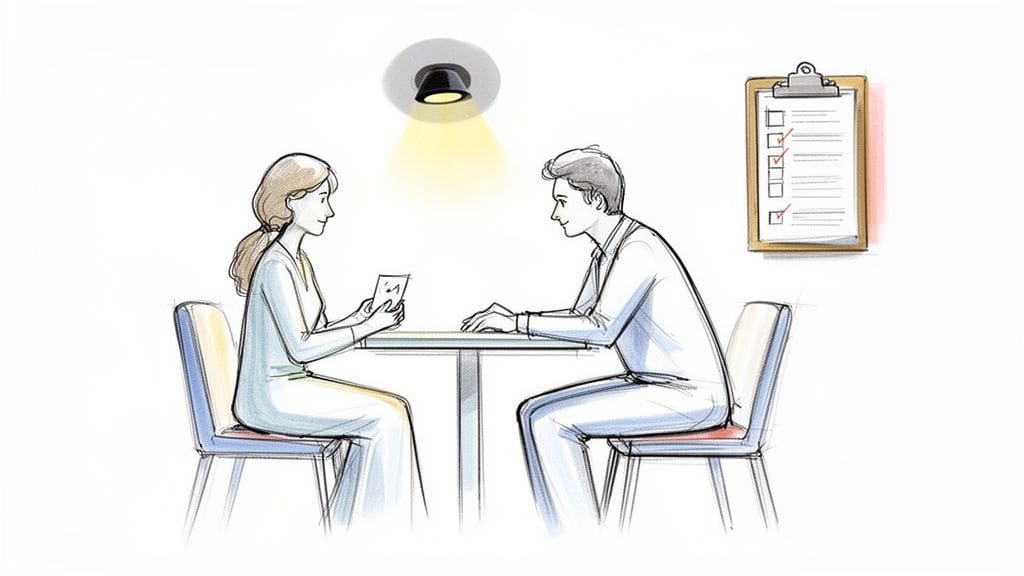
How It Works
This method focuses on translating internal neurodivergent experiences into concrete, medically relevant information. For example, instead of saying, "I'm always tired and can't do anything," you could use a script to say, "I'm concerned about my executive dysfunction, which makes it difficult to initiate tasks like cooking and cleaning. This has been happening for six months." This frames the issue in a way a doctor can more easily diagnose and treat.
Patient advocacy organizations and disability medicine specialists champion these conversation scripts as they empower patients to self-advocate effectively. They bridge communication gaps, reduce the anxiety of a doctor's visit, and ensure critical information isn't forgotten under stress. For more ideas on how to articulate your needs, check out these communication strategies for talking with your doctor.
Actionable Tips for Implementation
* Write It Down First: Prepare your key points and questions on a notepad or your phone. Having your script ready prevents you from forgetting important details during the appointment.
* Arrive Early: Get to your appointment a few minutes early to review your notes in a calm environment, helping you feel more centered before the conversation begins.
* Bring a Supporter: If you feel anxious, bring a trusted friend or family member. They can offer emotional support and help you remember to cover all your points.
* Keep Copies: Save your scripts for recurring health issues. This saves time and ensures consistency in how you communicate your needs in future visits.
3. Family Conversation Script
Family conversation scripts are pre-planned statements designed to help you communicate your needs clearly and compassionately with relatives. These are particularly valuable for neurodivergent individuals who need to explain their experiences, set boundaries around social obligations, or manage expectations without causing family conflict. These scripts provide gentle, firm language for situations like declining a chaotic holiday gathering due to sensory overload or explaining that needing alone time is not a personal rejection.

How It Works
The strategy behind these scripts is to connect your needs to the health of your relationship with your family. Instead of just saying, "I can't come to the party," you could frame it as, "To make sure I can be present and enjoy our time together, I need to sit out the main party but would love to visit in a quieter setting the next day." This approach validates the family connection while honoring your own capacity.
Advocates for neurodivergent families and family systems therapists promote these conversation scripts because they can reduce misunderstandings that stem from generational or neurotype differences. A primary advantage is their ability to preserve emotional bonds while establishing necessary boundaries. The goal is to build understanding over time, not to win a single argument.
Actionable Tips for Implementation
* Choose a Calm Moment: Initiate these discussions during a quiet, private time, not in the middle of a stressful family event.
* Use a Warm Tone: A warm, sincere tone often helps family members feel your love and care, making them more receptive to your message.
* Frame Requests Positively: Explain your needs in terms of protecting the relationship. For instance, "I'm taking a break now so I can have the energy to connect with you fully later."
* Write It Down: If a face-to-face conversation feels too intense, consider writing a letter or email. This gives you time to articulate your thoughts carefully.
* Be Patient: Understand that it may take several conversations for family members to fully grasp your needs. Revisit your scripts as needed.
4. Social Anxiety and Initiation Script
Conversation scripts for social anxiety and initiation provide simple, pre-planned templates for reaching out to others. They are invaluable for neurodivergent individuals who experience analysis paralysis or executive dysfunction when trying to make plans, send a text, or RSVP. These scripts lower the barrier to social connection by offering clear, low-risk ways to initiate contact, reducing the anxiety that often leads to isolation.
Need ready-to-use phrases for tricky conversations? tonen can help.
tonen gives you 188+ conversation scripts, tone guidance and calming tools — designed for autistic adults, ADHD and social anxiety. Try it free for 7 days.
Download on the App StoreiOS only. Android coming soon.
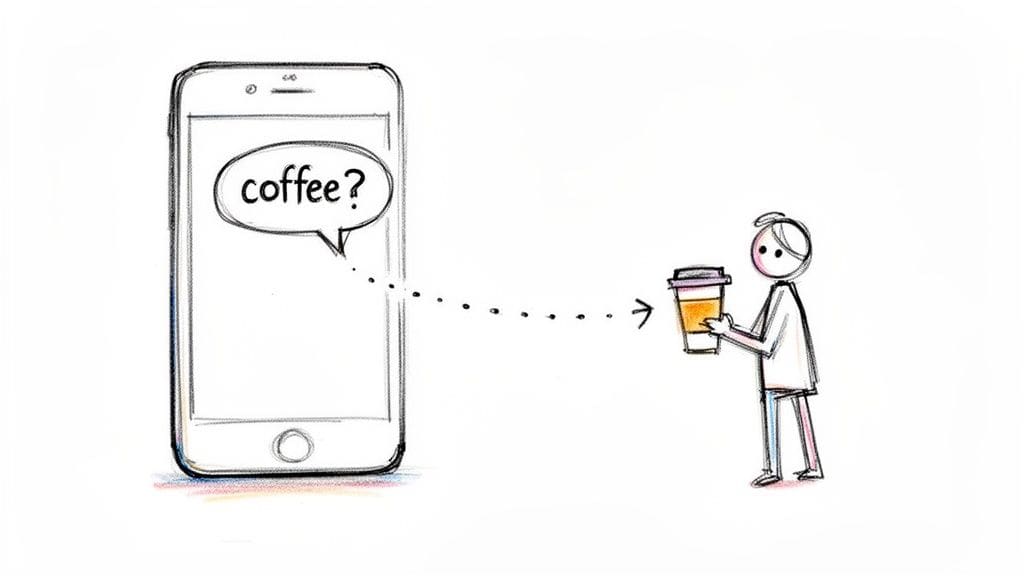
How It Works
The strategy involves using specific, actionable language that minimizes ambiguity. Instead of a vague "we should hang out," a script offers a concrete suggestion like, "I've been thinking of you. Want to grab coffee Tuesday afternoon?" This approach removes the guesswork for both people and makes it easier to say yes.
Social anxiety treatment programs and neurodivergent friendship coaches often recommend these conversation scripts because they bypass the mental spiral of "what if they say no?" or "is this weird?" By having a go-to phrase, you can act before overthinking takes over. If you need more ideas, you can find help on how to start a conversation and build momentum.
Actionable Tips for Implementation
* Start Small: Begin by using one script with a single, trusted friend. Success with a low-pressure interaction builds confidence for future outreach.
* Be Specific: Propose a clear plan with a time and place, like "Want to watch a movie at my place on Friday?" This reduces back-and-forth and makes planning easier for everyone.
* Embrace Your Natural Timing: Don't feel pressured to respond instantly or send messages at a "normal" time. Sending a text when you feel ready is better than not sending one at all.
* Use Warmth with Close Friends: For reconnecting after a period of isolation, a vulnerable script can be effective. Try: "I know I've been quiet. I'd like to catch up if you're interested."
5. Overwhelm Communication and Asking for Help Script
Overwhelm communication conversation scripts are pre-planned phrases that help neurodivergent individuals clearly state their needs during moments of intense sensory or emotional distress. They are designed for situations like panic, overwhelm, or shutdown when forming complex sentences is difficult. These scripts provide a direct, low-effort way to ask for specific support, such as requesting quiet space or reassuring touch, without needing to explain the crisis as it happens.
How It Works
The strategy involves using simple, direct language to communicate a state and a need. For example, instead of struggling to describe the feeling of a shutdown, a person can use a script like, "I'm shutting down. I need to be alone and will text you later." This immediately informs a trusted person what is happening and what action (or inaction) is required, reducing confusion and preventing further escalation.
These emergency conversation scripts are often promoted by trauma therapists and peer support groups because they bypass the need for executive functioning when it's offline. Sharing these scripts with family, partners, or close friends in advance is a key part of the process, ensuring they know how to respond effectively. For more strategies, explore these tips on what to do when feeling overwhelmed to manage these moments.
Actionable Tips for Implementation
* Create a Crisis Card: Write down 2-3 of your most essential scripts on a physical card or in a notes app. Include specific needs like "dim the lights" or "speak quietly."
* Share Scripts Proactively: During a calm moment, share your scripts with loved ones. Explain what each phrase means and how you'd like them to respond.
* Use a Direct Tone: When overwhelmed, clarity is more important than politeness. A direct tone ensures your message is understood without ambiguity.
* Practice When Calm: Rehearse saying your scripts out loud when you are not in crisis. This builds muscle memory, making it easier to access them during an actual emergency.
6. Education and Learning Accommodation Script
Education and learning accommodation conversation scripts are structured templates for students to request academic support. They are particularly effective for neurodivergent learners needing to explain their learning differences to teachers or professors and secure necessary accommodations like extra exam time or alternative assignment formats. These scripts provide clear, respectful language to advocate for academic success without focusing on a specific diagnosis.
How It Works
The strategy behind these scripts is to connect an accommodation request to a positive learning outcome. For example, instead of stating, "I have ADHD and I need more time," a student might say, "To demonstrate my full understanding of the material, I need to use the extra time accommodation outlined in my file." This frames the request around academic performance, a goal shared by both student and educator.
Disability services professionals and neurodivergent student advocates promote these conversation scripts because they remove the anxiety of self-advocacy. A key benefit is the ability to communicate needs clearly and formally, fostering a collaborative relationship with instructors.
Actionable Tips for Implementation
* Start with Documentation: Before speaking with instructors, register with your school's disability services office to get formal documentation for your accommodations.
Focus on Impact, Not Diagnosis: Explain how an accommodation helps you learn, not why* you need it. For example, "Receiving instructions in writing helps me process the details accurately."
* Time Your Request: Schedule a brief meeting with your professor during office hours early in the semester, not right before an exam or deadline.
* Follow Up in Writing: After your conversation, send a polite email summarizing the accommodations you discussed. This creates a helpful record for both you and the instructor.
7. Dating and Romantic Relationship Script
Dating and romantic relationship conversation scripts are pre-planned statements that help neurodivergent individuals navigate the complexities of intimacy and connection. They are invaluable for disclosing a diagnosis like autism or ADHD, communicating specific needs, and setting healthy boundaries without causing misunderstanding. These scripts reduce the anxiety that often accompanies romantic vulnerability by providing clear, rehearsed language for sensitive topics.
How It Works
This method focuses on framing personal needs as relational information rather than as deficits. For example, instead of a blunt "I don't like surprises," you could use a script like, "To feel secure and present with you, I need to know about changes to our plans in advance because surprises can cause me anxiety." This approach explains the why behind the need, fostering understanding and collaboration.
Relationship therapists and dating coaches specializing in neurodivergence often promote these conversation scripts as they empower individuals to build healthier relationship dynamics from the start. By turning a potential point of conflict into a moment of connection, these scripts lay the groundwork for mutual respect and support. For more tips on building strong connections, explore these resources on developing healthy relationship communication.
Actionable Tips for Implementation
* Choose a Calm Moment: Disclose a diagnosis or discuss a need during a low-pressure, private moment, not in the middle of a disagreement.
* Focus on the "Why": Connect your need to how it affects you and your ability to be a good partner. Frame it as a way to improve the relationship.
* Use a Warm Tone: Vulnerability can be scary. Practicing a warm, open tone helps make your disclosure feel more like an invitation and less like a demand.
* Revisit as Needed: Relationships evolve, and so do needs. Treat these scripts as living documents that you can revisit as you and your partner grow together.
8. Difficult Conversation and Conflict Resolution Script
Difficult conversation and conflict resolution conversation scripts are structured templates for navigating disagreements, apologizing, or addressing hurt feelings. They are essential for neurodivergent individuals who may find emotionally charged discussions overwhelming or difficult to initiate. These scripts provide a predictable framework for expressing emotions and needs clearly, helping to resolve conflicts without causing relationship rupture. They guide you through stating your feelings, identifying the issue, and proposing a resolution.
How It Works
This method focuses on a non-accusatory formula, often expressed as: "When [specific event] happened, I felt [emotion] because [reason]. I need [specific request]." This structure separates the person from the problem, making it easier for the other party to hear your perspective without becoming defensive. For particularly sensitive conversations, learning techniques such as using I Feel Statements can be incredibly effective in transforming disagreements into constructive dialogue.
These conversation scripts are championed by relationship specialists and Nonviolent Communication experts because they de-escalate conflict and promote mutual understanding. The goal is to open a dialogue, not to win an argument. You can find more strategies in our guide on how to handle conflict in relationships.
Actionable Tips for Implementation
* Request a Calm Time: Ask to talk when both people are calm and can focus. Say, "I'm upset about something and want to talk it through. Is now a good time?"
* Focus on Impact: Describe the behavior and its impact on you, avoiding character attacks. "When I had to repeat my request, I felt unheard," is more effective than "You never listen."
* Allow for Breaks: If you or the other person gets overwhelmed, it's okay to pause. You can say, "I need to take a break because I'm getting dysregulated. Can we continue in 20 minutes?"
* Combine with Calm Tools: If you feel dysregulated, use a sensory tool from your calm kit while you talk to help manage your emotional state.
9. Transition and Grief Communication Script
Transition and grief communication conversation scripts are structured templates for navigating major life changes like job loss, moving, a diagnosis, or bereavement. They help individuals, especially neurodivergent people, articulate difficult emotions and needs during periods of upheaval. These scripts provide a starting point for expressing what you're going through, asking for support, and setting boundaries when capacity is low, all while preserving important relationships.
How It Works
This method focuses on stating your reality clearly and then specifying what you need. Instead of withdrawing without explanation, you might say, "I'm going through something difficult right now and need some space to process, but I still care about our connection." This frames your withdrawal as a temporary need, not a rejection. It gives people a way to understand your behavior without making incorrect assumptions.
Grief counselors and trauma-informed coaches often recommend these conversation scripts because they lower the activation energy required to communicate during an already exhausting time. By having pre-formulated language, you can advocate for yourself without needing to invent the words on the spot. This approach is similar to how managers might plan to handle difficult employees by preparing their points beforehand to ensure clarity and professionalism.
Actionable Tips for Implementation
* Specify Your Needs: Be direct about what kind of support is helpful. For example, "I need a distraction right now, can we go see a movie?" is more effective than a vague request.
* Update as Needed: Grief and transitions are not linear. It's okay to tell people your needs have changed. You might need space one week and company the next.
* Accept It's a Starting Point: A script can open the door, but it can't script the entire emotional journey. Use it as a tool to initiate dialogue, not control it.
* Consider Professional Support: These scripts are most effective when used alongside professional help like therapy or counseling to process the underlying grief or transition.
10. Self-Advocacy and Neurodivergent Identity Script
Self-advocacy conversation scripts are templates for communicating your neurodivergent identity and correcting misinformation. They are vital for autistic and ADHD individuals who wish to educate others, set boundaries around harmful stereotypes, or connect with peers. These scripts offer clear, confident language for moments like disclosing a diagnosis, pushing back against stigma, or explaining that neurodivergence is an identity, not a defect.
How It Works
This approach centers on owning your identity with pride and clarity. Instead of justifying your experience, you state it as a fact. For example, rather than a lengthy explanation, you might say, "ADHD isn't about being lazy. It's about how my brain regulates attention and time." This reframes the conversation from apology to education.
These conversation scripts are promoted by neurodivergent advocates because they reduce the emotional labor of self-advocacy. They empower you to define your own narrative, correct misunderstandings firmly, and build community. To learn more about navigating these topics, you can explore resources on what it means to be neurodivergent in a neurotypical world.
Actionable Tips for Implementation
* Protect Your Energy: You do not owe an explanation to everyone. Choose who you want to educate and when.
* Lead with Pride: Frame your identity as a neutral or positive fact, not something to be excused. A simple "I'm autistic, and that's just how my brain works" can be very effective.
* Use Tone Strategically: Employ a firm, direct tone when correcting harmful assumptions. Use a warmer tone when connecting with allies or other neurodivergent people.
* Find Your Community: Connect with neurodivergent groups online or in person. Sharing experiences and scripts with peers can be incredibly validating and helpful.
10 Conversation Scripts Comparison
| Script Type | Implementation Complexity 🔄 | Resource Requirements ⚡ | Expected Outcomes 📊⭐ | Ideal Use Cases | Key Advantage ⭐ | Practical Tip 💡 |
|---|---|---|---|---|---|---|
| Workplace Boundary-Setting Script | Medium — customization + timing | Moderate — practice, possible HR support | Clearer boundaries; reduced workplace overwhelm | Requesting WFH, limiting meetings, email expectations | Protects wellbeing while preserving professionalism | Practice tone options; follow up with an email |
| Healthcare Communication Script | Medium — translate experiences to medical terms | Moderate — documentation, longer appt. time, support person | Better diagnosis, appropriate accommodations, less appointment anxiety | Explaining symptoms, medication side effects, sensory needs | Increases accuracy of care and access to accommodations | Bring written notes; arrive early; bring a supporter |
| Family Conversation Script | Medium — emotional nuance, repetition needed | Low–Moderate — time, patience, possible letters | Improved family understanding; preserved relationships | Disclosing diagnosis, declining gatherings, setting expectations | Reduces guilt and maintains relationships | Choose calm moments; use Warm tone; consider a letter |
| Social Anxiety and Initiation Script | Low — simple, low‑pressure lines | Low — practice and reference on phone | More social connection; less avoidance | Texting, RSVPs, reconnecting after gaps | Low‑effort prompts that overcome initiation paralysis | Use concrete plans and start with low‑pressure invites |
| Overwhelm & Asking for Help Script | Low–Medium — concise crisis phrases | Moderate — share scripts with trusted people, crisis card | Faster, clearer support during meltdown or shutdown | Panic, sensory overload, shutdowns | Enables help when verbalizing is difficult | Create and share a crisis card; practice in calm times |
| Education & Learning Accommodation Script | Medium — may need formal processes | Moderate–High — paperwork, disability services | Access to accommodations; improved academic outcomes | Requesting extra time, alternative formats, breaks | Facilitates equitable access and reduces academic stress | Get requests documented; start with disability services |
| Dating & Romantic Relationship Script | Medium — emotional timing and vulnerability | Low–Moderate — practice; partner engagement | Clearer expectations; healthier early relationship patterns | Disclosing neurodivergence, setting intimacy/communication needs | Reduces masking and builds authentic connection | Disclose in low‑pressure moments; use Warm tone |
| Difficult Conversation & Conflict Resolution Script | Medium–High — needs regulation and structure | Moderate — time, possibly therapy support | Fewer escalations; better, sustainable resolutions | Apologies, hurt feelings, recurring conflicts | Structures charged talks to prevent rupture | Schedule when calm; allow breaks if dysregulated |
| Transition & Grief Communication Script | Medium — evolving needs and sensitivity | Moderate — ongoing updates, possible counseling | Maintained support networks; reduced isolation | Job loss, bereavement, major life changes | Helps sustain connections during upheaval | Be specific about needed support; update people often |
| Self‑Advocacy & Neurodivergent Identity Script | Low–Medium — boundary around education | Low — energy management, community links | Increased pride; reduced stigma; better understanding | Correcting stereotypes, identity disclosure, community building | Promotes identity acceptance and educates others succinctly | Protect energy; you don't owe education to everyone |
Putting Scripts into Practice: Your Next Steps
The extensive examples provided throughout this article demonstrate a fundamental truth: conversation scripts are not about robotic recitation. Instead, they are a powerful tool for self-advocacy and connection, designed to reduce the cognitive load of high-stakes interactions. By having a reliable framework, you free up mental energy that would otherwise be spent searching for the right words, allowing you to focus on listening, empathizing, and being present in the moment.
The true value of these scripts lies in their adaptability. You've seen how a single core message can be adjusted with a direct, warm, firmer, or softer tone, making it suitable for a wide range of relationships and situations. The inclusion of opt-out lines and specific asks for support transforms a simple statement into a complete communication strategy. This approach is particularly effective for neurodivergent individuals, people with social anxiety, and anyone who feels drained by social demands, as it provides a predictable structure in an often unpredictable world.
Your Actionable Path Forward
Moving from reading to doing is the most important step. Here's a strategic plan to integrate conversation scripts into your daily life:
1. Identify Your Priority: Don't try to master everything at once. Review the scripts covered-from workplace boundaries to family dynamics-and select the one that addresses your most pressing current challenge. Focusing on a single, high-impact area will build momentum.
2. Customize and Personalize: The provided variants are a starting point. Your next task is to rewrite the chosen script in your own voice. Does the "firmer" tone feel more natural to you? Do you need to adjust the vocabulary? Make it sound like something you would actually say.
3. Rehearse for Confidence: Practice is non-negotiable. Say the script out loud to yourself, a trusted friend, or even into a voice recorder. The goal is to internalize the phrasing so it feels less like a script and more like a natural response. This repetition builds muscle memory, making it easier to access the words under pressure.
4. Start with Lower Stakes: Before using your script in a critical conversation, test it in a less stressful situation. This builds confidence and helps you fine-tune the delivery without the fear of major consequences.
Mastering conversation scripts is a skill of empowerment. It's about building a personal library of responses that protect your energy, clarify your needs, and strengthen your relationships. Each time you successfully advocate for yourself, you reinforce the belief that your voice matters and that you are capable of guiding conversations toward healthier outcomes. This is not about achieving perfection in one attempt; it is a journey of gradual improvement, one conversation at a time.
*
Ready to stop just reading about scripts and start practicing them? The tonen app is designed to help you save, customize, and rehearse your personal conversation scripts. With its unique Practice Mode and tone analysis, you can build the confidence to handle any difficult conversation that comes your way. Get started with tonen today and turn these strategies into your superpower.
Frequently asked questions
This guide covers conversation scripts for work, family & health with practical, neurodivergent-friendly strategies—clear steps, scripts where useful, and ways to reduce anxiety or overload rather than vague "be confident" advice.