Being neurodivergent simply means your brain works, learns, and processes information differently than what society considers 'typical.' This isn't a defect or a flaw. Instead, it's a natural and normal variation in the human brain, much like having different eye colors or hair textures. The idea of neurodiversity sees these cognitive variations as a valuable and essential part of our collective human experience.
What Being Neurodivergent Really Means
To really get what it means to be neurodivergent, it helps to think of an orchestra. A standard orchestra has violins, cellos, flutes, and trumpets, all playing their part in a predictable way to create a beautiful symphony. Now, imagine adding instruments that aren't usually in that setup—like an electric guitar or a synthesizer.
Those new instruments aren't "wrong" or "broken." They just process the musical score differently and produce a unique sound. In this analogy, the traditional instruments are like neurotypical brains, while the electric guitar and synthesizer represent neurodivergent brains. They add a different, equally valid texture to the music.
The Human-Centered View
It's so important to move away from sterile, medical definitions. At its core, being neurodivergent is about having a different cognitive blueprint that shapes a person's entire reality. This wiring affects how they:
* Perceive the world: This can show up as heightened sensory experiences, where sounds are louder, lights are brighter, or the texture of a shirt is impossible to ignore.
* Communicate and interact: Social cues that seem obvious to some might feel confusing or require a lot of conscious effort to interpret. You can learn more in our article about being autistic and the concept of autism.
* Learn and solve problems: Many neurodivergent people excel at things like pattern recognition, creative thinking, and deep, focused analysis on topics that grab their interest.
> The crucial takeaway is that neurodivergence is not about a deficit in ability but a difference in processing. It's about a brain that operates on a different, but equally valid, system.
This foundational understanding challenges the old, rigid idea that there's only one "right" way for a brain to work. Instead, it invites us to appreciate the wide spectrum of human thought and perception.
By recognizing this, we can start to see the unique strengths and perspectives that neurodivergent individuals bring to our communities, workplaces, and relationships. It sets the stage for a much richer, more inclusive understanding of the human mind.
Exploring Different Neurotypes and Lived Experiences
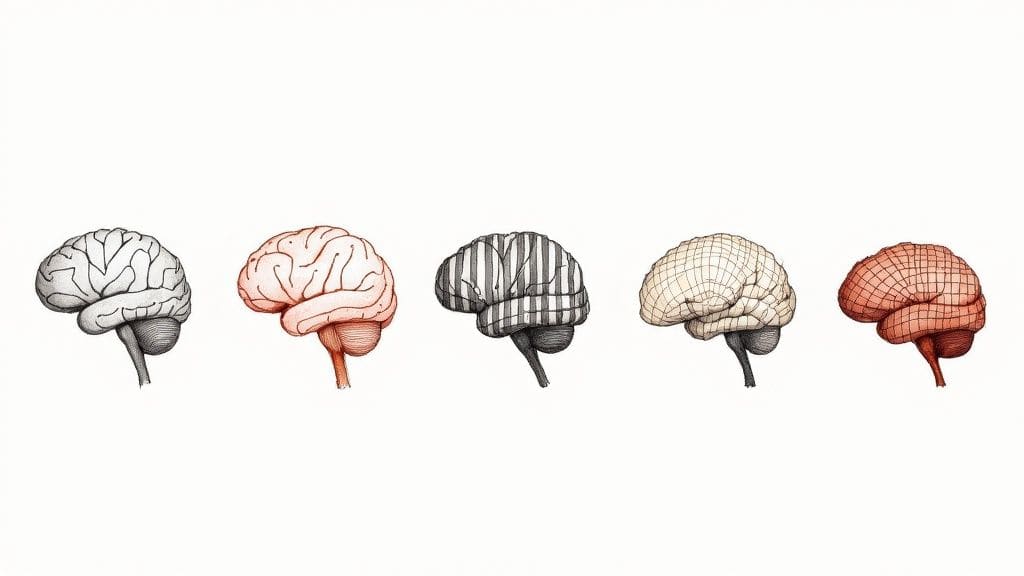
The term neurodivergent isn't a single diagnosis. Think of it more like a vast and varied landscape of human experience, covering a whole spectrum of ways our brains can perceive, interact with, and process the world. When we move past simple labels, we can start to appreciate the unique inner worlds that define each neurotype.
It might surprise you to learn just how common neurodivergence is. We're talking about an estimated 15-20% of the global population—that's roughly one out of every five to seven people you meet. This includes conditions like ADHD, autism, and dyslexia, making neurodivergence a fundamental and widespread part of human variation.
Just to put that in perspective, recent data shows that autism spectrum disorder (ASD) is identified in about 1 in 44 children in the US. You can dig into more of these neurodiversity statistics on Zipdo.co.
This incredible variance means there's no single "neurodivergent experience." There are only individual ones.
Understanding Autism Spectrum Disorder (ASD)
Autism is often defined by a different way of processing social and sensory information. For many autistic people, this shows up as an intense, deep focus on specific passions. This isn't just a casual hobby; it's a profound interest that can lead to incredible expertise.
Communication styles can also look quite different. An autistic person might value direct, literal communication, preferring clarity and honesty over navigating subtle social cues or small talk. Sensory input is another key part of the experience—sounds, lights, or textures that a neurotypical person might barely notice can feel overwhelming or even physically painful.
> The autistic experience is not a checklist of symptoms but a complex inner world. It often involves a profound sense of justice, deep loyalty, and a unique way of seeing patterns that others might miss.
Exploring Attention-Deficit Hyperactivity Disorder (ADHD)
ADHD is so much more than just an inability to pay attention. In reality, it's a challenge with regulating attention. This creates a dynamic mix of immense creativity, spontaneous problem-solving, and periods of intense hyperfocus, where someone can become completely absorbed in a task they find genuinely engaging.
The other side of the coin is the struggle with executive functions—the mental skills we use for planning, organizing, and managing time. This can make mundane but necessary tasks feel monumental, not because of a lack of desire, but because the ADHD brain is wired for interest-based stimulation, not priority-based tasks. To get a better feel for the daily reality of ADHD, exploring practical strategies for focusing with ADHD can be really insightful.
If you're considering seeking professional guidance, knowing the right way to start that conversation is a huge first step. Check out our guide on https://usetonen.com/blog/how-to-talk-to-your-doctor-about-adhd.
The Experience of Dyslexia and Other Neurotypes
Dyslexia is best known for the challenges it creates with reading, writing, and spelling. But that's only part of the story. Many dyslexic individuals have remarkable strengths that are directly linked to their unique brain wiring.
These strengths often include:
* Exceptional Spatial Reasoning: A knack for mentally manipulating 3D objects, which can make them brilliant engineers, artists, and designers.
* Big-Picture Thinking: A talent for spotting connections and patterns that others overlook, leading to truly innovative ideas.
* Creative Problem-Solving: A natural ability to approach challenges from completely unconventional angles.
Other neurotypes, like Dyspraxia (which affects physical coordination) and Tourette Syndrome (characterized by involuntary movements or sounds called tics), also add to the rich tapestry of neurodiversity. Each of these profiles comes with its own set of strengths and challenges, proving that the neurodivergent mind is not a monolith, but a mosaic of unique human perspectives. Embracing this variety is the first step toward building a more understanding and inclusive world.
The Strengths and Challenges of a Neurodivergent Brain
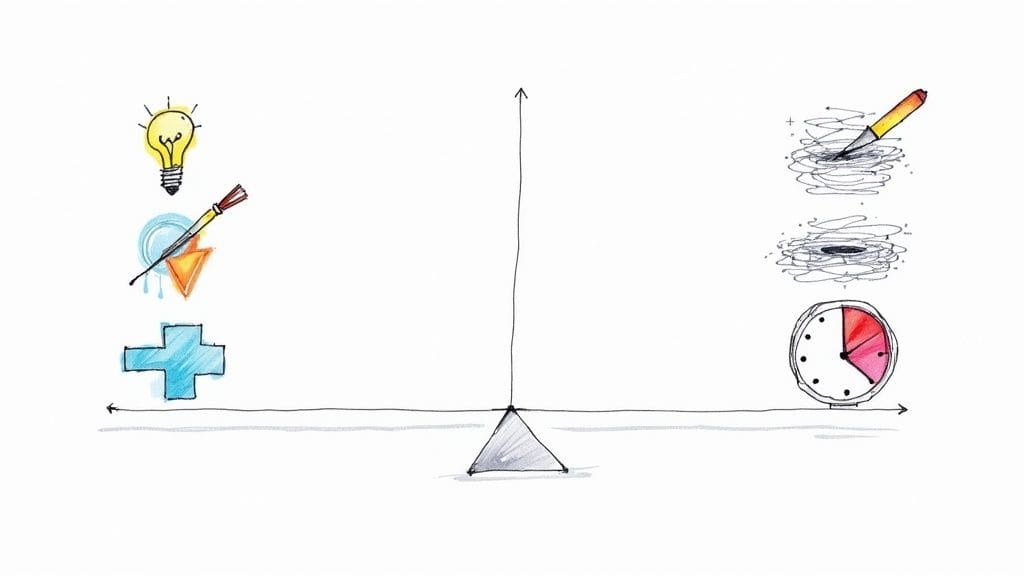
Talking about the neurodivergent mind means looking at two sides of the same, incredibly valuable coin. One side is packed with remarkable strengths that come from processing the world differently. These aren't just little quirks; they're powerful assets in creativity, problem-solving, and deep thinking that can lead to some truly amazing insights.
But on the other side of that coin are real, everyday hurdles. These challenges aren't a sign of some personal flaw. They almost always come from the friction of a neurodivergent brain trying to operate in a world built for neurotypical wiring. Getting this balance right is the key to both appreciating the individual and providing support that actually helps.
The Unique Superpowers of Neurodivergence
Many neurodivergent people have abilities that are genuinely exceptional. While not everyone shares the same traits, a few common themes pop up again and again across different neurotypes, giving us a peek into the unique advantages this kind of thinking offers.
Some of these powerful strengths include:
* Deep Pattern Recognition: The ability to spot connections, trends, and systems that most people miss. This is an absolute game-changer in fields like data analysis, research, and big-picture strategy.
Want support navigating life as neurodivergent? tonen can help.
tonen gives you 188+ conversation scripts, tone guidance and calming tools — designed for autistic adults, ADHD and social anxiety. Try it free for 7 days.
Download on the App StoreiOS only. Android coming soon.
* Intense Creativity and Imagination: A knack for "out-of-the-box" thinking is a classic hallmark. A dyslexic mind, for example, might be able to visualize a complex 3D model from a simple 2D blueprint, leading to groundbreaking designs.
* Hyperfocus: The capacity for deep, unwavering concentration on something that sparks their interest. When a person is locked into their passion, this allows for an incredible level of mastery and productivity.
* Unwavering Loyalty and Justice Sensitivity: A powerful sense of fairness and a deep dedication to people and causes they believe in. This makes many neurodivergent individuals passionate advocates and fiercely reliable friends and colleagues.
These aren't just isolated skills. They represent a fundamentally different—and often highly effective—way of engaging with the world.
Navigating Common Environmental Hurdles
While the strengths are significant, it's just as important to acknowledge the challenges that can make daily life tough. These hurdles often feel intensely personal, but they're frequently just symptoms of a mismatch between a person and their environment.
> A fish is an expert swimmer, but it will struggle if you ask it to climb a tree. Similarly, a neurodivergent person may struggle in an environment that doesn't account for their needs, not because they are incapable, but because the environment itself is the barrier.
Common challenges often include:
* Executive Dysfunction: This is a broad term for difficulties with things like planning, organizing, starting tasks, and managing time. It can make everyday responsibilities like paying bills or hitting deadlines feel like climbing a mountain.
* Sensory Overload: Heightened sensitivity to sounds, lights, textures, or smells can be completely overwhelming. A bustling office or a crowded supermarket can trigger intense stress, making it hard to function.
* Social Anxiety and Miscommunication: Trying to navigate unspoken social rules can be exhausting. To cope, many neurodivergent people use a strategy called "masking" to fit in by suppressing their natural behaviors. Over time, this can lead to burnout and a feeling of losing your true self. You can explore a deeper explanation in our guide covering what masking is in autism.
A better way to understand these difficulties is to see them not as deficits, but as points of friction. Thinking this way helps us see the whole picture: the incredible strengths a neurodivergent brain brings to the table, and the environmental tweaks needed to help it thrive.
Common Neurodivergent Strengths and Associated Challenges
The relationship between strengths and challenges is often deeply connected. A trait that fuels incredible focus in one context can create difficulties in another. Here's a look at how these dualities can play out.
| Common Strength | Potential Associated Challenge | Neurotype Often Associated |
|---|---|---|
| Hyperfocus | Difficulty shifting attention or transitioning between tasks. | ADHD, Autism |
| Creative & Divergent Thinking | Struggles with linear, step-by-step instructions. | Dyslexia, ADHD, Autism |
| Pattern Recognition | May over-analyze social cues or get lost in details. | Autism, ADHD |
| Empathy & Justice Sensitivity | Prone to emotional overwhelm or burnout from caring deeply. | Autism, ADHD |
| Detail-Oriented Precision | Can lead to perfectionism that slows down task completion. | Autism |
| 3D & Spatial Reasoning | Difficulties with sequential processing or reading traditional text. | Dyslexia |
| High Energy & Spontaneity | Impulsivity or restlessness in structured environments. | ADHD |
This table isn't about boxing people in. Instead, it highlights the need for a balanced perspective.
When we reframe these difficulties as environmental mismatches, the focus shifts from trying to "fix" a person to simply adapting the environment. Small accommodations—like providing clear written instructions, offering flexible work hours, or allowing the use of noise-canceling headphones—can make all the difference. This balanced view helps us celebrate the incredible gifts of a neurodivergent mind while creating a world where its challenges don't get in the way.
How to Create Genuinely Inclusive Environments
Moving from simply understanding neurodiversity to taking meaningful action is where real change happens. But creating a genuinely inclusive space isn't about grand, sweeping gestures. It's about the small, consistent adjustments that empower every neurodivergent person to do their best work.
These strategies aren't about giving anyone an unfair advantage. Think of it as leveling the playing field so that unique talents and fresh perspectives can finally shine through.
This shift is crucial, especially at work. Neurodivergent talent remains a massively untapped resource, largely because of significant barriers. In fact, unemployment for neurodivergent adults hovers between a staggering 30-40%—that's eight times the rate for non-disabled individuals.
Even for those who are employed, 76% don't disclose their condition, fearing stigma. This is a huge loss, considering inclusive companies see a 10-15% boost in productivity. You can dig into more data on neurodiversity in the workplace on MyDisabilityJobs.com.
The goal is simple: make it normal to ask for and receive support.
Building Supportive Workplaces
A truly inclusive workplace is flexible by design. It anticipates needs and offers support proactively, which lifts the burden on an employee to constantly advocate for themselves just to get basic accommodations. This builds psychological safety and lets everyone focus on what they were hired to do.
Small, thoughtful adjustments can make a world of difference.
* Provide Agendas in Advance: Sending out meeting topics and goals ahead of time gives people a chance to process the information and gather their thoughts. This small step can dramatically reduce in-the-moment anxiety.
* Offer Flexible Schedules: A rigid 9-to-5 schedule simply doesn't work for every brain. Allowing flexibility in start times or offering remote options helps individuals manage their energy and focus when they're most productive.
* Create Quiet Workspaces: Open-plan offices can be a sensory nightmare. Providing access to quiet rooms or noise-canceling headphones is a lifeline for those easily overwhelmed by constant noise and movement.
* Establish Clear Communication Channels: Use direct, unambiguous language in emails and instructions. Offering multiple ways to communicate—like Slack for quick questions and email for detailed requests—caters to different processing styles.
Fostering this kind of culture is the key to keeping great talent and boosting the whole team's morale. For more on this, check out our guide on supporting mental health at work.
> Inclusivity is not about treating everyone the same; it's about giving everyone what they need to succeed. The most effective accommodations are often the ones that benefit everybody, not just a few individuals.
Fostering Inclusion in Educational Settings
Schools and universities are another critical environment where inclusive design can unlock someone's full potential. The pressures of academia can be tough for any student, but they can be especially taxing on a neurodivergent mind. The right support system can transform their experience from one of struggle to one of success.
Accommodations in education are all about providing equitable access to learning. They remove barriers that have absolutely nothing to do with a student's intelligence or ability to learn.
Here are a few vital supports for educational environments:
1. Extended Test Times: This isn't about making tests easier. It's about giving students with different processing speeds the time they need to actually demonstrate what they know, without the added pressure of a ticking clock.
2. Access to Assistive Technology: Tools like text-to-speech software, digital organizers, or note-taking apps can be indispensable. They help students manage executive function challenges and engage with the material in a way that truly works for them.
3. Sensory-Friendly Rooms: Just like at work, a designated quiet space can be a sanctuary for a student who is feeling overwhelmed. It gives them a place to decompress and regulate before they're ready to rejoin the classroom.
4. Clear and Written Instructions: Providing assignment details in writing, with deadlines and expectations clearly spelled out, helps prevent misunderstandings. It also reduces the cognitive load of trying to remember a long list of verbal instructions.
By putting these strategies into practice, workplaces and schools can move beyond mere tolerance. They can create environments where every single person feels seen, valued, and fully equipped to contribute their very best.
A Practical Toolkit for Allies and Self-Advocates
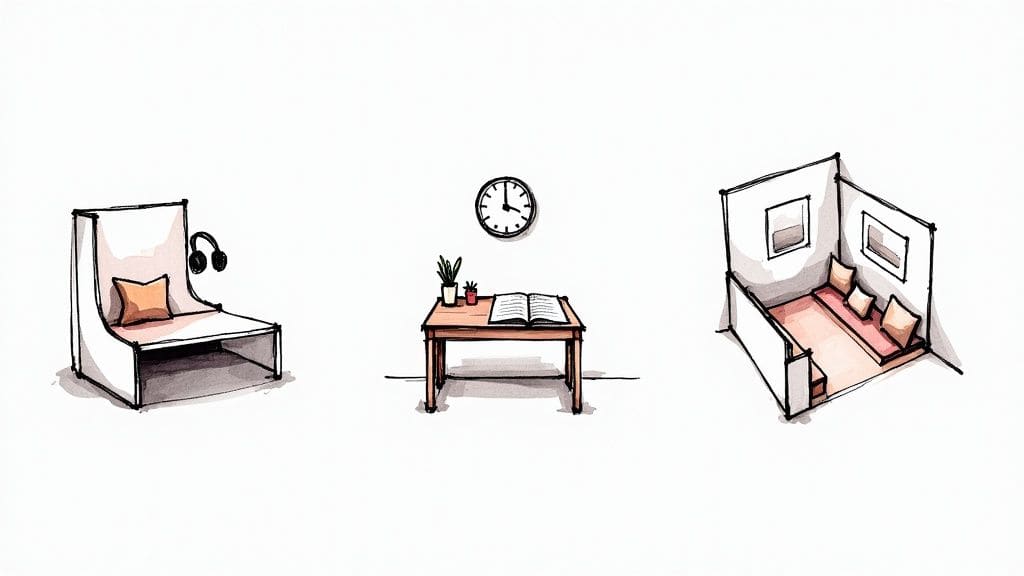
Real empowerment isn't just a buzzword; it's a two-way street built on mutual understanding and practical support. For both allies and neurodivergent people, this means developing a toolkit of actual strategies. This isn't about looking for a "cure" or a "fix." It's about creating environments and relationships where everyone truly feels seen, heard, and valued for who they are.
For allies, the work starts by learning to listen without jumping to conclusions. For neurodivergent individuals, it begins with finding the confidence to speak up for your own needs.
Essential Strategies for Allies
Being a good ally is an active role, not a passive one. It's about shifting from well-meaning thoughts to thoughtful engagement. This requires a real willingness to learn and adapt, recognizing that your intentions matter far less than your actual impact. The whole point is to help lift the burden from the neurodivergent person, not add to it.
You can start with these foundational actions:
* Listen to Understand, Not Just to Respond: When a neurodivergent person shares their experience with you, your first job is to simply listen. Fight that common urge to immediately offer solutions or compare their situation to something you went through. Just hear them out.
* Ask About Communication Preferences: Never, ever assume. One person might need direct, literal language to feel comfortable, while another might need extra time to process information before they can reply. Asking a simple question like, "What's the best way for us to communicate about this?" can make a massive difference.
* Educate Yourself on Specific Neurotypes: Take the initiative here. Do a little research on the differences between autism, ADHD, and dyslexia. It shows you respect their experience enough to do your own homework instead of expecting them to educate you.
> True allyship is about decentering yourself. It's about recognizing that you don't have all the answers and that the most valuable thing you can offer is your willingness to listen, learn, and adapt your own behavior.
A Guide to Self-Advocacy
Self-advocacy is the skill of figuring out what you need and then learning how to communicate those needs effectively. It's a journey of building confidence, setting healthy boundaries to avoid burnout, and connecting with communities that get it. It's about taking back control of your own narrative.
Developing this skill is a process, but a clear roadmap makes it feel much more achievable.
#### Identify Your Unique Needs
First, you have to get clear on what's actually going on. Take some time for self-reflection and pinpoint the specific situations where you struggle. What accommodations would genuinely make a difference? For instance, you might realize that open-plan offices send you into sensory overload, or that you just can't retain verbal instructions. Writing these things down can bring a lot of clarity.
#### Communicate Your Needs Effectively
Once you know what you need, the next step is actually telling someone. This can be super intimidating, but it helps to frame your request as a way to improve your performance or well-being. For example, you could say to a manager, "I do my best work in a quiet environment. Would it be possible for me to use noise-canceling headphones?"
Finding the right words is a huge part of this. For those looking for specific ways to articulate their needs, exploring different autism communication tools and techniques can provide helpful scripts and strategies to get you started.
#### Master Your Personal Systems
Let's be honest—for many neurodivergent people, especially those with ADHD, standard productivity advice just doesn't work. It's crucial to develop personalized systems that are built for your brain, not someone else's. Implementing tailored approaches to time management can be a game-changer. You can learn more about effective time management strategies for ADHD adults to find what actually sticks.
By combining self-awareness with practical tools, both allies and advocates can build a more inclusive and understanding world, one conversation at a time.
Answering Your Questions About Neurodiversity
As you dig into the world of neurodiversity, it's completely normal for questions to pop up. Getting clear, straightforward answers is how we build real understanding and move toward a more inclusive world. This section tackles some of the most common questions to clear up a few misconceptions and cement the core ideas we've talked about.
Let's jump right in.
Is Being Neurodivergent a Medical Condition or a Disability?
This is a fantastic and really nuanced question. At its core, being neurodivergent just describes a natural, built-in variation in how a person's brain works. It isn't a medical condition in the same way a cold or the flu is. However, some neurotypes, like autism and ADHD, are indeed medically recognized diagnoses.
Many people with these diagnoses also identify as disabled. This isn't a negative label; it's a practical and empowering one. Identifying as disabled is what provides access to legal protections and necessary accommodations at work or in school.
> The key idea is this: the neurotype itself isn't the disability. The disability often comes from the friction between a neurodivergent person and an environment that simply wasn't built for them. A different kind of brain becomes a disabling condition when it's forced to operate in an unaccommodating world.
Can Someone Become Neurodivergent Later in Life?
Core neurotypes like autism, ADHD, and dyslexia are generally considered innate—they're woven into a person's neurological makeup from birth. But it's incredibly common for people to go undiagnosed or not even realize they're neurodivergent until they're well into adulthood.
This late discovery isn't the neurotype suddenly appearing; it's a journey of self-awareness. It's finally finding the language to describe a whole lifetime of experiences. This is exactly why you hear so many stories of adults getting an ADHD or autism diagnosis in their 30s, 40s, or even later.
Separately, it's also possible for a person's brain function to be permanently altered by an event like a traumatic brain injury (TBI) or a stroke. This is sometimes called acquired neurodivergence, as it changes how their brain processes information, but it's distinct from the developmental neurotypes we're focusing on here.
What Is the Difference Between Neurodivergent and Neurodiverse?
These two terms get mixed up all the time, but they have distinct and important meanings. Nailing the difference is a huge step toward clear and respectful conversations.
* Neurodivergent: This is an adjective that describes an individual. It means their brain functions in a way that differs from what society considers "typical." For example, you'd say, "My friend is neurodivergent."
* Neurodiverse: This is an adjective that describes a group of people. It means the group is made up of people with a mix of different brain types—some neurotypical, some neurodivergent. For instance, "Our company is proud to have a neurodiverse team."
Think of it like this: a single person can't be "diverse." Diversity requires a mix of people. So, a person is neurodivergent, while a team, a classroom, or a whole community is neurodiverse. You would never say, "I am a neurodiverse person." The correct way to say it is, "I am neurodivergent" or "I am a neurodivergent person."
Using the right term shows you've taken the time to understand the concepts. It helps make sure our conversations about this topic are accurate and inclusive, honoring both individual identity and the collective strength we find in our neurological differences.
Feeling overwhelmed by social conversations? tonen is a mobile app designed by neurodivergent makers to help you communicate with less stress. With a library of ready-to-use scripts, tone options, and a calming toolkit, you can navigate social situations with more confidence. Your privacy is our priority—all your data stays on your device. Start your 7-day free trial today at https://usetonen.com.
Frequently asked questions
This guide covers what does it mean to be neurodivergent? a complete guide with practical, neurodivergent-friendly strategies—clear steps, scripts where useful, and ways to reduce anxiety or overload rather than vague "be confident" advice.