To ask for what you need in a relationship, identify one need, turn it into a specific request and choose a time or format that works for you. You can be direct while leaving room for the other person to respond. You do not have to justify every feeling before asking.
A lot of readers are here because they're stuck in the same loop. You want more reassurance, more clarity, more help, more affection, or more consideration, but every time you try to bring it up, it comes out sharp, apologetic, vague, or late. That problem gets even harder for autistic people, people with ADHD, and anyone with social anxiety, because indirect language, timing pressure, and tone interpretation can turn one conversation into a full nervous system event. Learning how to ask for what you need in a relationship is less about being perfectly eloquent and more about using a repeatable structure that protects both clarity and connection.
The Gentle Art of Asking for Your Needs
You notice something is off. Maybe you keep waiting for your partner to check in first. Maybe you need more physical affection, or more quiet, or clearer plans, or help with practical tasks. You tell yourself not to make a big deal out of it, then resentment starts building anyway.
That's usually the moment to stop guessing and start asking clearly. The most effective version of how to ask for what you need in a relationship is simple: name the need, prepare the words, pick the moment, and make the request without blame. Kindness matters, but so does precision.
> Practical rule: Don't wait until your need turns into a complaint. Ask when you can still stay specific.
Mainstream advice often stops at "use I statements" or "just be honest." That's incomplete. Honest communication still fails when the request is too vague, the timing is bad, or the listener hears criticism instead of information. Neurodivergent people often run into another layer: literal interpretation, slower processing under stress, tone mismatch, or trouble finding the exact words quickly enough.
If communication itself feels confusing, this short piece on why communication feels so hard can help put language to that experience. The relief often starts when you stop expecting yourself to improvise perfectly and start treating these conversations like a skill.
What works better than hoping they'll just know
Three shifts help immediately:
- Swap mind-reading for naming: Your partner may care deeply and still miss what you need.
- Swap criticism for request: "You never make time for me" lands very differently from "I want more intentional time together."
- Swap urgency for structure: A prepared sentence usually works better than an emotionally overloaded monologue.
You are allowed to have needs. You are also responsible for making them understandable.
First Identify Your Core Needs Before You Ask
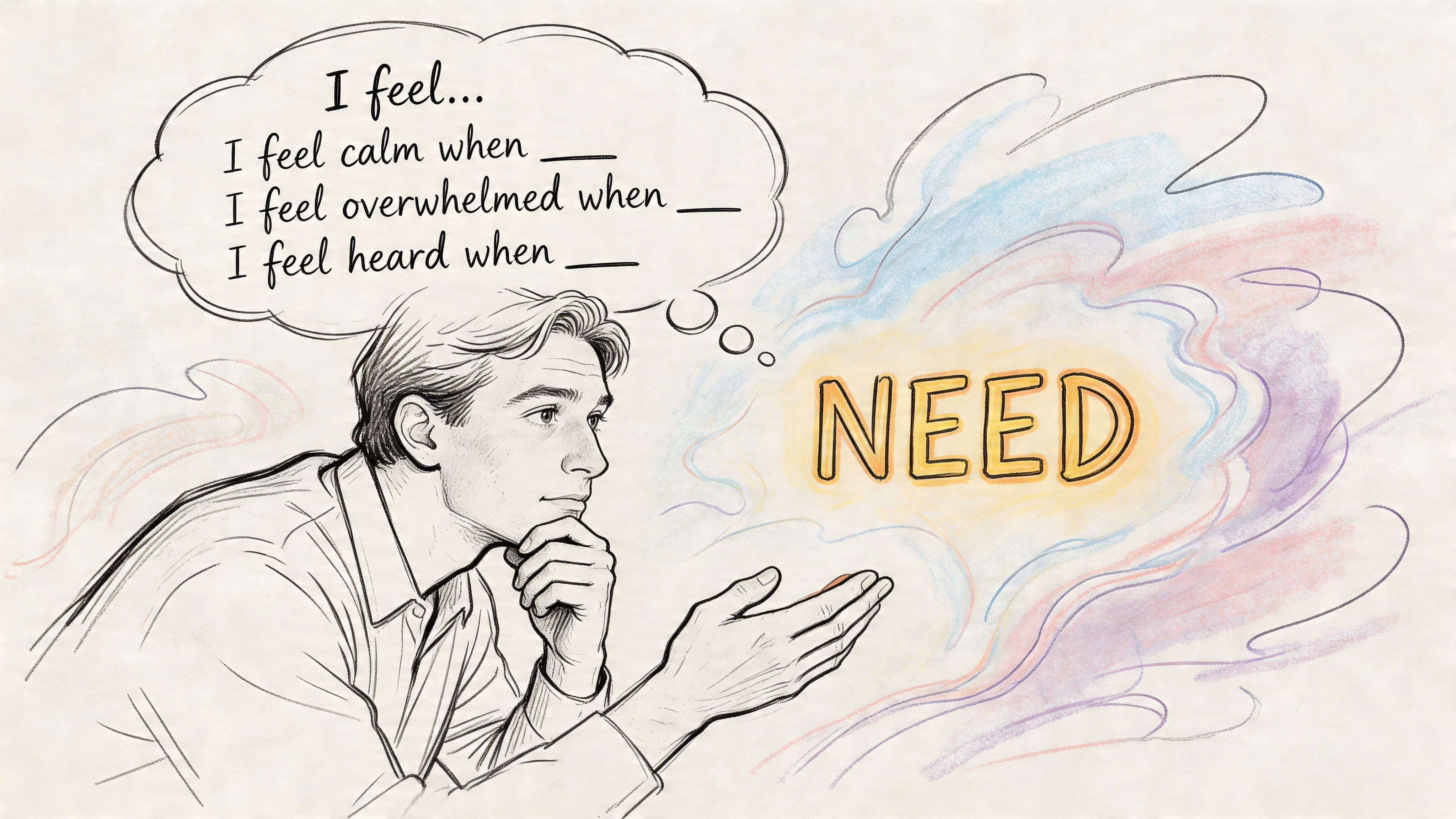
Many don't struggle because they have needs. They struggle because they try to communicate the surface request before identifying the core issue underneath it.
"I want you to text me more" might mean "I need reassurance."
"I want you to come with me" might mean "I need support."
"I want more conversation" might be "I need connection."
Until you know the underlying need, your request is likely to come out as either control or confusion.
A useful baseline comes from this relationship needs overview from Heartmanity, which notes that thriving relationships need core experiences such as affection, acceptance, validation, autonomy, security, trust, empathy, and prioritization. Those categories help you sort the problem before you try to solve it.
Need versus strategy
A need is the emotional or relational requirement.
A strategy is one possible way to meet it.
That difference matters.
- Need: security
Strategy: "Text me when you get home."
- Need: prioritization
Strategy: "Can we have one uninterrupted evening together this week?"
- Need: autonomy
Strategy: "Please ask before making plans that involve me."
People get stuck when they defend the strategy as if it is the need. Then every discussion turns rigid. If your partner can't do the exact method you proposed, you may miss the fact that they're still willing to meet the need in another form.
> If you can name the need in one word, you'll usually ask for it more clearly.
A short self-check before you speak
Try these prompts privately first:
- What am I feeling most often lately? Lonely, dismissed, crowded, anxious, disconnected, unwanted, unsupported?
- What moment keeps bothering me? Be concrete. A missed call, a sarcastic tone, no follow-up, constant interruptions, no affection?
- What would help me feel better, specifically? More notice, more warmth, more space, more help, more clarity?
- What am I afraid my partner will assume? That I'm needy, controlling, dramatic, too much, difficult?
- What matters most here? The exact behavior, or the underlying experience?
For many people, attachment patterns also complicate this process. Someone with avoidant habits may minimize needs until they explode. Someone with anxious habits may ask from panic instead of clarity. If that sounds familiar, the Refresh Psychiatry & Therapy post on avoidant attachment style is a useful companion read because it helps explain why some people go silent right when they most need connection.
If you worry you're "too much"
That fear is common, and it keeps people vague. But vagueness doesn't make you easier to love. It just makes you harder to understand.
What helps is replacing self-judgment with accurate language:
- "I'm not asking for too much. I'm naming something important."
- "I don't need to defend having a need."
- "My job is to communicate clearly, not to erase myself."
- "Their answer gives me information. It doesn't define my worth."
If you have trouble putting feelings into words, journaling or using prompts can help you translate emotion into language. This guide on expressing your feelings more clearly can help when everything in your body feels loud but your words still won't line up.
When you know whether you need affection, reassurance, autonomy, empathy, or prioritization, the conversation gets simpler. Not always easier emotionally, but much cleaner.
How to Craft Clear Scripts for Your Request
Once you know the need, don't wing it. Use a structure. Prepared language lowers the odds that you'll drift into blame, over-explaining, or shutting down halfway through.
One of the most useful tools here is the DEAR MAN framework for asking without starting a fight. The parts most relevant for relationship requests are Describe, Express, Assert, and Maintain.
The four parts that keep a request clean
Describe what happened without judgment.
Stick to observable facts.
Express how it affected you.
Name the feeling and why it matters.
Assert the request clearly.
Say what you want, not what you hope they'll infer.
Maintain focus if the conversation drifts.
If they get defensive or change topics, gently return to the ask.
That sounds like this:
- "When we made plans and they changed last minute, I felt thrown off."
- "I felt anxious because predictability helps me stay regulated."
- "Next time, I'm asking for as much notice as possible."
- "I hear that things came up. I still want to stay with the request for more notice."
Struggling to ask for what you need? tonen can help.
tonen offers conversation scripts, Reply Helper, Perspective Helper, Debrief, Phone Call Mode and Calm Kit. Start with 21 free scripts on iPhone. Optional Premium unlocks more features.
Download on the App StoreAvailable on iOS.
Keep the request concrete
A good request includes three things:
1. What you want
2. Why it matters
3. What emotional outcome it supports
This is much stronger than politeness alone. "Could you maybe be a little more supportive?" is technically gentle, but it's too blurry. "When I'm overwhelmed, I'd like you to ask whether I want comfort or problem-solving, because that helps me feel understood" gives your partner something usable.
> The best request is not the softest one. It's the one your partner can actually understand and respond to.
Scripting Your Needs With Tone Options
| The Need | Vague Complaint | Clear Request (Warm Tone) | Clear Request (Direct Tone) |
|---|---|---|---|
| More quality time | "We never spend time together anymore." | "I miss feeling connected to you. Could we plan time together this week without phones?" | "I want dedicated time together this week. Let's choose a time today." |
| Reassurance | "You're so distant lately." | "When I don't hear from you after a hard day, I feel alone. Could you send a quick check-in?" | "I need more reassurance during stressful days. Please send a short check-in message." |
| Help with chores | "I do everything around here." | "I feel overloaded when dinner and cleanup both stay with me. Could you handle dishes tonight?" | "I need you to take dishes after dinner tonight." |
| More emotional support | "You never listen." | "When I share something hard, I need listening before advice. Could you do that first?" | "When I bring up something emotional, listen first and hold advice unless I ask for it." |
| More space | "You're always on me." | "I care about us, and I'm overstimulated right now. Could I have some quiet time and reconnect later?" | "I need quiet time alone right now. I can talk later." |
Phrases that usually fail
These often create defensiveness because they sound global, moralizing, or impossible to answer well:
- "You always…"
- "You never…"
- "If you cared, you would…"
- "I guess I just won't ask anymore."
- "Maybe it's stupid, but…"
Phrases that usually land better
Try language that is observable and specific:
- "When X happened, I felt Y."
- "What I'm asking for is…"
- "This matters to me because…"
- "I'm not attacking you. I'm trying to make this easier for us."
- "If that exact solution doesn't work, can we find another one that still meets the need?"
For more examples of direct but respectful phrasing, this roundup of scripts for setting boundaries is a strong reference point.
If you're learning how to ask for what you need in a relationship, scripting is not cheating. It's preparation. People rehearse for job interviews, presentations, and hard phone calls all the time. A relationship request deserves at least that much care.
Choose the Right Time and Set the Stage
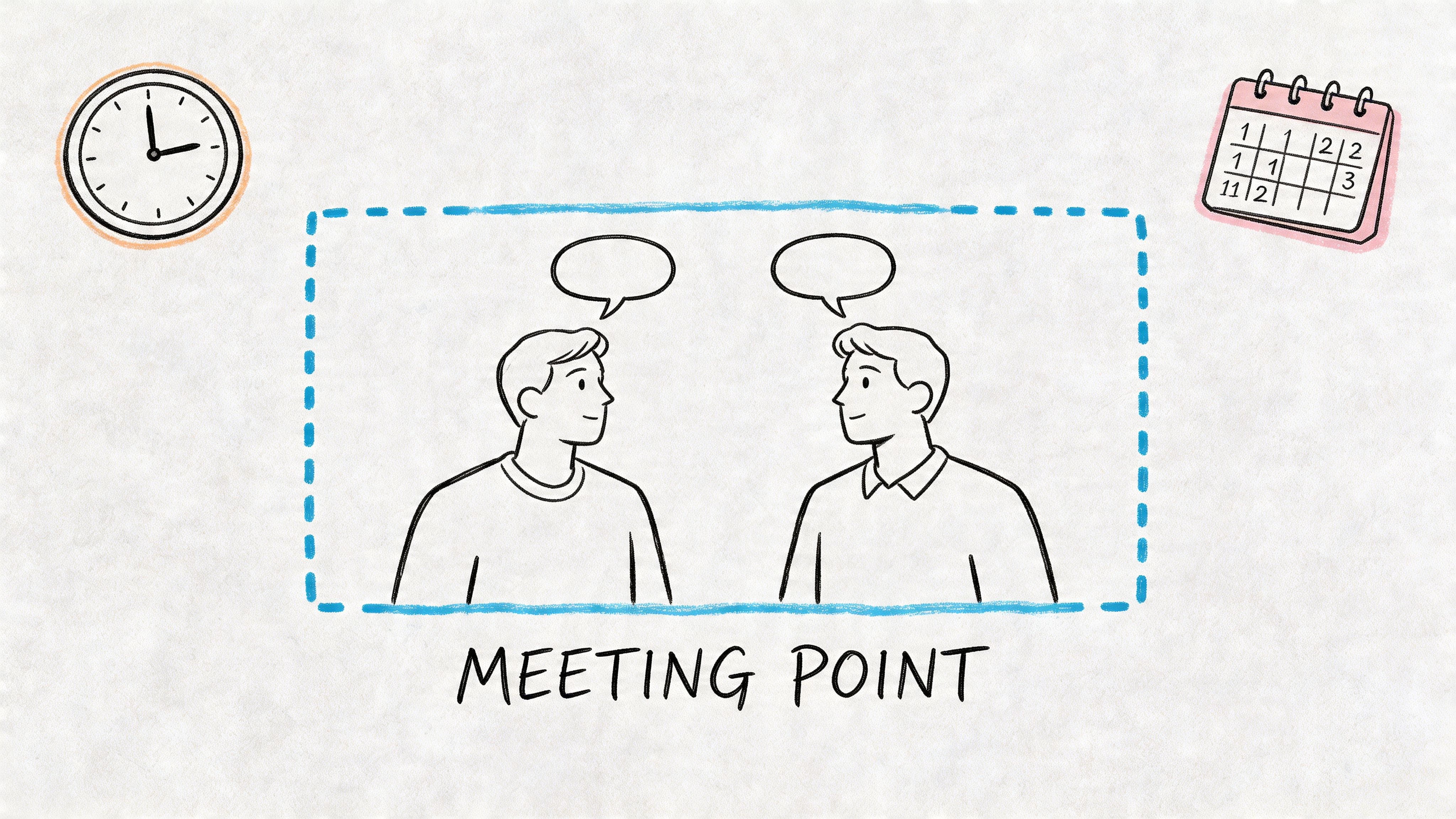
A clear script can still fail if the conversation starts at the wrong moment. Good timing isn't a luxury. It is part of the skill.
When needs go unspoken for too long, people usually don't become calmer. They become sharper, more withdrawn, or more hopeless. This piece on unmet needs and resentment notes that unmet needs create a real psychological burden, including anger and resentment, and that requests land better when they come from vulnerability instead of frustration.
Don't bring a vulnerable ask into a bad container
Avoid starting the conversation when either of you is:
- Hungry: low patience changes tone fast
- Angry: your brain will argue for winning, not understanding
- Lonely in a raw way: you may ask from panic rather than clarity
- Tired: processing and empathy both drop
You don't need a perfect cinematic moment. You need a decent one. Calm enough. Private enough. Unrushed enough.
Open the conversation gently
A good opener prevents your partner from feeling ambushed:
- "I have something important I want to talk about. Is now a good time?"
- "Can we take ten minutes tonight? I want to talk about something that would help me feel closer to you."
- "I'm not bringing this up to start a fight. I want us to understand each other better."
That last sentence matters more than people realize. It tells the other person what kind of conversation this is.
> A useful test: If the setting makes either person feel trapped, rushed, or publicly exposed, it's the wrong setting.
If you tend to freeze before serious conversations, a little preparation helps. This guide on how to prepare for a conversation offers practical ways to organize your thoughts before you speak.
Navigating the Conversation and Handling Responses
Once the request is out in the open, the hard part isn't always the asking. It's staying present for the response.
Many neurodivergent people often hit a wall. A partner pauses, sighs, looks away, asks for time, or answers in a tone that feels off, and your brain starts filling in the blanks. Was that rejection? Anger? Indifference? Contempt? Sometimes yes. Often, it's just processing.
Scenario one: your partner gets defensive
You say, "I need more follow-through when we make plans."
They respond, "So now I'm failing again?"
Don't chase the accusation. Clarify the intention and restate the ask.
Try:
- "I'm not saying you're failing. I'm saying this pattern is hard on me."
- "I want to stay with the specific request."
- "Can we focus on what would help going forward?"
Scenario two: your partner shuts down
You ask for more emotional engagement, and they go quiet.
Silence isn't always refusal. Some people need time to process, especially if they feel flooded or ashamed. If you assume silence equals hostility, the conversation can collapse for no reason.
Try:
- "I'm noticing you got quiet. Are you thinking, overwhelmed, or done talking for now?"
- "Would a short pause help?"
- "I'm okay continuing later if we set a time."
Scenario three: they deflect into your tone
You say something important. They answer, "I don't like how you said that."
Sometimes tone does need repair. Sometimes tone becomes a distraction from the content. Handle both.
A balanced response sounds like:
- "I'm open to softening my tone. I still want to keep the request on the table."
- "If my tone felt sharp, I'm willing to reset. The need is still real."
Compromise on method, not on reality
This distinction protects a lot of relationships.
If your need is reassurance, compromise might mean voice notes instead of long texts.
If your need is more structure, compromise might mean a weekly planning check-in instead of constant updates.
If your need is space after conflict, compromise might mean taking a break with a clear return time.
What usually doesn't work is pretending the need itself disappeared because the conversation felt uncomfortable.
For readers who struggle with escalation, this guide on handling conflict in relationships can help you stay grounded when the discussion starts to wobble.
Practice Makes Progress Using Supportive Tools
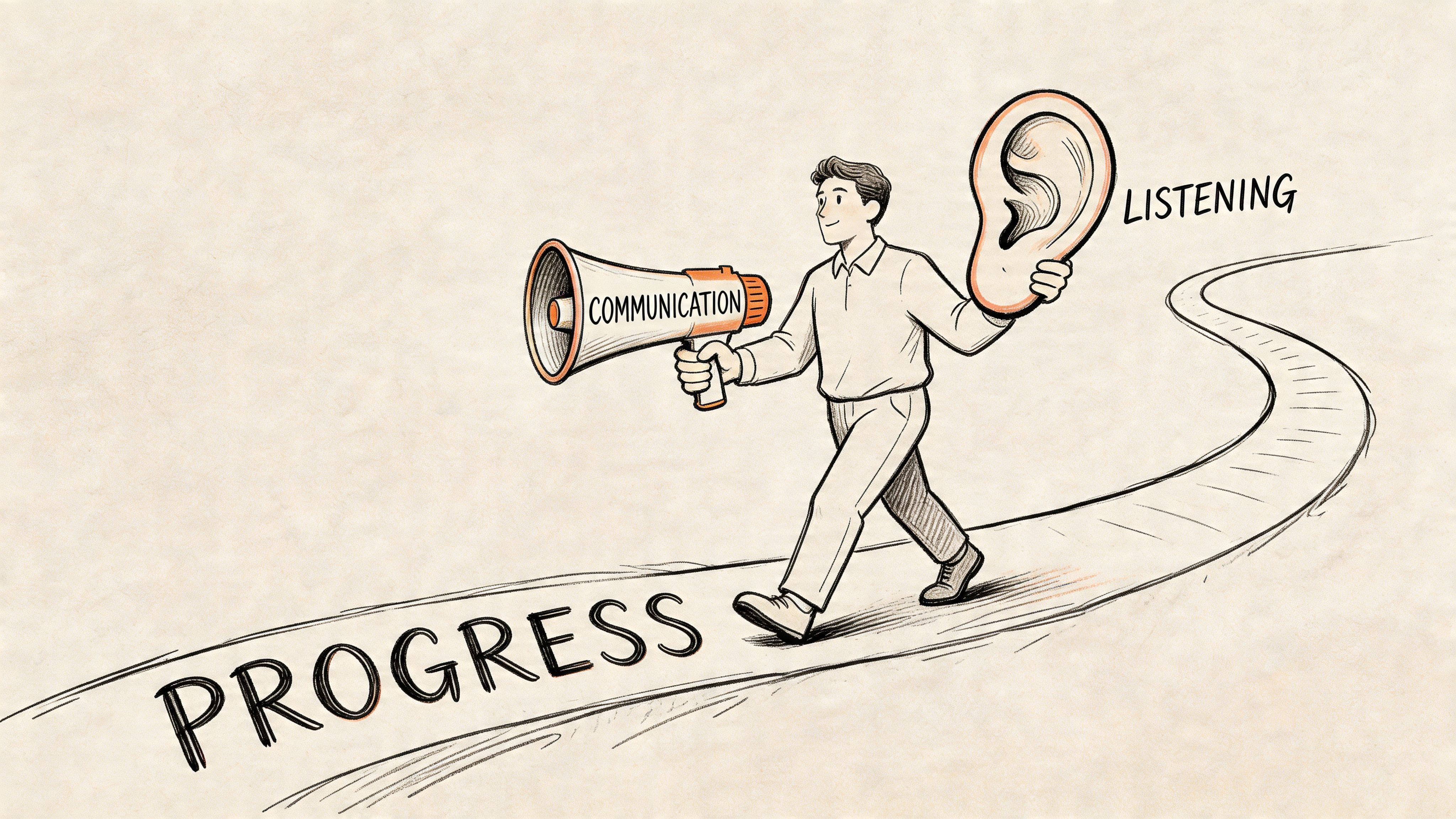
Nobody learns how to ask for what you need in a relationship once and then does it perfectly under stress forever. This is a rehearsal-based skill. The more often you identify, script, time, and deliver requests, the less likely you are to default to apologizing, snapping, or giving up.
That matters even more if you process language slowly, lose words when overwhelmed, or need extra time to sort feeling from thought. Practice reduces load. It doesn't erase vulnerability, but it gives vulnerability structure.
Build a repeatable practice loop
Use a simple cycle:
1. Notice the pattern
What keeps hurting, frustrating, or draining you?
2. Name the need
Is it reassurance, affection, clarity, space, empathy, support, or prioritization?
3. Write a two- or three-line script
Keep it short enough to say out loud.
4. Rehearse the wording
Read it. Edit it. Say it again.
5. Choose the time intentionally
Don't wait for the next argument.
6. Debrief after the conversation
What landed well? What got muddy? What would you adjust next time?
Why outside support helps
A lot of people benefit from tools, prompts, or guided practice because live conversation asks you to do too many things at once. You're regulating emotion, tracking tone, reading cues, remembering your point, and trying not to sound accusing. That's a lot.
Some people use journaling. Some work with a therapist. Some prefer skills-based apps and script libraries because they make communication more concrete. If speaking confidence is part of the challenge, the ChatPal guide on how to improve speaking confidence has useful crossover advice on pacing, wording, and delivery that applies outside work too.
What improvement actually looks like
Progress usually doesn't look like never feeling anxious again. It looks like:
- Catching resentment earlier
- Asking before the issue becomes explosive
- Using fewer blaming phrases
- Recovering faster when a conversation goes awkward
- Staying specific instead of spiraling into history
That's real progress. It's also sustainable.
If you're neurodivergent, script preparation can be especially valuable because it lets you test phrasing before the social stakes arrive. A low-pressure tool can help you save scripts, try different tones, and regulate before the conversation if your brain tends to blank under pressure.
The most important shift is this: stop treating self-advocacy as a special event. Treat it like a relational habit. The couples who do this best are not the ones who never need anything. They're the ones who make needs discussable.
Saved scripts and downloaded Calm exercises can be used offline. Reply Helper, Perspective Helper and Debrief use online processing, so do not treat them as an offline private notebook. Review tonen’s privacy policy before sharing sensitive information.