Laughing when nervous is a powerful, built-in mechanism your brain uses to cope with stress, not a personal flaw. If you've ever started laughing at a serious moment, you're not alone. This odd-feeling reaction is your body's way of managing overwhelming emotions when you're suddenly dropped into a tense or awkward situation, acting like a biological pressure-release valve to let go of tension. Understanding why this happens is the first step toward managing this involuntary reflex.
The Real Reason You Start Laughing When Nervous
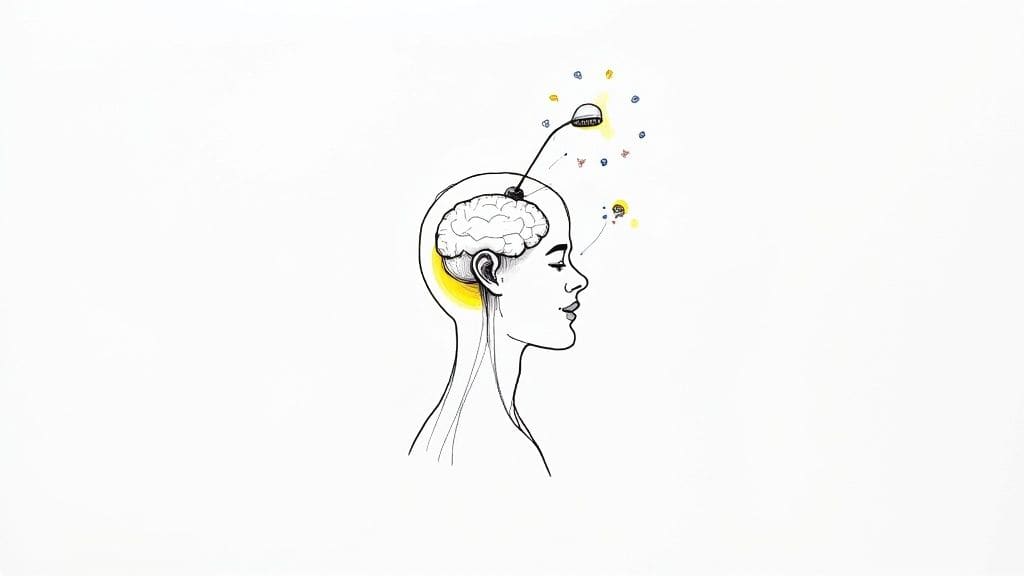
When you hit a stressful moment, your body gets a sudden flood of hormones like cortisol and adrenaline. This surge creates an intense need for release, and laughter is one of the fastest ways your brain can physically let go of that pent-up tension. It's an involuntary reflex, hardwired to diffuse a difficult moment before it boils over.
This response is deeply rooted in our neurobiology. Research shows that laughter is far more than just a reaction to a good joke; it's a complex social signal. Neuroimaging studies have even shown a difference between the voluntary, polite laughter we use in social settings and the spontaneous, involuntary kind that pops out when we're laughing when nervous.
Your Brain's Inbuilt Safety Valve
Picture your brain as a computer with way too many tabs open at once. When it gets overloaded with stress signals, it needs to shut something down to prevent a total system crash. Nervous laughter is that quick 'force quit' command.
It serves a few immediate, very practical functions:
* Emotional Regulation: It gives you a physical outlet for confusing or clashing emotions, like when you feel fear and surprise at the same time.
* Tension Release: The physical act of laughing can literally relax your muscles and interrupt the body's fight-or-flight response.
* Social Signalling: It can signal to others that a situation isn't a real threat, even if it feels uncomfortable. This can de-escalate potential conflict and smooth things over.
A Response Rooted in Anxiety
Ultimately, laughing when nervous is often a direct symptom of anxiety. It's a coping mechanism your brain grabs when it doesn't know how else to react to a perceived social threat or intense pressure. The laughter itself can feel so jarring because it just doesn't fit the emotional mood of the moment.
> This mismatch between your internal feelings (anxiety, fear, or discomfort) and your external reaction (laughter) is what makes the experience so confusing. It's your body's attempt to protect you by releasing pressure, even if the method seems completely out of place.
Understanding this biological basis is the first step toward getting a handle on it. It isn't a weird quirk; it's a feature of your nervous system trying to keep you safe.
For those who feel this reaction is tied to a deeper social unease, exploring approaches like cognitive behavioural therapy for social anxiety can offer incredibly valuable tools for reframing these automatic responses. When nervous laughter shows up in social settings, apps for social anxiety can help you prepare and debrief conversations. By recognising the root cause, you can start to work with this reflex instead of constantly fighting against it.
The Surprising Upside to Your Nervous Laughter
As strange as it might feel in the moment, that burst of nervous laughter is actually doing you a favour. It's far more than a social quirk—it's your body's built-in self-soothing tool, working overtime to bring you back to a state of balance when the pressure is on.
So, instead of seeing it as a flaw, let's reframe it. Think of it as an adaptive coping mechanism with some genuinely helpful upsides. The moment you laugh, your brain gets a signal to release endorphins, the body's natural feel-good chemicals that give you a quick hit of relief from anxiety and even pain.
It's a Biological Stress Reducer
That endorphin rush is just the start. The benefits of a nervous chuckle are more physical than you might realise.
* Boosts Oxygen: Laughter forces you to breathe deeper, stimulating your heart, lungs, and muscles. It's a bit like a mini-workout for your insides, flooding your system with oxygen-rich air.
* Improves Circulation: All that extra oxygen helps get your blood flowing, which naturally encourages a sense of relaxation.
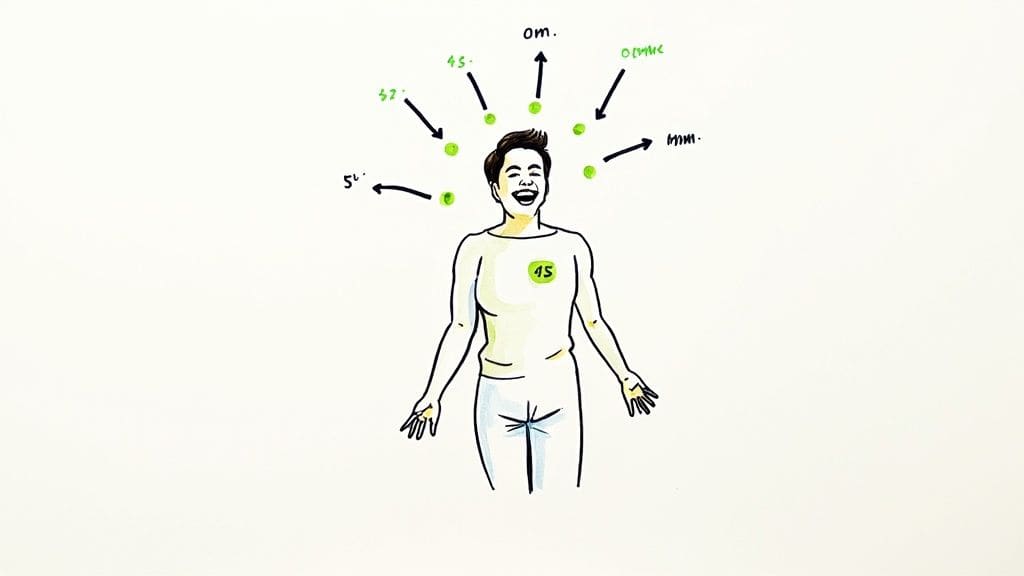
* Relaxes Tense Muscles: A good laugh—even a nervous one—can melt away physical tension. In fact, your muscles can stay relaxed for up to 45 minutes afterwards.
This whole process is a direct counterattack against your body's stress response. And it's surprisingly effective. Laughter has been shown to significantly reduce key stress hormones. A meta-analysis of UK clinical trials found that a single session of laughter dropped cortisol levels by an average of 31.9%. It's a powerful, instinctive reaction.
How to Reframe Your Reaction
Once you understand these hidden advantages, you can start to see your nervous laughter in a whole new light. Instead of something to be embarrassed about, you can recognise it as your body's genuine attempt to help you cope. It's trying to take the edge off a difficult situation.
> This shift in perspective is powerful. When you see your nervous laughter as a functional biological response—not a social blunder—you can cut down on the secondary wave of anxiety that often follows. It's proof that your body is actively trying to protect you from feeling overwhelmed.
This self-soothing reflex is a key part of navigating social interactions. When you embrace it, you can feel more in control, which is a massive step towards learning how to be engaging in a conversation without that extra layer of self-criticism.
When Nervous Laughter Creates Awkward Problems
Even though it's a natural release valve, laughing when nervous can sometimes backfire in a big way. What your brain intends as a self-soothing reflex can accidentally send all the wrong signals, causing social friction and making you feel even worse.
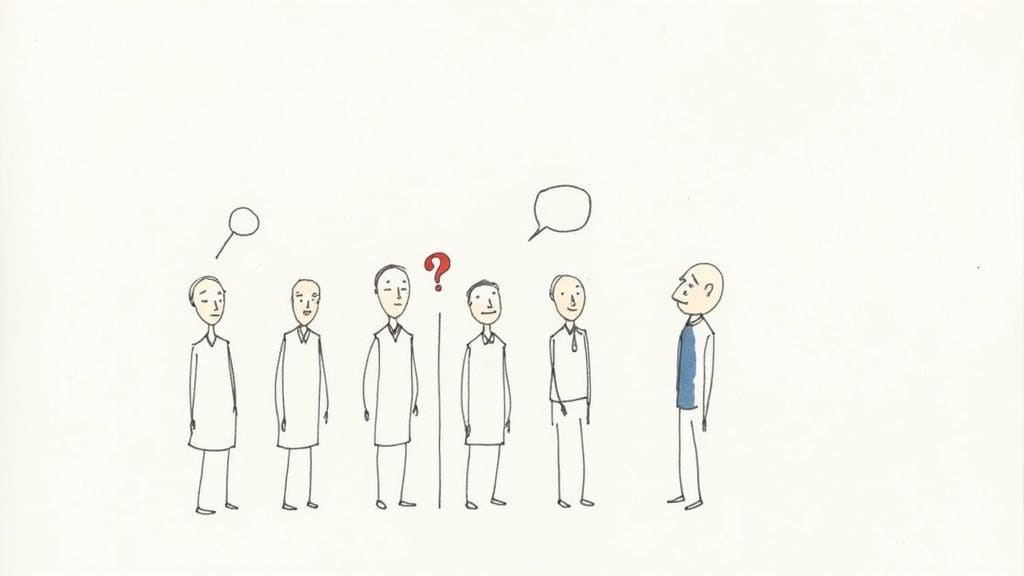
This all comes down to context. What your brain registers as a harmless way to let off steam, other people might see as disrespect, insincerity, or a complete lack of empathy. That disconnect between the situation and your reaction is where things get messy.
Where It Gets Misinterpreted
Some situations are like social minefields, and an ill-timed giggle can make a tense moment explode. Just being aware of these high-stakes scenarios is the first step toward getting a handle on your response.
* During Serious News: Laughing while a friend is sharing bad news—like losing their job or a personal crisis—can make you seem cruel. It doesn't matter that it's a shock response; it looks like you don't care.
* In Sombre Settings: A chuckle during a funeral, a memorial, or a serious meeting can feel profoundly disrespectful to everyone around you.
* During Professional Feedback: If your manager is giving you critical feedback, nervous laughter can look like you're not taking them seriously. That can do real damage to your professional reputation.
Struggle with nerves in social situations? tonen can help.
tonen gives you 188+ conversation scripts, tone guidance and calming tools — designed for autistic adults, ADHD and social anxiety. Try it free for 7 days.
Download on the App StoreiOS only. Android coming soon.
In these moments, it's easy to feel completely isolated. Your body is doing one thing while your brain is screaming the opposite. The social fallout can then amplify the very anxiety that caused the laughter in the first place, trapping you in a painful cycle of stress and misunderstanding.
> The real issue isn't the laughter itself—it's how other people read it. They're reacting to what they see (an out-of-place smile), not what you feel (overwhelming anxiety).
The Impact on Relationships
If this happens often enough, it can start to wear away at trust. Friends might think twice before confiding in you, and colleagues might start to see you as flaky or unreliable. This is where learning how to handle difficult conversations becomes absolutely essential, especially when your default reaction is sending the wrong message.
When your habit of laughing when nervous consistently creates awkwardness or hurt, it stops being a harmless quirk and becomes a real problem. Realising this is the key, because it gives you the motivation to find new ways to cope—strategies that put you back in control during those high-stakes moments.
In-the-Moment Strategies to Manage Nervous Laughter
When you feel that inappropriate giggle bubbling up, having a plan is your best defence. Trying to manage the urge of laughing when nervous isn't about just forcing it down; it's about gently redirecting your attention.
The goal is to shift your focus away from whatever is triggering your anxiety and onto something you can actually control. Having a few discreet, go-to techniques can help you regain composure without drawing a spotlight on yourself. These methods are designed to interrupt the physical impulse before it completely takes over, putting you back in the driver's seat.
If you're looking to build a broader toolkit, exploring some effective coping strategies for stress can provide a solid foundation for managing anxiety in various situations.
Ground Yourself in the Present Moment
Grounding techniques are incredibly powerful. They work by pulling your mind out of that dizzying, anxious spiral and planting it firmly back in the physical world, forcing your brain to focus on sensory input instead of emotional overload.
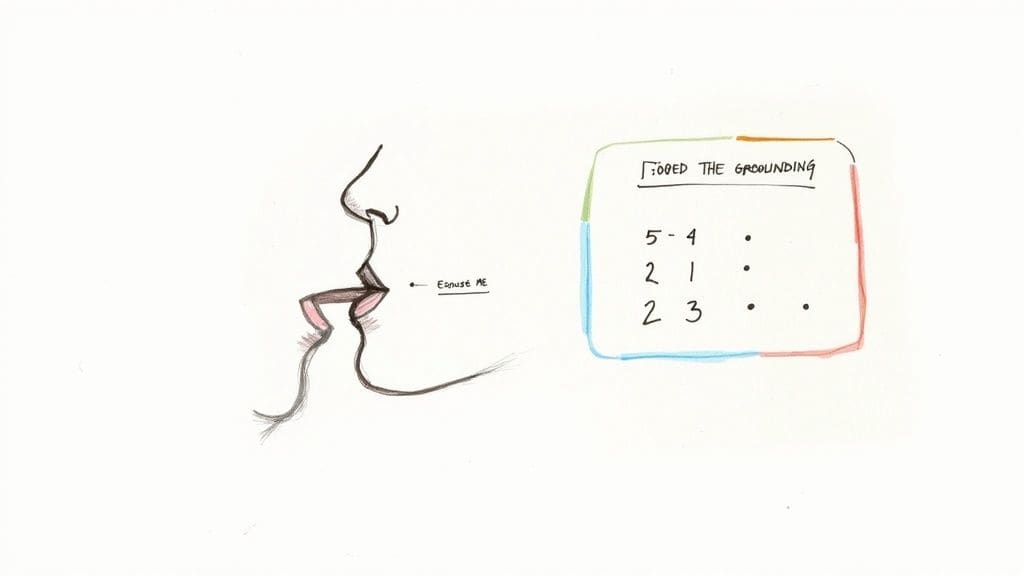
One of the simplest and most effective methods is the 5-4-3-2-1 technique.
* 5: Look around and mentally name FIVE things you see. It could be a clock on the wall, a scuff mark on the floor, or the way light hits a window.
* 4: Bring your awareness to FOUR things you can feel. The texture of your shirt cuff, the cool surface of a table, your feet planted on the ground.
* 3: Tune in to THREE sounds you can hear. Maybe it's the quiet hum of a computer, distant chatter, or your own breath.
* 2: Identify TWO distinct smells. Can you catch a whiff of coffee from the breakroom or the scent of hand sanitiser?
* 1: Focus on ONE thing you can taste. This could be the faint aftertaste of your morning tea or just the neutral taste in your mouth.
By walking your senses through this exercise, you create a pattern interrupt for the feedback loop that leads to nervous laughter. For a deeper dive, our guide on grounding techniques for anxiety has even more ideas to help you stay present.
Use Subtle Physical Interruptions
Sometimes, all it takes is a small, unnoticeable physical action to break the impulse. Think of these as discreet little course corrections.
* Gently bite your tongue or the inside of your cheek. The minor, sharp sensation gives your brain a different physical signal to focus on.
* Press your tongue firmly against the roof of your mouth. This engages your facial muscles and can help stifle the physical beginnings of a laugh.
* Subtly clench and unclench a muscle. Tensing your fist under the table or digging your toes into your shoes can divert that restless physical energy.
> These tiny actions are like a circuit breaker. They redirect the nervous energy that would otherwise come out as laughter, giving you a physical task that helps restore your sense of control.
Prepare Simple Redirecting Phrases
Having a few pre-planned phrases in your back pocket can be an absolute lifesaver. Calmly acknowledging the moment often diffuses awkwardness much faster than trying to ignore it and hoping no one noticed.
A few you could try:
* "Apologies, I sometimes laugh when I'm feeling nervous."
* "Please give me a moment to process that."
* "That took me by surprise. Let me just think for a second."
These simple scripts explain your reaction without oversharing and let you gracefully steer the conversation back on track. Knowing you have an exit plan can be incredibly empowering.
Building Long-Term Control Over Your Responses
Putting a stop to nervous laughter for good isn't just about what you do in the moment. It's about building a solid foundation of emotional regulation so that when stress hits, you have more than one tool in your belt. Think of it less as suppressing a feeling and more as expanding your range of responses.
This long-term approach starts with a bit of detective work. You need to understand your own patterns—what specific situations, people, or topics trigger that uncomfortable urge to laugh? Once you know what you're up against, you can start to prepare for it.
Keep a Simple Trigger Journal
One of the most powerful things you can do is keep a simple journal. This isn't about writing lengthy diary entries. It's about jotting down quick, factual notes right after you catch yourself laughing nervously.
For just a week or two, try to answer these questions whenever it happens:
* Who were you with? A particular boss? A new group of people?
* Where were you? A quiet meeting room? A noisy party? The environment matters.
* What was the topic? Were you talking about something serious, personal, or maybe even a little confrontational?
* What did you feel right before laughing? Try to name the emotion. Was it pure anxiety? Shock? Feeling cornered?
This simple act of noticing will quickly reveal themes. Maybe it only happens during performance reviews, or whenever you have to talk about money. That awareness is your first real step toward regaining control.
Use Visualisation and Mental Rehearsal
Once you've identified your triggers, you can use them to your advantage. Visualisation is a fantastic technique—it's something athletes and performers use all the time to get ready for high-pressure moments. It's basically running a mental movie of yourself handling a situation exactly how you want to.
> Think of your brain like a muscle. Each time you mentally rehearse a calm and measured response, you are creating new, stronger neural pathways. You're teaching your brain an alternative route to take when stress hits, one that doesn't automatically lead to nervous laughter.
Let's say you have a difficult conversation coming up. Take a few quiet minutes beforehand. Close your eyes and imagine it going well. See yourself listening without interrupting, breathing slowly, and responding thoughtfully—with no out-of-place laughter.
This isn't just wishful thinking; it actually helps your nervous system get used to a different way of reacting, making that calm state much easier to slip into when the real moment arrives. It's a process that aligns really well with the core principles of Cognitive Behavioural Therapy (CBT). If you want more structured support, there are some great apps for CBT that can guide you through exercises like this right on your phone.
By consistently working on these long-term strategies, you build genuine emotional control, making the habit of laughing when nervous a much less frequent and powerful reflex.
Knowing When to Seek Professional Support
For most of us, laughing when we're nervous is just an occasional quirk. But sometimes, it can be a sign of something deeper—an anxiety issue that could use some professional support. The key is figuring out when this reflex crosses the line from a slightly awkward coping mechanism to a real problem. The best way to do that is to honestly assess the impact it's having on your day-to-day life.
If the laughter feels completely out of your control, happens all the time, and leaves you feeling genuinely distressed, it might be time to talk to someone. It's also worth paying attention to whether it shows up alongside other anxiety symptoms, like a constant sense of worry, panic attacks, or suddenly avoiding social events you used to look forward to.
Key Signs It's Time to Get Help
When your nervous laughter starts to consistently damage your relationships, both at home and at work, that's a clear signal you could benefit from support. Have friends or colleagues misunderstood your intentions because you laughed at the wrong moment? Has it created friction or made serious conversations feel impossible?
Look out for these flags:
* Your laughter has led to genuine misunderstandings or conflict.
* You find yourself actively avoiding situations just because you're afraid you might laugh inappropriately.
* It comes with physical symptoms like a racing heart, shortness of breath, or feeling dizzy.
* You carry a persistent sense of dread or shame about it.
It's also important to understand the bigger picture. Chronic, unmanaged anxiety doesn't just mess with your social life; it's worth being aware of the potential health risks associated with chronic anxiety.
> Reaching out for support isn't a sign of weakness. It's an act of self-empowerment. It means you're taking charge, ready to understand what's going on and find healthier ways to manage stress.
Help is out there, and it really works. Therapies like Cognitive Behavioural Therapy (CBT) are specifically designed to help you spot and reframe the anxious thought patterns that trigger the laughter. In the UK, some mental wellbeing programmes are even using laughter-based interventions, which studies show can boost social connection and aid mental health recovery. You can read the full research about these comedy and humour interventions to learn more.
A Few Final Thoughts
Still have a couple of questions about laughing when nervous? Let's clear up some of the most common worries people have. Think of these as quick takeaways to round out everything we've covered.
Is Laughing When Nervous a Sign of a Serious Mental Disorder?
For the vast majority of people, the answer is no. It's usually just a quirky, harmless physiological reaction to feeling stressed or overwhelmed.
It only really veers into "let's look into this" territory if it feels completely uncontrollable, happens alongside other severe symptoms like panic attacks, and consistently creates major problems in your work and personal life. If you're genuinely concerned, having a chat with a healthcare professional is always a positive next step.
How Can I Explain My Nervous Laughter Without Making It Awkward?
Keeping it brief and honest is almost always the best approach. A simple, calm statement can work wonders.
Try something like, "Apologies, I have a tendency of laughing when nervous." Just acknowledging it can clear the air, prevent misunderstandings, and help others react with a bit more empathy. You don't owe anyone a detailed explanation of your entire neurological history; just enough context to make sense of the moment.
Can I Completely Stop Myself From Laughing When Nervous Again?
The goal here is management, not total elimination. Since it's a deeply wired biological reflex, trying to just white-knuckle it and suppress the laughter can actually backfire, ramping up your stress levels even more.
The strategies in this guide are all about reducing how often it happens, managing the impulse when it does pop up, and generally feeling more in control. The real aim is to build up your toolkit of coping skills so that nervous laughter isn't the only tool you have when the pressure is on.
*
Feeling overwhelmed by social situations is tough, but you don't have to figure it all out alone. tonen is a mobile app we designed to help you handle conversations with less stress and more confidence. With tools like our Scripts Library for planning ahead, a Perspective Helper for tricky moments, and a Calm Kit for when things get intense, you can start feeling more prepared, one conversation at a time. Download tonen from the App Store and start your 7-day free trial today.
Frequently asked questions
This guide covers why you laugh when nervous — the science explained with practical, neurodivergent-friendly strategies—clear steps, scripts where useful, and ways to reduce anxiety or overload rather than vague "be confident" advice.