Social anxiety activities work best when they combine two things at once: changing the thoughts that fuel fear and practicing the exact social behaviors that feel hard. In the U.S., 7.1% of adults experienced social anxiety disorder in the past year, with 9.1% among ages 18 to 29, so if social situations feel exhausting, avoidable, or strangely high-stakes, you're not dealing with something rare or trivial.
"Just be confident" is useless advice. Confidence usually comes after repetition, not before it. The most effective social anxiety activities give you a way to rehearse, test assumptions, calm your body, and stay in the moment long enough for your nervous system to learn that discomfort isn't danger. That's especially important for neurodivergent people, who may also be navigating sensory overload, literal communication styles, masking fatigue, or rejection sensitivity.
The eight approaches below are the ones I'd want someone to use in real life: graduated exposure, CBT thought records and behavioral experiments, social skills training, mindfulness and ACT, assertiveness practice, structured groups, online exposure, and values-based identity work. Each one includes how to do it, what tends to help, what usually backfires, and ways to adapt it if standard advice has never quite fit. If social anxiety is also tied to culture shock or living abroad, this guide on expat social anxiety adds another useful lens.
1. Graduated Exposure Therapy
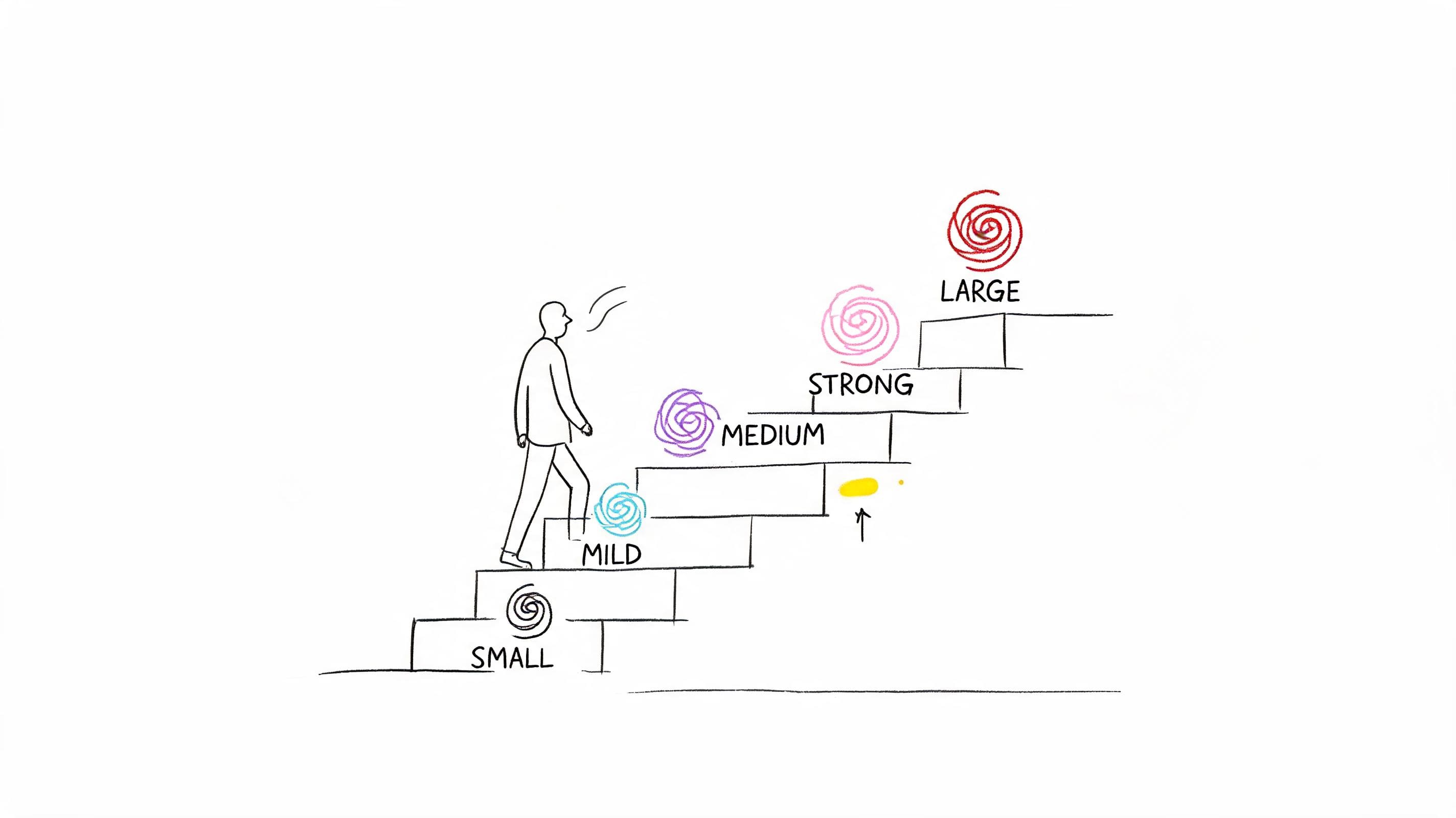
Graduated exposure is one of the most reliable ways to reduce social anxiety because it changes the learning pattern underneath avoidance. Each time you stay in a social situation long enough to see what happens, your nervous system gets new evidence. The goal is not to feel calm before you act. The goal is to practice until the situation becomes more familiar and less dominant.
That matters because avoidance usually spreads. A skipped phone call turns into avoiding appointments. Avoiding one group conversation turns into staying quiet in class, at work, or with friends. Over time, life gets smaller.
How to build an exposure ladder
Start with a written list of 8 to 12 situations you avoid or endure with intense stress. Rate each one from 0 to 100 based on anticipated distress. Then sort them from easier to harder.
Choose a starting point in the 30 to 50 range. That is often hard enough to trigger anxiety, but still possible to complete without shutting down.
A useful ladder might look like this:
- 20/100: Make eye contact and say hi to a neighbor.
- 35/100: Ask a store employee a simple question.
- 45/100: Make a short phone call to confirm an appointment.
- 60/100: Join a group conversation and ask one follow-up question.
- 75/100: Attend a meetup for 20 minutes.
- 90/100: Give a presentation or go to a networking event alone.
Repeat the same step several times before moving up. One successful attempt can help, but repetition is what teaches your brain that the discomfort is tolerable and temporary.
What to do during the exposure
Stay in the situation long enough for the first spike of anxiety to level off, or long enough to gather new information. That might mean remaining in the conversation for two more minutes, finishing the phone call instead of hanging up, or staying at the event until you speak to one person.
Use one clear target behavior. Examples include asking one question, making one comment, or introducing yourself once. Vague goals such as "be more confident" are hard to measure and easy to judge harshly.
Afterward, write down three things:
1. What I predicted
2. What happened
3. What I want to repeat or adjust next time
This makes exposure a learning exercise rather than a willpower test. If you want a structured way to examine the thoughts behind those predictions, this CBT guide for social anxiety pairs well with exposure practice.
Difficulty levels and real trade-offs
Exposure works best when it is demanding but doable. Too easy, and nothing changes. Too intense, and you may leave early, dissociate, or avoid the next attempt.
A simple way to judge fit:
- Too low: Mild discomfort, little urge to avoid, no real learning
- Good starting level: Noticeable anxiety, strong temptation to escape, still possible to stay
- Too high: Panic, shutdown, confusion, or sensory overload that blocks learning
This trade-off matters for neurodivergent people in particular. A hard social task can become impossible if it is stacked with fluorescent lighting, noise, unclear rules, and no recovery time. In practice, I would rather make the social step smaller and complete it consistently than set an ambitious goal that leads to a crash.
Neurodivergent-friendly adaptations
Many standard exposure plans fail because they treat every difficulty as fear. Sometimes the barrier is sensory load, processing speed, masking fatigue, or uncertainty about what script fits the situation. Adjusting those factors is not avoidance. It is good design.
Use adaptations like these:
- Script the first 1 to 3 lines. Prepare an opener, a follow-up, and an exit line.
- Reduce background load. Start in quieter places, at off-peak times, or with one person instead of a group.
- Set a time boundary. Practice for 5, 10, or 20 minutes so the task has a clear end.
- Preview the interaction. Rehearse out loud or use tonen's Practice Mode to try different phrasings before the actual conversation.
- Add recovery time. Plan decompression after the exposure so you do not associate practice with total exhaustion.
A few scripts help many people get started:
- Opener: "Hi, can I ask you something quickly?"
- Follow-up: "How did you get into that?"
- Exit: "It was good talking with you. I'm going to grab some water."
Examples for different contexts
A student might build a ladder from emailing a teacher, to asking one question after class, to speaking once in a small group, to contributing one comment in full class discussion.
A working adult might start by greeting one coworker, then making one short call, then speaking once in a meeting, then attending a professional event for a set amount of time. If the fear centers on performing in front of others, these practical tips for managing stage fright can support the higher steps.
What usually backfires
Several patterns slow progress:
- Waiting to feel fully ready
- Jumping straight to the hardest scenario
- Using exposure to prove you will never feel anxious
- Reviewing every interaction for mistakes afterward
- Treating sensory overwhelm as a personal failure
A better standard is simple. Did you do the step you planned, stay long enough to learn something, and come back to it again? If yes, the exercise worked, even if it felt awkward.
2. Cognitive Behavioral Therapy and Behavioral Experiments
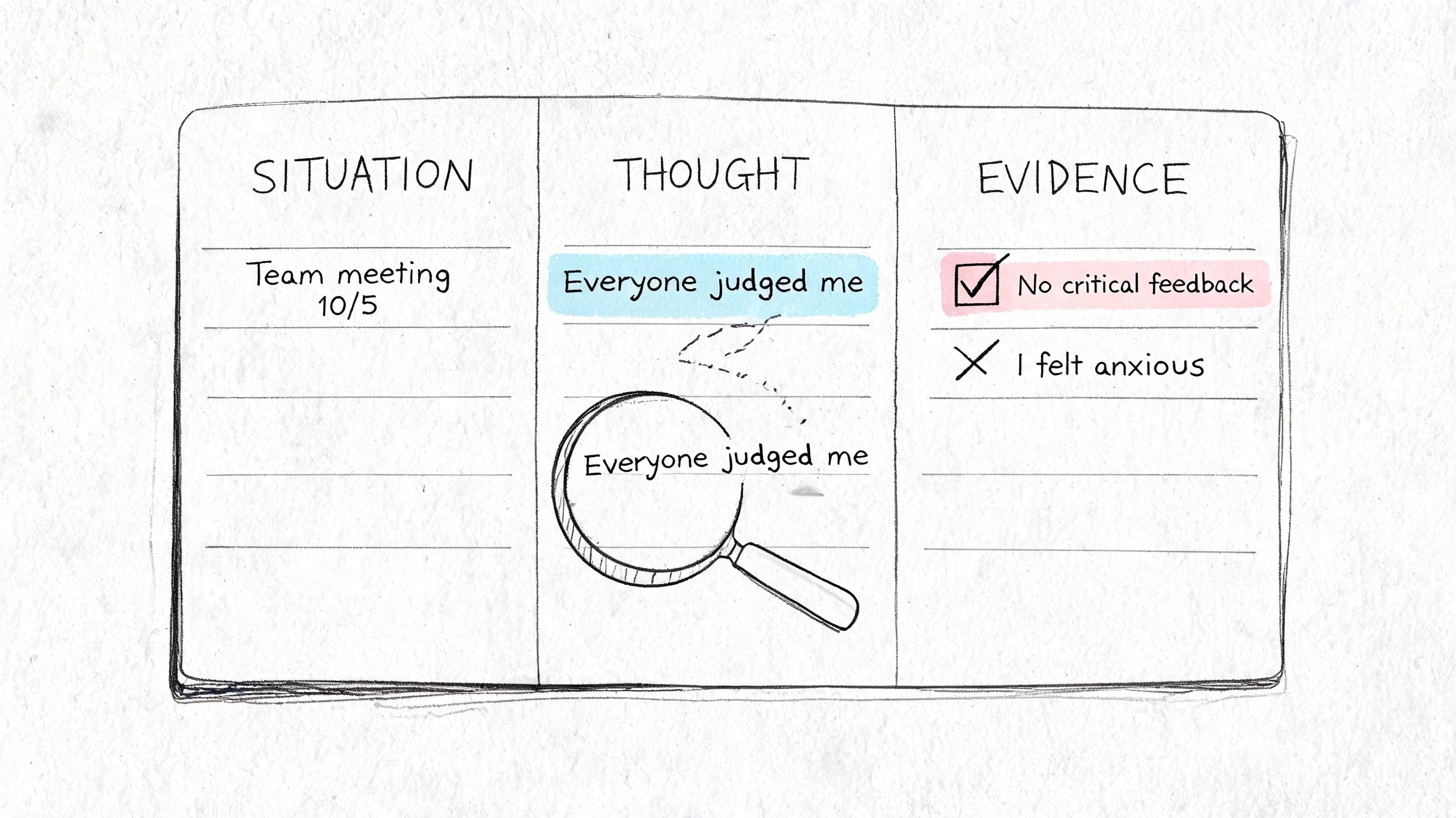
Many people with social anxiety don't just feel nervous. They predict disaster with great conviction. CBT helps you slow that prediction down and inspect it.
A thought record is simple. You write the situation, the automatic thought, the emotion, the evidence supporting the thought, the evidence against it, and a more balanced alternative. If you want a deeper walkthrough, this CBT guide for social anxiety gives a useful framework.
A better way to challenge anxious thoughts
Take the thought: "If I say something awkward in the meeting, everyone will think I'm incompetent."
Write it down exactly as it appears. Then ask:
- What am I predicting? Be specific.
- What evidence do I have?
- What evidence am I ignoring?
- What would I tell another person in the same situation?
Then rate how strongly you believe the thought before and after. The point isn't to force positivity. The point is accuracy.
Behavioral experiments make CBT stronger. Instead of arguing with your mind forever, you test the prediction in real life. Say one thing in the meeting. Ask one question in class. Make one brief comment in a group chat. Then record what happened.
What works better than reassurance
Reassurance can soothe you for a minute, but it often keeps the fear intact. Evidence gathering is more durable.
For example, a neurodivergent employee who thinks, "If I ask for clarification, they'll think I'm difficult," can run a small experiment by asking for one instruction in writing and then noting the actual response. A person worried about appearance-based judgment can attend a low-stakes event and record observed reactions instead of assumed ones.
> Notice the shift. You're not trying to "win" against anxiety. You're collecting data your anxious brain usually skips.
Keep a success log. Not a fake positivity journal. A record of times your prediction didn't come true, or came true in a smaller and more manageable way than expected. That's one of the most practical social anxiety activities because it interrupts the habit of treating every fear as fact.
3. Social Skills Training and Scripting
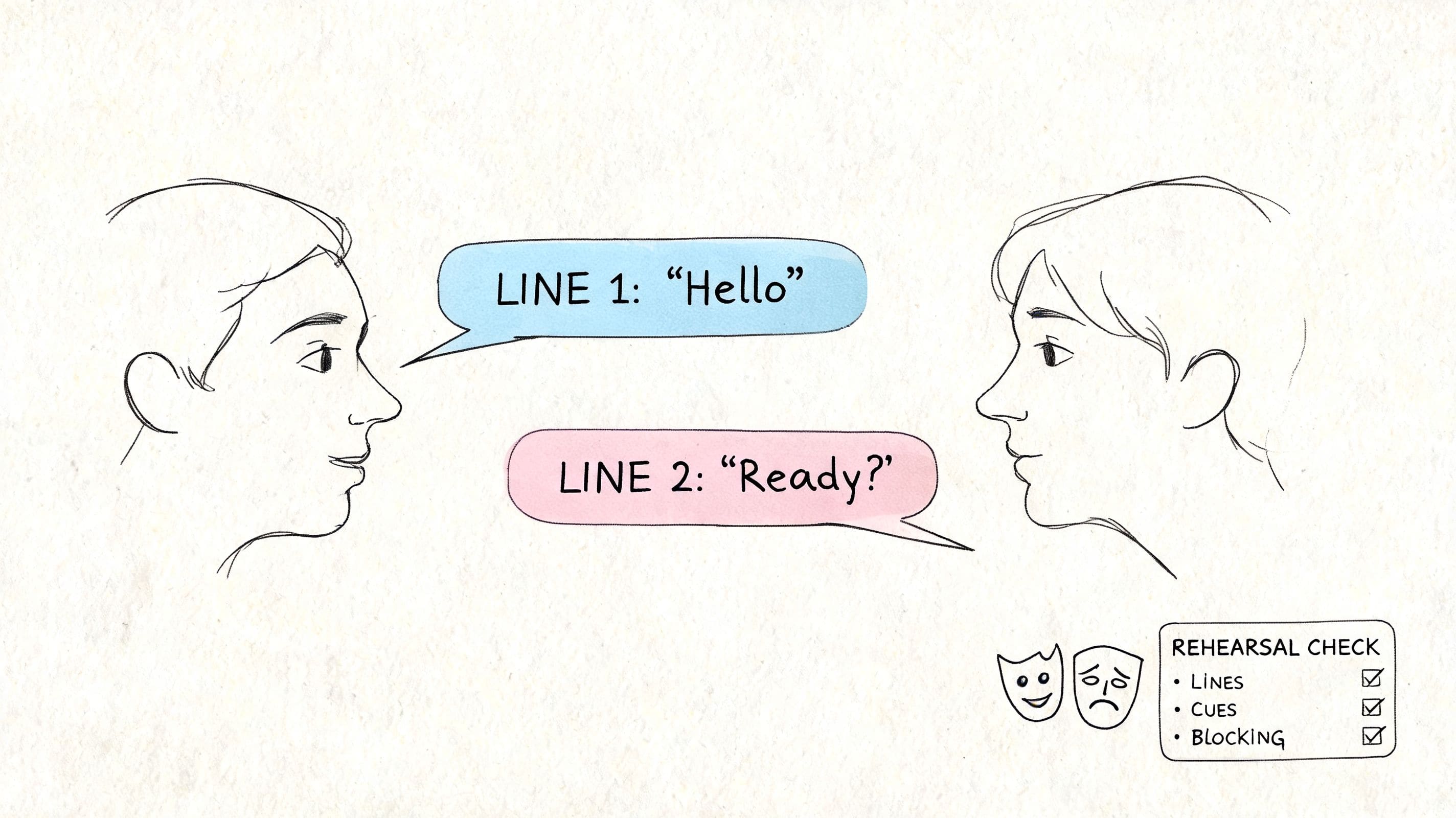
Not every hard social moment is "just anxiety." Sometimes the stress comes from not knowing what to say, when to say it, how direct to be, or how to end the exchange without sounding rude. Social skills training helps by making the invisible parts of conversation more explicit.
That matters even more for neurodivergent people. One source discussing this gap notes that up to 40 to 50% of autistic people experience co-occurring social anxiety, while many standard resources still assume a neurotypical communication style.
Use scripts as scaffolding, not a mask
A good script shouldn't make you sound robotic. It should reduce uncertainty.
For an autistic adult at a networking event, a usable script might be:
- Opening: "Hi, I'm Alex. What kind of work do you do?"
- Bridge: "That's interesting. How did you get into that?"
- Exit: "I'm glad we talked. I'm going to grab some water, but it was nice meeting you."
For an ADHD teen asking for an extension:
- Request: "I'm behind and I want to turn in better work."
- Specific ask: "Could I have until Friday?"
- Support line: "If needed, I can also show you what I've finished so far."
The social skills training article for adults is useful if you want examples of how these patterns transfer across work and personal life.
Looking for activities to build social confidence? tonen can help.
tonen gives you 188+ conversation scripts, tone guidance and calming tools — designed for autistic adults, ADHD and social anxiety. Try it free for 7 days.
Download on the App StoreiOS only. Android coming soon.
How to practice so it transfers to real life
Read the script, then out loud, then in a role-play. Record yourself. Notice where the wording feels unnatural and edit it until it sounds like you.
Prepare multiple versions of the same message. One direct, one warmer, one softer. That helps when anxiety makes a single script feel too rigid.
What doesn't work well is memorizing long paragraphs. Under stress, long scripts vanish. Short scripts hold.
> "Short, clear, repeatable" beats "perfect and impressive" almost every time.
This is one of the most underrated social anxiety activities because many people get calmer when they know they have language ready, especially for starting, clarifying, or exiting a conversation.
4. Mindfulness-Based Exposure and ACT
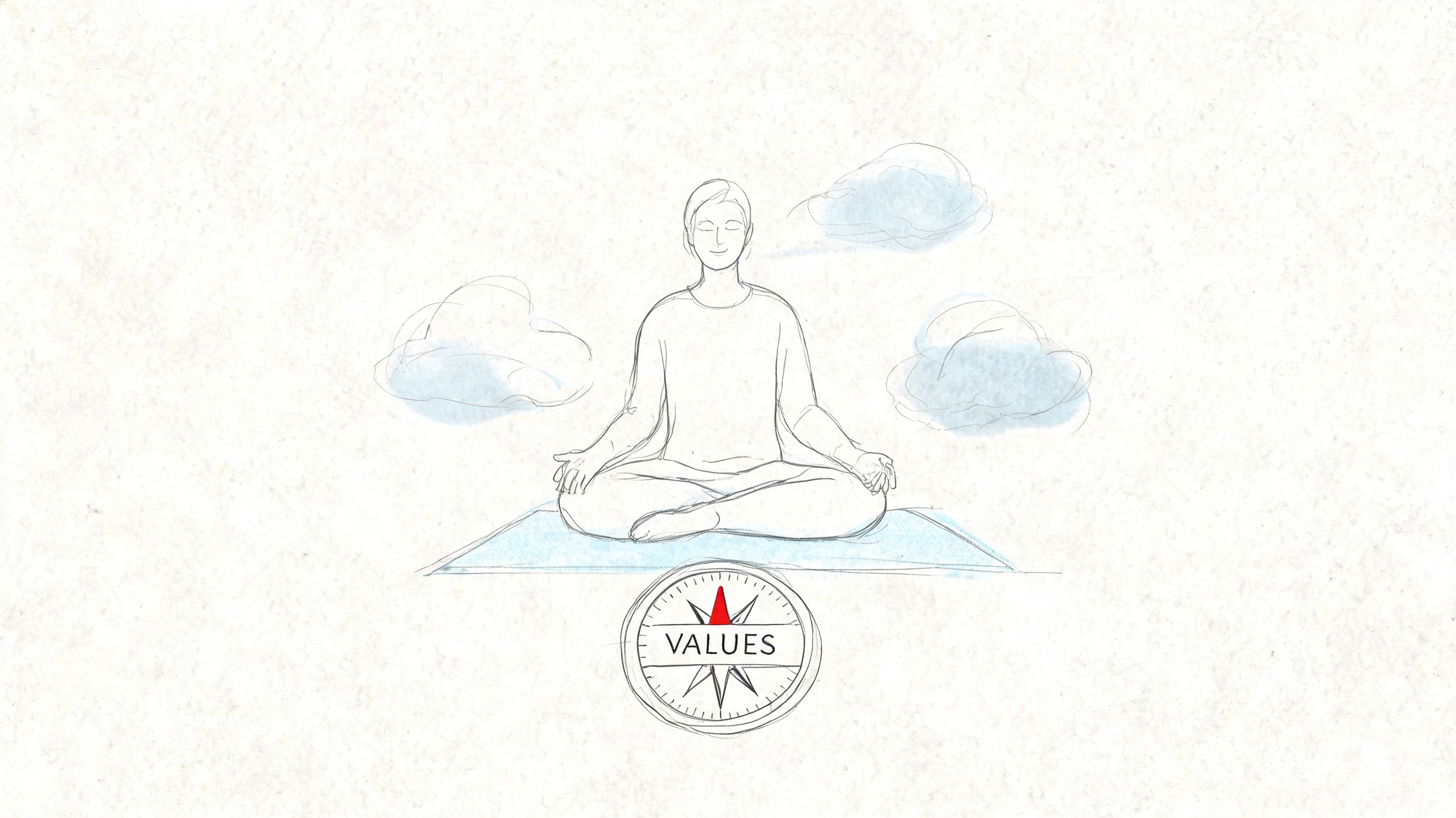
Trying to get rid of anxiety before you speak often keeps social anxiety in charge. Mindfulness and ACT work better for many people because the goal is different. You practice noticing what your body and mind are doing, then you choose the next action on purpose.
That matters in live conversation, where anxiety can spike after you start talking, not only before. For autistic people, ADHDers, and other neurodivergent people, the hard part is often sensory load, mental blanking, or getting stuck on self-monitoring while still trying to stay present with another person. A useful practice has to work under those conditions.
A simple acceptance sequence
Use this during a real interaction, not only in quiet practice.
- Notice: "My chest is tight. I'm scanning for mistakes."
- Name: "I'm having the thought that I sound awkward."
- Anchor: Press both feet into the floor, feel the chair under your legs, or touch a ring, sleeve, or textured object.
- Choose: Say one short, useful sentence.
That last step matters. ACT is not passive endurance. It is willingness plus action.
A low-pressure script might be: "I lost my train of thought for a second. What were you saying?" At a networking event: "Hi, I'm Alex. I wanted to come say hello." In a text exchange: "I'm getting activated, so I'm going to slow down and reply in a few minutes."
How to turn this into exposure
Pair mindfulness with a specific social task. Keep the task small enough that you can repeat it.
A beginner version might be making eye contact for one second, then asking a cashier one clear question. A moderate version might be joining a group conversation for two minutes without trying to sound impressive. A harder version might be sharing an opinion, noticing the surge of self-consciousness, and staying in the conversation long enough to hear the response.
Rate each practice by two things: anxiety level and willingness level. Anxiety tells you how activated you were. Willingness tells you whether you made room for discomfort and still did the task. That second measure is often more useful than asking whether you felt calm.
Neurodivergent-friendly adaptations
Traditional mindfulness advice can be too vague or too body-focused for some people. Adapt it.
If interoception is hard, anchor outside the body. Count three blue objects, feel the seam of your shirt, or track the pressure of your shoes on the ground. If eye contact increases overload, look at the person's forehead or nose bridge instead. If open-ended social tasks create shutdown, use a narrow goal such as "ask one follow-up question" or "stay for five minutes."
Sensory tools are valid here. Earplugs, a fidget, a cold drink, a weighted item in a bag, or a planned break can make exposure possible instead of overwhelming. The trade-off is that too many safety behaviors can turn into avoidance, so use supports that help you stay engaged rather than disappear from the interaction.
What mindfulness is and isn't
Mindfulness is attention with less struggle. It is not performance. It is not forcing steady breathing, empty thoughts, or perfect presence.
If your mind wanders, comes back, wanders again, and comes back again, that is still practice.
Many people also need language for what happens next. If you notice anxiety and then freeze because you do not know what to say, pairing this method with a few practical communication skills that make conversations easier usually works better than mindfulness alone.
Digital tools can help with repetition. Some people use tonen to draft a calmer reply, test how a message may come across, or reduce the urge to over-explain before sending. That does not replace exposure. It can lower the friction enough that you do the practice instead of avoiding it.
5. Assertiveness Training and Communication Skills
A lot of social anxiety gets reinforced after the conversation ends. You said yes when you meant no. You stayed vague when you needed clarity. You let someone interrupt, overstep, or assume. Then your body remembers social interaction as draining and unsafe.
Assertiveness changes that pattern. It teaches you to speak clearly without being aggressive and to tolerate the discomfort that can come with honesty.
Start with low-stakes requests
Don't begin with your hardest family conflict or a major workplace confrontation. Practice on situations where the social cost is lower.
Examples:
- Customer service request: "I ordered the wrong item. Could I exchange it?"
- Boundary with a friend: "I can't talk tonight, but I can text tomorrow."
- Work clarification: "I do better with written instructions. Can you send that by email?"
If you want practical language models, this communication skills article on getting better at communication can help you shape requests in a way that feels natural.
The structure that makes assertiveness easier
Use a three-part frame:
- Acknowledge briefly: "I appreciate you thinking of me."
- State your position clearly: "I can't take that on this week."
- Offer an alternative if you want to: "I can revisit it next month."
That frame works for declining invitations, setting work boundaries, and asking for accommodations. It also reduces rambling, which is common when anxiety pushes you to over-explain.
Someone requesting a quieter meeting format might say, "I participate better when I have the agenda in advance. Could you send it before the meeting?" A teen might say, "I'm not comfortable answering in front of the whole class. I can write my response instead."
> Clear doesn't mean cold. Brief doesn't mean rude.
What doesn't help is trying to make everyone happy before you speak. Assertiveness often feels uncomfortable precisely because it interrupts people-pleasing. That discomfort is normal.
6. Group Exposure Therapy and Structured Social Groups
Group practice often reveals the part of social anxiety that solo exercises cannot touch. The problem is not only starting a conversation. It is speaking while people watch, pausing while someone waits, recovering after an awkward moment, and tolerating the feeling of being noticed.
That is why a well-run group can help so much. It gives you repeated exposure to real social pressure, with enough structure that you can stay in the exercise instead of shutting down.
What structured groups do better than unstructured support
A good group gives you three things at once. Repetition, clear expectations, and feedback that is specific enough to use next time.
That usually looks like practicing one social task at a time:
- Level 1: Say your name and answer one predictable opener
- Level 2: Share an opinion that could invite disagreement
- Level 3: Start a conversation with another member without being called on
- Level 4: Speak to the whole group, then stay present for feedback
Groups tend to work best when the facilitator actively shapes the task. Therapy groups for social anxiety, skills-based groups, and hobby groups with a clear format can all work well. A loosely run support group may still feel validating, but it often lets anxious members stay quiet for an hour and call it participation.
That is a real trade-off. Safety matters, but too much room to avoid can keep the fear intact.
How to choose a group that matches your nervous system
Before joining, ask practical questions. A lot of people skip this step, then assume the group failed because they felt flooded.
Ask:
- Is there a written agenda before each session?
- Are people invited to participate, or put on the spot?
- Can members pass once and come back later?
- How is feedback given?
- How large is the group?
- Is there background noise, fluorescent lighting, or frequent side conversation?
- Is text chat allowed in hybrid or online portions?
For neurodivergent people, those details are not preferences. They change the difficulty level of the exposure. An autistic person may handle social uncertainty better when the topic is clear. Someone with ADHD may do better with shorter speaking turns and visible structure. Someone with sensory sensitivity may participate far more in a quieter room than in a noisy cafe-style meetup.
How to use a group without disappearing inside it
Go in with one target behavior per session. Not five.
Examples:
- "I will speak once before the halfway point."
- "I will ask one follow-up question."
- "I will disagree mildly instead of pretending I have no opinion."
- "I will stay in the room after I blush or lose my place."
Anxious individuals often judge success based on their level of calmness. A better measure is whether you performed the planned behavior while experiencing anxiety.
If speaking live feels too activating, use a bridge. Start with a text-based or hybrid group, then move to voice or video, then in-person practice. For younger people and for adults who freeze under live social demand, accessible formats often make the difference between avoiding practice and starting it.
Scripts that reduce uncertainty
Groups get easier when you do not have to invent every sentence under pressure. Keep a few lines ready.
- Joining late: "Hi, I'm a little behind, but I'm here now."
- Passing without vanishing: "I want to come back to this after I hear another example."
- Entering discussion: "I agree with part of that. My experience was a little different."
- Recovering after losing your place: "I lost my train of thought. Give me a second."
- Closing a turn: "That's my main point."
If you want low-pressure rehearsal before a live group, use conversation practice for anxiety to test wording that feels natural in your own voice. Tools like tonen can also help you revise a message or script so it sounds clear without becoming stiff or overexplained.
Commit long enough to get useful data
The first sessions are often the hardest. That does not mean the group is wrong for you. It may mean the exposure is finally specific enough to activate the fear you need to work on.
Give it a short trial with a clear review point, such as four to six sessions. Then assess the right things. Did you participate more? Recover faster after awkward moments? Need less safety behavior? Feel less dread before the session, even if only slightly?
Those are meaningful gains. Group work is rarely comfortable at first, but it can be one of the fastest ways to practice being seen without escaping.
7. Virtual and Online Exposure Practice
Online exposure can be the difference between staying stuck and getting real reps. For many people with social anxiety, especially autistic people, ADHDers, and anyone who gets overloaded by fast live interaction, digital spaces offer a practice environment with fewer variables and more control.
That control helps, but it also creates a trade-off. Text, voice notes, video calls, and online groups can lower the barrier to participation. They can also become a polished version of avoidance if you stay only where you can edit every word.
Use online practice with a clear exposure ladder. Pick one setting, define one target behavior, and repeat it often enough to collect useful evidence about what happens.
Build a digital exposure ladder that transfers to real life
Choose the lowest-friction format that still brings up some anxiety. Then increase immediacy, visibility, or spontaneity one step at a time.
A simple progression might look like this:
- Level 1, low difficulty: react in a group chat, leave a short comment, or send one direct message
- Level 2, low to moderate difficulty: post your own question in a forum or community channel
- Level 3, moderate difficulty: send a voice note or speak once in a small video call
- Level 4, moderate to high difficulty: join a live online discussion and ask one follow-up question
- Level 5, high difficulty: keep your camera on, speak early, and tolerate imperfect delivery
The point is not to clear levels quickly. The point is to choose steps that are hard enough to matter and manageable enough to repeat.
Match the format to the fear
Different platforms expose different fears. That matters because the right exercise depends on what you are trying to test.
- Fear of saying the wrong thing: start with text-based communities, then move to voice notes and live calls
- Fear of being watched: use brief camera-on practice in low-stakes meetings
- Fear of delayed judgment: post a comment without checking repeatedly for responses
- Fear of sounding awkward: record one short voice message and send it without redoing it five times
I usually tell clients to target one fear at a time. If you try to work on tone, eye contact, speed, and spontaneity all at once, it becomes hard to tell what helped.
Use scripts, then fade them
Online practice works best when you do not rely on pure improvisation at the start. A short script reduces cognitive load and gives you something concrete to test.
Examples:
- Joining a Slack or Discord conversation: "Jumping in late, but I had a question about this."
- Posting in a professional community: "I'm curious how others handle this. Here's what I've tried so far."
- Speaking on a video call: "I can start with a quick thought."
- Sending a voice note: "I wanted to reply by voice because it's easier to explain clearly."
For rehearsal, use conversation practice for anxiety to test wording before a live interaction. Tools like tonen are useful for checking whether a message sounds too formal, too blunt, or too apologetic. Then send the version that feels clear enough, not perfect.
Neurodivergent-friendly adaptations
Online exposure is often more accessible because it lets you control pace, sensory input, and processing time. Keep those supports if they help you participate more consistently.
A few adaptations that work well:
- turn off self-view during video calls if seeing your own face increases self-monitoring
- use headphones, captions, or a quieter room to reduce sensory load
- keep a one-line prompt on screen so working memory does not have to carry the whole task
- schedule practice when medication, energy, and attention are at their best
- agree with yourself on a stopping point, such as one comment or one spoken contribution
These are supports, not failures. A support becomes a safety behavior only if it blocks the learning you need. If a written prompt helps you speak, keep it. If rewriting the same sentence for 25 minutes keeps you from posting at all, scale that back.
Review the right outcome
Do not grade online exposure by whether you felt relaxed. Grade it by whether you showed up, did the planned behavior, and stayed long enough to learn something.
Useful questions after each practice:
- What did I predict would happen?
- What happened instead?
- How long did the anxiety spike last?
- Which safety behaviors showed up?
- What is the next repeatable step?
That kind of review turns digital practice into real treatment work, rather than another place to hide.
8. Values-Based Identity Work and Authentic Self-Expression
A lot of people with social anxiety aren't only afraid of embarrassment. They're afraid of being seen accurately and then rejected. After enough years of masking, over-adapting, or editing yourself for safety, social confidence can't grow because there isn't much room left for a real self to show up.
Values-based work addresses that. Not by telling you to "just be yourself," which is too vague to help, but by asking what matters to you and how you want to sound, act, and connect.
Find the values under the fear
Write down a few domains: work, friendship, family, health, creativity, learning. Under each, list what you want to stand for.
Examples:
- Work: honesty, clarity, reliability
- Friendship: warmth, depth, reciprocity
- Daily life: autonomy, steadiness, kindness
Then look for the gap between those values and your current behavior. An autistic employee may value directness but mask by sounding overly agreeable. An ADHD student may value creativity but stay silent to avoid seeming scattered. An introvert may value depth but spread themselves thin trying to seem socially easy.
Practice authenticity in small doses
Authenticity isn't one big reveal. It's repeated small acts of self-expression.
That might mean saying, "I need a minute to think before I answer." Or, "I do better with clear plans." Or, "I'd rather have one-on-one time than a big group hang." Those are not dramatic statements, but they reduce the split between your inner experience and outer behavior.
This kind of work is especially relevant for neurodivergent people because generic social advice often asks for more masking, not better fit. One background source on this gap argues that many common resources fail to account for sensory sensitivities, literal thinking, executive function strain, and masking fatigue, which is exactly why values-based expression matters for sustainable change.
> The social goal isn't to become universally liked. It's to become more recognizable to yourself while staying connected to other people.
When this approach works, social situations often become less exhausting even before they become easy.
8-Method Social Anxiety Activities Comparison
| Approach | Implementation complexity | Resource requirements | Expected outcomes | Ideal use cases | Key advantages |
|---|---|---|---|---|---|
| Graduated Exposure Therapy (Systematic Desensitization) | Moderate, requires structured hierarchy and pacing | Therapist guidance helpful, time commitment (weeks–months), relaxation practice | Reduced avoidance, habituation to feared situations, measurable confidence gains | Specific social fears (presentations, meetings), clients able to practice gradually | Strong empirical support, paced progression, builds real-world mastery |
| Cognitive Behavioral Therapy (Thought Records & Behavioral Experiments) | Moderate, requires metacognitive skills and consistent homework | Therapist or guided materials, regular record-keeping, time for experiments | Reframed beliefs, reduced catastrophizing, durable cognitive shifts | Those with distorted thinking patterns who can engage in evidence gathering | Targets root cognitive processes, flexible across situations, well-researched |
| Social Skills Training & Scripting | Low–Moderate, structured teaching with repeated role-play | Trainer/peer practice, scripts, rehearsal time (in-person or digital) | Improved discrete social skills, reduced uncertainty, quicker functional gains | Neurodivergent people or those with skill deficits, networking, scripted scenarios | Concrete, teachable skills; scripts lower cognitive load; immediate confidence boosts |
| Mindfulness-Based Exposure & ACT | Moderate–High, requires mindset shift and ongoing practice | Mindfulness instruction, daily practice time, values clarification exercises | Greater psychological flexibility, acceptance of anxiety, value-driven action | Chronic or treatment-resistant anxiety, clients preferring acceptance approaches | Reduces struggle and shame, supports authentic engagement, long-term resilience |
| Assertiveness Training & Communication Skills Development | Low, teaches clear frameworks but needs real-world calibration | Coaching/role-play, scripts (DEAR MAN etc.), practice in everyday contexts | Clearer boundaries, less people-pleasing, improved relationships | People-pleasers, workplace/family boundary issues, those needing direct communication | Practical language frameworks, reduces resentment, improves interpersonal outcomes |
| Group Exposure Therapy & Structured Social Groups | High, group coordination and skilled facilitation required | Scheduled group sessions, trained facilitator, peer cohort, homework | Authentic social exposure, peer support, better generalization to real life | Those who benefit from peer feedback, reducing isolation, cost-sensitive clients | Realistic practice context, peer modeling, accountability and social learning |
| Virtual/Online Exposure Practice & Digital Social Interaction Training | Low, technically simple but needs planned progression | Devices/internet, digital platforms, flexible scheduling, privacy safeguards | Increased comfort with digital/social formats, stepwise bridge to in-person | Remote workers, neurodivergent preferring text-based practice, mobility-limited people | Low barrier to entry, flexible, recordable interactions for review |
| Values-Based Identity Work & Authentic Self-Expression | High, deep reflective work and gradual behavioral alignment | Therapy/coaching, time for reflection, safe practice contexts, gradual disclosure | Stronger identity, intrinsic confidence, sustainable authentic engagement | People who mask or people-please, those seeking long-term authenticity | Builds intrinsic self-worth, reduces masking, aligns behavior with core values |
Building Your Social Anxiety Toolkit
Social anxiety usually improves through a personalized system, not a single breakthrough. The right mix depends on what blocks you. Rumination responds to cognitive work and behavioral experiments. Shutdown during live interaction often needs body-based regulation and acceptance skills. Blank-mind moments usually improve when you practice short scripts, predictable openings, and recovery lines.
Start with a toolkit you can repeat on an ordinary week.
A workable plan is often smaller than people expect. One phone call. One follow-up question. One clear boundary without over-explaining. One group event where you stay long enough to settle, then leave on purpose instead of escaping in panic. In practice, these smaller reps tend to build more trust in yourself than a single high-pressure attempt that leaves you flooded for three days.
Trade-offs matter. Exposure helps, but the dose has to fit your current capacity or you risk reinforcing dread. Scripts reduce uncertainty, but overly polished lines can make you sound unlike yourself and increase monitoring. Mindfulness can lower the fight-or-flight spiral, but it stops helping when it turns into another performance standard. Assertiveness improves relationships over time, yet it can create short-term friction with people who benefited from your old patterns of over-accommodation.
For neurodivergent people, fit is not optional. Sensory load, processing speed, language retrieval, masking fatigue, and communication preferences all affect whether an activity is useful or draining. I treat adaptations as part of the method, not a diluted version of it. Text-based rehearsal, extra response time, shorter exposures, visual scripts, and planned exits often make the difference between practice that sticks and practice you avoid for months.
A strong toolkit also has a clear sequence. Pick one primary method, one support skill, and one way to track what happened. For example, use graduated exposure as the main practice, a two-line grounding routine before and after, and a brief note on what you predicted versus what happened. That structure keeps the work concrete and makes progress easier to notice, especially if your brain tends to dismiss small wins.
Delay is common with social anxiety, as noted earlier, which is one reason low-pressure starting points matter. Private practice tools can lower the threshold for beginning before you feel ready for a therapist, a group, or a harder real-world conversation. They do not replace treatment when treatment is needed. They can make the first reps possible.
Tonen fits best as a support tool inside that larger plan. It can help you rehearse a short message, test different tones, shorten an over-explained draft, or calm your nervous system before a conversation. That is useful for anyone with social anxiety, and especially useful for neurodivergent people who benefit from previewing language and reducing ambiguity.
If you want a broader perspective on resilience and mental training, this Locals Jiu Jitsu guide to mental strength offers another practical angle.
If you want support practicing conversations before they happen, tonen offers concise scripts, tone options, private rehearsal, perspective reframes, and calming tools designed for neurodivergent people and anyone who finds social or professional interactions stressful.
Frequently asked questions
Any small, planned step that builds tolerance for social situations—saying hello to a barista, one question in a meeting, or a five-minute call—counts when it is intentional and repeatable.