If you keep asking why is communication so hard for me, the short answer is this: for many people, especially neurodivergent people, communication feels hard because it asks your brain to do too many things at once in a system that wasn't built with your processing style in mind. It's often a mismatch, not a character flaw. You may be decoding tone, filtering noise, searching for words, tracking facial expressions, managing anxiety, and trying not to say the "wrong" thing all at the same time.
Why Communication Feels So Difficult
You say one sentence. The other person reacts strangely. Then your brain starts replaying the whole exchange like security footage.
Many who ask why is communication so hard for me aren't asking because they don't care. They're asking because they care so much, and communication still keeps going sideways.
It's often a mismatch, not a failure
A lot of communication advice assumes everyone is using the same internal equipment. That's not how it works.
Some people process language quickly in real time. Some need a beat longer. Some rely on subtext. Some rely on direct words. Some can talk while sorting emotions. Others need to understand the emotion first and speak second.
When those styles clash, everyday conversation can feel like trying to dance to music only one person can hear.
> Main takeaway: If communication feels unusually hard, it doesn't automatically mean you're bad at it. It may mean your brain is doing more behind the scenes than other people realize.
Why common advice misses the point
"Make eye contact."
"Think on your feet."
"Don't overthink."
"Just be yourself."
That advice can backfire when your nervous system is already overloaded. If talking already feels like live problem-solving, adding more social rules doesn't help. It just increases the load.
Communication can feel hard when you are:
- Processing words directly: You respond to the words that were said, while the other person expects you to infer hidden meaning.
- Monitoring too many signals: Tone, facial expression, background noise, timing, and word choice all compete for attention.
- Trying to prevent harm: If you've been misunderstood before, your brain may treat conversation like risk management.
- Masking heavily: You may be editing your posture, voice, face, and timing while also trying to follow the topic.
That last piece matters. Many neurodivergent people learn to "perform" the right kind of communication instead of inhabiting it naturally. That can make even a short interaction feel like a shift at work.
Your Brain on Communication Overload
Some conversations feel simple from the outside and brutal from the inside. That gap confuses people. It can also make you doubt yourself.
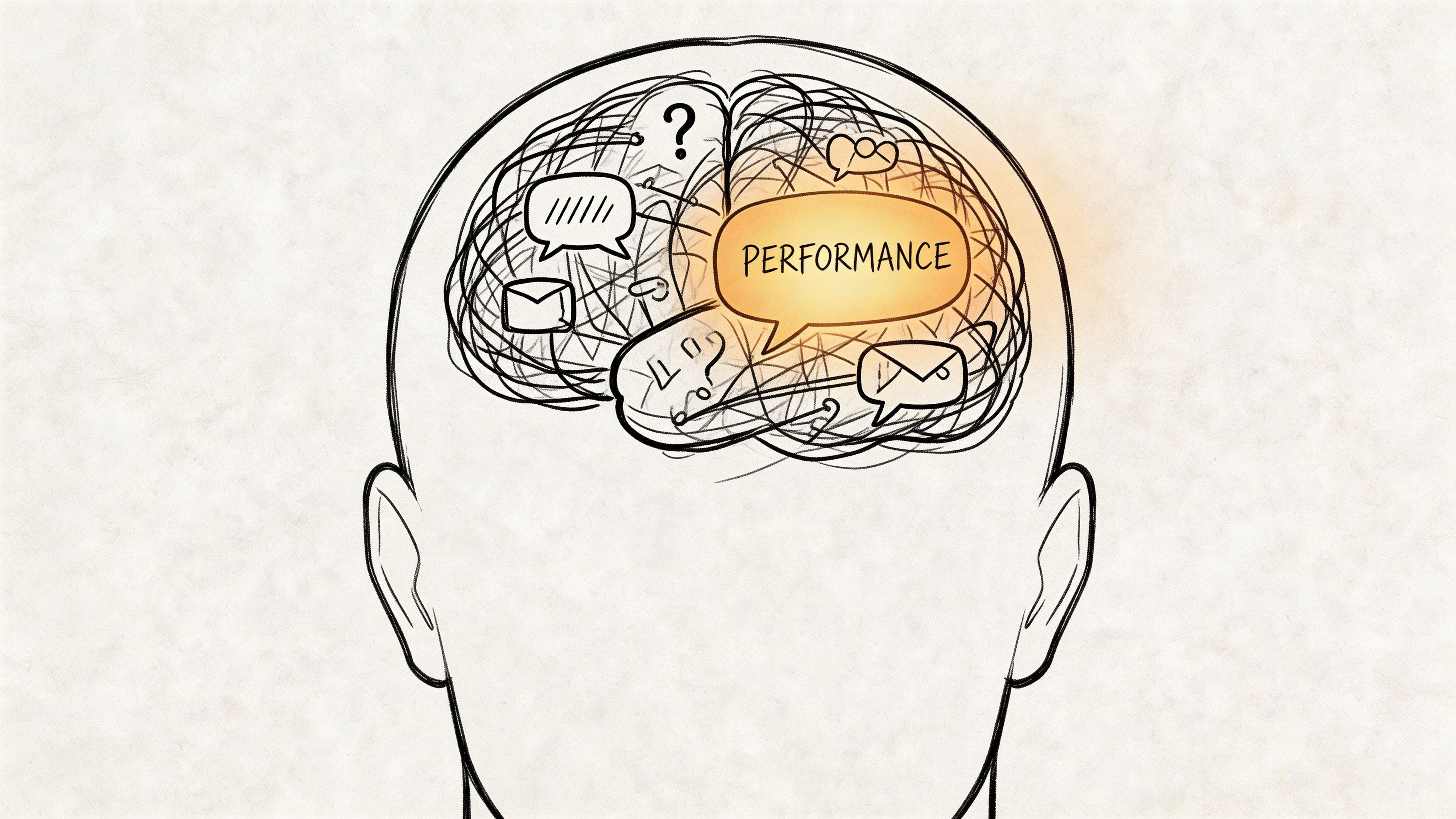
Sensory input steals processing power
If the room is loud, the lights are bright, someone is tapping a pen, and a second person cuts in halfway through your sentence, your brain may already be close to capacity before the social part begins.
Think of your attention like a laptop with too many tabs open. The system still works. It just gets slower, hotter, and less reliable.
Common signs of sensory communication overload include:
- Delayed responses: You heard the words, but your brain needs time to separate them from everything else.
- Losing your sentence halfway through: New input interrupts the path you were building.
- Shutdown after talking: The conversation ends, then your body suddenly feels wiped out.
- Irritation that seems "too big": Often it isn't about the person. It's accumulated overload.
If emotional intensity joins the pile, the load gets even heavier. This explainer on emotional dysregulation in adults can help connect the dots between overwhelm and communication trouble.
Executive function affects conversation too
Executive function is the brain's coordination system. It helps you hold information, switch topics, organize thoughts, and respond in sequence.
Conversation asks for all of that at once.
You may need to:
1. Listen to the question.
2. Ignore irrelevant noise.
3. Figure out what the person really means.
4. Search memory for the right example.
5. Decide how honest to be.
6. Choose a tone.
7. Answer fast enough that the pause doesn't feel "weird."
That's a lot. If executive function is uneven, conversation can feel like trying to direct airport traffic with one walkie-talkie.
Deep focus can clash with fast conversation
Many neurodivergent people think in a detailed, narrow beam instead of a broad floodlight. That can be a strength. It supports pattern recognition, depth, precision, and strong interest-based learning.
It can also make quick topic jumps feel physically jarring.
A short comparison helps:
| Communication demand | What it can feel like internally |
|---|---|
| Rapid back-and-forth | Constant forced task-switching |
| Vague question | Too many possible answers at once |
| Interruption | Your thought file gets closed before saving |
| Group discussion | Multiple moving targets with no clear order |
So if you've been wondering why is communication so hard for me, your brain may not be failing at conversation. It may be processing in more detail, more directly, or with less spare bandwidth than the situation assumes.
The Social Puzzle of Different Communication Styles
A lot of painful communication moments aren't about saying the wrong thing. They're about two people using different social maps and assuming the other person is using the same one.
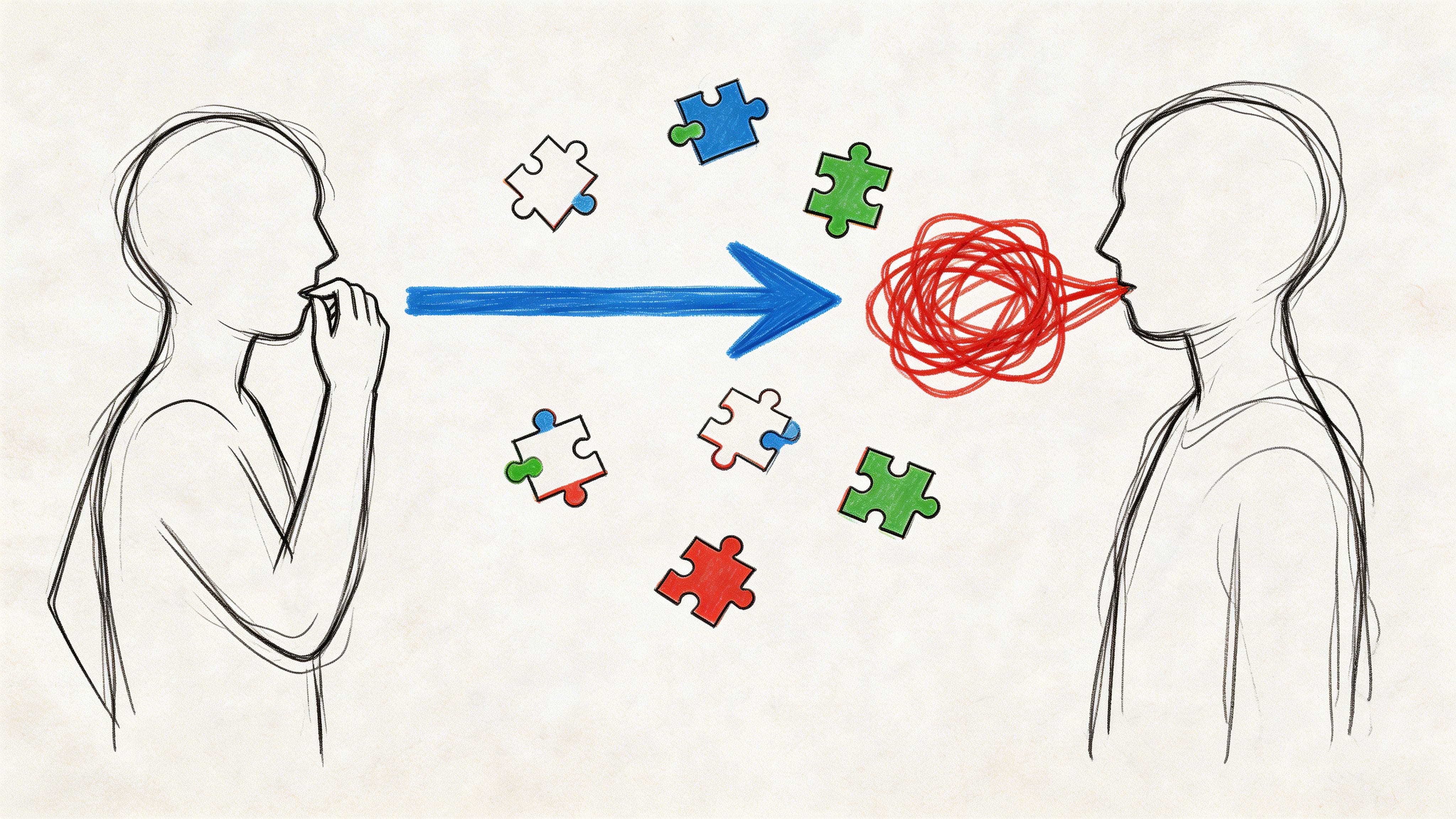
You might think you're being clear. The other person thinks you're blunt. They think they're being polite. You hear them as vague or passive-aggressive.
Neither side necessarily means harm. But the mismatch is real.
Finding communication harder than it should be? tonen can help.
tonen offers conversation scripts, Reply Helper, Perspective Helper, Debrief, Phone Call Mode and Calm Kit. Start with 21 free scripts on iPhone. Optional Premium unlocks more features.
Download on the App StoreAvailable on iOS.
The double empathy problem in plain language
Older models treated autistic communication as if one side lacked skill. A more useful view is that misunderstanding often runs both ways.
That changes the frame completely.
It suggests that many communication struggles come from style mismatch, not from one person being socially defective.
> When two people use different communication norms, each person can misread the other. That's a translation problem, not proof that one of them is broken.
Different styles often value different things
Many neurodivergent people prefer communication that is direct, unadorned, and specific. Many neurotypical settings reward communication that is softened, implied, and layered with social cushioning.
That difference can create friction fast.
For example:
- You say, "I need the instructions in writing."
- They hear, "You're difficult."
Or:
- They say, "It might be nice if this got done soon."
- You hear a casual preference, not an actual deadline.
Neither response is irrational. The problem is that the rules were different and mostly unspoken.
Why this matters for self-esteem
If you've spent years being told that your tone is wrong, your timing is off, or your responses are "too much" or "not enough," you may have built a whole identity around being bad at communication.
That identity can be inaccurate.
Try a different question:
- Not "What's wrong with me?"
- But "What style am I using, what style are they using, and where is the mismatch?"
That question creates room for repair.
A simple reframe for past conversations
When you look back at old misunderstandings, sort them into this quick model:
| What happened | Possible reframe |
|---|---|
| You answered directly and they got offended | They may have expected subtext |
| You needed time and they thought you were disengaged | They may equate speed with interest |
| You were direct and they called you rude | They may value softening over precision |
| They were indirect and you missed the cue | They may assume hints are obvious |
This doesn't erase hurt. It does reduce shame.
How Anxiety and Past Experiences Shape Your Responses
Sometimes communication feels hard because your body learned that speaking can be costly.
Maybe you were corrected constantly as a kid. Maybe teachers called you disrespectful when you were confused. Maybe friends laughed when you interpreted something directly. Maybe a manager praised "professional communication" but only meant "communicate like me."
That history adds weight to every new conversation.
Your nervous system remembers patterns
A person doesn't need one dramatic event to become tense around communication. Repetition is enough.
You speak. Someone winces.
You ask for clarification. Someone gets impatient.
You explain your intention. Someone says you're overreacting.
After enough loops like that, your brain starts preparing for impact before the conversation even begins.
That's one reason social anxiety can feel so physical. Tight chest. Blank mind. Sudden heat. Frozen face. Urge to escape.
If that pattern feels familiar, structured anxiety learning resources can help you understand the body side of anxiety, not just the thought side.
Why masking can become automatic
Masking often starts as protection.
You learn to smile when confused. Nod when lost. Force eye contact. Laugh half a second after everyone else. Rehearse texts. Rewrite emails. Keep your "too direct" version hidden.
The cost is that you may stop knowing which parts are adaptation and which parts are you.
> A useful question: Are you struggling to communicate, or are you struggling to communicate while bracing for misunderstanding?
The loop that keeps repeating
Communication anxiety often follows a pattern like this:
1. Anticipation
You expect the conversation to go badly.
2. Overcontrol
You script everything or say almost nothing.
3. Stress response
Your thinking narrows. You lose words or miss cues.
4. Aftermath
You replay it for hours and conclude you failed.
5. Avoidance
Next time feels even bigger.
If you want a gentle mental health framework for interrupting that cycle, this guide on cognitive behavioural therapy for social anxiety gives practical language for spotting patterns without blaming yourself.
Practical Strategies to Reduce Communication Stress
You don't need a whole new personality. You need lighter systems.
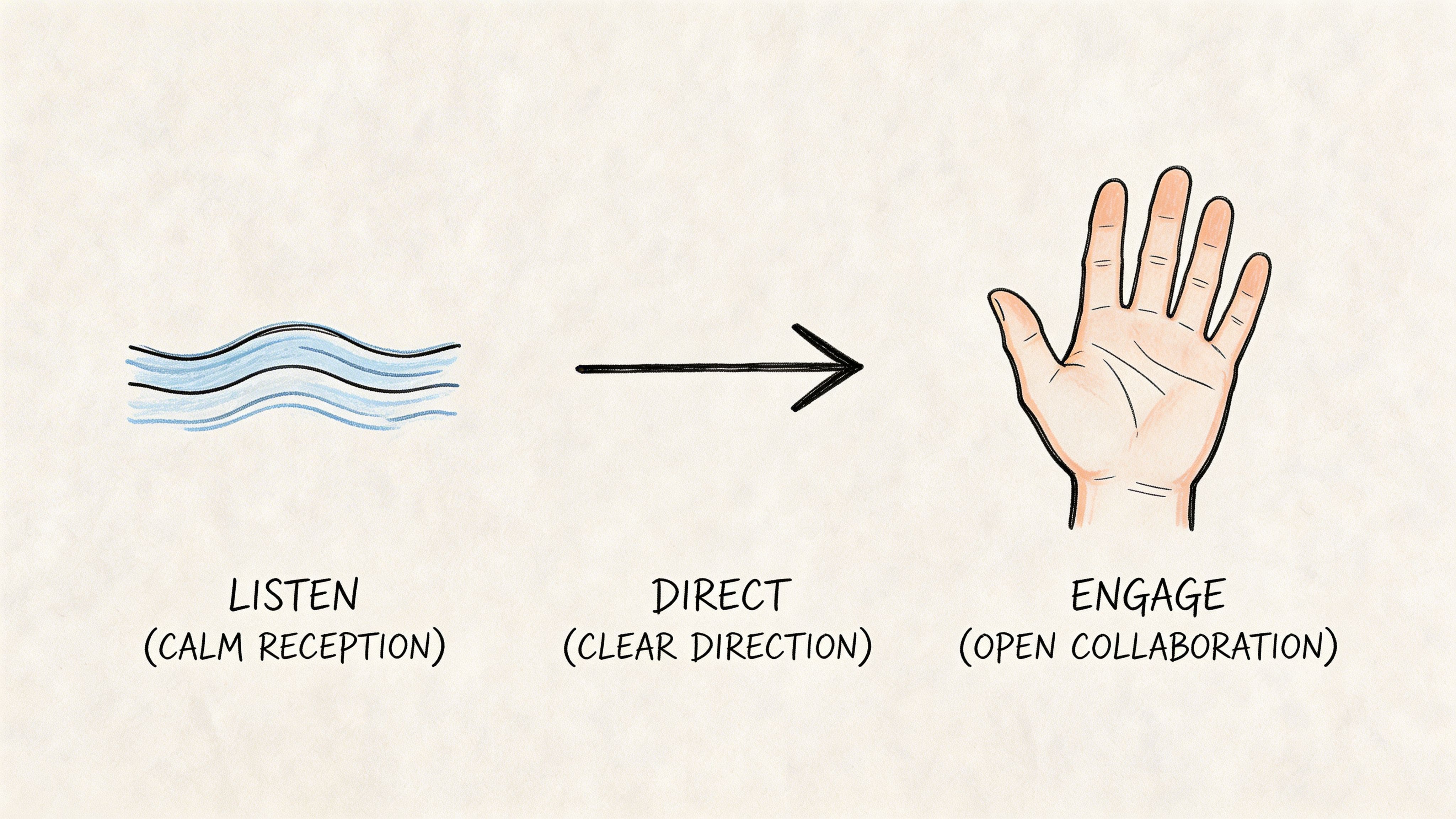
The best tools reduce cognitive load before, during, and after a conversation. They help your brain do less in real time.
Before the conversation
A script doesn't make you fake. It makes the task smaller.
That matters because even experts routinely overestimate what other people will understand. In the classic tapping experiment described in MIT's explanation of the Curse of Knowledge, tappers expected listeners to identify songs far more often than listeners were able. The gap was substantial, with a high percentage expected versus a very low actual recognition. If people misjudge understanding that badly in a simple task, it makes sense to prepare your wording ahead of time.
Try this low-load prep:
- Write one goal: "I need to ask for more time," not "I need to explain everything perfectly."
- Draft two lines: One opening sentence and one clarifying sentence.
- Choose one example: Concrete beats exhaustive.
- Plan one exit line: "I need a minute to think. Can I come back to this?"
If your conversations happen in work settings, these client communication best practices can be adapted into plain, structured language even if the "client" is a teacher, manager, parent, or friend.
During the conversation
You do not have to answer at top speed to count as competent.
Use friction-lowering phrases such as:
- Buying time: "Let me think for a second."
- Requesting precision: "Can you say what you mean more directly?"
- Checking interpretation: "I want to make sure I understood."
- Reducing overload: "Can we do one question at a time?"
> "Can you put that in a more concrete way?" is often more useful than pretending you understood.
Another tool is channel switching. If spoken conversation gets muddy, move it.
You can say:
| Situation | Lower-load alternative |
|---|---|
| Too much verbal detail | "Could you send that in writing?" |
| Emotions rising | "I want to respond carefully. I'll text you after I think." |
| Group discussion is chaotic | "I can discuss this better one-on-one." |
| You're losing your words | "I know what I mean, but I need a minute to phrase it." |
After the conversation
Post-conversation care matters. Many people skip it, then wonder why they dread the next interaction.
Try a short reset:
- Do a body check: jaw, shoulders, breath, stomach.
- Write what occurred: not your fear version, the observable version.
- Separate awkward from harmful: not every imperfect exchange was a disaster.
- Save useful phrases: if a sentence worked once, keep it.
If sending messages is a major stress point, this guide on getting help sending messages without anxiety offers practical ways to simplify digital communication too.
If you've been asking why is communication so hard for me, a good answer is often this: because you've been trying to do a high-load task without enough supports. Supports aren't cheating. They're access tools.
Using Tools Like tonen for Practice and Support
Sometimes the barrier isn't insight. It's implementation.
You may understand your patterns perfectly and still freeze when you need words fast. That's where structured tools can help.
What support looks like in practice
A useful communication tool should reduce decisions, not create more of them.
That usually means it helps with a few specific jobs:
- generating a starting sentence
- adjusting tone without rewriting from scratch
- offering a concrete opt-out line
- giving script preparation space
- helping during moments of overwhelm
That's the logic behind tonen's conversation scripts for neurodivergent people. The app includes a Scripts Library with numerous prompts across work, family, health, school, and social situations. Each script includes a few lines to try, an opt-out line, an ask-for-support option, and tone choices such as Direct, Warm, Firmer, and Softer.
Why this kind of tool can help
A tool like this is useful because it lowers three common communication burdens at once.
First, it reduces blank-page stress. You don't have to invent wording from zero.
Second, it makes tone more visible. If tone has always felt mysterious, seeing one message phrased in different ways can clarify the hidden rules.
Third, it gives your body a rehearsal path. For rehearsal, choose a script, adapt the words and read them aloud yourself if that is useful. You can also practise with someone you trust. That matters when your nervous system tends to panic under pressure.
There's also a Perspective Helper for generating gentle interpretations of what someone else may have meant, plus a Calm Kit with breathing, grounding, body scan, and visualization tools for overwhelm moments.
> Tools like this aren't about making you more "normal." They help you communicate with less improvisation and less strain.
Finding Your Authentic Communication Style
The end goal isn't to become flawlessly smooth. It's to communicate in ways that are honest, sustainable, and kind to your nervous system.
That may mean preferring text over calls. It may mean asking for written instructions, choosing one-to-one conversations over group chatter, or being openly direct with people who appreciate clarity. It may mean you stop apologizing for needing extra processing time.
Your style doesn't have to look standard to be valid.
A few signs you're moving in the right direction:
- You feel less drained after ordinary conversations
- You understand your limits sooner
- You ask for clarity instead of guessing
- You use supports without shame
- You judge yourself less harshly when an interaction is awkward
If communication difficulties significantly affect your work, relationships, or mental health, extra support can help. A neurodiversity-affirming therapist, coach, educator, or speech-language professional can help you build tools that fit your actual brain.
You are not too much. You are not failing at being a person. If communication has always felt hard, there is usually a reason. Once you understand that reason, you can stop forcing yourself into methods that drain you and start building ones that fit.
If you want practical support, tonen offers low-cognitive-load conversation help for neurodivergent people, including ready-to-use scripts, tone options, script preparation, perspective support, and calming tools for overwhelm. It's one way to make hard conversations feel more manageable without asking you to mask harder.