Making friends when you have ADHD can feel like you showed up to a party where everyone else got a secret rulebook you never received. The key to success with ADHD and making friends is to first understand how your brain's unique wiring—traits like impulsivity, conversational detours, and big emotions—impacts social situations, and then to build specific, practical strategies that work with your brain, not against it. This guide provides actionable steps, from low-pressure conversation starters to systems for maintaining long-term connections, helping you build authentic friendships without the burnout.
This isn't about fixing something that's broken. It's about learning the specific operating system your brain runs on so you can build the social life you want and deserve.
Why Making Friends With an ADHD Brain Feels Different
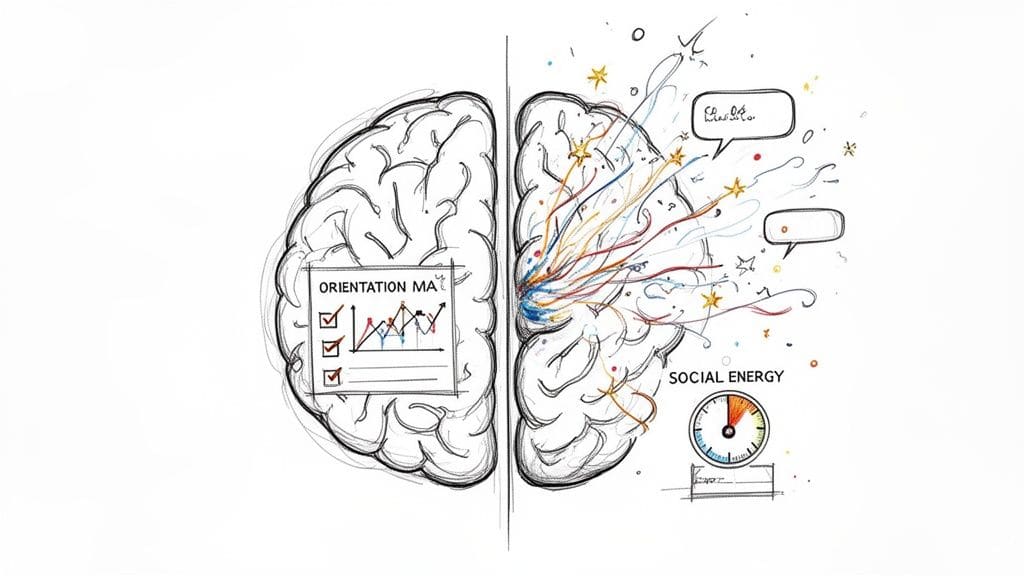
If you have ADHD, you've probably felt out of sync in social situations. Maybe you get so excited you interrupt someone, your mind zips off on a tangent mid-story, or you express an emotion with an intensity that seems to startle others. Vague advice like "just be yourself" often falls flat because it completely ignores the real, neurological reasons why an ADHD brain experiences the world differently.
Your Social Operating System
The most important step you can take is to stop viewing ADHD traits as character flaws and start seeing them as features of your brain's unique operating system. Many of these traits are neutral, but they can be easily misinterpreted by people who don't understand what's going on under the hood.
This is a classic problem for many of us, where our internal experience doesn't match the external perception. The table below breaks down some of the most common ADHD social challenges and offers a more proactive way to think about them.
ADHD Social Challenges and Proactive Solutions
| Common ADHD Challenge | How It's Often Perceived | A Proactive Solution to Try |
|---|---|---|
| Impulsivity (e.g., interrupting) | Rude, not listening, trying to dominate the conversation. | Pause and take a breath before you speak. If you do interrupt, a quick "Sorry, I got excited—please finish your thought!" can work wonders. |
| Inattention (e.g., mind wandering) | Bored, disinterested, not paying attention. | Try a subtle fidget or doodle to keep your brain engaged. Asking clarifying questions can also help pull your focus back. |
| Emotional Intensity (e.g., "big" reactions) | Overly dramatic, "too much," emotionally unstable. | Learn to recognize your early emotional cues. Give yourself permission to take a short break from an intense conversation if you need it. |
| Time Blindness (e.g., being late or forgetting plans) | Unreliable, disrespectful, don't care about others' time. | Set multiple, loud alarms. Put plans in a shared digital calendar immediately, and tell new friends, "I'm bad with time, so please nudge me!" |
Looking at challenges through this lens isn't about making excuses. It's about gathering honest data so you can build strategies that actually work for you, not against you.
> The journey of making friends with ADHD isn't about becoming someone else. It's about learning to work with your brain's unique wiring, not against it, to build connections that feel authentic and sustainable.
Managing emotional intensity gets easier with structured ADHD emotional regulation tools and scripts.
A New Framework for Connection
Instead of forcing your brain to follow neurotypical social scripts that feel unnatural and exhausting, you can build a new framework that honors your needs. This means actively managing your energy and finding ways to express your authentic self without causing burnout or misunderstandings. It's also about remembering that being a neurodivergent individual comes with a whole host of strengths, too.
A really helpful starting point is the social energy budget. Think of it just like a financial budget: you only have a finite amount of social energy to spend each day or week. Some interactions are high-cost (like big parties or formal networking events), while others are low-cost (a one-on-one chat with a trusted friend).
By paying attention to what drains you versus what energizes you, you can make more intentional choices about your social life. This helps you break the classic boom-and-bust cycle of over-socializing and then needing to hide for days to recover. This simple reframing is a game-changer in the challenging but rewarding process of managing ADHD and making friends.
Mastering the Art of Conversation
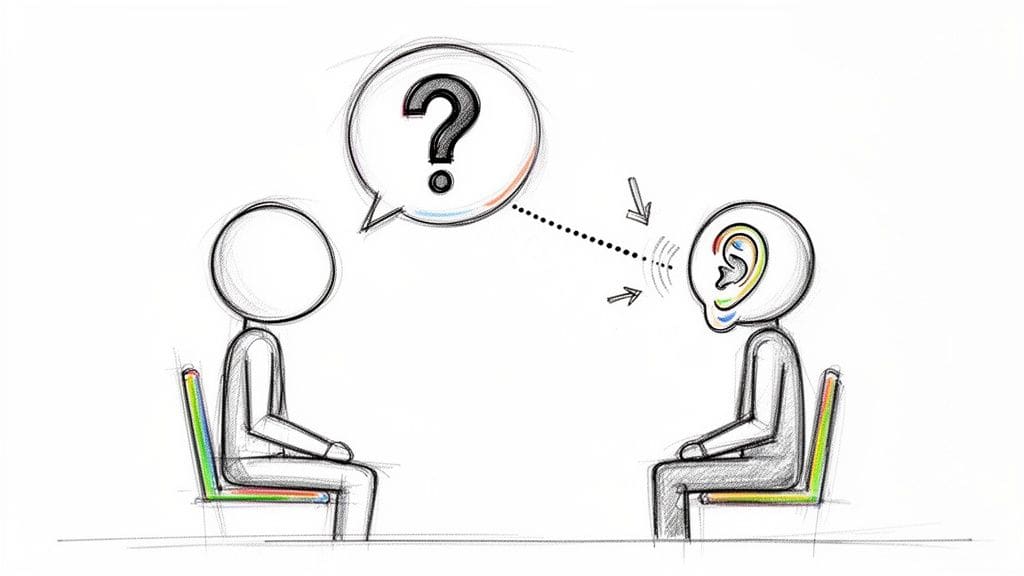
Let's be honest, "just be yourself" is terrible advice for making friends when you have ADHD. So let's ditch the vague stuff and get into the actual mechanics of a conversation—a common pain point when you're navigating ADHD and making friends.
Success here isn't about being perfect. It's about having a real toolkit you can rely on: low-pressure conversation starters, listening techniques that work for a wandering mind, and graceful ways to recover when you inevitably have a social hiccup. It's about learning to ask open-ended questions that invite stories, not just "yes" or "no" answers, and then practicing those skills in low-stakes situations to build real confidence.
Think of it like building a muscle. Moving past surface-level chats takes practice. The more you engage in these small social moments, the more natural and less draining the whole process will start to feel.
Low-Pressure Conversation Starters
That frozen feeling when you're trying to think of something to say? It's paralyzing. The key is to have a few go-to, open-ended questions in your back pocket that take the pressure off.
These questions work because they shift the focus to the other person and their experiences. This gives your brain something concrete to do instead of just spinning in anxiety.
Here are a few starters you can adapt to almost any situation:
- At a Hobby Group or Class:
- "What first got you interested in [the hobby/topic]?"
- "I'm pretty new to this. What's one thing you wish you knew when you started?"
- "That [piece of equipment/technique] you're using looks interesting. How does it work?"
- At a Work or Networking Event:
- "What's been the most interesting project you've worked on recently?"
- "Besides work, what's something you're passionate about?"
- "This is a big event! Have you been to any talks you'd recommend?"
These kinds of questions give people room to tell a story, which gives you way more material to work with for follow-up questions. And if you're in a party setting for something like a 2026 event, you could even try some fun icebreaker games for parties to kickstart things and make networking less daunting.
Active Listening for the ADHD Brain
Being told to "just listen" is useless advice when your brain is wired for speed and novelty. For a mind prone to wandering, active listening requires specific, actionable techniques to keep you anchored in the conversation.
It's not about forcing your brain to be still; it's about giving it a helpful job to do.
> Don't fight your brain's urge to jump ahead. Instead, channel that energy into listening for the 'emotional headline' of what someone is saying—the feeling behind their words. This gives your focus a target.
Try these ADHD-friendly listening strategies:
1. Become a Detective: Listen with the specific goal of finding one interesting detail you can ask about later. This turns listening from a passive waiting game into an active hunt.
2. The "Mindful Nod": Physically nodding doesn't just show you're engaged; it also provides kinetic feedback that can help keep you present in your own body and focused on the speaker.
3. Reflect and Clarify: Briefly summarize what you think you heard. Saying, "So, it sounds like you were frustrated with the project because…" does two things: it confirms you understood and gives your brain a second to catch up and lock back onto the conversation.
These simple actions provide just enough stimulation to help your brain stay engaged without derailing the chat. For a deeper dive into these and other techniques, check out our detailed guide on how to improve your conversation skills.
Gracefully Recovering from Social Hiccups
Interrupting, oversharing, zoning out... it happens. With an ADHD brain, these moments are not a matter of if, but when. The real difference between an awkward moment and a genuine connection is how you handle the recovery.
Having a few simple scripts ready can turn a moment of panic into an opportunity to connect.
Example Scenarios and Recovery Scripts:
- You interrupt someone out of excitement:
- What to say: "Oh my gosh, I'm so sorry, my brain just got so excited about your point that it jumped ahead! Please, what were you about to say? I really want to hear it."
- Why it works: It validates their point, explains your action without over-apologizing, and puts the focus right back on them.
- You realize you've been oversharing:
- What to say: "Wow, I just went off on a tangent there, didn't I? Thanks for listening. Anyway, enough about my [topic], I'd love to hear more about your experience with..."
- Why it works: It shows self-awareness and gracefully pivots the conversation back to them.
- You zoned out and missed what they said:
- What to say: "I'm so sorry, my brain just went on a little side quest for a second and I missed that last part. Could you say that again? It sounded important."
- Why it works: It's honest, relatable, and shows you value what they were saying enough to ask them to repeat it.
Practicing these skills is everything. By turning social interaction into a series of manageable steps, you demystify the entire process. Mastering conversation is a crucial part of building better relationships, and it's a skill you can absolutely develop.
Finding it hard to make friends with ADHD? tonen can help.
tonen offers conversation scripts, Reply Helper, Perspective Helper, Debrief, Phone Call Mode and Calm Kit. Start with 21 free scripts on iPhone. Optional Premium unlocks more features.
Download on the App StoreAvailable on iOS.
Building Resilience to Rejection
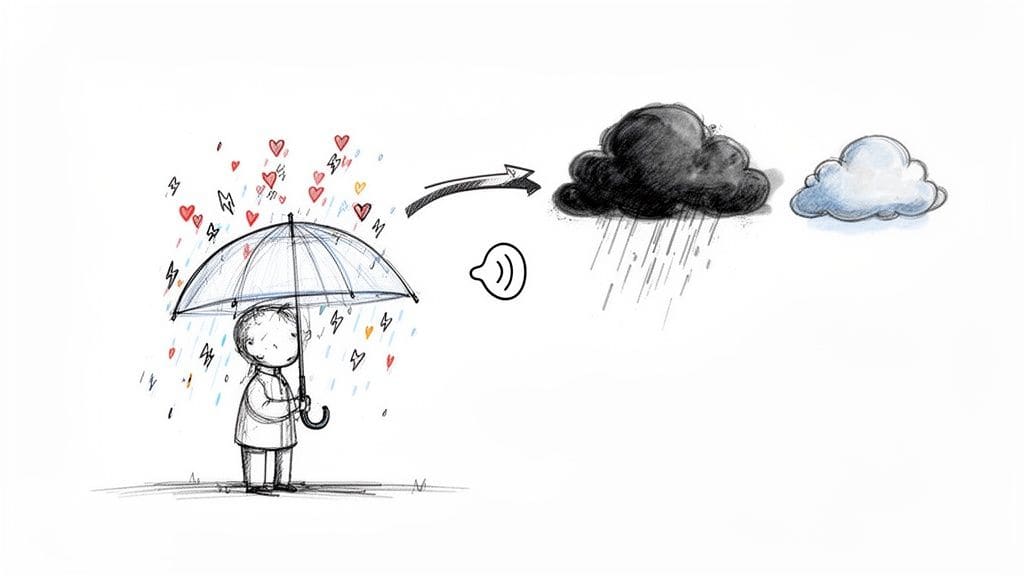
The sting of social rejection can feel almost physical, especially for those of us with ADHD. Building resilience is one of the most important skills for navigating the world of friendships. It means looking the reality of Rejection Sensitive Dysphoria (RSD) straight in the eye, validating how much it hurts, and then building a toolkit to handle it.
This isn't about blaming ourselves. It's about empowerment. It's about reframing what feels like a catastrophic failure into a simple data point—an opportunity to learn and grow.
A huge part of this is understanding why some ADHD traits, like impulsivity or missing a subtle social cue, can be misinterpreted by others and create friction. Instead of internalizing rejection as proof that you're flawed, you can learn to shift your perspective. It's the difference between the catastrophic thought, "They all hate me," and a more neutral observation like, "Our communication styles just didn't click in that moment."
Understanding the Sting of Rejection
If a missed text or a lukewarm response feels like a gut punch, you're not being dramatic. For many with ADHD, the emotional reaction to perceived rejection is intensely, disproportionately painful. This heightened sensitivity, often called Rejection Sensitive Dysphoria (RSD), can turn the normal ups and downs of socializing into an emotional minefield.
This experience often starts young. Systematic reviews show that children with ADHD face much higher rates of peer rejection, bullying, and social exclusion. Studies have consistently linked ADHD to social challenges, with some kids being disliked by their peers within just minutes of meeting them.
From Rejection to Reframing
Since you can't control how other people react, your power lies in controlling how you interpret and respond to those reactions. This is where cognitive reframing comes in. It's a powerful technique for challenging the automatic negative thoughts that rejection triggers, and it's a conscious effort to find a different, more balanced way of looking at a situation.
Instead of letting your brain spiral, you can practice asking yourself a few key questions in the moment:
- Is there another possible explanation? Maybe they didn't text back because they're busy, not because they're mad at you.
- Am I assuming the worst-case scenario? Your brain might leap to "I'm so annoying," but the reality could just be a simple misunderstanding.
- What can I actually learn from this? Perhaps the interaction just highlighted a social setting or communication style that isn't a good fit for you. And that's okay.
This isn't about pretending rejection doesn't hurt. It absolutely does. It's about containing the emotional fallout so it doesn't derail your entire effort to connect with people.
> The moment you feel that pang of rejection, pause. Take a deep breath. Your first thought is a draft, not a fact. You have the power to edit it.
Managing these intense feelings is a skill you can build over time. If you find yourself getting overwhelmed by strong emotions in social situations, learning some practical grounding techniques can be a lifesaver. For more strategies, check out our guide on how to regulate your emotions effectively.
Building a Social Resilience Toolkit
Resilience is a muscle. It's built through practice, not by trying to avoid all potential pain. Your toolkit should include both in-the-moment strategies for when you feel that sting and long-term approaches to minimize how often it happens.
Here are a few actionable tools to get you started:
- Grounding Techniques: When a wave of rejection-fueled anxiety hits, bring your focus back to the present moment. Try the 5-4-3-2-1 method: silently name five things you can see, four things you can touch, three things you can hear, two things you can smell, and one thing you can taste. This yanks your brain out of the emotional spiral and anchors it in your physical environment.
- Narrative Shift Practice: Grab a notebook. Write down a recent moment of perceived rejection. Next to it, write your immediate, automatic thought (e.g., "I said something stupid and now they think I'm weird"). Now, challenge yourself to write at least two alternative, more neutral explanations (e.g., "They seemed distracted, maybe they had a long day," or "Our senses of humor might just be different").
- Identify Your Safe Social Ecosystems: Not every social environment is for you. Instead of trying to force yourself to fit in everywhere, seek out places where your authentic self is more likely to shine. These often include:
- Shared Interest Groups: Think book clubs, D&D campaigns, or hiking groups. The activity is the focus, and connection happens naturally around it.
- Neurodivergent Communities: Online forums or local meetups for neurodivergent adults can be incredibly validating and low-pressure.
- Volunteer Opportunities: Working alongside others toward a common goal is a fantastic way to build connection without the pressure of small talk.
By proactively choosing environments that align with your interests and communication style, you drastically reduce the chances of painful social mismatches. This proactive approach is a cornerstone of successfully managing ADHD and making friends for the long haul.
How to Maintain Friendships Long-Term
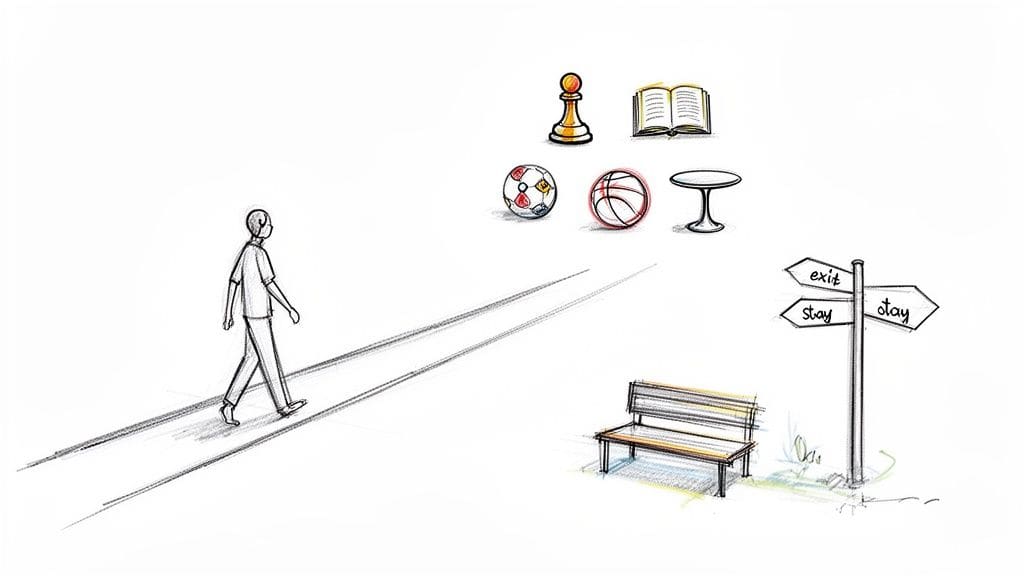
Making a new friend is an incredible feeling. But keeping that connection going long-term? That's where the real work—and the real reward—truly lies. For those of us with ADHD, common traits like object permanence issues ("out of sight, out of mind") can make this part of friendship feel like an uphill battle.
The secret isn't to force your brain to be something it's not. It's about building practical, personalized systems that do the heavy lifting for you. This way, you can work with your ADHD brain to combat hurdles like forgetting to reply to texts or missing important dates, instead of constantly fighting against it.
Creating Your Friendship Maintenance System
To counteract the "out of sight, out of mind" tendency, you have to find ways to bring your friends back into sight, intentionally. This is all about creating external reminders and lowering the activation energy it takes to reach out. Think of it as building a supportive scaffold for your social life.
A great place to start is using the digital calendar you already have for more than just work meetings.
- Schedule "Friend Check-ins": Set a recurring reminder—maybe weekly or bi-weekly—to text two or three friends. Just a simple calendar event that says "Text Sarah & Ben" can make all the difference.
- Log Important Dates: The moment a friend mentions a birthday, a big work presentation, or even a nerve-wracking doctor's appointment, pull out your phone and add it to your calendar with a reminder. A simple "Good luck on your presentation!" text can mean the world.
- Create Message Templates: That feeling of paralysis when trying to write the "perfect" text is real. Beat it by keeping a note on your phone with pre-written, low-effort messages you can copy, paste, and send.
> Key Takeaway: Your brain doesn't have to hold all the information. Let your tools do the heavy lifting. The goal is consistent connection, not perfect, spontaneous recall.
For anyone looking to build these skills and nurture lasting connections, it can be helpful to explore self-help resources for resilience.
Below is a simple system you can start using today. It's designed to externalize the mental load of remembering, making it easier to show up for your friends consistently.
Friendship Maintenance System for the ADHD Brain
| Challenge Area | System/Tool | Example Action |
|---|---|---|
| Object Permanence | Recurring Calendar Events | Set a bi-weekly reminder titled "Check in with 3 friends." |
| Forgetting Dates | Calendar App | When a friend mentions their birthday, add it immediately with a reminder. |
| Executive Dysfunction | Message Templates (Notes App) | Save pre-written texts like, "Thinking of you! How's your week going?" |
| Time Blindness | Multiple Alarms | For a meetup, set alarms for 1 hour before, 30 mins before, and "Leave NOW." |
This isn't about being robotic; it's about being reliable. These systems free up your mental energy so you can focus on the actual connection when you're with your friends.
Managing Your Social Energy and Boundaries
Maintaining friendships isn't just about remembering to text back. It's also about managing your own social battery to avoid burnout. If every interaction leaves you completely drained, you'll naturally start to avoid them.
Setting clear boundaries is an act of self-preservation that ultimately protects your friendships. Learning to say "no" or suggest an alternative is a vital skill. It's more than okay to communicate your needs. For a deeper look at this topic, you can learn more about setting boundaries with friends in our dedicated article.
Examples of Setting Boundaries:
- Instead of pushing through exhaustion: "I'm so glad you invited me out! My social battery is totally dead tonight, but I'd love to catch up over coffee this weekend. Are you free Saturday?"
- When a big group feels like too much: "A big party sounds fun, but I do better one-on-one. Could we maybe grab dinner just the two of us next week instead?"
Navigating Conflict and Repairing Ruptures
No friendship is perfect. Misunderstandings happen, and sometimes, our ADHD traits might be the cause. Maybe you were late because of time blindness, or you seemed distracted during an important conversation because your mind was racing.
The strength of a friendship isn't measured by the absence of conflict, but by the willingness to repair it. Owning your part in a misunderstanding can be incredibly powerful.
Apology Scripts for Common ADHD-Related Hiccups:
- When you're late: "I am so sorry for being late. My time blindness really got the better of me today, and I know that can feel disrespectful. I really value your time and will set extra alarms next time we meet up."
- When you interrupt: "I'm so sorry, I totally interrupted you. I got really excited about what you were saying. Please, finish your thought—I want to hear it."
- When you forget something important: "I feel awful that I forgot about [the event/date]. It completely slipped my mind, and that's on me. It's not a reflection of how much I care about you. Can you tell me how it went?"
These scripts aren't excuses; they are explanations that validate the other person's feelings while being honest about your own challenges. This kind of open communication is a cornerstone of building lasting relationships. It shows that your friendships are built on understanding and repair, not on being flawless.
Where to Find Your People and Thrive Socially
Here's one of the most powerful shifts you can make in your social life: stop asking, "How can I fit in?" and start asking, "Where do I belong?"
Finding success with friendship isn't about twisting yourself into a pretzel to meet neurotypical expectations. It's about finding social ecosystems where your brain's unique wiring is an asset, not something you have to apologize for. This means seeking out structured, activity-based places where connections can grow organically, without the constant pressure of painful small talk.
Finding your tribe is all about building a social life that works with your brain, not against it. It starts with self-acceptance and the radical idea that real connection is possible when you put yourself in the right setting. This single change can make friendship feel less like a mysterious puzzle and more like a natural side effect of just having fun.
From Unstructured Anxiety to Structured Connection
Let's be honest: for many of us with ADHD, unstructured social events are a complete nightmare. Big parties or vague invitations to "hang out" can feel paralyzing. The rules are invisible, which kicks social anxiety into high gear and drains your social battery in record time.
The fix? Seek out activities that have a built-in structure. When there's a shared focus—a game, a project, a goal—the pressure to be a sparkling conversationalist just melts away. The connection happens as a byproduct of doing something together.
> Your social life shouldn't feel like a final exam you didn't study for. Find settings where the "rules" are the game, the project, or the trail map. This gives your brain a clear focus and lets friendships bloom naturally.
Think about it. At a board game cafe, the focus is the game. In a hiking club, it's the trail. In a volunteer group, it's the task at hand. These environments provide a kind of social scaffolding that supports connection without demanding constant, draining effort.
Finding Your Social Sweet Spot
The real key is to line up your social life with what you actually love to do. When you're genuinely passionate about something, your ADHD-fueled enthusiasm becomes a magnet for people who share that excitement. This is a game-changing principle for anyone struggling with ADHD and making friends.
Look for these kinds of environments:
- Hobby and Interest Groups: Board game nights, book clubs, Dungeons & Dragons campaigns, or local sports leagues are fantastic. The shared activity gives you an instant, built-in topic of conversation and a common goal.
- Skill-Based Classes: Sign up for a pottery class, a coding workshop, or a language course. Learning and working alongside other people creates a natural sense of camaraderie.
- Neurodivergent Communities: Seeking out spaces specifically for neurodivergent adults, whether online or in person, can be incredibly validating. You'll find a shared understanding that removes the need to mask or overexplain your "quirks." You can finally just *be*.
- Volunteer Organizations: Working for a cause you believe in connects you with people who share your core values. That shared purpose fosters deep bonds with surprisingly little social pressure.
If the thought of joining these groups feels intimidating, dedicated social skills training for adults can give you some practical tools and frameworks to build that initial confidence.
Managing Overwhelm in Group Settings
Even in the perfect setting, social overwhelm is a real risk. An ADHD brain is processing a massive amount of sensory information, and group situations can quickly become too much. Having a plan to deal with this is crucial if you want your social life to be sustainable.
Keep a few of these strategies in your back pocket:
1. Plan Your Exit: Decide on a departure time before you even arrive. Giving yourself a clear out prevents you from staying until you're totally fried. It's perfectly okay to say, "I've had a great time, but I need to head out now!"
2. Take Sensory Breaks: Step away for a few minutes. Go to the restroom, step outside for some fresh air, or just find a quiet corner. This short break can reset your sensory system and give you the energy to re-engage. Think of it as a quick reboot for your brain.
3. Find a Social Anchor: Latch onto one or two people you feel comfortable with. Sticking with them can make a large, chaotic group feel much smaller and more manageable.
Ultimately, the journey of finding friendships is about finding your people—the ones who get you, appreciate your energy, and share your passions. It's a process of curating a social life that fills you up instead of draining you. Start small. Take one step today and look up a local group that sparks your interest. That one small action could be the start of finding a community where you don't just fit in—you belong.
Burning Questions About ADHD and Friendships
Let's be honest: navigating friendships with an ADHD brain brings up some specific, tricky situations. You know the ones. The moments that make you cringe, like realizing you never texted back or wondering how on earth to explain why you just interrupted someone for the third time.
Having a few go-to strategies for these common hurdles can make all the difference. It's not about masking; it's about having a plan so you can show up more confidently and authentically.
How Do I Tell a New Friend I Have ADHD?
This is a big one, but it doesn't need to be a formal, sit-down confession. The best way to share is often casual and in the moment, tying it to a specific behavior. Frame it as a simple piece of context, not a heavy excuse.
Try weaving it into the conversation when it feels relevant:
- If you interrupt them: "Ugh, so sorry, my brain gets so excited and just jumps ahead—total ADHD thing! What were you saying?"
- If you're running late: "I am so sorry I'm late; my ADHD time blindness completely got me today. I really appreciate you waiting."
- If the environment is distracting: "Focusing in loud places is so hard for me. It's part of my ADHD wiring, so I much prefer quieter spots where I can actually hear you."
This approach normalizes your experience and gives your friend useful information without making it a huge deal. It's just part of who you are.
I Forgot to Text Back and Now I'm Paralyzed with Shame. What Do I Do?
This is the classic ADHD shame spiral, fueled by a potent mix of rejection sensitivity and executive dysfunction. The shame can feel massive, but trust me on this: a late reply is almost always better than no reply. Honesty and simplicity are your best friends here.
> The longer you wait, the bigger the mental block grows. The only way out is through. A short, honest message can break the cycle. You don't owe them a novel-length apology; you just need to pop back into their inbox.
Try one of these scripts to rip off the Band-Aid:
- Simple & Sweet: "Oh my gosh, I am so sorry for the massive delay in replying. It's not at all a reflection of how I feel about you! How have you been?"
- Honest & Relatable: "Hey! I saw this, fully intended to reply, and then my ADHD brain just… dropped it. Thinking of you and wanted to say hi!"
- Action-Oriented: "So sorry for the radio silence! I've been totally underwater. Would love to catch up properly—are you free for a quick call this week?"
Are Some Hobbies Better for Making Friends When You Have ADHD?
Absolutely. Hobbies with built-in structure are a game-changer. They give you a shared focus, which takes all the pressure off of maintaining constant, unstructured small talk. The activity itself provides a social "scaffold," allowing connection to happen more naturally.
Think about activities where the goal is clear and shared:
- Board game cafes or D&D groups: The rules of the game become the rules of the social interaction.
- Book clubs or writing workshops: The book or story is the star of the show, giving everyone a built-in topic.
- Sports leagues, hiking clubs, or climbing gyms: The focus is on the physical activity, and conversation happens organically around it.
Choosing something you're genuinely interested in also lets your natural enthusiasm—a classic ADHD strength—shine. That passion is magnetic and attracts people who get excited about the same things you do.
Managing the day-to-day moments of friendship can feel draining. tonen is a mobile app designed to help you communicate with more confidence and less stress. With a library of scripts for tricky situations, a tool to help you see other perspectives, and in-the-moment calming exercises, tonen provides the support you need to build and keep the friendships you deserve. Find clearer, kinder ways to connect on usetonen.com.