If someone makes a rude comment, first consider whether it is safe and useful to respond. You can ask for clarification, state a boundary or leave. A short line such as “What did you mean by that?” gives you an option without promising that the other person will soften or apologise.
A rude comment often lands before your brain has caught up. You hear the words, your stomach drops, and then one of several things happens. You freeze, you go blank, you over-explain, or you reply too sharply and spend the rest of the day replaying it.
The most useful answer to how to respond to rude comments isn't "stay calm" or "just ignore it." It's to have a system that works even when your processing speed drops under stress. For many autistic people, ADHDers, and people with social anxiety, that means a low-cognitive-load approach you can repeat: Assess, Choose, Respond, Calm.
A Neurodivergent-Friendly Framework for Rude Comments
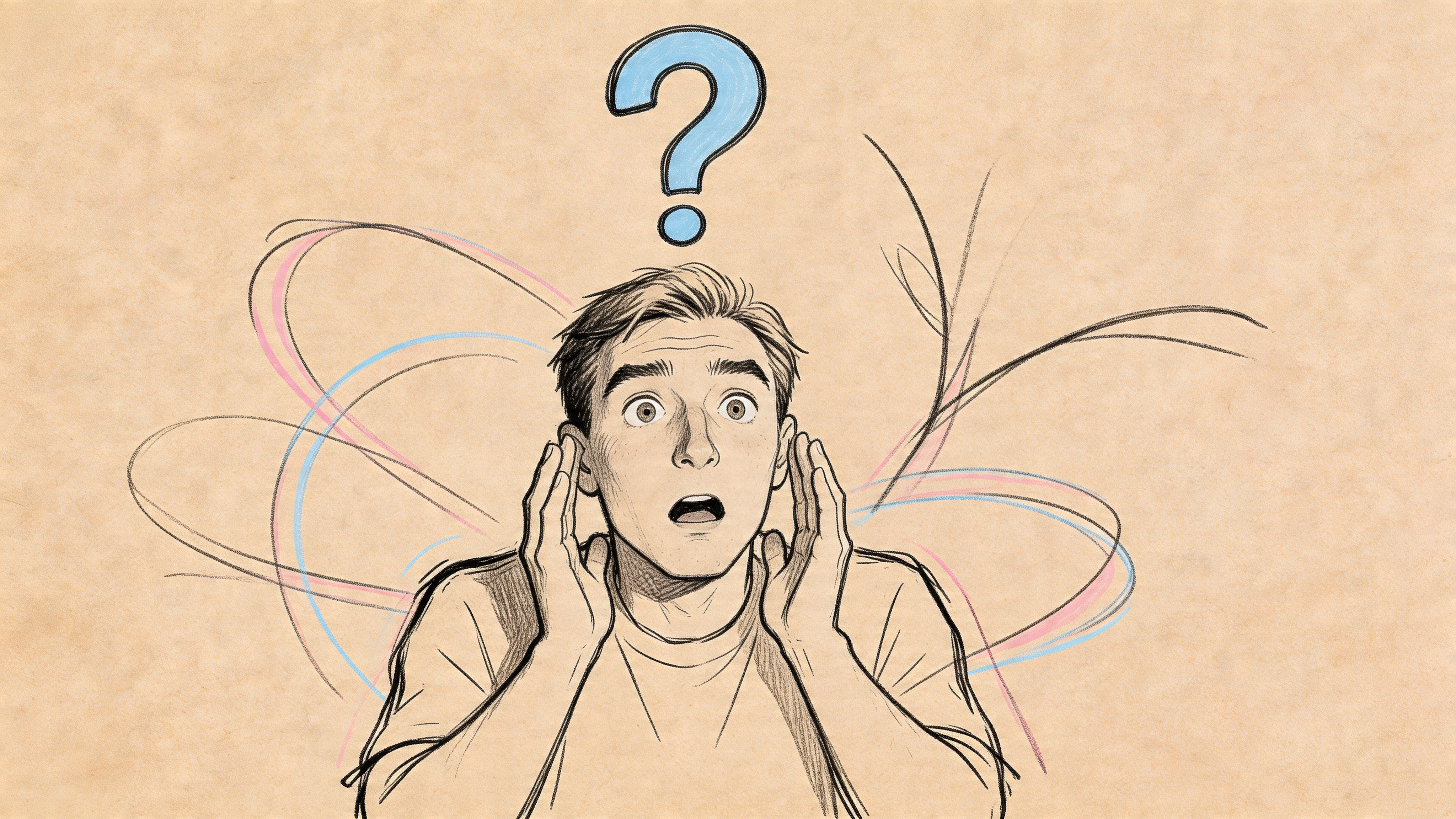
Most advice about rude people assumes you can instantly read subtext, regulate your emotions, and produce the perfect line on command. That's exactly where many neurodivergent people get stuck. A lot of us need a beat to decode tone, sort out intent, and decide whether something was careless, sarcastic, or openly hostile.
The four-part framework
Use this sequence when you're deciding how to respond to rude comments:
1. Assess
Check whether the situation is safe enough to engage. Safety comes before social skill.
2. Choose
Pick your goal. Do you want clarity, a boundary, a repair, or a clean exit?
3. Respond
Use a short script that matches your goal and energy level.
4. Calm
Expect an aftershock. Your nervous system may still be activated even if you handled the conversation well.
> Practical rule: You do not need to answer immediately to answer well.
A lot of neurodivergent communication difficulty isn't a lack of insight. It's timing, overload, and the pressure to perform socially while already stressed. That's why I prefer frameworks that reduce decisions instead of adding more.
What this changes in practice
When you treat rude comments as a decision process rather than a personality test, the interaction becomes easier to handle. You stop asking, "What's the perfect comeback?" and start asking, "What outcome do I want, and do I even want to spend energy here?"
If this dynamic feels familiar, why communication can feel unusually hard for neurodivergent people is often less about not knowing what to say and more about having to process too many variables at once. A usable framework cuts those variables down.
The Pre-Response Safety and Intent Check
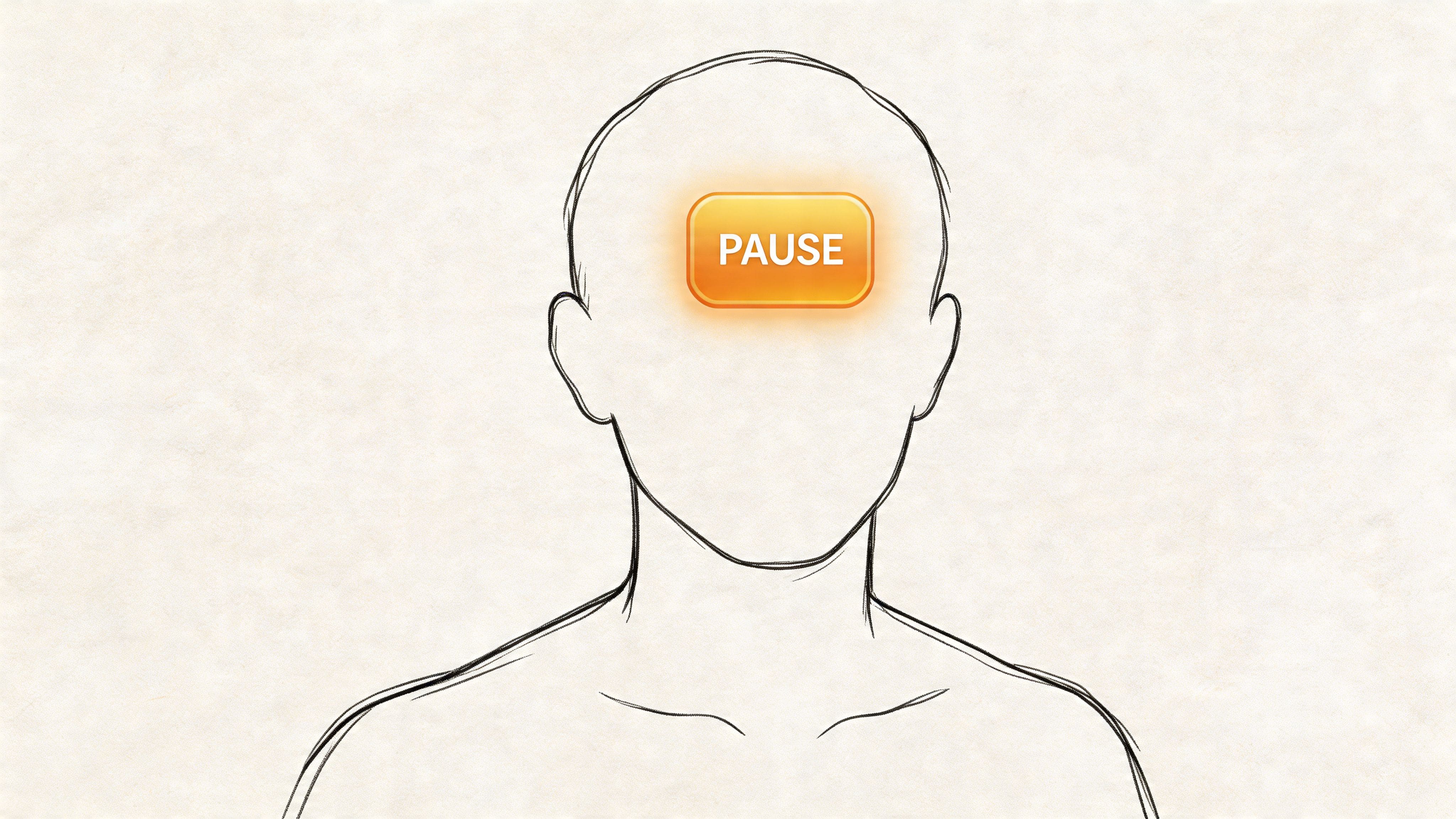
Before words, pause. Not because pausing is elegant, but because it protects you from getting pulled into someone else's speed. A rude person often wants immediacy. You don't have to give it to them.
The fastest useful check is this: Am I safe, what probably happened, and what will this cost me if I engage? If your body is buzzing, your thoughts are fragmented, or the person has power over you in a way that makes confrontation risky, that matters.
Ask these three questions
- Is it safe enough to respond right now
If the person is aggressive, cornering you, mocking you publicly, or escalating, you may need distance before language.
- What is the most likely intent
Some comments are clumsy. Some are joking-but-not-really. Some are designed to dominate. You don't need perfect certainty. You just need a working guess.
- What context am I in
A workplace meeting, family dinner, group chat, and customer interaction all have different stakes. Your response should fit the setting, not just the words.
> If your brain goes blank, that is information. Blankness often means overload, not weakness.
A low-load checklist you can remember
Try this internal script:
- Pause for one breath: Buy yourself one second.
- Name the type: Confused, rude, unsafe, or not worth it.
- Pick one goal: Clarify, stop it, leave it, or revisit later.
That's enough to keep you from spiraling into ten possible interpretations.
A lot of people feel pressure to answer sarcasm or passive aggression on the spot. That's especially hard if you take language at face value or need extra time to interpret whether someone is serious. In such instances, a quick read on context helps. If you struggle to decode whether someone meant the comment as a joke, jab, or serious criticism, this guide on how to tell if someone is serious can give you extra cues to look for.
When not responding is the correct response
There are times when silence is not avoidance. It's conservation.
Choose not to engage when:
- You're nearing shutdown: If speaking will make things worse for you, step out first.
- The person wants an audience: Some people perform rudeness. A private follow-up works better than public sparring.
- There is no relationship to protect: Not every stranger, troll, or repeat boundary-pusher deserves your labor.
What doesn't work well is forcing yourself to improvise while dysregulated. That usually leads to one of two outcomes. You say less than you mean and feel small afterward, or you say more than you intended and have to recover from that too.
Your Script Library for Different Tones and Goals
If you already know the comment crossed a line and you want to respond, the next decision is tone. The same boundary can sound very different depending on whether your goal is warmth, speed, firmness, or minimal friction.
That matters because "assertive" is too broad to be useful. In real life, you may want to be clear without sounding harsh, or kind without sounding available for debate.
Unsure how to respond when someone is rude? tonen can help.
tonen offers conversation scripts, Reply Helper, Perspective Helper, Debrief, Phone Call Mode and Calm Kit. Start with 21 free scripts on iPhone. Optional Premium unlocks more features.
Download on the App StoreAvailable on iOS.
Response scripts for different tones
Here's one scenario: a coworker says, "Wow, you're sensitive."
| Tone | Goal | Sample Script |
|---|---|---|
| Direct | Stop the comment fast | "That comment isn't helpful. Please don't say that to me." |
| Warm | Protect the relationship while setting a boundary | "I know you may not mean harm, but that lands badly for me. Could you phrase it differently?" |
| Firmer | Address a repeated pattern | "I've let this pass before, but I'm not okay with that kind of comment. Stop using it with me." |
| Softer | Buy time while still marking the issue | "I'm not comfortable with that. I'd rather keep this respectful." |
This is why a personal script library helps. You don't need one perfect line. You need several usable ones.
Build your own with Why-Me-Ask
The Why-Me-Ask technique, part of the Kim Constructive Conversations Model, gives a structure that's especially helpful when you want to stay grounded. The sequence is simple: say your Why, explain the Me impact, then make an Ask. The method is described in this guide to the Why-Me-Ask technique for offensive comments, which notes that it increases positive outcomes in difficult conversations.
A basic version sounds like this:
- Why: "I value working well together."
- Me: "That comment felt dismissive."
- Ask: "Could you not use that phrasing with me?"
You can shorten it further when stressed: "I want to keep this respectful. That comment felt dismissive. Please don't repeat it."
> Short scripts are not less mature. They're often more effective because they leave less room for confusion.
If you want a place to collect and adapt phrases by tone, conversation scripts for hard social moments can be a useful model. The key is not memorizing dozens of lines. It's saving a few that match your real voice.
What works better than over-explaining
People often over-explain when they feel misunderstood. I get why. You want the other person to fully understand your internal state before they judge your response.
But for rude comments, over-explaining often weakens your boundary. Better options are:
- State impact briefly
- Name the behavior
- Make one clear request
That's enough. If they're willing to repair, they'll have what they need.
Powerful Phrases and Graceful Exit Strategies
Some moments don't need a full framework. They need a line you can remember while your pulse is climbing.
Three phrases that create pressure without escalating
Try these when you want to slow the interaction down:
- "Could you say that again?"
Good for comments that were rude, but deniable.
- "What do you mean by that?"
Useful when someone is hiding behind vagueness or "just joking."
- "Would it be unreasonable if I asked you not to speak to me that way?"
This can lower defensiveness while still drawing a line.
These phrases work differently from a comeback. A comeback aims to win. These aim to make the other person account for their behavior.
When a strategic apology helps
This surprises people, but sometimes a light apology can disarm tension without surrendering your boundary. Not "I'm sorry for existing." More like: "I may have misunderstood your tone, but that landed badly for me."
That kind of line can help in workplaces, customer-facing roles, or family systems where direct confrontation gets punished. You're not admitting fault for their rudeness. You're creating an opening for them to correct course.
> A graceful response is not the same as a submissive one. You can reduce friction and still protect yourself.
Opt-out lines for when you're done
Not every interaction should continue. Prewritten exit lines are useful because they remove the need to invent a socially acceptable escape while overloaded.
Keep a few like these:
- "I'm going to step away from this conversation now."
- "I'm not able to discuss this productively right now."
- "Let's revisit this later, if needed."
- "I've said what I needed to say."
- "I'm ending this conversation here."
The trade-off is simple. Staying longer may feel polite, but it often increases dysregulation. Leaving early can feel awkward, but it protects your bandwidth. In many situations, that's the better choice.
How to Rehearse and Personalize Your Responses
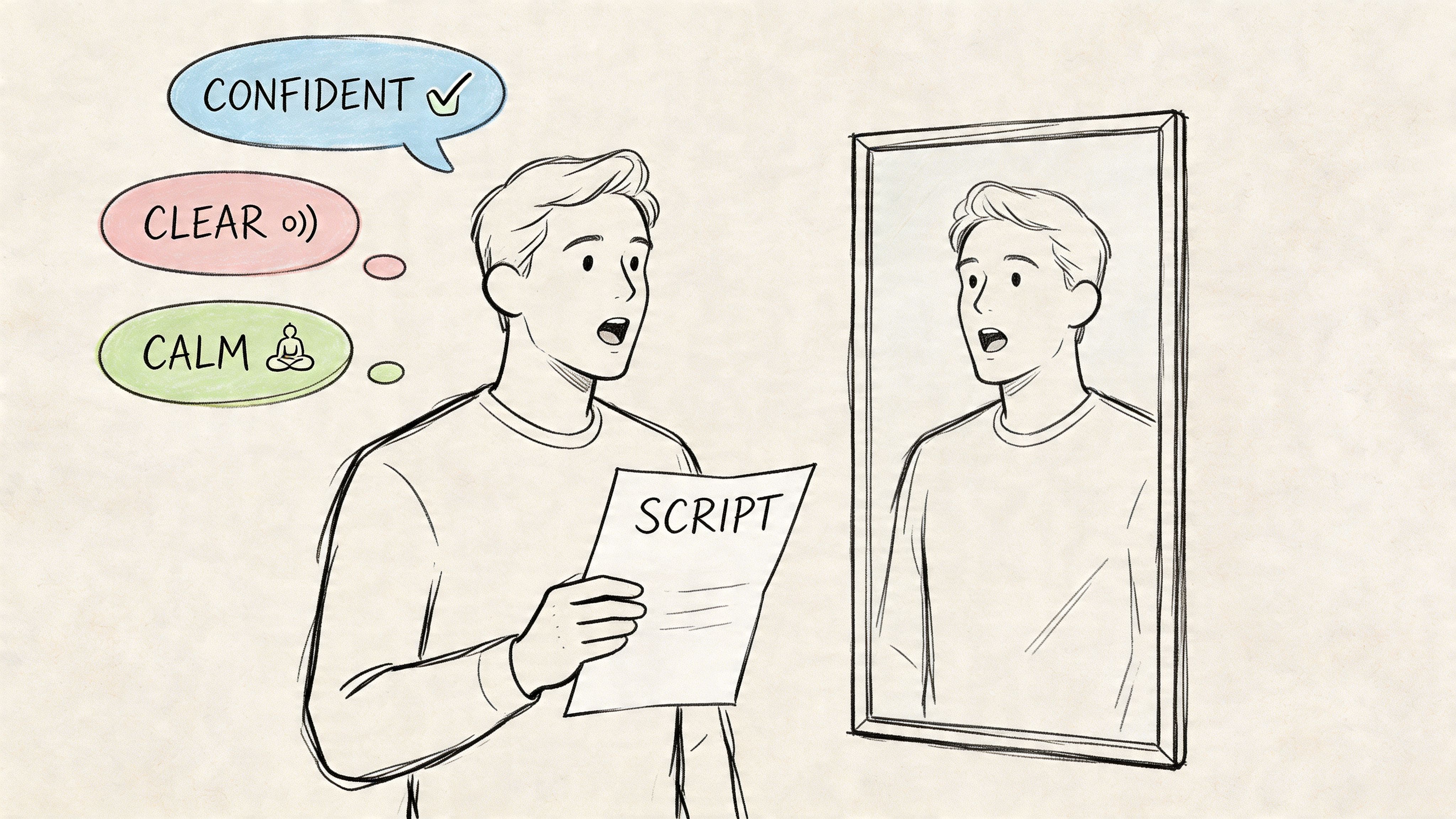
You're halfway through a conversation, someone says something sharp, and the line you practiced disappears. That does not mean the script failed. It means your nervous system got busy.
For a lot of neurodivergent people, the hard part is not knowing what a good response sounds like. The hard part is retrieving it under pressure, while processing tone, deciding whether the comment was intentional, and managing the body response at the same time. Rehearsal helps because it reduces how much you have to do in the moment.
Practice until the words feel usable
The goal is familiarity, not perfection. If a sentence feels too formal, too long, or too unlike you, you probably will not use it when stressed.
A simple practice method works well:
1. Choose three situations you deal with often
Pick specific patterns, such as a rude joke, a dismissive interruption, or a passive-aggressive message.
2. Write one short response for each situation
Keep it brief enough to say in one breath if needed.
3. Test it out loud
Spoken words hit differently. If you stumble over a phrase, change it.
4. Make a low-effort version
Create a shorter option for low-capacity days, shutdown risk, or text-based communication.
5. Store it outside your head
Use a notes app, lock screen note, paper card, or another system you can reach quickly.
That last step matters. Working memory often drops under social stress. External support makes the response more accessible.
If you want a structure for practicing difficult conversations ahead of time, this guide on how to prepare for a conversation is a useful place to start.
Personalize for your actual communication style
A script works better when it matches your cadence, your values, and the setting you are in. I usually adjust scripts in three ways: how direct they sound, how much warmth they include, and how much energy they require.
For example, the same boundary can be shaped a few different ways:
- Direct: "That comment wasn't okay with me."
- Warm: "I want to keep this respectful. That comment didn't sit well with me."
- Firmer: "I'm not continuing this if you keep speaking to me like that."
- Softer: "I may be interpreting this directly, but that came across as rude."
Those variations matter. Some people need a cleaner sentence because too many words increase cognitive load. Others need a warmer entry because directness gets misread in their workplace or family. Neither approach is more mature. It is a fit question.
A tool built for rehearsal can help with that process. tonen stores ready-to-use scripts, lets you switch between Direct, Warm, Firmer, and Softer tones, and includes script preparation features designed to keep the cognitive load low.
Rehearse for the body, not just the wording
Reading a script once is rarely enough. Say it while standing up. Say it at a normal volume. Say it a few times with a slightly faster heartbeat after walking around the room. That kind of practice gets closer to real life than silent reading does.
Some people also do well with paired regulation. Read the line, then unclench your jaw. Read it again, then exhale slowly. If short grounding practices help you access language more reliably, resources on meditation for productivity can give you a few workable options without turning rehearsal into a big project.
Preparation is a form of self-trust
Prepared language is still real language. In many cases, it is the clearest version of what you mean.
Waiting until a rude comment happens often leads to freezing, overexplaining, or saying something harsher than you intended. Rehearsal gives you another path. You do not have to invent your boundary from scratch every time.
Using Quick Calming Tools After the Interaction
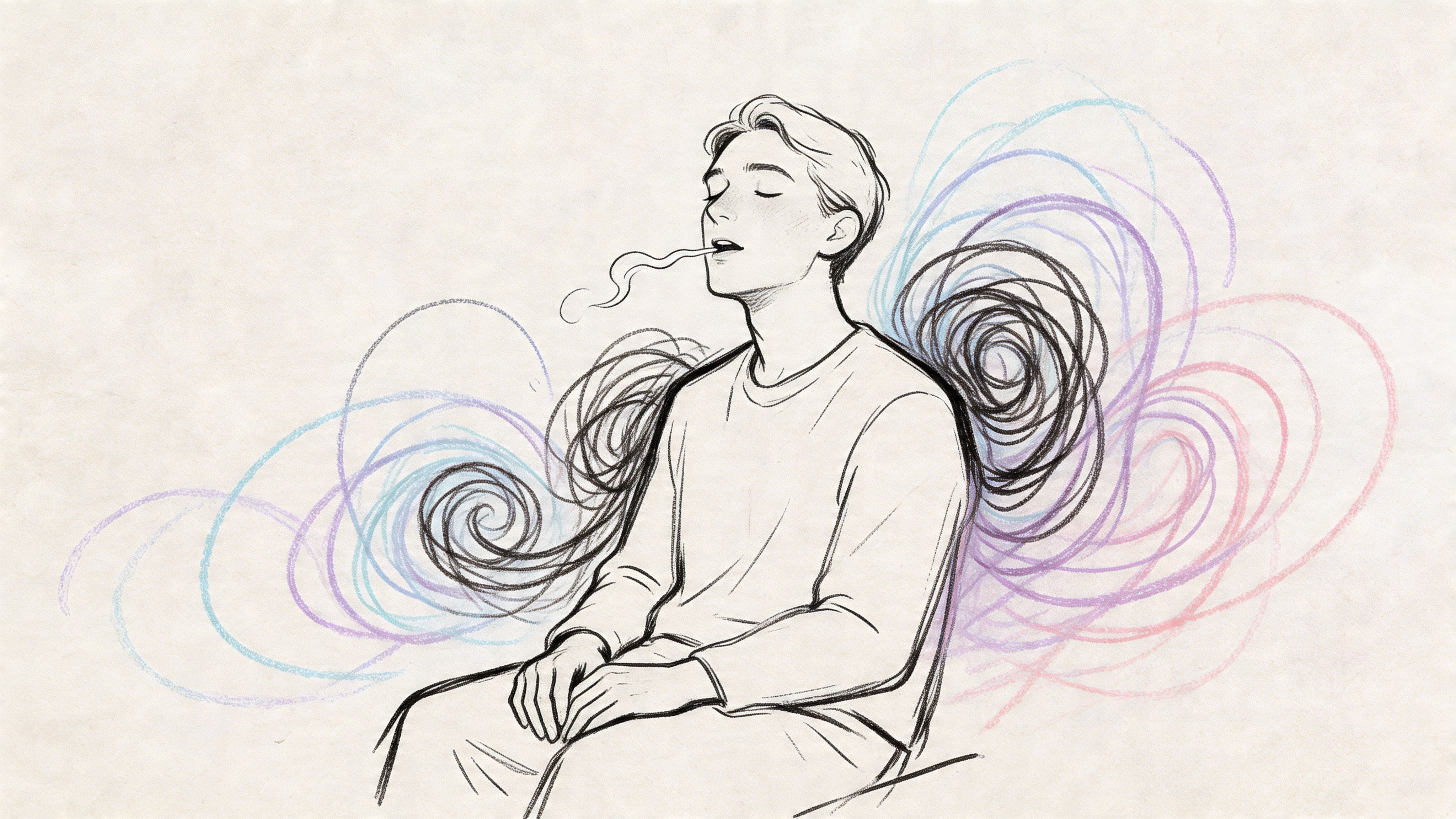
The conversation may end, but your nervous system may not. That's common. You can give a perfectly reasonable response and still feel shaky, angry, nauseated, or stuck replaying the exchange.
This is the part most advice skips. If you're learning how to respond to rude comments, include the recovery step. Otherwise the moment keeps taking energy long after it's over.
A quick post-conversation calm kit
Use one of these right away:
- Box breathing
Breathe in, hold, breathe out, hold. Keep the count comfortable. The point is rhythm, not perfection.
- 5-4-3-2-1 grounding
Name five things you can see, four you can feel, three you can hear, two you can smell, and one you can taste or imagine tasting.
- Drop your shoulders and unclench your jaw
Many people stay braced without noticing. A small body reset can interrupt the stress loop.
- Body scan for hotspots
Ask: where am I gripping? Chest, throat, stomach, hands. Then soften one area at a time.
Keep the aftercare simple
You don't need a long ritual in a bathroom stall or office corridor. You need something short enough for practical use.
A practical sequence looks like this:
- Go somewhere less stimulating if possible.
- Take one slower breath than your body wants.
- Touch a stable object, like a desk edge, wall, or chair.
- Say one orienting sentence to yourself: "That interaction is over."
> The goal after a rude comment is not to become instantly serene. It's to come back into enough regulation that the rest of your day remains yours.
For people who find mindfulness helpful when stress lingers into work or study, this article on meditation for productivity offers a practical way to think about calming attention without making it feel abstract.
If grounding tends to work better for you than talking, grounding techniques for anxiety after stressful interactions can help you build a small reset routine you can remember.
The big shift is this: your job isn't just to answer the rude comment. Your job is also to protect your nervous system before, during, and after the interaction.
If you want support putting these scripts into practice, tonen is built for neurodivergent people who want less stressful conversations. It gives you private, ready-to-use scripts with tone options, rehearsal support, and calming tools so you don't have to build every response from scratch in the moment.