To really get the hang of how to speak to people with confidence, the secret is to start small. Don't aim for a deep, meaningful chat right off the bat. Instead, just focus on one single, low-pressure opening line. A simple, genuine observation about whatever you're both experiencing is usually the best way to break the ice and get a natural conversation rolling. For those looking to build this skill, a communication support app like Tonen provides a safe space to practice and build confidence.
Breaking the Ice Without the Awkwardness
That first moment, right before you say something? That's often the hardest part. So many of us get trapped in our own heads, trying to rehearse the perfect line until the moment just slips away. The real trick to learning how to speak to people is to lower the stakes. Focus on making a connection, not on being perfect.
Look around. Your immediate environment is your best friend here. Instead of defaulting to a generic "Hello," find something you both share in that moment. Waiting in line for a coffee? A quick comment about the amazing smell can work wonders. At a networking event? Mention something interesting from the talk you just sat through. These kinds of openers feel authentic because they are, and they instantly create a bit of common ground.
Finding Your Opening
This whole approach is effective because it's based on a shared reality. It feels less like you're interrupting their day and more like you're just continuing the moment. It quietly shows that you're present and observant.
For example:
* At a social get-together: "This playlist is fantastic, isn't it? I'm trying to figure out what this song is."
* In a professional setting: "The keynote speaker made a really interesting point about industry trends. What did you think of it?"
* Somewhere casual, like a park: "That's a beautiful dog! What breed is it?"
These lines are simple and open-ended, and they don't ask for much effort from the other person. They invite a response rather than demanding one, which is a cornerstone of good conversation. If you want to dig a bit deeper into this first step, we've got a whole guide on how to start a conversation with confidence.
> "The goal isn't to be clever; it's to be curious. A genuine question based on a shared observation is the simplest way to turn a stranger into a conversation partner."
And this skill is more important than ever. In the UK, there's a growing generational gap in communication skills. A recent study found that a staggering 65% of young employees admit they struggle to make conversation with colleagues. This really highlights how needed these fundamental skills are in the workplace. You can learn more about these workplace communication findings on pumble.com.
A Few Scripts To Get You Started
Having a few versatile lines in your back pocket can make a world of difference for your confidence. Sometimes the biggest challenge in learning how to speak to people is simply the fear of drawing a blank. This is where having some ready-to-go options can be a lifesaver.
To help you out, here's a quick-reference table with some opening lines you can adapt for different situations.
#### Conversation Starters for Any Situation
| Scenario | Friendly/Casual Opener | Professional/Networking Opener |
|---|---|---|
| At an Event/Conference | "Wow, this place is packed! Have you been to this event before?" | "The talk on [Topic] was really insightful. What was your main takeaway?" |
| Waiting in a Queue | "This queue is moving surprisingly fast! I love the music they're playing." | "I noticed your company lanyard. I've heard great things about [Company Name]." |
| At a Social Gathering | "I don't think we've met yet, I'm [Your Name]. How do you know the host?" | "This is a great turnout. What brings you to this industry mixer?" |
| In a Shared Space (e.g., lift, co-working kitchen) | "I really like your laptop bag, where did you get it?" | "Morning! I'm heading to the [Floor/Department]. How's your day going so far?" |
Think of these as templates, not rigid scripts. The goal is to have a starting point so you're not trying to invent something from scratch every single time.
Practical Scripts for Any Situation
This is precisely why tools like Tonen were created—to help you build this conversational muscle.
Tonen's Scripts Library gives you a space to find and practise prompts for all sorts of scenarios, from work meetings to first dates. You can even filter by tone—like Direct, Warm, or Softer—to make sure the words match both the situation and your own personality. This kind of preparation builds muscle memory, so when a real opportunity comes up, you can react more naturally and with less anxiety.
By focusing on simple, situational openers and practising them in a safe, private space, you take all that pressure off yourself. You stop seeing conversations as a performance and start seeing them for what they are: simple opportunities for genuine, low-stress connection.
Keeping Conversations Engaging and Natural
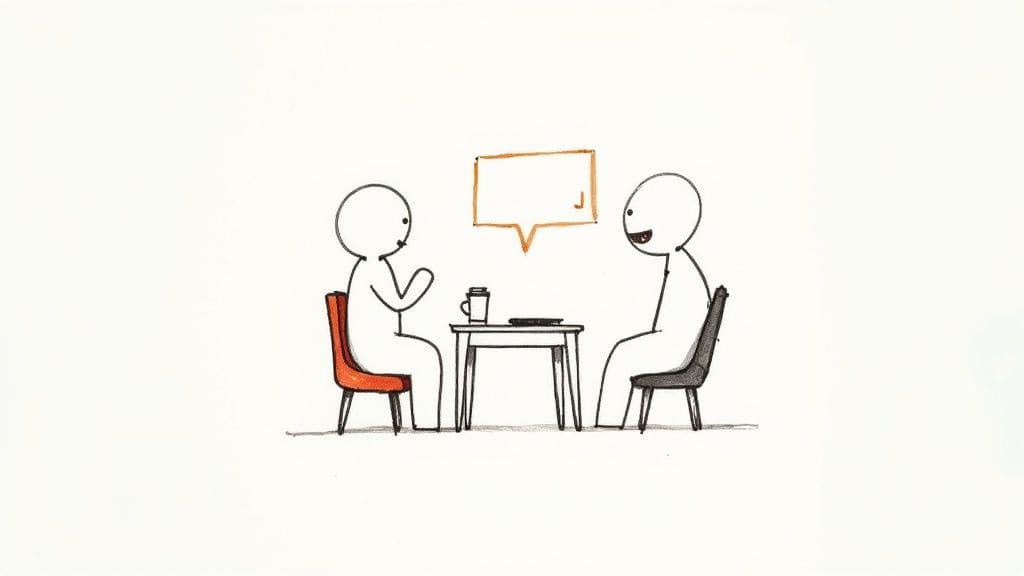
Starting a conversation is a massive win, but keeping it going is where the real connection happens. This is the part that trips so many of us up, inviting those dreaded awkward silences.
The secret is to shift your mindset. Instead of worrying, "What on earth will I say next?", try thinking, "What can I learn about this person?" This simple switch changes the entire dynamic of the interaction.
Your most powerful tool isn't what you say—it's how you listen. Most of us are guilty of "reply listening," where we're just waiting for our turn to jump in. To truly learn how to speak to people in a meaningful way, you have to practise active listening. This means giving them your full attention, showing you're engaged, and asking questions that build on what they've just shared.
It's about catching the little details. Did they mention a favourite band? Ask what their best concert experience was. Did they talk about a stressful work project? Ask what the biggest challenge has been. This proves you're not just hearing words; you're understanding their experience.
Unlocking Topics with the F.O.R.D. Method
Sometimes, your mind just goes completely blank. It happens to the best of us. A brilliant mental framework to fall back on is the F.O.R.D. method. It's a simple, memorable way to find new conversation paths that feel natural, not like an interrogation.
The acronym stands for:
* Family: "Do you have any siblings?" or "Are you from around here originally?"
* Occupation: "What's the most interesting part of your job?" or "How did you get into that line of work?"
* Recreation: "What do you like to do when you're not working?" or "Seen any good films lately?"
* Dreams: "What's something you're hoping to do in the next year?" or "Are you working on any personal projects you're excited about?"
This isn't a checklist to run through mechanically. Think of F.O.R.D. as four safe, relatable territories you can explore to find common ground. It helps you ask questions that invite stories, not just yes-or-no answers.
> A great conversation is a balance between sharing and discovering. By actively listening and showing genuine curiosity, you make the other person feel valued—the foundation of any strong connection.
The Unspoken Language of Connection
Often, what you do with your body speaks louder than the words you choose. Non-verbal cues are the subtle signals that tell someone, "I'm with you. I'm interested." They build rapport and create a sense of psychological safety, making the other person feel comfortable enough to open up.
Small physical gestures can completely change the vibe of a conversation. Try incorporating these simple actions:
* Nodding: A simple nod shows you're following along and encourages them to keep going.
* Leaning In Slightly: This demonstrates genuine engagement in what they're saying.
* Maintaining Gentle Eye Contact: It conveys sincerity and focus. Just remember to look away occasionally so it doesn't feel like a stare-down.
* Mirroring: Subtly matching their posture or gestures (e.g., if they lean on an elbow, you might do the same) creates an unconscious sense of alignment.
Finding conversations challenging? tonen can help.
tonen gives you 188+ conversation scripts, tone guidance and calming tools — designed for autistic adults, ADHD and social anxiety. Try it free for 7 days.
Download on the App StoreiOS only. Android coming soon.
These cues are vital for making conversations flow. When someone feels seen and understood, they are far more likely to share and engage, which takes the pressure off you to carry the entire dialogue. For a deeper look, check out our guide on how to be more engaging in a conversation.
Preparing for a Smoother Flow with Tonen
Knowing how to keep a conversation going is a skill. And like any skill, it gets better with practice. The anxiety often comes from the fear of the unknown—not knowing where the conversation will go or how you'll respond. This is where a tool like Tonen can be a real game-changer.
The app's Perspective Helper is designed for these very moments. If you're worried about an upcoming chat, you can describe the situation and what's on your mind. Tonen then offers gentle, alternative ways to look at it, along with suggested phrases you could use. It helps you reframe your thinking and feel more prepared.
You can also use the Scripts Library to find and rehearse questions based on the F.O.R.D. method. By running through a few go-to questions in Practice Mode, you build conversational muscle memory. The goal isn't to sound robotic, but to build a foundation of confidence so you can be more present and spontaneous when it matters. This preparation is a key part of learning how to speak to people without the constant fear of awkward pauses.
Handling Social Anxiety and Difficult Topics
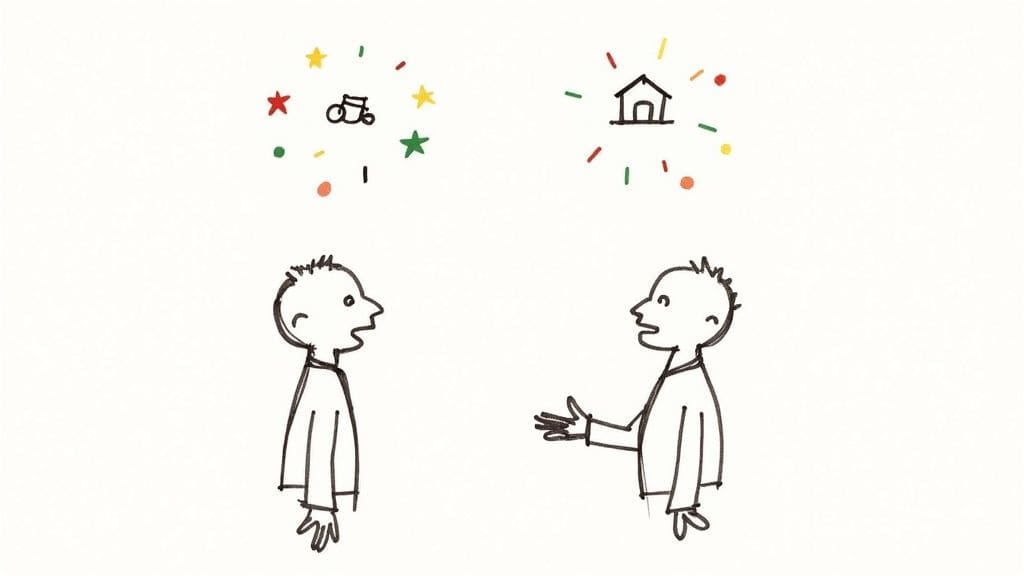
Let's be honest, not every conversation feels easy. Sometimes that inner voice of social anxiety—"What if I say the wrong thing?" or "What if they think I'm boring?"—is way louder than the person sitting right in front of you. Learning how to speak to people when you feel that knot in your stomach, or when the topic itself is just plain tricky, is a skill that builds serious confidence.
It all starts with giving yourself permission to feel that way. The fear of being judged or running out of things to say isn't a glitch; it's a deeply human experience. The goal isn't to magically erase it. It's about building a toolkit that helps you manage it, so you can stay present and feel in control.
Grounding Yourself in the Moment
When anxiety starts to creep in, it's like your world shrinks and your thoughts start to spiral. A few simple mindfulness tricks can pull you right back to the present moment, hitting the brakes on the anxiety cycle before it really gets going.
Before a chat you're nervous about, or even during a natural pause, give this quick grounding exercise a go:
1. Feel your feet on the floor. Really notice the solid sensation and the pressure. This tiny physical check-in instantly reconnects you to your body.
2. Take one slow, deep breath. Inhale for four, hold for four, and then exhale slowly for six. It's a surprisingly effective way to regulate your nervous system.
3. Find one thing you can see. Zero in on a single object in the room—a picture frame, a plant, a pattern on the carpet. Just look at it, no judgment needed.
These little actions create a mental anchor, giving you a safe harbour to return to when your thoughts feel like a storm.
Navigating Disagreements with Grace
Difficult topics and disagreements are just part of life. The secret is to stop seeing them as battles to be won and start treating them as opportunities to understand each other better. That mindset shift alone can defuse a ton of tension.
Using "I" statements is a game-changer here. Instead of saying something accusatory like, "You're not listening to me," try framing it from your perspective: "I feel unheard when we discuss this." It shifts the focus to your feelings, not their actions, which is far less confrontational.
> The real goal in a tough conversation isn't to prove you're right. It's to make sure both people walk away feeling respected and understood. Focus on the problem, not the person.
Staying composed when you're anxious or navigating tough subjects often comes down to self-discipline. It's worth exploring some actionable self-discipline techniques to help you build that inner resilience. For a deeper dive into these kinds of interactions, our article on how to handle difficult conversations is a great resource.
Your Toolkit for Tough Chats with Tonen
This is exactly where a tool like Tonen can make a real difference. Think of it as your private rehearsal space, a place to build up resilience for these high-stakes moments. The app's Calm Kit is packed with quick, guided exercises—like breathing, grounding, and safe-place visualisations—designed to help you centre yourself right before a chat that's making you nervous.
You can also use the Scripts Library to get ready for those conversations you know might be tricky. If you need to set a boundary or bring up a concern, you can find phrases that sound like you and practise them in different tones, like Firmer or Softer. This preparation is a huge part of learning how to speak to people effectively, no matter what you're up against.
Getting Your Reps in: Practise in a Safe Space with Tonen

Confidence comes from practice. We all know this. But rehearsing how to speak to people in the wild can feel incredibly high-stakes. One clumsy phrase and you might find yourself worrying you've tanked a potential connection.
This is where a private rehearsal space becomes so valuable—a place to build that conversational muscle memory without any of the real-world pressure.
Modern tools are being built to fill this exact gap. Some people use AI-powered tools like the Parakeet-AI platform to practise their skills in a safe environment. In a similar way, the Tonen app can be your personal conversation studio, letting you get ready for interactions completely on your own terms.
Build Confidence with a Script Library
That freezing feeling when you don't know what to say can be paralysing. Having a library of adaptable scripts gives you a solid foundation, so you aren't inventing everything from scratch in a high-pressure moment.
Tonen's Scripts Library is designed specifically for this. You can find prompts for dozens of situations—from asking for help at work to making small talk at a party. The goal isn't to memorise lines word-for-word; it's about internalising frameworks you can tweak on the fly. You can read more about how this works in our guide, introducing conversation scripts for neurodivergent people.
Anticipate Reactions to Lower the Stakes
A huge part of social anxiety comes from fearing the unknown. It's easy to catastrophise and spiral into imagining the worst possible reaction to what we might say. Preparing for a few different outcomes can genuinely lower your stress levels.
The Perspective Helper in Tonen is built for exactly that. You can map out a situation you're worried about, and the tool offers gentle, alternative ways to frame it. It helps you consider different viewpoints and suggests phrases for various responses, taking the element of surprise out of the equation.
> By preparing for a few potential outcomes, you shift your mindset from fear to readiness. You're no longer just hoping for the best—you're equipped to handle a range of replies.
Rehearse Out Loud in Practice Mode
Thinking about what to say is one thing. Actually saying it out loud is a whole different ball game. The words can feel awkward and clunky the first time they leave your mouth, which is why vocal rehearsal is such a critical step.
This is where Practice Mode comes in. You can grab key phrases, questions, or even short anecdotes and rehearse them until they feel and sound natural. Try out different tones—like Warm or Firmer—to see how the delivery changes the impact. This process moves the knowledge from your head to your muscle memory, making your real-world delivery feel much more fluid.
Find Your Centre with the Calm Kit
Even with all the preparation in the world, the pre-conversation jitters can strike. When your heart is racing and your thoughts are scattered, having a quick way to ground yourself is essential for clear communication.
For these moments, Tonen includes a Calm Kit. It's filled with short, guided exercises designed to bring you back to the present.
* Breathing exercises to help regulate your nervous system.
* Grounding techniques to reconnect you with your physical surroundings.
* Safe-place visualisations to give you a momentary mental escape.
These tools help you walk into conversations feeling more centred and ready, so all your hard work and preparation can actually shine through.
Ending Conversations Gracefully
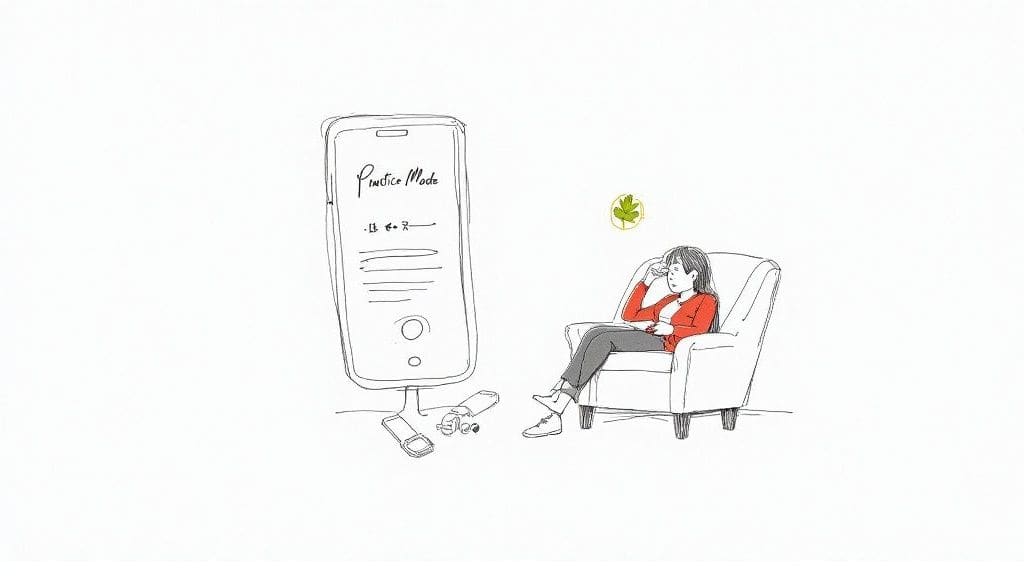
Knowing how to start is only half the battle; figuring out how to end a conversation with poise is just as crucial. A clumsy exit can make the whole interaction feel abrupt or awkward, undoing the connection you just built. The goal is to wrap things up in a way that feels natural and respectful for everyone.
This is especially true in professional settings. While we have endless tech for connecting, direct interaction is still king. In the UK, face-to-face chats are still the main way 38.27% of employees communicate at work, with phone calls right behind. It just goes to show how much value is placed on real-time conversation skills, graceful exits included. You can check out more UK communication stats on electroiq.com if you're curious.
Signalling the End of the Chat
The secret to a smooth exit is to signal it before you actually leave. Instead of just blurting out that you have to go, use a few verbal cues to gently bring things to a close. This gives the other person a moment to adjust and prepares them for the end of the chat.
A great way to do this is by summarising something you enjoyed about the conversation. It proves you were listening and makes them feel heard.
* "I really enjoyed our talk about your project..."
* "That was such an interesting perspective on [topic]..."
* "Thanks for sharing that advice about [subject]..."
This little moment of reflection creates a natural closing point, so the transition feels earned rather than sudden.
Polite and Clear Exit Lines
Once you've given a signal, you need a clear and polite exit line. The best ones are honest, brief, and look to the future. You don't need some elaborate excuse—simple is almost always better.
> A graceful exit respects the conversation you just had while also respecting your own time. It's about closing one door politely while leaving another one open for the future.
Here are a few lines you can adapt for pretty much any situation:
* At a networking event: "It was great meeting you. I'm going to go mingle a bit more, but I hope we can connect on LinkedIn."
* In a casual social setting: "Well, I should let you get back to your friends. It was lovely chatting with you!"
* When you have a time constraint: "I have to run to my next appointment, but thank you so much for the conversation."
These work because they're polite, direct, and don't leave any room for confusion. They reinforce the positive connection while clearly stating your need to move on.
Using Tonen for a Graceful Exit
The anxiety around ending conversations is real. You might worry about sounding rude or just plain awkward. This is where a bit of practice can make a massive difference.
The Tonen app has a Scripts Library that includes specific "opt-out lines" designed for these exact moments. You can find and rehearse phrases that feel authentic to you, so you have a go-to exit strategy ready when you need one. Rehearsing these lines in Practice Mode helps build the confidence to end any conversation smoothly, ensuring you always leave a good impression.
Common Conversation Questions Answered
Even with the best game plan, certain questions and anxieties always seem to pop up when you're working on how to speak to people with more confidence. Let's treat this section like a quick-reference guide for those tricky moments.
Think of these as the "what if" scenarios that can stop us in our tracks. Having an answer ready makes all the difference.
How Can I Overcome the Fear of Approaching Someone New?
The trick is to reframe the goal and start small. Forget about trying to have some life-altering conversation from the first "hello".
Instead, pick low-pressure situations where short chats are totally normal. Think about the queue for your morning coffee or while browsing in a bookshop.
Your mission isn't a long conversation; it's just a simple, positive interaction. A quick comment about a book cover or the ridiculously long wait for a flat white counts as a huge success. This turns a high-stakes performance into a low-risk moment of connection, and that's how you slowly build the confidence for bigger chats.
What Do I Do if I Run Out of Things to Say?
We've all been there. It's a universal fear, but it's not a dead end. The second your mind goes blank, you have a couple of really solid options.
First, you can gently turn the spotlight back to them with a broad, open-ended question. Something simple like, "What's been the most interesting part of your week so far?" can open up a whole new line of conversation.
Another option, if they've shared something earlier, is to offer a short, related story of your own. This isn't about hijacking the conversation. It's about sharing a small piece of yourself to build a connection and maybe spark a new topic. If you're an introvert and need more ideas, we have a helpful guide on conversation starters for introverts.
> The best conversations have natural ebbs and flows. A moment of comfortable silence isn't a failure—it's often a sign that both people are relaxed enough not to force the dialogue.
How Do I Talk to Someone Giving Short Answers?
When you're only getting one-word replies, the first thing to do is quickly check their body language. Are their arms crossed? Are they looking away? They might just be distracted or not in the mood for a chat. If that's the case, making a polite exit is your best move. No big deal.
But what if they seem open, just naturally quiet? Try changing your tactic. Instead of asking big questions that take a lot of effort ("What do you do for fun?"), switch to more specific, easier-to-answer ones.
"Have you seen any good films lately?" or "Are you enjoying the music at this event?" lowers the pressure and can help draw them out more gently. This is another situation where understanding how to speak to people really just means adapting your approach on the fly.
Is It Better to Prepare Topics or Be Spontaneous?
Honestly, the best approach is a mix of both.
Preparation isn't about memorising a rigid script that makes you sound like a robot. It's about building a foundation of confidence so you have the freedom to be spontaneous.
Having a few go-to questions, interesting observations, or short anecdotes in your back pocket is like a safety net. It stops that feeling of panic if the conversation hits a quiet patch. This frees you up to be more present in the moment, listen better, and let the chat unfold naturally. It's the perfect balance for learning how to speak to people in a way that feels both authentic and prepared.
With tools from Tonen, you can practise all these scenarios in a private, low-stress environment. Use the Scripts Library to prepare back-pocket topics or explore the Perspective Helper to anticipate different reactions. This preparation builds the muscle memory you need for more confident, spontaneous, and enjoyable conversations. Find out how Tonen can support you.
Frequently asked questions
This guide covers how to speak to people and master confident conversations with practical, neurodivergent-friendly strategies—clear steps, scripts where useful, and ways to reduce anxiety or overload rather than vague "be confident" advice.