If you're managing someone who seems capable but inconsistent, misses verbal instructions, avoids noisy meetings, or looks overloaded by tasks that seem straightforward on paper, the support usually isn't complicated. How to support neurodivergent employees comes down to three habits: make work clearer, make communication kinder and more explicit, and remove avoidable friction from the environment. That means written priorities, predictable check-ins, flexible ways of working, and accommodations that help people perform instead of forcing them to mask.
Your Essential Guide on How to Support Neurodivergent Employees
Most managers don't need a medical framework. They need a practical one.
A team member says "yes" in meetings but then delivers something different. Another does excellent work alone but shuts down in fast group discussions. A third is seen as disorganized, yet produces unusually strong work when expectations are written down and deadlines are broken into smaller stages. Those are common management moments, and they're often where good intentions fail.
How to support neurodivergent employees starts with a shift in posture. Don't ask, "Why can't they just adapt?" Ask, "What part of this system is creating unnecessary effort?"
Start with management habits, not diagnosis
You don't need to identify whether someone is autistic, has ADHD, dyslexia, dyspraxia, or another neurotype to improve their workday. You need to reduce ambiguity.
That usually looks like this:
- Clarify the task: Put priorities in writing. Include what good looks like, when it's due, and what matters most.
- Offer communication options: Let people respond in writing after meetings if that helps them process.
- Reduce avoidable overload: Fewer last-minute changes, fewer vague requests, and fewer unstructured check-ins.
- Lead with strengths: Match work to what someone does well, not just what the role description assumed.
> Practical rule: If an adjustment helps one person without harming the team, it's probably a good management practice for everyone.
Support should feel ordinary, not exceptional
The best support doesn't feel like a special program. It feels like competent leadership.
Managers often overcomplicate this because they're worried about saying the wrong thing. In practice, employees usually respond well when a manager is direct, respectful, and consistent. "I want to set you up to do your best work" is more useful than a broad statement about inclusion with no day-to-day follow-through.
Strength-based management also matters. Some neurodivergent employees bring unusual persistence, pattern recognition, originality, detail processing, or deep focus to the work. Support isn't about lowering expectations. It's about removing barriers that stop those strengths from showing up reliably.
That's the answer. Build clarity into the work, not just kindness into the culture.
Foundations of Neuro-Inclusive Support
Neuro-inclusion is easiest to understand at task level. Forget labels for a moment and look at what happens during an ordinary week.
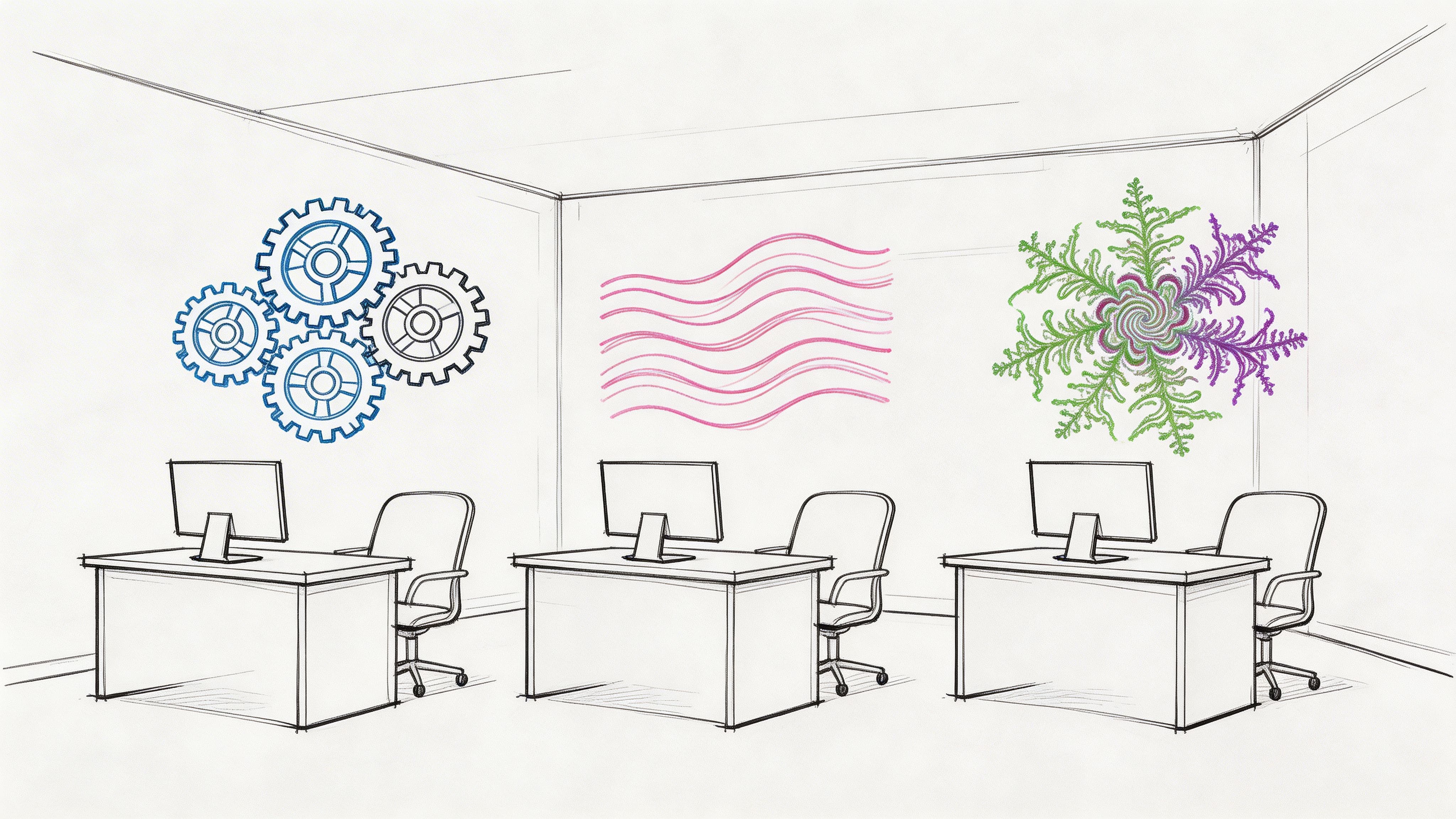
A manager gives verbal instructions at the end of a meeting. One employee starts immediately. Another needs time to process and would do better with a written recap. Neither response is wrong. They reflect different processing styles.
For readers trying to understand autism in more depth through a workplace lens, this article on autism and day-to-day support needs adds helpful context.
What neurodivergence can look like at work
You're not diagnosing anyone by noticing patterns. You're observing what helps people succeed.
Common workplace differences can show up as:
- Communication differences: Some employees prefer direct language and struggle when feedback is overly softened or implied.
- Processing speed differences: A person may need time after a meeting to form a response, even if they're highly capable.
- Executive function challenges: Prioritizing, sequencing, task initiation, and switching attention can all take more effort.
- Sensory sensitivities: Bright lights, background chatter, strong smells, and constant interruptions can drain focus quickly.
- Social interpretation differences: Unspoken rules, office politics, and vague expectations may create unnecessary stress.
A manager who treats those patterns as attitude problems usually gets worse outcomes. A manager who treats them as design problems usually gets better ones.
Shift from judgment to interpretation
Consider two examples.
An employee misses a deadline after receiving a broad request like "pull together your thoughts and share a draft soon." That may not be laziness. It may be a task that was too open-ended.
Another avoids speaking in a large meeting but sends an excellent written summary afterward. That isn't lack of engagement. It may be a sign that the person communicates best with more processing time.
> Good support often begins when a manager stops reading difference as resistance.
What this means for managers
You don't need to become an expert in every neurotype. You do need situational awareness.
Try asking yourself:
1. Is the work request specific enough to act on?
2. Have I made the priority visible, not just spoken?
3. Is the environment making concentration harder than it needs to be?
4. Am I measuring performance, or am I rewarding one preferred style?
That last question matters. Many workplaces still reward fast verbal responses, comfort with ambiguity, and social ease, even when those traits aren't necessary for the role. Neuro-inclusive support asks a better question: what conditions help this employee produce strong work consistently?
Effective Communication Strategies and Tools
Communication is where inclusion becomes real. Most managers don't lose trust because they're unkind. They lose it because they're vague.
If difficult conversations feel high-stakes, managers can benefit from practicing language before using it. A library of workplace conversation scripts for feedback, boundaries, and check-ins can make those moments easier to handle with less guesswork.
Say the task, the priority, and the next step
A lot of workplace stress comes from hidden expectations.
Don't say, "Can you tighten this up?"
Say what needs changing, by when, and what standard matters most.
Don't say, "Keep me posted."
Say how often, in what format, and what you want flagged early.
Need help navigating workplace conversations? tonen can help.
tonen offers conversation scripts, Reply Helper, Perspective Helper, Debrief, Phone Call Mode and Calm Kit. Start with 21 free scripts on iPhone. Optional Premium unlocks more features.
Download on the App StoreAvailable on iOS.
Example communication scripts for managers
| Instead of Saying This... | Try Saying This... |
|---|---|
| "This isn't quite there." | "The structure is strong. I need two changes before this is ready: shorten the introduction and make the recommendation clearer in the final section." |
| "Can you be more proactive?" | "I'd like you to send me a short update by Thursday with what's on track, what's blocked, and where you need a decision from me." |
| "You need to participate more in meetings." | "I want your input. If speaking live is draining, send your thoughts before or after the meeting in writing." |
| "Let's touch base sometime." | "Let's meet Tuesday at 10 for 20 minutes. We'll review priorities, blockers, and any support you need." |
| "This should be obvious." | "I may not have been clear. Here's what I'm looking for, and here's an example of the level of detail I need." |
| "Why didn't you ask for help?" | "If something feels unclear or stuck, I want you to flag it early. A short message is enough." |
Run meetings for different processing styles
Inclusive meetings aren't softer. They're better organized.
Use a few consistent habits:
- Send an agenda early: People think better when they know what's coming.
- Name the purpose: Is the meeting for updates, decisions, brainstorming, or problem-solving?
- Pause before expecting responses: Some people need a beat to process.
- Write action items down: Don't rely on memory and implied ownership.
- Offer another route for input: Written comments after the meeting often improve quality.
Check in without making it personal too fast
Some managers ask, "Are you okay?" when they notice a dip in performance. That can feel intrusive or too vague.
Try something more grounded:
- Focus on work patterns: "I've noticed this project seems harder to move forward than usual."
- Invite problem-solving: "Is there anything about the task, timeline, or communication that we should adjust?"
- Offer options: "Would written priorities, a quieter workspace, or a shorter planning meeting help?"
> "What would make this easier to do well?" is one of the most useful questions a manager can ask.
What doesn't work
A few habits create more friction than managers realize:
- Public correction: It increases stress and often reduces clarity.
- Indirect feedback: Hinting is not the same as coaching.
- Unstructured meetings: They privilege fast talkers, not always the best thinkers.
- One-size-fits-all communication: If every important instruction is verbal, some employees will be working at a disadvantage.
If you want to know how to support neurodivergent employees in a way that holds up under pressure, start here. Make communication explicit enough that nobody has to decode what you meant.
Designing and Offering Reasonable Accommodations
Accommodations work best when managers treat them as performance tools. They are not favors. They are ways to remove friction that blocks good work.
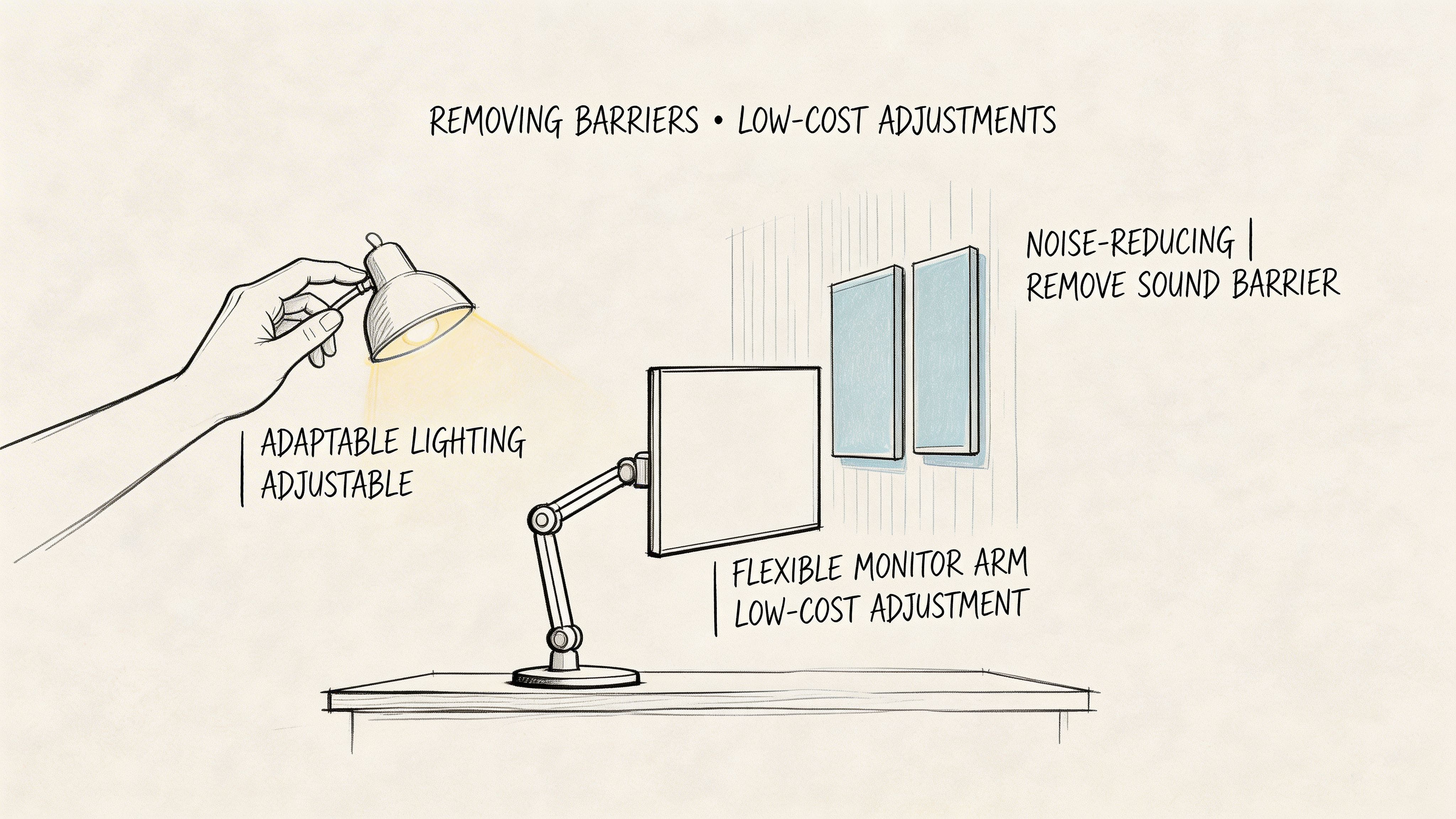
Three accommodation categories that solve common problems
Most useful adjustments fall into three buckets.
Sensory environment
Open offices can be exhausting. Noise, movement, bright overhead lighting, and interruptions all add cognitive load.
Useful supports include:
- Quiet zones: A place for concentrated work without constant interruption.
- Lighting control: Desk lamps, lower-glare setups, or alternate seating.
- Noise support: Headphones, acoustic panels, or permission to step away from busy areas.
If your workplace is rethinking layout, these strategies for office cubicle privacy are a practical reference for reducing distraction without redesigning everything at once.
Schedule flexibility
Not everyone does their best work on the same rhythm.
A good accommodation might be:
- core collaboration hours with flexibility around start and finish times
- remote or hybrid options for focus-heavy work
- protected blocks for uninterrupted work
- fewer context switches in a single day
Tools and assistive technology
Sometimes the barrier is not motivation. It's the format.
Helpful tools can include speech-to-text, screen readers, task management apps, written templates, shared agendas, or visual project boards. The right tool depends on the friction point.
Offer accommodations through conversation, not bureaucracy
The fastest way to make support feel risky is to turn it into a formal maze too early.
Start with a practical question: What would help you do your best work on this task?
Then get specific. If an employee says meetings are draining, ask whether the issue is timing, noise, pace, unclear agendas, or the expectation to respond live. Different problems need different solutions.
A strong manager also avoids forcing employees to become experts in self-advocacy. Some people can name what they need clearly. Others only know what feels hard. This guide on how to advocate for yourself at work can also help employees prepare for that conversation.
> Manager's test: An accommodation is working when the employee has to spend less energy coping and more energy doing the job.
What often goes wrong
Accommodation efforts usually fail for operational reasons, not philosophical ones.
Common mistakes include inconsistent application, overreliance on verbal agreements, and treating support as temporary goodwill rather than part of normal management. If the adjustment disappears the moment work gets busy, the employee learns not to trust it.
Reimagining Performance Management and Growth
Traditional reviews often reward presentation over performance. They also compress months of work into one stressful conversation, which is a poor fit for employees who need clarity, predictability, and regular course correction.
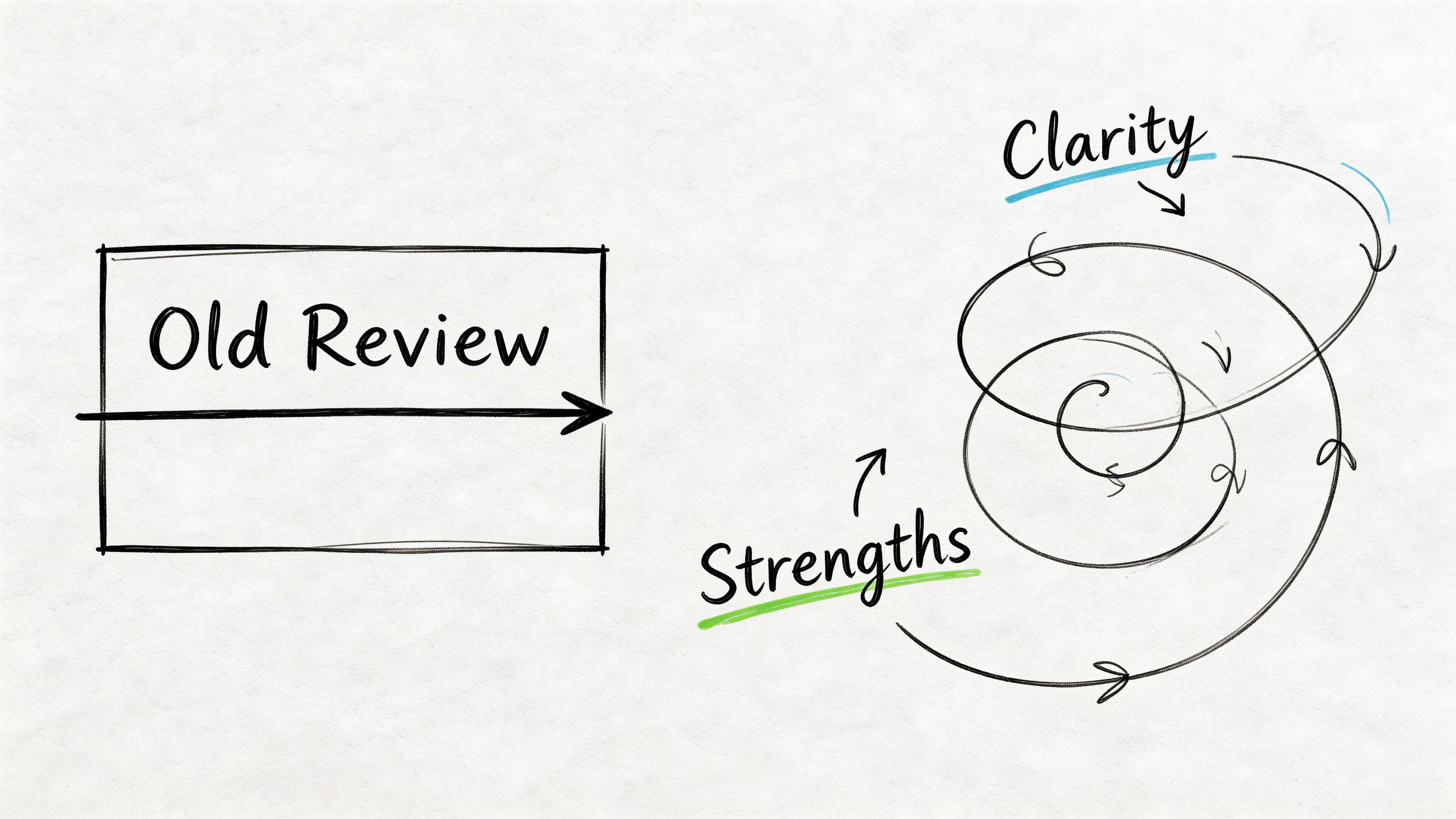
Annual review thinking causes avoidable problems
A manager waits until quarter-end to mention that a team member's updates have been too broad for months. By then, frustration is high on both sides.
That approach fails because it asks one conversation to do too much:
- evaluate performance
- deliver surprise feedback
- fix unclear expectations
- plan future growth
Many people struggle under that setup. Neurodivergent employees often struggle more because ambiguity accumulates.
Build a lighter, clearer feedback rhythm
Use a repeated structure. Keep it simple enough that both manager and employee know what to expect.
A good check-in can cover:
1. Current priorities
2. What's blocked
3. What support is needed
4. What success looks like before the next check-in
Written follow-up matters. If the conversation stays verbal, key details can get lost or reshaped by stress.
Measure contribution, not style conformity
A lot of review language is still too subjective.
Phrases like "executive presence," "not visible enough," or "needs polish" often hide a preference for one communication style. Replace them with observable criteria.
Try this instead:
- From vague to specific: "Needs to communicate better" becomes "Needs to send a project update every Friday covering risks, status, and next actions."
- From personality to outcome: "Seems disengaged in meetings" becomes "Shares strong written analysis and should be given a clear route to contribute outside live discussion."
- From broad goals to milestones: "Own this project" becomes "Draft the brief by Wednesday, confirm dependencies by Friday, and bring one recommendation to the next review."
Protect focus as part of performance support
Many employees are judged on output while managers destroy the conditions needed to produce it.
If you want stronger work, protect time for it. Block uninterrupted hours. Reduce unnecessary meetings. Make sure urgent requests are urgent.
For teams working on wellbeing and communication habits together, this article on mental health at work and everyday support practices is a useful resource.
> Clear goals, visible priorities, and shorter feedback loops don't make performance management easier on paper. They make it fairer in practice.
That's the shift. Performance management should help people improve while they're still in motion, not punish them after confusion has piled up.
Building a Neuroinclusive Workplace Culture
A neuroinclusive culture isn't built by one empathetic manager. It's built when everyday practices become normal across the company.
Culture shows up in what people can safely ask for
Employees notice whether support depends on individual courage.
If accommodations, clarity, and flexibility are only available to people who disclose confidently, many employees will stay quiet and absorb the strain. A healthier culture uses universal practices so support doesn't hinge on a personal conversation.
That means:
- written meeting agendas as standard
- flexible communication formats
- predictable feedback routines
- calm spaces and practical tools available without fuss
- managers trained to respond constructively, not skeptically
ERGs and leadership behavior matter
Employee Resource Groups can help translate policy into lived reality. They create a place for peer support, pattern-spotting, and feedback that senior leaders might otherwise miss.
Leadership behavior matters just as much. If leaders talk about inclusion but reward only one work style, employees will trust the reward system, not the message. Managers watch what gets promoted. Employees do too.
A useful complement to this work is a broader strategy for building a culture of inclusiveness, especially if your organization is trying to connect neuro-inclusion with wider people practices.
Measure what your culture does
Hiring matters, but it's not enough.
A company should also look at:
- Promotion patterns: Who advances, and who stalls?
- Retention trends: Who leaves after early friction?
- Engagement feedback: Do employees feel safe asking for support?
- Manager consistency: Are inclusive practices used unevenly across teams?
These measures tell you whether your culture works only in pockets or across the organization.
What a mature culture looks like
In strong neuroinclusive workplaces, support is not framed as extra help for a few people. It's part of how work gets designed.
Managers give clear instructions because that improves execution. Teams use written summaries because memory is fallible. Quiet space exists because concentration matters. Flexibility exists because output matters more than performative busyness.
That's also the most practical answer to how to support neurodivergent employees at scale. Don't rely on exceptional managers to compensate for ordinary systems. Build systems that make good management easier.
If you want extra help handling the day-to-day conversations that often make or break workplace support, tonen is worth a look. It's a mobile app built to help neurodivergent people handle social conversations with less stress, using ready-to-use scripts, script preparation tools, perspective support, and a low-cognitive-load design. For managers, employees, and anyone who finds workplace conversations hard to start, it can make feedback, boundary-setting, and support requests feel much more manageable.