If you're wondering what to talk to your friends about, the answer is to shift from unstructured small talk to structured, meaningful conversation frameworks. This means using specific, prepared topics like shared interests, thoughtful questions, and future plans to reduce social anxiety and build genuine connection. For neurodivergent communicators, having a toolkit of these frameworks makes socializing less draining and more rewarding. This guide offers 10 concrete strategies, complete with ready-to-use micro-scripts and tips, so you can move past awkward silences and into deeper friendships with more confidence.
We'll explore exactly what to discuss and how to approach each topic, with special focus on tools that can help you rehearse and choose the right tone for every situation. Instead of guessing, you'll have a clear roadmap for initiating and sustaining conversations that feel authentic to you and strengthen your bonds with others. This approach is about making social interactions more accessible and enjoyable, not forcing a performance.
> Key Takeaway: The goal isn't just to find topics; it's to build a repeatable system for connection that works for your unique communication style. By preparing conversation starters and understanding how to navigate different social contexts, you can build the confidence to engage more deeply.
The strategies below are designed for one-on-one chats, but many can be adapted for larger groups. To move beyond superficial chats in those settings, consider exploring these 12 essential topics for group discussions that can lead to deeper connections. This article will focus specifically on fortifying your individual friendships, giving you actionable steps for everything from sharing special interests to setting healthy boundaries.
1. Shared Special Interests & Hyperfixations
One of the most effective ways to figure out what to talk to your friends about is by focusing on shared special interests or hyperfixations. These are the topics you and your friend are both deeply passionate about, creating a natural and enthusiastic conversational foundation. For many neurodivergent people, these intense interests are a source of joy and expertise, making conversations centered on them feel authentic and less draining.
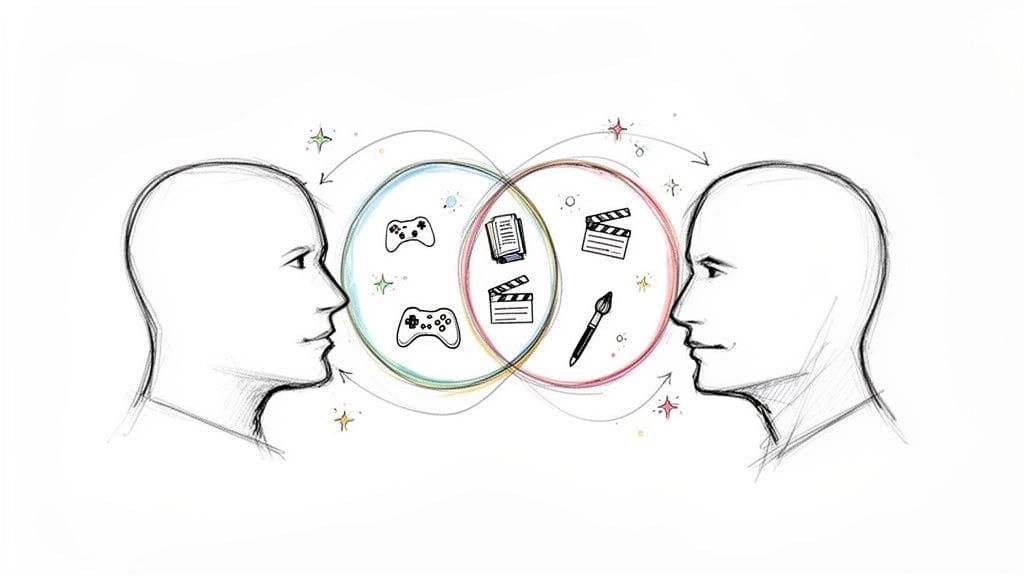
This approach moves past the struggle of small talk by anchoring communication in a shared comfort zone. Instead of searching for something to say, you can dive straight into a subject where you both have plenty of thoughts and energy to share.
Why This Method Works
Engaging with a shared interest reduces the cognitive load of social interaction. You're not performing conversation; you're genuinely participating in an exchange of information and excitement about something you both love. This builds a powerful sense of connection and mutual understanding. Deciding what to talk to your friends about becomes simple when the answer is a subject you both adore, like the latest update in a video game or a new theory about a favorite TV show.
> Key Insight: Special interests provide a pre-built script. The lore, mechanics, or details of the interest itself give you a framework for questions, comments, and follow-ups, making the back-and-forth feel more intuitive.
Actionable Tips for Implementation
- Ask First: Before diving into your own interest, show curiosity about theirs. A simple, "Been watching/reading/playing anything interesting lately?" opens the door without pressure.
- Balance the Airtime: It's easy to get carried away when discussing a passion. Set a mental timer to remind yourself to pause, ask a question, and give your friend a chance to share their perspective. This helps ensure the conversation feels balanced.
- Connect Your Interests: If you're unsure what to talk to your friends about beyond one shared topic, try to bridge the gap. For example, "The character design in that game reminds me of the art style in the comic series I was telling you about. Have you seen it?"
2. Asking Thoughtful Questions About Their Life
Another powerful method for figuring out what to talk to your friends about is to shift the focus from your own experiences to theirs. By asking thoughtful, open-ended questions about your friend's life, you create a conversational structure that relies on active listening rather than the often-difficult task of self-disclosure. This technique can reduce social anxiety by giving you a clear role: the interested and engaged listener.

This approach moves beyond generic questions like "How are you?" and dives into specific areas of their life. It shows you remember past conversations and are genuinely invested in their experiences, goals, and challenges, which is a cornerstone of building deeper friendships.
Why This Method Works
Asking specific questions provides a predictable framework for conversation, which can be comforting for neurodivergent individuals. It eliminates the guesswork of finding a topic and instead focuses your energy on understanding your friend's perspective. When you're unsure what to talk to your friends about, this strategy makes your friend the subject matter expert, allowing you to follow their lead while actively strengthening your bond. If you're looking for activities specifically designed to unearth deeper thoughts and perspectives from your friends, consider trying games like 'The Game of Things' to spark meaningful dialogue.
> Key Insight: Memory is a powerful tool for connection. Following up on something a friend mentioned weeks ago-like a work project or a family event-shows you were paying attention and that you care about their life beyond the immediate conversation.
Actionable Tips for Implementation
- Follow Up on Specifics: Instead of a broad "What's new?", try something more targeted. For example, "How did that big presentation you were worried about last month go?" or "You mentioned you were trying to read more; found any good books lately?"
- Listen More Than You Speak: The goal here is to learn about them. After asking a question, concentrate fully on their answer. Resist the urge to immediately formulate your next question or relate it back to yourself. This is a key part of becoming a more engaging conversationalist.
- Ask About Feelings and Processes: Go beyond just the facts. Inquire about their experience with questions like, "What was the most challenging part of that for you?" or "How did you feel when you finally finished it?" This invites deeper sharing.
3. Discussing Plans, Events & Future Activities
Structuring conversations around concrete plans is an excellent solution when you're figuring out what to talk to your friends about. This method focuses on upcoming events, vacations, group outings, or shared activities, which provides a clear and tangible framework for communication. For neurodivergent individuals who think in practical, logical terms, this approach removes the abstract pressure of open-ended socializing and grounds the conversation in specific details.
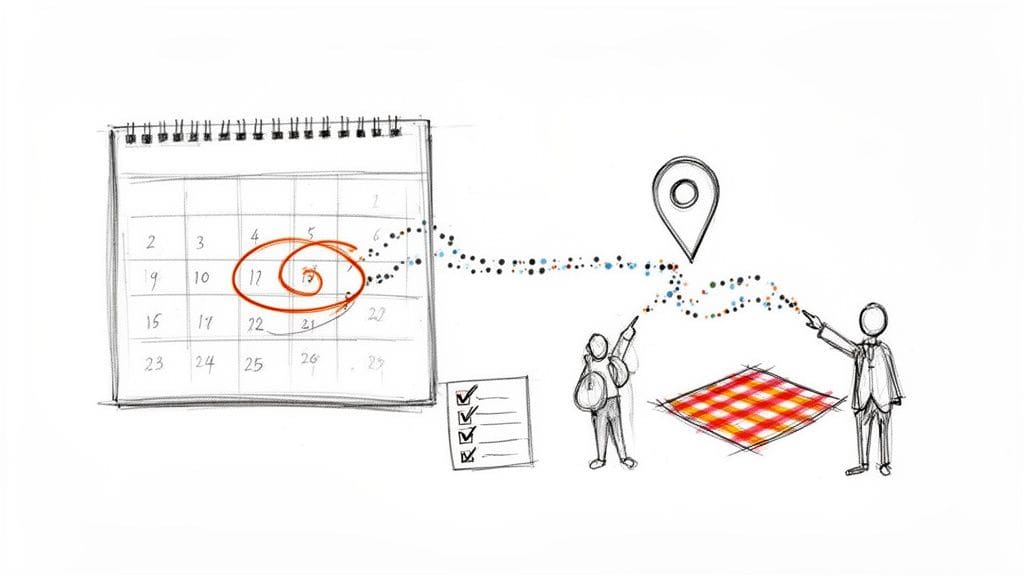
By centering the discussion on future activities, you create a purposeful interaction. Instead of searching for abstract topics, you can discuss logistics like dates, times, and locations, or brainstorm ideas for a party or a trip. This turns the conversation into a collaborative, goal-oriented task, which can feel more comfortable and productive.
Why This Method Works
Planning reduces ambiguity in social interactions. The conversation has a built-in purpose: to organize a future shared experience. This process naturally generates questions and next steps, making the back-and-forth feel logical and less demanding. Deciding what to talk to your friends about is simplified when the goal is to coordinate attendance at a concert or figure out the details of a weekend getaway. The conversation is anchored by real-world constraints and possibilities.
> Key Insight: Concrete plans provide a natural script with a beginning, middle, and end. The process of brainstorming, deciding on details, and confirming the plan gives the conversation a logical flow that minimizes social guesswork.
Actionable Tips for Implementation
- Prepare Key Details: Before suggesting an activity, have some specific information ready. Knowing potential dates, times, or costs prevents the conversation from becoming vague and helps your friend make an informed decision.
- Use a Direct Tone for Logistics: When discussing practical details, be clear and direct to avoid confusion. For example, "Are you free on Saturday the 14th at 7 PM for the movie?" is more effective than "Maybe we could see a movie sometime?"
- Brainstorm Collaboratively: Frame planning as a team effort. Ask for their input with questions like, "I was thinking we could go hiking next month. Do you have any favorite trails?" This makes the process inclusive and shows you value their opinion on what to talk to your friends about doing together.
4. Seeking or Offering Advice & Support
A powerful way to figure out what to talk to your friends about is by creating a space for reciprocal advice and support. These conversations, focused on helping each other with real-life challenges, build deep intimacy and trust. For many neurodivergent people who appreciate directness and problem-solving, this clear, purpose-driven framework can feel more manageable than ambiguous social chatter.
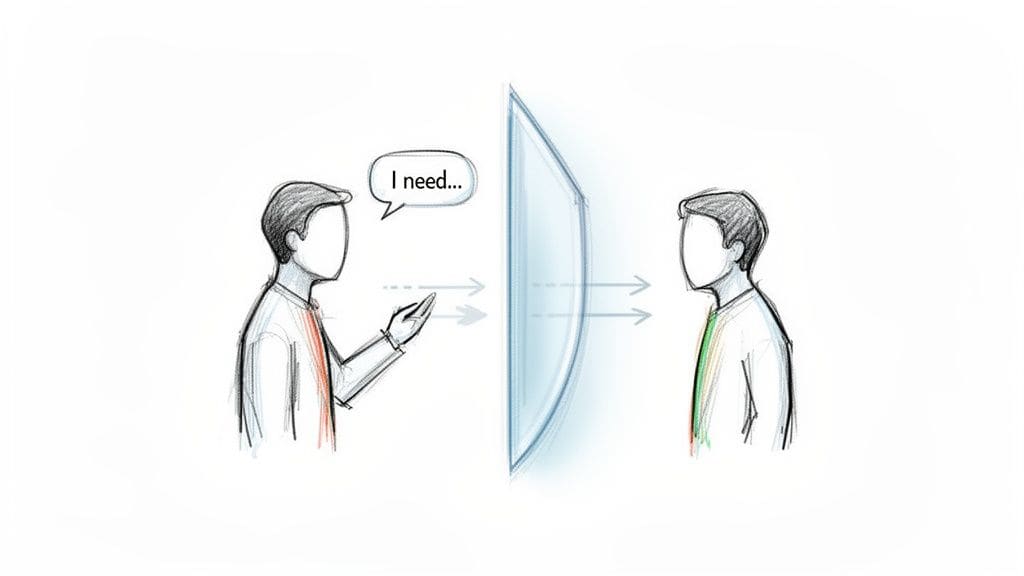
This method provides a definite purpose for the conversation, whether it's brainstorming career moves, processing family dynamics, or discussing mental wellbeing. By moving into a helper or advisee role, you bypass the uncertainty of small talk and engage in a meaningful exchange.
Running out of things to say with friends? tonen can help.
tonen offers conversation scripts, Reply Helper, Perspective Helper, Debrief, Phone Call Mode and Calm Kit. Start with 21 free scripts on iPhone. Optional Premium unlocks more features.
Download on the App StoreAvailable on iOS.
Why This Method Works
Focusing on advice creates a clear structure with defined roles, which can reduce social anxiety. You know your objective: to either offer help or ask for it. This removes the guesswork from the interaction and grounds it in a concrete, shared goal. It's a direct route to figuring out what to talk to your friends about that strengthens your bond through vulnerability and mutual reliance. The conversation becomes a tool for connection, not just a social obligation.
> Key Insight: Offering or seeking support provides a conversational script based on problem-solving. One person presents a challenge, and the other asks clarifying questions, offers perspectives, or helps brainstorm solutions, creating a natural and productive back-and-forth.
Actionable Tips for Implementation
- Ask Before Advising: Always check if your friend wants advice or just a listening ear. A simple, "Are you looking for advice, or do you just need to vent?" respects their needs and sets clear expectations for the conversation.
- Use Clear "I" Statements: When asking for help, be direct to avoid miscommunication. Instead of hinting at a problem, try, "I'm struggling with a situation at work and could really use your perspective on it." This directness is often appreciated.
- Set Boundaries on Support: It's okay to not have the capacity to help. If you're overwhelmed, you can say, "I want to support you, but I don't have the emotional energy to talk about this right now. Can we check in tomorrow?" Learning how to say things without upsetting people is a key skill for maintaining healthy friendships.
5. Sharing Funny Stories, Memes & Humor
A fantastic solution for what to talk to your friends about is to build conversations around humor. Sharing funny personal anecdotes, absurd observations, or the latest viral meme creates an immediate connection through shared laughter. For many neurodivergent individuals, humor can be a lower-stakes way to bond, as it often requires less deep emotional vulnerability while still fostering a strong sense of camaraderie and joy.
This method sidesteps the pressure of serious topics by focusing on lighthearted, relatable content. Instead of struggling for a conversation starter, you can simply share something that made you laugh, creating a natural and positive opening for interaction.
Why This Method Works
Humor acts as a universal social lubricant, reducing the cognitive and emotional load of conversation. When you're both laughing at the same relatable neurodivergent meme or a ridiculous situation you experienced, you're co-creating a positive emotional state. This makes figuring out what to talk to your friends about feel effortless because the goal is simply to share a moment of fun, not to navigate complex social rules.
> Key Insight: Humor provides a low-pressure entry point. A funny story or meme doesn't demand a heavy response; a simple "lol" or a laughing emoji can be enough to sustain the connection, making it ideal for low-energy days.
Actionable Tips for Implementation
- Create a Humor Library: When you see a funny meme, video, or post, save it to a specific folder on your phone or computer. This gives you a pre-vetted collection of content to share asynchronously in a group chat or when conversation lulls.
- Frame Your Funny Story: Turn an awkward moment into a bonding experience. Start with, "You won't believe the awkward thing I just did..." This frames the story as humor, inviting your friend to laugh with you, not at you.
- Know Your Audience: Humor is subjective. Before sharing a niche or potentially edgy joke, consider your friend's sense of humor. If unsure, you can test the waters with something universally relatable, like a funny animal video.
- Tag-Team the Joke: If you have a shared funny experience, build on each other's retelling. Adding details and laughing together about the memory reinforces your bond and makes deciding what to talk to your friends about a collaborative, fun activity.
6. Exploring Perspective & Meaning Through Hypotheticals
A creative solution for figuring out what to talk to your friends about involves using "what if" scenarios and thought experiments. This method uses hypothetical questions to explore ideas, values, and perspectives without the pressure of discussing deeply personal challenges. For many neurodivergent individuals, this abstract, idea-based approach feels safer and more engaging, fostering connection through intellectual curiosity rather than direct vulnerability.
Conversations built on hypotheticals-like debating the ethics of a superhero's choice or imagining how you'd handle a zombie apocalypse-can reveal a lot about a person's logic and values. This creates depth and understanding in a low-stakes, often playful, way.
Why This Method Works
This approach is effective because it separates ideas from personal identity, allowing for open and honest debate without the risk of judgment. You can discuss complex topics like morality, friendship, or societal rules through an impersonal lens. Figuring out what to talk to your friends about becomes an exercise in creativity, exploring shared and differing viewpoints on everything from silly superpower choices to serious ethical dilemmas. It's a way to connect on a deeper level by exploring how you each think.
> Key Insight: Hypotheticals create a conversational playground. There are no "right" answers, which removes the fear of saying the wrong thing and encourages imaginative, collaborative thinking.
Actionable Tips for Implementation
- Start with Fun: Begin with lighthearted questions that are easy to answer. "If you could have any fictional animal as a pet, what would it be and why?" is less intimidating than a heavy philosophical prompt.
- Bridge to Reality (Gently): After exploring a hypothetical, you can connect it back to real life. For example, "Your answer about what makes a good leader in that scenario is interesting. It reminds me of what we were saying about our boss last week."
- Use a Warm Tone: Your tone of voice is important; ensure your curiosity sounds genuine and not like an interrogation. Keep the exchange playful and reciprocal, always giving your friend ample space to explore their own thoughts. When you are stuck on what to talk to your friends about, this method provides endless material.
7. Updates on Routines, Current Events & Happenings
A straightforward way to figure out what to talk to your friends about is by sharing casual updates on your life. This can include new routines you're trying, interesting articles you've read, current events, or simply what you've been watching lately. This method provides a steady stream of low-pressure conversation material without needing deep vulnerability or extensive planning.
This approach is especially effective for many neurodivergent people, as it aligns with a natural tendency to communicate by sharing information and observations. Instead of forcing small talk, you're offering a simple, factual glimpse into your world, creating an easy opening for your friend to do the same.
Why This Method Works
Sharing routine updates and current happenings lowers the barrier to starting a conversation. It doesn't require a big emotional investment and can feel more concrete than abstract questions about feelings. Discussing something you just learned or a new habit you're building is a fantastic way to connect. Knowing what to talk to your friends about becomes much simpler when you can draw from your daily experiences.
> Key Insight: Life updates serve as a low-stakes "check-in" that maintains connection. It signals that you're thinking of your friend and want to keep them in the loop, strengthening the bond through consistent, small interactions rather than infrequent, high-effort ones.
Actionable Tips for Implementation
- Start with a Simple Opener: Begin with a casual line to introduce your update. For example, "You won't believe the new coffee routine I'm trying," or "I just saw this wild news story and had to share."
- Keep It Brief: Avoid info-dumping by keeping your initial share concise. The goal is to open a dialogue, not deliver a monologue. Share the main point, then pause to let your friend react or ask questions.
- Ask a Reciprocal Question: After sharing, turn the focus back to them. A simple, "How about you? Anything new in your world?" or "Seen any interesting trends lately?" makes the conversation a two-way street.
- Connect to Their Interests: When sharing an update, try to link it to something they care about. For instance, "I started watching this new show, and the main character totally reminds me of the one from that book you love." This makes the update more relevant and engaging for them.
8. Expressing Appreciation & Gratitude
A direct and powerful way to figure out what to talk to your friends about is to focus on expressing genuine appreciation. This involves conversations centered on telling friends why you value them, what they mean to you, or your gratitude for specific things they have done. For many neurodivergent individuals who find it hard to translate internal feelings into words, this structured approach can be a low-ambiguity method for building connection.
This method sidesteps the ambiguity of casual conversation by providing a clear purpose and script. Instead of wondering what to say next, you can initiate a meaningful interaction by sharing something positive and specific about your friend, which reinforces the bond between you.
Why This Method Works
Voicing appreciation provides a clear, positive framework for communication, reducing the mental effort of guessing social cues. It's a conversation with a built-in positive outcome: making your friend feel seen and valued. This can be especially helpful when you're unsure what to talk to your friends about but want to show you care. Actions like thanking a friend for their support during a tough time or complimenting how they handled a situation strengthen your connection with clear, heartfelt communication.
> Key Insight: Direct appreciation is a high-impact, low-risk conversational tool. It's difficult to misinterpret genuine gratitude, making it a safe way to express positive feelings and deepen a friendship.
Actionable Tips for Implementation
- Be Specific: Vague praise like "you're a great friend" is nice, but specific comments are more impactful. Try, "I really appreciated how you listened without judgment when I was upset last week."
- Use a Script as a Starting Point: If finding the right words is a challenge, use pre-made scripts as a foundation. For example, "I wanted to tell you that I'm really grateful for [specific action] because it [how it made you feel]." Learning more about how to express your feelings in words can provide you with more tools for these conversations.
- Choose the Right Moment: Bring up your appreciation during a quiet, one-on-one moment rather than in a loud, distracting group setting. This ensures your message is received clearly and feels more personal.
9. Discussing Identity, Neurodivergence & Lived Experience
Diving into conversations about identity, neurodivergence, and lived experiences can create profound, lasting connections. If you're wondering what to talk to your friends about that moves beyond surface-level topics, sharing your perspective as a neurodivergent person can be incredibly powerful, especially with friends who share similar experiences. These conversations involve discussing everything from coping strategies to how your neurotype shapes your worldview.
This topic transforms the abstract nature of neurodivergence into a concrete, shared reality. It allows you and your friends to process social situations, validate each other's feelings, and build a supportive framework based on mutual understanding. This is about making space to be your authentic self and seeing that self reflected and accepted by others.
Why This Method Works
Sharing lived experiences around neurodivergence fosters a unique form of intimacy and trust. It confirms that you are not alone in your struggles or your joys, which is a fundamental human need. These discussions can demystify behaviors like stimming or the need for accommodations, turning potential points of confusion into opportunities for connection. Deciding what to talk to your friends about becomes less about performance and more about genuine, vulnerable sharing.
> Key Insight: Vulnerability in a safe friendship isn't a weakness; it's a bridge. By opening up about your neurodivergent experience, you give your friends a roadmap to better understand and support you, strengthening the entire relationship.
Actionable Tips for Implementation
- Test the Waters First: Start with a lower-stakes observation before diving deep. You could say, "My brain felt so scrambled after that loud party. Do you ever feel like that?" This gauges their openness to the topic.
- Frame it with "I" Statements: Focus on your personal experience to avoid making broad generalizations. For example, "For my ADHD, I find that having a visual timer helps me stay on task," is more effective than "People with ADHD need timers." This makes your experience relatable, not prescriptive. Learning more about communication can be helpful; check out these social skills for autistic adults for more ideas.
- Balance Sharing and Listening: These topics can be emotionally intense. Be mindful of your own capacity and your friend's. If you share something heavy, make sure to ask them how they're doing or if they've ever felt similarly, ensuring the conversation remains a two-way street.
10. Boundary-Setting & Honest Communication About Needs
One of the most profound topics for what to talk to your friends about involves clearly communicating your personal needs and boundaries. While it might feel intimidating, having direct conversations about your limits-such as needing advance notice for plans or preferring text over phone calls-is essential for building sustainable and respectful friendships. This approach prevents resentment and misunderstandings before they start.
These conversations shift the dynamic from guessing games to mutual understanding. Instead of hoping a friend intuits your needs, you provide them with a clear roadmap for how to best support you, making your interactions feel safer and more authentic.
Why This Method Works
Honest communication about your needs reduces the social exhaustion that comes from masking or enduring situations that drain your energy. It allows you to show up as your genuine self, which strengthens the foundation of your friendship. Deciding what to talk to your friends about can include these structured talks, which ultimately serve to protect the long-term health of the relationship. By being upfront, you give your friends the information they need to interact with you in a way that feels good for everyone involved.
> Key Insight: Setting boundaries is not about pushing people away; it's about creating clear guidelines so they can stay close in a healthy way. It replaces ambiguity with clarity, reducing anxiety for both you and your friend.
Actionable Tips for Implementation
- Use "I" Statements: Frame your needs from your own perspective to avoid sounding accusatory. Instead of "You always call without warning," try "I find it easier to connect when we schedule calls, as I have limited bandwidth for spontaneous ones."
- Offer Alternatives: When setting a boundary, provide a positive alternative. For example, "I'm not available for crisis support right now, but I care about you and want to check in tomorrow. Can we text then?"
- Practice Your Script: Rehearsing what you want to say can significantly lower the stress of the conversation. You can learn more about how to set boundaries with friends and find scripts that help you prepare for these important discussions.
Comparison of 10 Friend Conversation Topics
| Conversation Type | Ideal Use Cases 💡 |
|---|---|
| Shared Special Interests & Hyperfixations | When interests overlap; neurodivergent peers |
| Asking Thoughtful Questions About Their Life | When you struggle with self-disclosure; building closeness |
| Discussing Plans, Events & Future Activities | Organizing outings; practical thinkers |
| Seeking or Offering Advice & Support | During challenges; mutual support relationships |
| Sharing Funny Stories, Memes & Humor | Casual chats; group texts; icebreakers |
| Exploring Perspective & Meaning Through Hypotheticals | Idea-focused friends; philosophical or creative talks |
| Updates on Routines, Current Events & Happenings | Regular check-ins; maintaining ties |
| Expressing Appreciation & Gratitude | Milestones; supporting friends after help |
| Discussing Identity, Neurodivergence & Lived Experience | With other neurodivergent people; supportive settings |
| Boundary-Setting & Honest Communication About Needs | Fixing recurring friction; long-term relationships |
Your Next Conversation Can Be Different
This extensive guide moves beyond generic advice and offers a structured toolkit for anyone who has ever felt stuck wondering what to talk to your friends about. The core takeaway is simple: meaningful connection is not a mystery to be solved, but a skill to be built through practice, preparation, and having the right frameworks. For many neurodivergent individuals, this means turning the abstract art of conversation into a more predictable science.
We've explored ten distinct pathways for connection, each with its own set of scripts, tone variations, and practical applications. From the comfortable ground of shared special interests to the vulnerability of discussing your neurodivergence, you now possess a map for navigating social interactions with more confidence. The next time you feel the pressure of an impending hangout or a silent phone call, you don't have to rely on guesswork. You have a plan.
From Framework to Friendship
The true power of these strategies isn't just in filling silence; it's about intentionally building stronger, more authentic friendships. Mastering these conversational frameworks creates a positive feedback loop. A successful conversation builds confidence, that confidence encourages more interaction, and more interaction deepens the friendship.
Let's distill the most critical lessons from this guide into actionable next steps:
- Start Small and Specific: Don't try to implement all ten strategies at once. Choose just one for your next interaction. If you and your friend both love a particular video game, focus on Strategy #1: Shared Special Interests. If you haven't seen them in a while, prepare a few questions from Strategy #2: Asking Thoughtful Questions.
- Embrace Preparation: Rehearsal is not a sign of being unnatural; it's a tool for clarity. Before a call, jot down a few bullet points. Use the micro-scripts provided as a starting point and adapt them to your own voice. This preparation reduces in-the-moment cognitive load, freeing you up to actually listen and connect.
- Prioritize Authenticity Over Perfection: The goal is not a flawless performance. The goal is genuine connection. It's okay if you stumble over a word, need to pause and think, or use an "opt-out" line when a topic feels too heavy. True friends will appreciate your honesty far more than a perfectly polished, but impersonal, conversation.
- Make Boundaries Part of the Conversation: Remember Strategy #10: Boundary-Setting. Knowing what to talk to your friends about also includes knowing what *not* to talk about. Normalizing conversations about communication needs, social battery levels, and topic preferences is one of the most profound ways to show you care.
> A great friendship isn't built on having endless, spontaneous things to say. It's built on a mutual commitment to showing up, listening with intent, and creating a space where both people feel seen and respected.
Ultimately, these frameworks are about empowerment. They give you control in situations that may have previously felt chaotic or overwhelming. By learning how to initiate, guide, and even gracefully exit conversations, you are investing directly in the health and longevity of your relationships. The next time you find yourself anxious about an upcoming social event, revisit this list. You have more tools at your disposal than you think, and your next conversation can be the one where you feel truly heard.
*
tonen offers Conversation Scripts, Reply Helper, Perspective Helper, Debrief, Phone Call Mode and Calm Kit. Choose a script for wording, Reply Helper for a draft response, Perspective Helper for possible interpretations, or Debrief to reflect afterwards. AI suggestions are possibilities to check, not evidence of another person’s intentions.