The best app to improve communication skills provides practical, on-demand coaching to help you build confidence and lower social anxiety. For neurodivergent people or anyone facing stressful conversations, a tool like tonen creates a safe, low-pressure space to prepare and practice. It offers pre-written scripts for tricky situations, tone adjustments to sound authentic, and a private practice mode, turning overwhelming moments into manageable ones and providing a clear path to better real-world interactions.
Finding the Right Communication Skills App
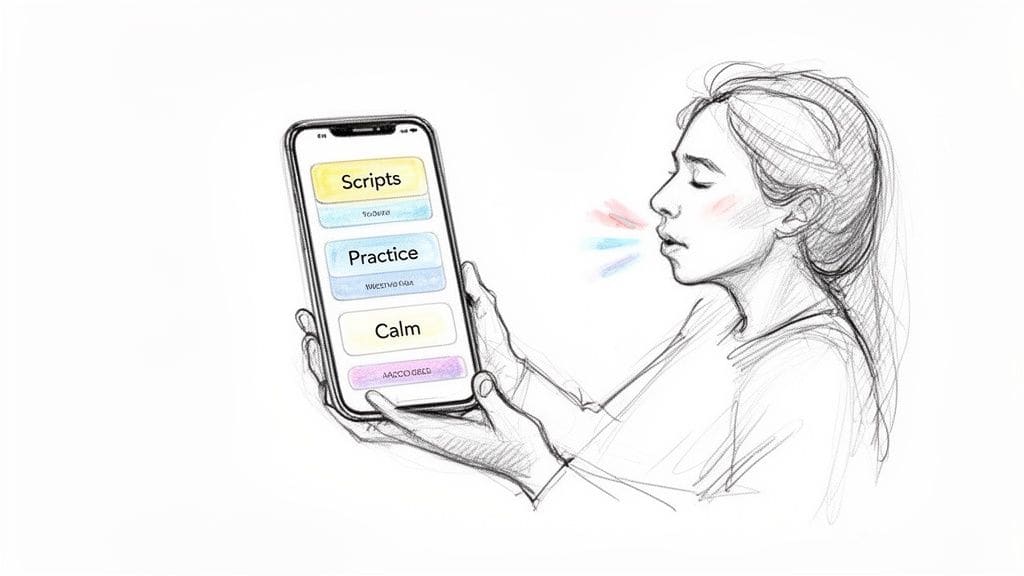
If you're looking to build better communication skills in 2026, technology can offer some surprisingly effective support. A well-designed app to improve communication skills acts like a personal toolkit, giving you the exact resources you need to navigate tricky social situations with a lot less stress.
Let's break down what makes these apps work, who they help the most, and how you can pick the one that's right for you. We'll start with the core features that truly make a difference in building real-world conversational confidence.
Why This Kind of Support Is So Needed
Let's be honest: communication barriers can be exhausting, especially for the 15-20% of the global population that identifies as neurodivergent. These challenges don't just affect social life; they can impact work and create a huge amount of mental drain.
We're now seeing clear data on how much these tools can help. Pilot studies on apps with script libraries and calming tools have shown a 50% reduction in social anxiety after just 30 days of use. That's a massive impact.
For many, particularly autistic individuals, these tools offer a vital support system that simply wasn't available before. A specialized autism communication app can provide targeted assistance that respects and works with a neurodivergent communication style. For a curated adult-focused roundup, see the best apps for autistic adults.
> Think of a communication app like a personal coach in your pocket. It's a safe space to rehearse a tough conversation, find the right words when you're stuck, or calm your nerves before a stressful interaction, all without judgment.
Choosing Your Toolkit
When you start looking for an app to improve your skills, it's easy to get lost in options that just offer generic public speaking tips. The real value comes from apps that provide comprehensive effective communication skills training focused on real-life scenarios.
A quality app should equip you with practical tools that actually work. Here are some of the most important features to look for.
Core Features of an Effective Communication Skills App
The table below breaks down the key features that can turn an app from a simple novelty into a powerful tool for building confidence and reducing anxiety.
| Feature | Benefit for the User | Example Application |
|---|---|---|
| Script Library | Provides ready-to-use language for common situations, reducing cognitive load and the "what do I say?" panic. | Finding a polite way to ask for a deadline extension at work or a clear way to set a boundary with a friend. |
| Tone Options | Allows you to adjust the script's tone (e.g., warmer, firmer) to match the context and your personality. | Making sure a request to a colleague sounds collaborative (Softer) instead of demanding (Firmer). |
| Private Practice Mode | Offers a judgment-free space to rehearse conversations out loud, building muscle memory and confidence. | Running through a difficult conversation with a family member before it happens, so the words feel more natural. |
| Built-in Calm Tools | Provides immediate access to grounding exercises (like guided breathing) to manage in-the-moment anxiety or overwhelm. | Using a 2-minute breathing exercise to calm your nervous system just before walking into a job interview. |
These features work together to create a supportive loop: you can prepare what you want to say, practice how you want to say it, and have tools to manage your anxiety if things get stressful. This is what helps you build skills that translate directly into your daily life.
Why These Apps Are a Lifeline for Neurodivergent Minds
If you're neurodivergent or have social anxiety, you've probably heard well-meaning but unhelpful advice like "just practice more" or "be confident." It completely misses the point. A conversation isn't just an exchange of words; it's an intense mental workout.
You're constantly decoding unspoken rules, trying to read subtle tones, and fighting a background fear of saying the wrong thing. That's why a dedicated app to improve communication skills isn't just another self-help tool. It's a genuine lifeline. It works by offloading some of that heavy mental work, so you can show up more authentically and with far less stress.
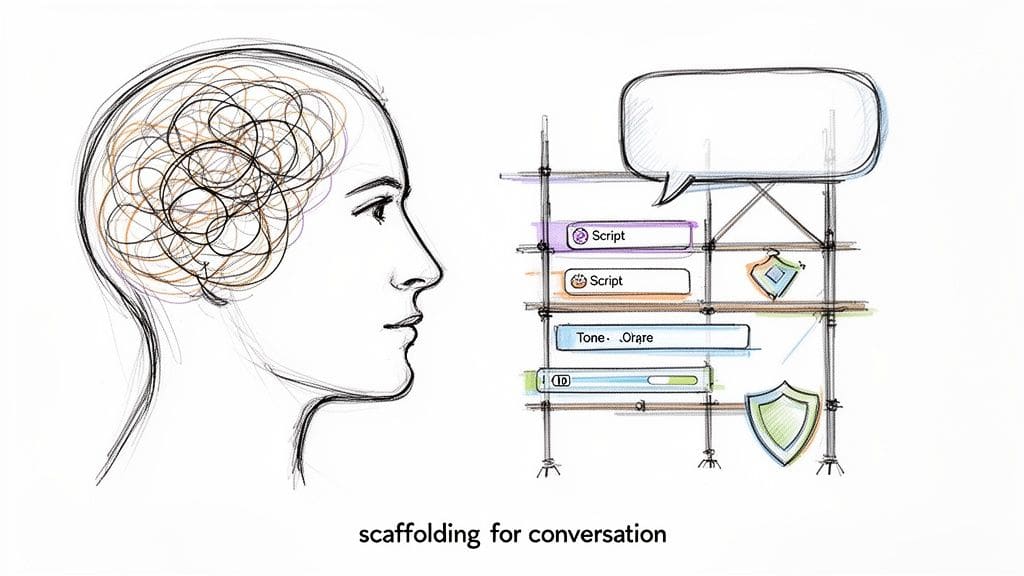
Think of it this way: a difficult conversation can feel like trying to build something complex with no instructions. A good communication app provides the scaffolding for that conversation. It doesn't build it for you, but it offers a solid framework—like scripts and tone suggestions—that removes the guesswork. This frees up your mental energy to focus on the actual connection.
Translating Social Cues into Clear Actions
One of the hardest parts for many neurodivergent communicators is navigating the unwritten social code. How do you know if a coworker is being polite or passive-aggressive? How can you set a boundary without coming across as harsh?
This is where a well-designed app becomes your personal "translator for social cues."
Instead of leaving you to figure out ambiguous signals on your own, it gives you clear, actionable options. Take declining an invitation—something that can cause a ton of stress. An app can offer several ways to say "no" kindly, each with a slightly different tone. This empowers you to protect a friendship without the exhausting work of crafting the perfect response from scratch. We explore this targeted support more in our guide to apps for neurodivergent communication.
> A quality app externalizes the cognitive load. It takes that exhausting internal monologue—"What do I say? How do I say it? What if they react badly?"—and turns it into a simple, external choice. This dramatically lowers the barrier to entry for any difficult conversation.
Reducing Anxiety and Preventing Burnout
The constant mental processing required for social interaction often leads to major anxiety and, eventually, burnout. When every conversation feels like a high-stakes performance, your energy gets drained fast. This is another area where an app to improve communication skills provides critical support.
By offering features designed to lower in-the-moment stress, these apps help manage the emotional side of communicating.
* Pre-Written Scripts: Having a library of prompts for common situations means you don't have to invent language under pressure. This is a game-changer for predictable but stressful events, like asking for accommodations at work or clarifying instructions in a class.
* Tone Adjustments: The ability to switch a script's tone from "Direct" to "Warm" gives you control over how your message lands, which reduces the fear of being misunderstood.
* Calming Tools: Instant access to grounding exercises can make all the difference. If you feel overwhelmed before a chat, a quick breathing exercise can help regulate your nervous system and bring you back to a calmer state.
These features don't just help you communicate better; they help you conserve the precious mental and emotional energy that neurodivergent individuals and people with anxiety need to navigate their day.
Must-Have Features That Make a Real Difference
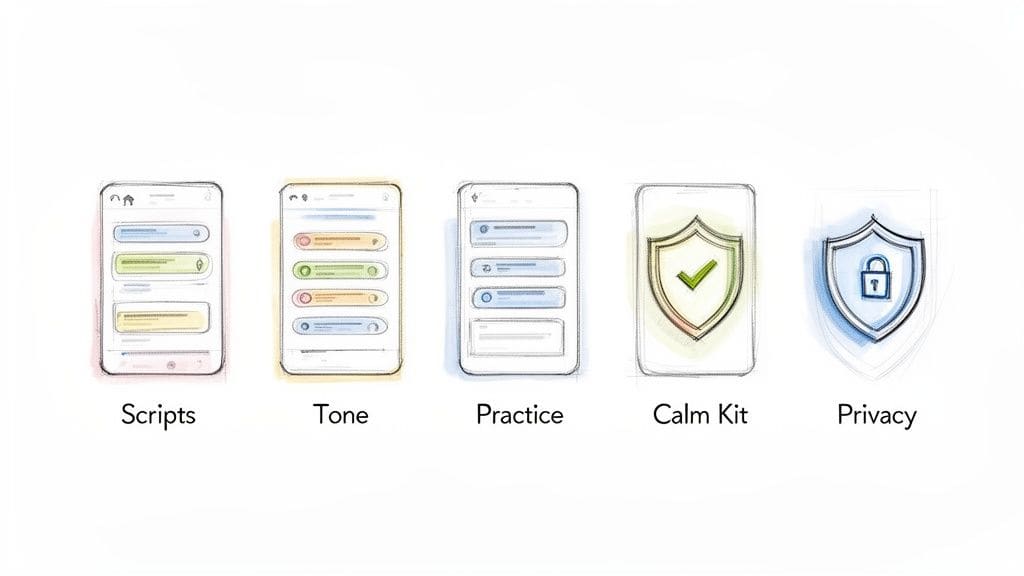
Not all apps are created equal. Finding an app to improve communication skills that actually works means looking past generic public speaking tips and finding a tool that feels like a personal support system.
The best ones are designed to solve the real, in-the-moment problems that come with social anxiety and neurodivergence. Think of it as a practical buyer's guide for your brain—you need something that does more than just tell you to "be confident."
A truly helpful app comes with a suite of features that work together to lower your cognitive load. We're talking about ready-made scripts, tone options, a private space to practice, and tools to manage anxiety when it spikes. When you put all these pieces together, you get a powerful resource to help you prepare for, get through, and recover from stressful conversations.
Script Libraries That Save Mental Energy
Imagine having a solid starting point for hundreds of tricky conversations. That's what a good script library offers. It's a foundational feature providing ready-to-use prompts for everything from setting boundaries with a difficult relative to asking for help at work.
For instance, an app like tonen gives you over 188 prompts. This means you don't have to waste precious mental energy staring at a blank screen, trying to find the "perfect" words under pressure. Instead, you can browse tested language that gets your point across clearly and kindly. You can explore how conversation scripts can change your whole approach to these moments.
Tone Choices That Give You Control
The words you use are only half the battle; how you say them matters just as much. A game-changing feature to look for is the ability to adjust the tone of any script. This lets you fine-tune the message so it fits the situation and, most importantly, feels like you.
Ready to improve how you communicate? tonen can help.
tonen gives you 188+ conversation scripts, tone guidance and calming tools — designed for autistic adults, ADHD and social anxiety. Try it free for 7 days.
Download on the App StoreiOS only. Android coming soon.
You might see options like:
* Warm: Perfect for preserving a friendship while declining an invitation.
* Firmer: Great for setting a clear boundary that leaves no room for negotiation.
* Direct: Ideal for making a straightforward, professional request at work.
This kind of control helps take the edge off one of the biggest sources of social anxiety: the fear of being misunderstood. It helps you sound authentic, not like you're reading from a generic script.
> The need for these skills has exploded, especially in the workplace. Back in 2021, communication abilities showed up in over 70% of new job openings globally, a huge jump driven by the shift to remote and hybrid work. This trend has only made tools that build clear, confident interaction more essential than ever. You can dig into more on the development of communication skills to see the full picture.
Practice Mode and Calm Kits
Rehearsal is how you build real confidence. A Practice Mode gives you a private, judgment-free zone to say the words out loud. It's your personal rehearsal studio where you can build the muscle memory needed for real-life conversations.
Finally, a built-in Calm Kit provides immediate support for when you feel that wave of overwhelm coming. Features like guided breathing, grounding exercises, or safe-place visualizations are crucial for managing the physical symptoms of anxiety. Having these tools right inside the app means help is just a tap away—right when you need it most.
Putting Communication Scripts into Practice
The features of a good communication app sound great on paper, but how do they actually hold up in the real world? The real test happens when you're in the thick of a genuinely tough, emotionally charged conversation. This is where tools like pre-written scripts and tone suggestions stop being abstract concepts and become practical, human lifelines.
Let's walk through a few stories that show just how big a difference these features can make. These aren't just hypotheticals; they mirror the everyday communication hurdles so many of us face.
Setting a Boundary Without Causing a Fight
First, picture Alex, an autistic adult who feels constantly steamrolled by a well-meaning but overbearing family member. This person often makes plans for Alex without asking, assuming they know what's best, which just feeds a cycle of anxiety and quiet resentment.
Alex needs to set a boundary but is terrified of starting a huge fight or damaging the relationship. Using an app like tonen, they find a script for "Setting a boundary about personal time." The first instinct might be to say, "I need you to stop making plans for me," but that feels way too confrontational.
Instead, the app suggests a 'Firmer' tone: "I appreciate you thinking of me, but moving forward, I need to manage my own schedule. Please check with me before making any plans that involve me."
This version is direct but still respectful. It takes the emotional guesswork out of the equation and gives Alex the exact words to use. After practicing it a few times, Alex can deliver the line calmly and confidently, finally setting that needed boundary without creating a family blow-up. It's a clear example of how an app can become an ally, helping you build skills for things like conflict resolution in relationships in all areas of your life.
Rehearsing for a High-Stakes Conversation
Next, think about Maria, an employee with ADHD who is getting ready for her annual performance review. She has to ask for some specific accommodations, like getting complex instructions in writing, but she's worried she'll get flustered and blank on her key points when she's on the spot.
This is where the app's Practice Mode becomes a game-changer. Maria finds a script for "Asking for workplace accommodations," saves it, and then rehearses it multiple times in private.
> This kind of rehearsal is all about building muscle memory. It lets Maria get comfortable with the words, try out a professional tone, and even think through how she'll answer potential questions. By the time she walks into that review, she's not just reciting a script; she's confidently and clearly stating her needs because she's already been through the conversation in a safe, judgment-free space.
Declining an Invitation While Preserving a Friendship
Finally, imagine someone with social anxiety who just got an invite to a huge party. They really don't want to go, but they're paralyzed by the fear of offending their friend and making things awkward. An app can offer a whole category of scripts for "Politely declining an invitation."
The user can choose a 'Warm' tone, which might generate something like this: "That sounds so fun, and I'm honored you thought of me! I won't be able to make it this time, but I'd love to catch up one-on-one soon."
This simple script does two crucial things at once: it respects the user's personal needs while also preserving the friendship. It turns a moment of high anxiety into a simple, straightforward, and manageable interaction. If this sounds familiar, you can read about how to practice conversations for anxiety and build this kind of confidence one step at a time.
Integrating a Communication App into Your Daily Routine
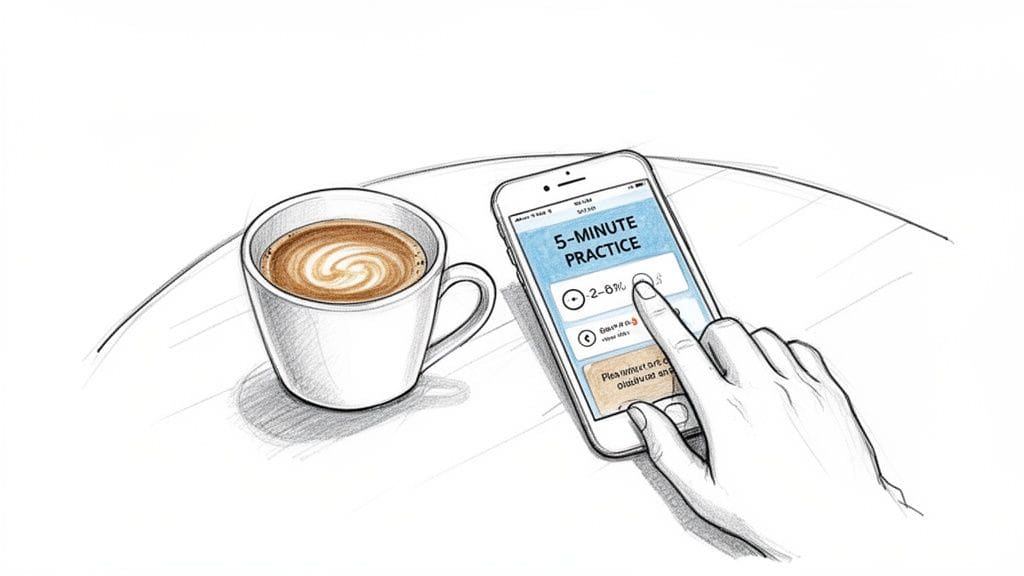
Any app to improve communication skills is only as good as the habit you build around it. To get real results, you have to move it from just another icon on your screen to a trusted part of your personal toolkit.
The key is to make practice a small, manageable habit. You don't need to block out hours for rehearsal. Just a few focused minutes each day can build the conversational muscle memory and confidence you need for those moments that matter. Here's how you can make a tool like tonen a dependable part of your daily life.
The 5-Minute Daily Practice Habit
One of the best ways to make an app stick is to create a small, consistent ritual. The goal is to make practice feel as automatic as your morning coffee.
Here's how you can build a 5-Minute Daily Practice habit:
1. Choose a Consistent Time: Link your practice to something you already do every day, like right after you brush your teeth or during your commute.
2. Pick One Script: Don't try to do too much at once. Just choose one new script from the library that feels relevant or a little challenging.
3. Rehearse Out Loud: This is the most important step. Use the app's practice mode to actually say the words. This is what builds real vocal confidence.
4. Experiment with Tone: Try the script in a few different tones (like Warm or Firmer) to feel the subtle shifts in meaning.
This simple habit turns preparing for tough conversations into a proactive, low-stress activity instead of a last-minute scramble.
> Building this consistency really pays off. Data from similar apps shows that private practice modes have led to 80% of users reporting that difficult family and health discussions became easier to manage. You can read more about these insights from AI-powered practice apps on apps.apple.com.
Using Your App in the Moment
Beyond your daily practice, a great app to improve communication skills also works as on-demand support right when you need it most. The idea is to get help discreetly, without drawing any attention.
For instance, you might quickly pull up a script for "making a clear request" just before an important phone call. Or, if you feel that familiar surge of anxiety before walking into a meeting, you can use the 'Calm Kit' as a preventative tool. A two-minute breathing exercise can ground you and help regulate your nervous system before you even enter the room.
By combining daily rehearsal with this kind of in-the-moment support, the app becomes a dynamic tool. It's both your private gym for building communication strength and your trusted field guide for navigating the social world with more ease and self-assurance.
How to Choose the Right App: An Evaluation Checklist
Choosing a communication skills app can feel like another overwhelming task, but it doesn't have to be. The best app isn't the one with the most features; it's the one that actually fits your brain and your life.
Think of it like finding the right pair of noise-canceling headphones. You need something that effectively blocks out the noise, feels comfortable, and doesn't add more stress. This checklist will help you cut through the marketing fluff and find a tool that genuinely supports you, especially if you deal with social anxiety or are neurodivergent.
1. Who Is It *Really* For?
Was this app built with your brain in mind? So many apps are geared toward generic public speaking tips for neurotypical executives. That's not what you need.
Look for tools specifically designed for neurodivergent users or people with anxiety. A clean, uncluttered interface is a huge clue. If the app feels calming and doesn't assault you with pop-ups and notifications, it's a good sign the creators understand the importance of reducing cognitive load.
2. Does It Solve Real Problems?
Don't get distracted by flashy but useless features. The core function of the app should be to provide practical, in-the-moment support for real communication challenges.
Here's what to look for:
* Practical Scripts: Does it offer short, usable scripts for everyday situations like asking for help, setting a boundary, or making small talk?
* Tone Options: Can you adjust the tone? A script for saying "no" needs to sound different if you're talking to your boss versus a close friend. The ability to shift between Direct, Warm, or Firmer tones is a game-changer for sounding authentic.
* A Private Practice Space: Is there a judgment-free zone to rehearse what you want to say? Building muscle memory in private is key to feeling confident in a live conversation.
* Calm Tools: What happens when you get overwhelmed? The best apps have built-in support, like guided breathing or grounding exercises, to help you regulate your nervous system on the spot.
3. Where Does Your Data Live?
Your thoughts, practice sessions, and custom scripts are incredibly personal. The last thing you want is for that data to be stored on a company's server, where it could be vulnerable.
Dig into the privacy policy. The most trustworthy apps process and store everything directly on your device. This is a non-negotiable for creating a truly safe space to work on your communication skills. If it's not on-device, it's not truly private.
4. Is the App Itself Stressful?
A communication app should reduce your anxiety, not add to it. If the interface is clunky, confusing, or overstimulating, it's already failed.
A good app should feel intuitive and easy to navigate from the moment you open it. It should feel like a calm, supportive tool, not another task on your to-do list. For a deeper look at tools built with this philosophy, you can learn more about apps for neurodivergent people.
5. Can You Try Before You Buy?
Confidence is key, and that applies to the developers, too. A company that believes in its product will let you try it out without any strings attached.
Look for a free trial that doesn't require a credit card. This shows they're confident you'll see the value. After the trial, the pricing should be transparent and simple—no confusing tiers or hidden fees. Clear monthly or annual options are a good sign.
Communication App Evaluation Checklist
Here's a quick-reference table to help you assess any app you're considering. Use it to make sure a tool truly meets your needs for practical support, privacy, and ease of use.
| Evaluation Criterion | What to Look For | Why It Matters |
|---|---|---|
| Target Audience | Language and design specifically for neurodivergent or anxious users. | Ensures the app is built to reduce cognitive load, not add to it. |
| Core Features | Practical scripts, tone options, private practice mode, and calm tools. | The features must solve real-world communication challenges you actually face. |
| Privacy Policy | Clear statement that all user data is stored on-device only. | Your personal thoughts and practice sessions should be 100% private and secure. |
| User Experience | A clean, intuitive, and low-stress interface. | The app should be a calming tool, not another source of anxiety. |
| Pricing Model | A no-credit-card-required free trial and transparent pricing. | Shows the developer is confident in the product's value and respects the user. |
Finding the right app is a personal journey, but by focusing on these key areas, you can filter out the noise and choose a tool that will become a trusted part of your communication toolkit.
Let's Tackle Some Common Concerns
It's totally normal to be a little skeptical about whether an app can really help with something as personal as communication. You might be wondering if a digital tool can make a dent in serious social anxiety, or if you'll just end up sounding like you're reading from a script.
These are great questions. Let's get into them.
Can an App Actually Help if My Social Anxiety Is Severe?
Yes, absolutely. For many people, a well-designed app is the perfect first step. When social anxiety is severe, traditional advice like "just practice more" or joining a group can feel like being asked to run a marathon without any training. It's completely overwhelming.
An app creates a private, judgment-free space to start building those skills. It's like having a rehearsal room where you can practice at your own pace, without the pressure of a live audience. This lets you build a solid foundation of confidence before you ever have to step into a higher-stakes conversation.
But Won't Using Scripts Just Make Me Sound Like a Robot?
This is a huge—and totally valid—concern. The goal of a good app isn't to turn you into a machine that reads lines verbatim. The real purpose is to give you a solid starting point so you're not trying to invent everything from scratch in a stressful moment.
> Scripts provide the blueprint, not the final performance. By rehearsing them and adjusting the tone, you internalize the message and make it your own.
Think of features like tone choices (Warm, Firmer) and a Practice Mode. They're designed to help you take that blueprint and make it sound like you. Over time, you're not just reciting words; you're using a reliable foundation to express your own thoughts more clearly.
So, Is This a Replacement for Therapy?
No, and that's a really important distinction. A communication skills app is a powerful support tool, but it is not a substitute for professional medical advice or therapy.
Think of it as one part of a bigger wellness toolkit. An app can be a fantastic partner to therapy, giving you a practical way to rehearse the strategies you discuss with a clinician. It empowers you with skills for daily interactions, but it doesn't replace the diagnosis, treatment, and personalized guidance you get from a qualified doctor or therapist.
Ready to build confidence in your conversations with less stress? tonen provides the scripts, practice tools, and calming features you need to navigate any interaction. Start your free trial today at https://usetonen.com.
Frequently asked questions
The best app for communication improvement depends on what you find difficult. For speech fluency and public speaking, Speeko or Orai. For conversation scripts and neurodivergent-specific challenges — finding the right words, setting limits, avoiding misreads — tonen is built directly for that use case with 188 real-situation scripts.