Learning how to ask for help gets easier when you do four things in order: notice the need early, choose the right person and time, use a specific script, and regulate the anxiety that shows up around the ask. That matters more than many realize because 40 to 50% of autistic adults report chronic difficulty asking for workplace support, and they are 2.5 times more likely to leave jobs due to unaddressed communication stress.
If you're reading this while staring at an unsent message, replaying ten possible responses, or telling yourself you should be able to handle it alone, you're not failing. You're dealing with a skill that many neurodivergent people were never taught in a way that works for our brains. Generic advice like "just be honest" or "just be specific" often skips the hardest part: turning a tangled internal experience into a clear request while your nervous system is yelling that asking is risky.
This guide is practical on purpose. You'll get decision rules, copyable scripts, and ways to lower the pressure before, during, and after the ask.
Why Asking for Help Feels So Hard
Needing help and being able to ask for it are two different things. A lot of people can spot that they're stuck, overloaded, confused, or close to shutdown. Then they freeze right at the point where they need words.
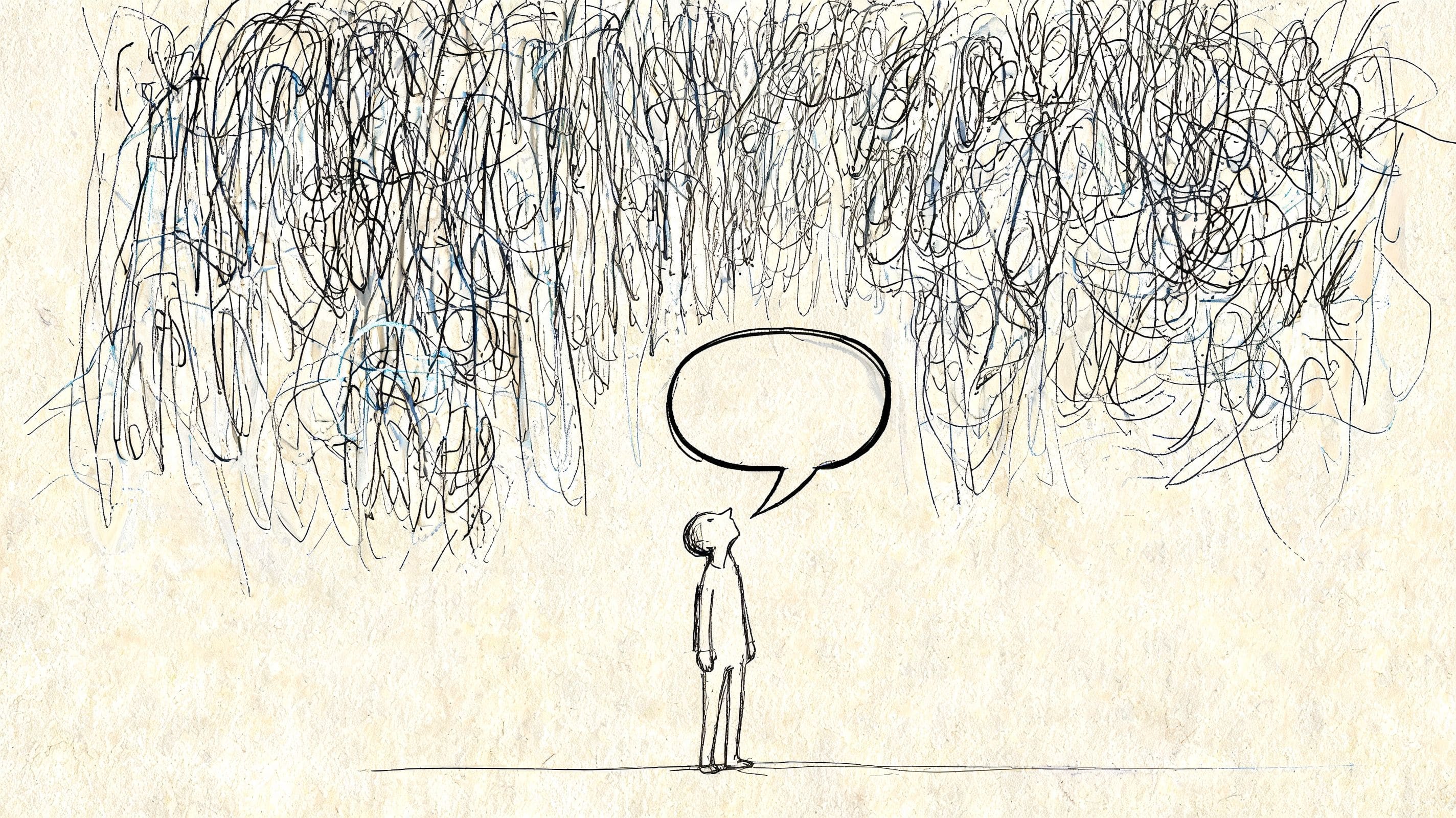
That freeze makes sense. Executive dysfunction can make the first step feel invisible. Rejection-sensitive dysphoria can make a small request feel like a major social risk. Literal thinking can make vague social norms around "the right way" to ask feel impossible to decode. So when people talk about how to ask for help as if it's a simple confidence issue, they miss the actual problem.
A lot of us learned to wait too long. We try to solve everything alone, use up our energy, and ask only when the situation is already urgent. That creates worse timing, less clarity, and more panic.
Why this hits neurodivergent people harder
A 2020 study in the Journal of Autism and Developmental Disorders found that 40 to 50% of autistic adults report chronic difficulties in asking for support in workplace settings, and that communication stress is linked to burnout and job loss. That changes the conversation. Asking for help isn't a soft skill or a nice extra. For many people, it's part of staying employed, staying regulated, and not burning through relationships.
The process that tends to work is simpler than the emotional experience of it:
- Recognize the need early before you're in crisis
- Choose the right person instead of asking the nearest person
- Use a concrete script instead of improvising under stress
- Plan for the emotional aftermath so you don't spiral after hitting send
> Practical rule: If you're waiting until you feel calm, perfectly articulate, and completely certain, you'll probably wait too long.
There's also an access issue here. Plenty of systems are built for people who can ask smoothly and indirectly. If you've ever struggled with forms, vague workplace language, or inaccessible instructions, tools like an accessibility checker for websites and digital systems can help you identify friction points outside yourself, not just inside yourself.
If communication has always felt harder than it seems to for other people, this reflection on why communication can feel so hard may feel familiar. The point isn't to pathologize yourself. The point is to stop treating difficulty as personal failure when it's often a mismatch between your brain, the moment, and the available communication structure.
Recognizing When and Who to Ask
The best ask usually happens before you're desperate. That's hard when your default mode is "push through" or "I'll deal with it later." In practice, the early signs matter more than motivation.
Signs it's time to ask
You probably need support if one or more of these keeps happening:
- You're looping. You keep rereading the same document, redoing the same task, or reopening the same email without progress.
- You're avoiding a specific next step. Not because it's unimportant, but because it feels too ambiguous.
- Your stress response is growing faster than the task. The actual problem is manageable, but your body is acting like it's dangerous.
- You can't prioritize. Everything feels equally urgent, so nothing starts.
- You've stopped making decisions. You're waiting, stalling, or hoping the need will disappear.
None of those mean you're incapable. They mean your current resources aren't matching the demand.
Choosing the right person
Not every helpful person is the right person for this ask. Pick based on role, capacity, and psychological safety.
Use this quick filter:
| Question | What to look for |
|---|---|
| Who has the authority to help? | A manager, teacher, coordinator, clinician, parent, or friend who can actually influence the outcome |
| Who has context? | Someone who already understands the project, pattern, or problem |
| Who has capacity right now? | A person who isn't clearly overwhelmed, rushed, or unavailable |
| Who feels safest? | Someone who tends to respond with clarity, not judgment |
| Who fits the ask? | Practical task help, emotional support, clarification, or permission are different asks |
Sometimes the right person isn't the warmest person. A kind friend may be great for emotional support but not for deadline decisions. A direct manager may not be comforting, but they may be the correct person for workload adjustments.
> Ask the person who can act, not just the person who will sympathize.
If you're sorting out whether someone's tone suggests openness, urgency, or dismissal, this guide on how to understand if someone is serious can help you read the situation more clearly.
When your hesitation is tied to older patterns, therapy can help separate current risk from old fear. If that support would help, look for evidence-informed therapy from Interactive Counselling or a similar service that understands anxiety, regulation, and communication barriers.
Crafting Your Request with Clear Scripts
Specific asks work better than vague ones. According to Harvard Business Review, framing a request as "I need help with X by Y date because Z" increases success rates by 60%. That structure lowers ambiguity, which is useful for anyone and especially useful when your brain goes offline under pressure.
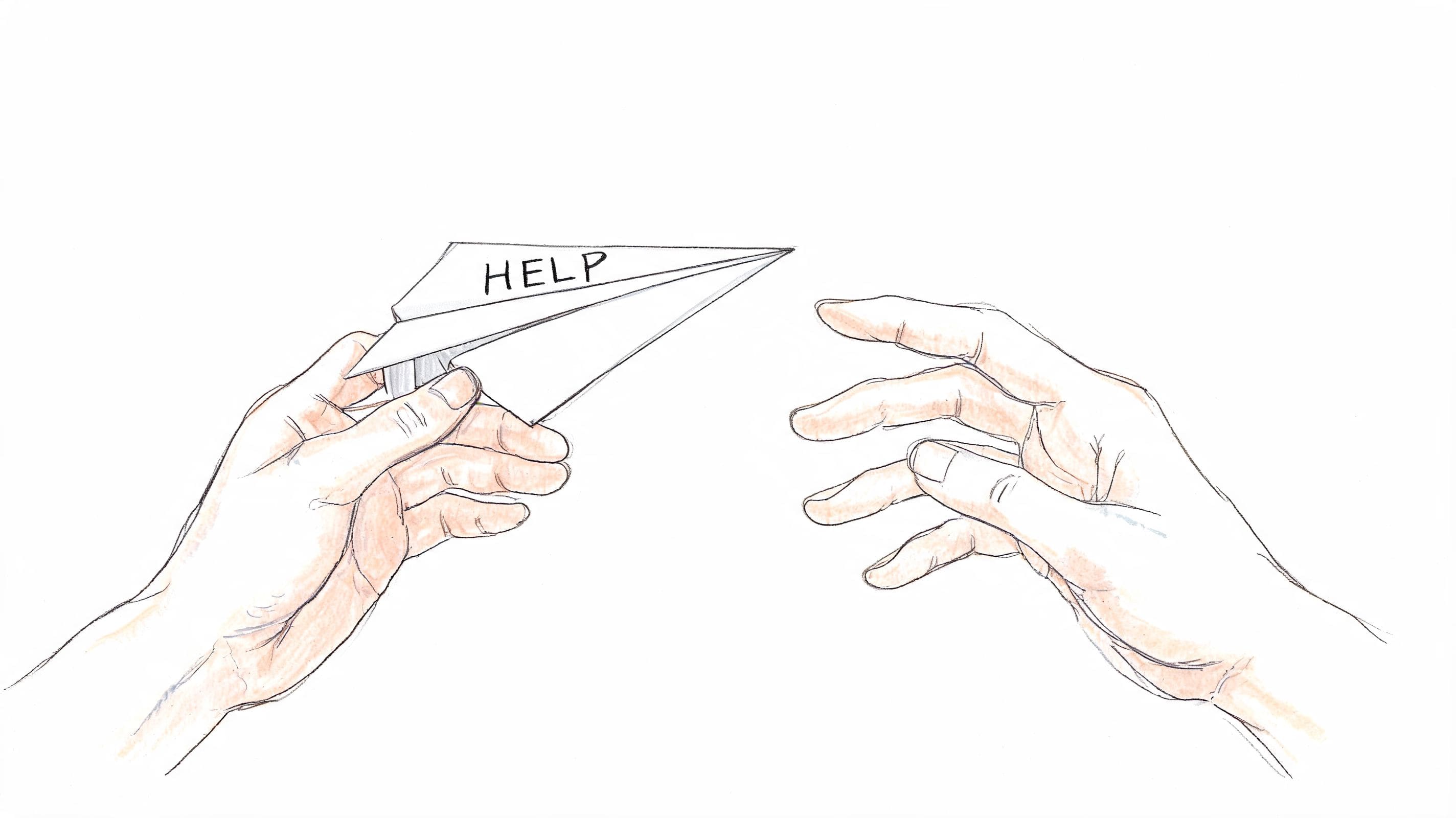
A good ask does three things. It names the problem. It names the kind of help needed. It gives the other person enough context to respond without guessing.
A quick pre-flight check
Before you send anything, run it through this checklist adapted from the SMARTDG framework described by Gavel International on high-performing teams asking for help:
- Effort check. Have you tried a reasonable first step on your own?
- Clarity check. Can the other person tell what you need after one read?
- Goal check. Does your ask connect to the work, task, relationship, or outcome?
- Timing check. Are you asking early enough for a thoughtful response?
If the answer is no to most of those, revise the ask before sending it.
Copyable scripts for common situations
Tone matters. Some days you want direct and brief. Other days you want warmth because it feels safer or fits the relationship better. Both are valid.
Finding it hard to ask for help? tonen can help.
tonen gives you 188+ conversation scripts, tone guidance and calming tools — designed for autistic adults, ADHD and social anxiety. Try it free for 7 days.
Download on the App StoreiOS only. Android coming soon.
#### Work
> Direct
> I need help prioritizing my workload for this week. I'm currently stuck between Task A and Task B, and I want to focus on the right one by Friday. Could you tell me which should come first?
> Warm
> Hi, I could use some help sorting priorities. I'm balancing Task A and Task B, and I'm not confident I'm focusing in the right place. Could you help me decide what matters most by Friday?
#### Family or home
> Direct
> I'm overloaded and need help with the dishes tonight. Can you take that task so I can finish the one thing I still have energy for?
> Warm
> I'm hitting my limit and could use some support tonight. Would you be able to handle the dishes so I can recover a bit and finish what's already on my plate?
#### Education
> Direct
> I need clarification on the assignment expectations before I continue. I'm unsure what you mean by the analysis section, and I don't want to head in the wrong direction. Could you explain what a strong response should include?
> Warm
> Hi, I'm working on the assignment and realized I'm not fully understanding the analysis section. Could you clarify what you're looking for so I can stay on track?
#### Social or emotional support
> Direct
> I'm having a hard day and need some support. Do you have bandwidth for a short call, or a few texts back and forth tonight?
> Warm
> Hey, I'm feeling pretty overwhelmed and would really value some support if you have room for it. Would you be up for a short call or a few check-in texts tonight?
What works and what usually doesn't
Many people get stuck at this stage. They ask in a way that protects them from feeling too exposed, but the protection also makes the ask harder to answer.
| Less effective | More effective |
|---|---|
| "Sorry, this is probably stupid…" | "I need clarification on…" |
| "I'm struggling" | "I need help with this part…" |
| "Can you help sometime?" | "Could you help by Thursday?" |
| "Everything is a mess" | "I'm stuck on step two…" |
| "Never mind, it's fine" | "If now isn't possible, can we pick another time?" |
If you want more examples of wording that sounds natural instead of robotic, these social script examples for hard conversations are useful for adapting tone without losing clarity.
Managing the Anxiety of Asking
You write the message. You reread it six times. You soften it, then unsoften it, then add context, then delete half of it because now it feels like too much. Finally you send it and immediately want to throw your phone across the room.
That sequence is familiar for a reason. Anxiety often peaks in three places: before the ask, during the wait, and right after a reply lands. Each point needs a different response.

Before you ask
The goal isn't to eliminate anxiety first. The goal is to make the anxiety small enough that you can act anyway.
Try one of these:
- Box breathing. Inhale, hold, exhale, hold in equal counts.
- 5-4-3-2-1 grounding. Name what you can see, feel, hear, smell, and taste.
- Body support. Sit with both feet on the floor or lean against something stable.
- Reduce the ask to one sentence. Start with the shortest version. You can add detail after.
Why rehearsal helps
Bandura's self-efficacy theory showed that modeled and rehearsed behavior builds confidence. A modern summary from Verywell Mind on self-efficacy and rehearsal notes that studies report 45% higher help-request rates when people rehearse scripts beforehand.
That fits lived experience. When you rehearse, you aren't trying to become fake or overly polished. You're reducing cognitive load. You're giving your brain a path to follow when stress narrows your options.
> Rehearsal doesn't make the feeling disappear. It makes the next step easier to reach.
During the wait
Rejection Sensitive Dysphoria (RSD) often takes over at this stage. A delayed response can feel like proof you asked badly, asked too much, or damaged the relationship. Usually, it means the other person is busy.
Use a waiting plan:
1. Set a no-reread window for a short period after sending.
2. Do one physical task that has a clear end, like making tea, showering, or taking out trash.
3. Write one alternative explanation for the silence that isn't self-blame.
If messaging is part of what spikes your anxiety, this guide on sending messages without spiraling offers practical ways to stay grounded before and after you hit send.
After the response
Good responses can still feel intense. So can neutral ones. If the reply is yes, your system may still stay activated because now you have to follow through. If the reply is no, your job is not to turn that into a story about your worth.
Try this response frame for yourself:
> Their answer is information. It is not a verdict on my value.
That's especially important when you're learning how to ask for help and every outcome feels bigger than it is.
Practicing Rehearsal and Setting Boundaries
People often treat asking as a one-time courage event. It works better as a repeatable skill. When you practice privately, you stop depending on perfect mood, perfect wording, or perfect timing.
Rehearsal helps because the hard part of how to ask for help usually isn't knowledge. It's retrieval under stress. If you've already said the words out loud, typed them once, or practiced a few tone options, your brain has less to build from scratch in the moment.
What to practice
Don't practice every possible conversation. Practice a few high-use patterns:
- Clarification asks like "I'm not sure what you mean by this part."
- Capacity asks like "I can do A or B well, but not both by then."
- Support asks like "Do you have bandwidth to help me think this through?"
- Delay requests like "I need more time to do this properly."
Private repetition matters. Read the script out loud. Trim words that feel unnatural. Make one direct version and one warmer version.
If speaking on the spot tends to wipe your mind blank, it helps to practice conversations for anxiety before they happen. The point is familiarity, not performance.
Why opt-out lines matter
A lot of anxiety comes from feeling trapped once you start asking. Boundaries fix that. If you know how to exit, pause, or decline a counter-offer, the ask feels less dangerous.
Keep a few opt-out lines ready:
> Thanks for hearing me. I need a bit of time to think before I decide.
> I appreciate the option. That won't work for me, but I'd like to look at another way forward.
> I'm not able to continue this conversation productively right now. Can we come back to it later?
Those lines protect your energy. They also prevent the common pattern where someone asks for help, gets overwhelmed by the reply, and agrees to something they didn't want.
Asking for Help Is Your Strength
Asking for help is not a confession that you're failing. It's a resource decision. You noticed a need, assessed the situation, chose the right person, and made the problem easier to solve. That's judgment.
For neurodivergent people, that skill can be life-changing because it replaces guesswork with structure. You don't have to wait until you're in shutdown, panic, or burnout. You can recognize the signs earlier, use a script that reduces ambiguity, and support your nervous system while the conversation happens.
The most useful version of how to ask for help is not elegant. It's functional. It sounds like a real person. It protects your dignity. It gives the other person something clear to respond to.
Start smaller than your brain says counts. Ask one clarifying question. Request one concrete adjustment. Send one brief message instead of drafting the perfect one. Skills grow through repetition, not intensity.
You are allowed to need support. You are allowed to ask clearly. You are allowed to make the process easier for yourself.
If you want help turning this into something usable in real life, tonen gives you ready-to-use scripts for work, family, health, education, and social situations, plus tone variations, opt-out lines, private rehearsal tools, and a Calm Kit for moments when anxiety spikes. It's built for neurodivergent people who want less guesswork and more support when it's time to speak up.
Frequently asked questions
Executive dysfunction, rejection sensitivity, literal thinking about social rules, and past experiences of being misunderstood can make the ask feel high-risk—even when you clearly need support.