If you freeze before speaking, replay conversations for hours afterward, or leave social events feeling wrung out, the answer to how to build confidence in social situations is not "try harder" or "act natural." It's building a system: lower the sensory load, prepare a few scripts, practice in small steps, and measure progress by recovery and follow-through instead of charm. For neurodivergent people especially, confidence usually comes from predictability and repetition, not from forcing spontaneity.
A lot of standard advice fails because it assumes social discomfort is just a mindset problem. It often ignores overload, processing delays, impulsive blurting, literal language, and the effort of tracking tone, timing, and body cues all at once. If you want to learn how to build confidence in social situations, use tools that work with your brain rather than asking your brain to perform like someone else's.
Your Neurodivergent Guide to Social Confidence
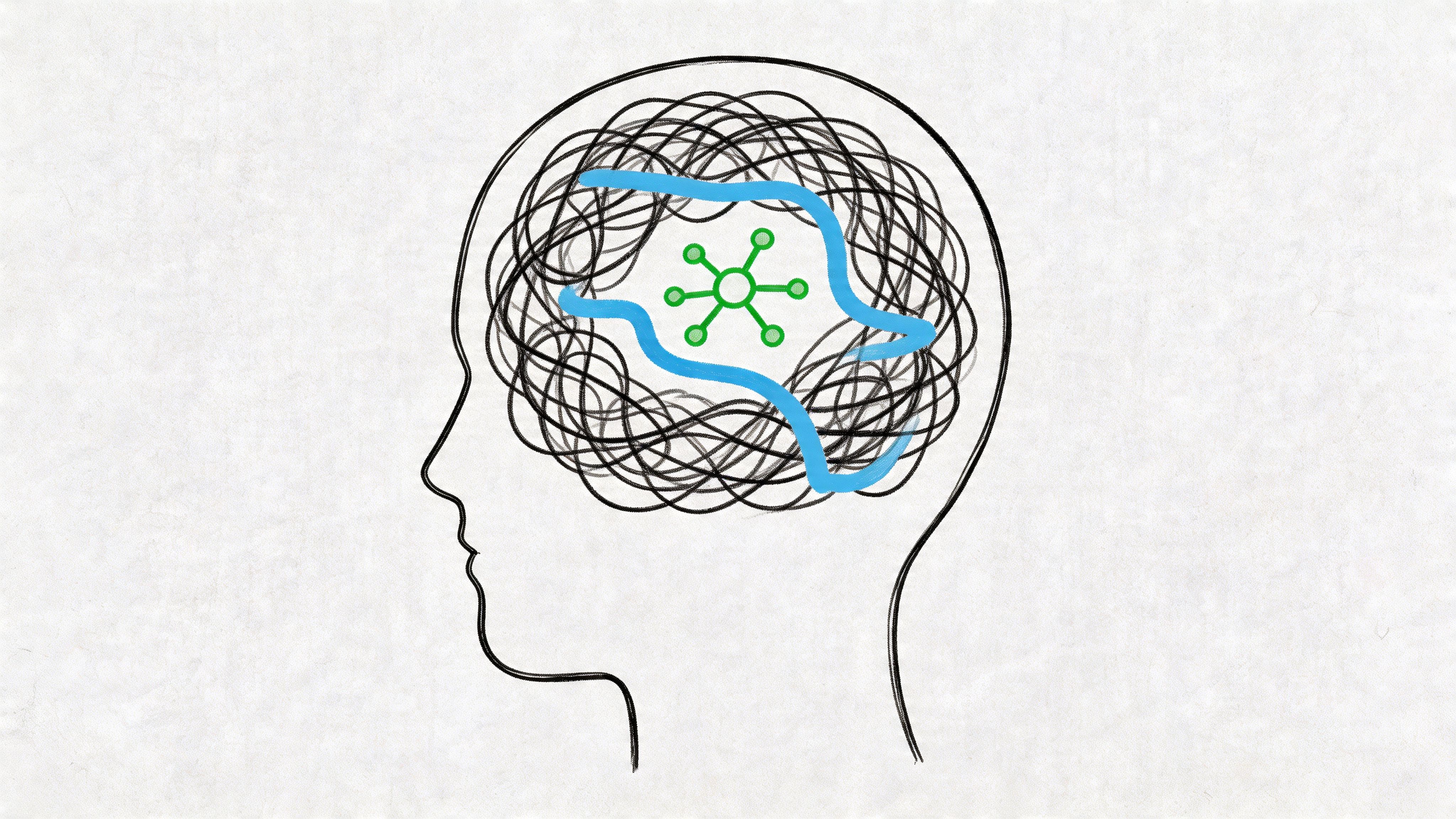
You might know this feeling well. You walk into a room already scanning the lights, noise, pacing, and faces. Someone says, "Just go mingle," and your brain offers nothing useful except static.
What actually helps
Social confidence gets easier when you build a repeatable toolkit:
- Reduce friction before the interaction. Choose quieter spaces when possible, preview who will be there, and decide how long you plan to stay.
- Use scripts without shame. A prepared opener, follow-up question, and exit line can reduce the mental load dramatically.
- Practice at a level your nervous system can tolerate. Confidence grows from successful reps, not from flooding yourself.
- Plan for regulation, not perfection. Breaks, stims, water, headphones, and recovery time are not failures. They're support tools.
> Practical rule: If a strategy only works when you have perfect energy, it's not a reliable strategy.
External supports matter too. If you lose track of intentions when you're stressed, tools like visual reminders for ADHD can help you keep simple prompts visible, such as "pause," "ask one question," or "leave after 30 minutes if needed."
For a broader look at communication supports designed around neurodivergent needs, this guide on neurodivergent communication challenges and tools is useful context.
Stop aiming to look effortless
Many neurodivergent adults learned to treat every interaction like a test. That creates too much pressure. Confidence is rarely "I now feel fearless." More often it's "I know what to do when I feel unsure."
That shift matters. When you stop chasing effortless social performance, you can start building dependable social capacity.
Reframe Your Mindset From Performance to Connection
Many people who struggle socially aren't lacking insight. They're trying to do too much at once. They're monitoring facial expression, eye contact, timing, wording, volume, and whether they seem "normal," all while trying to listen. That's a performance mindset, and it burns energy fast.
A better target is connection. Not perfect delivery. Not saying the most interesting thing. Just enough mutual understanding to make the interaction real.
What performance mode sounds like
Performance mode usually comes with thoughts like:
- "I need to come across well."
- "I can't pause too long."
- "If I say something odd, this is ruined."
- "I need them to like me."
Connection mode sounds different:
- "Can I understand this person a little better?"
- "Can I stay present for one exchange at a time?"
- "Can I be clear instead of impressive?"
- "Can I leave this conversation respectfully if I need to?"
This sounds subtle, but it changes the whole load of the interaction.
Why this shift works
Positive relationships don't just feel good. They help build self-esteem over time. An American Psychological Association press release on self-esteem and relationships describes a meta-analysis of 52 studies involving more than 47,000 participants, finding that positive social relationships, support, and acceptance significantly help shape self-esteem across ages 4 to 76. The relationship was bidirectional, which means supportive interactions build self-esteem, and self-esteem also affects relationship quality.
That matters for how to build confidence in social situations. You do not need a dramatic personality transformation first. Small positive interactions count. A brief warm exchange with a cashier, one decent chat in a class, one moment where you ask a real question instead of performing competence. Those experiences stack.
> Connection is a lower bar than performance, but it creates better results.
A practical reset before you walk in
Try this short internal script before a social event:
1. My job is not to impress.
2. My job is to notice, respond, and stay kind.
3. A pause is allowed.
4. Leaving early is allowed.
5. One genuine exchange is enough for today.
If work settings are especially loaded for you, this guide on how to be confident in an interview is useful because interviews often magnify the same pressure to perform.
If social communication feels difficult in ways other people don't seem to understand, this article on why communication can feel so hard may help put language around that experience.
Want to feel more confident in social settings? tonen can help.
tonen offers conversation scripts, Reply Helper, Perspective Helper, Debrief, Phone Call Mode and Calm Kit. Start with 21 free scripts on iPhone. Optional Premium unlocks more features.
Download on the App StoreAvailable on iOS.
Prepare Your Social Toolkit with Scripts and Rehearsal
You get to the event, someone turns toward you, and your mind goes blank. Not because you have nothing to say. Because your processing speed drops under pressure, the room is loud, and your brain is trying to track tone, timing, facial expression, and whether you are supposed to jump in now or wait.
That is exactly why preparation helps.
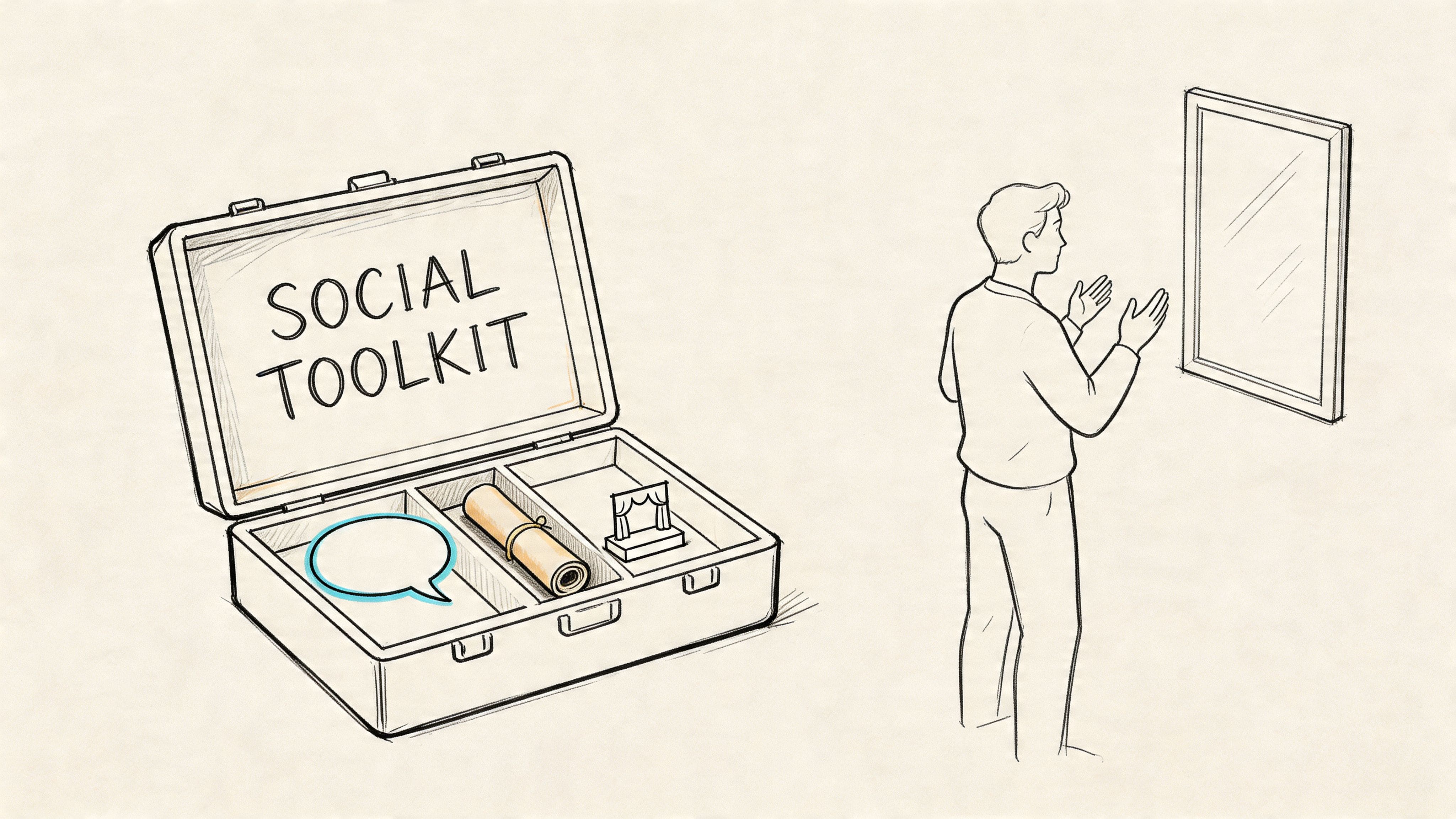
Confidence usually improves when you stop asking yourself to improvise in high-load moments. A social toolkit gives you language, exits, and recovery options before your nervous system is under strain. For many neurodivergent people, that is not overplanning. It is accessibility.
Scripts are prepared language. They are common in work, dating, conflict, healthcare, and customer service. The difference is that neurotypical people are often taught these patterns implicitly, while neurodivergent people may need them made visible and repeatable.
Build three script types
A good script is short, flexible, and easy to retrieve under stress. Skip the goal of sounding spontaneous. Aim for sounding clear and real.
Opening lines
Openers work best when they reduce guesswork for both people. Observation plus invitation is usually easier than trying to be clever.
- "I heard you mention [topic]. How did you get into that?"
- "This is my first time here. Have you been before?"
- "I like your [specific thing]. Where did you find it?"
- "I'm a little slow to warm up, but I wanted to come say hi."
That last one can work especially well for autistic or otherwise neurodivergent readers because it sets context without apologizing for your communication style.
Keeping the conversation moving
Many people freeze because they think they need to perform. A simpler job helps. Notice something, ask one follow-up, then reflect back the part that seems to matter.
Useful follow-ups:
- "What was that like for you?"
- "How did you decide that?"
- "What do you like most about it?"
- "Do you mean more the people side or the technical side?"
That pattern is easy to remember: notice, ask, reflect.
Example:
"I've heard a few people mention that class. What made you pick it?"
"So it feels more relaxed than competitive. That makes sense."
If you want more structure, this guide on how to prepare for a conversation ahead of time gives a useful framework.
Exit lines are part of confidence
A lot of social anxiety sits at the end of the interaction, not the beginning. If you do not know how to leave, every conversation can feel like a trap.
Write your exits ahead of time.
- "It was good talking with you. I'm going to get some water, but I'm glad we chatted."
- "I need a quick reset, so I'm going to step outside. Good talking with you."
- "I'm heading out soon, but I appreciated this conversation."
Exit scripts matter even more if you deal with sensory overload, delayed processing, or shutdown. They let you leave early without scrambling for words.
> A clear exit line often builds more confidence than a clever opener.
Rehearsal without turning yourself into a robot
Rehearsal helps most when it stays light. You are not trying to memorize a whole conversation. You are teaching your body what the first sentence feels like in your mouth, and giving your brain a few reliable paths when stress narrows your options.
Practice out loud. Then vary the line on purpose:
- Read it once
- Say it in your own words
- Try a warmer version
- Try a more direct version
- Practice one recovery line if you lose your place
Recovery lines help more than perfect lines. Try:
- "I lost my train of thought for a second."
- "Give me a moment. I know what I mean, I just need a second to say it."
- "I'm processing. Go on."
One factual option for rehearsal is tonen, which includes a Scripts Library, tone options, script preparation tools, and a Calm Kit. Used well, a tool like that is not a substitute for actual interaction. It is a support for preparing when your brain works better with preview, structure, and repetition.
Build Real-World Experience with Graded Exposure
Once you have scripts, you need real reps. Not giant leaps. Reps. The most reliable approach for how to build confidence in social situations is a Graduated Exposure Hierarchy, described in Feeling Good Psychotherapy's overview of evidence-based strategies for social confidence. The basic idea is simple: test anxious predictions in low-stakes situations, then slowly increase difficulty. Repeated safe exposure helps the brain update its threat response.
This works better than trying to "psych yourself up." Temporary hype fades fast. Evidence from practice comes from doing the thing, surviving the awkwardness, and noticing that the feared outcome usually doesn't happen.
A sample graded exposure ladder
| Level | Challenge Example | Goal |
|---|---|---|
| 1 | Say “thanks” to a cashier in a comfortable way | Stay present for a brief exchange |
| 2 | Ask a barista one clarifying question | Tolerate initiating contact |
| 3 | Send one low-pressure message to an acquaintance | Practice opening without overthinking |
| 4 | Make one comment in a class, meeting, or group chat | Be visible without aiming to impress |
| 5 | Have a five-minute one-on-one conversation | Use one opener and one follow-up |
| 6 | Attend a structured social activity like a book club or hobby group | Stay engaged in a predictable setting |
| 7 | Join a small group conversation and contribute once or twice | Practice entering and exiting smoothly |
| 8 | Attend a gathering with an exit plan and recovery plan | Build endurance without masking all night |
The awkward phase is not a sign you're failing
It's common to quit here. You try once or twice, feel clunky, and assume the method isn't working. But awkwardness is part of skill acquisition. You are collecting evidence, not auditioning for social ease.
A few rules make exposure more useful:
- Keep it specific. "Be more social" is too vague. "Ask one question at the meetup" is measurable.
- Choose structured environments. Hobby groups, volunteer shifts, and classes reduce the burden of finding a topic.
- Review facts after the interaction. Write down what you predicted, what happened, and what you'd keep the same next time.
If you want prompts for practicing before you engage in social situations, these practice conversations for anxiety can make the jump feel less abrupt.
> Don't judge an exposure by how anxious you felt. Judge it by whether you completed the planned step.
Manage Overwhelm and Measure Your Progress
A social plan isn't complete unless it includes regulation. Many neurodivergent people don't fail socially because they lack courage. They hit overload and then blame themselves for having limits.
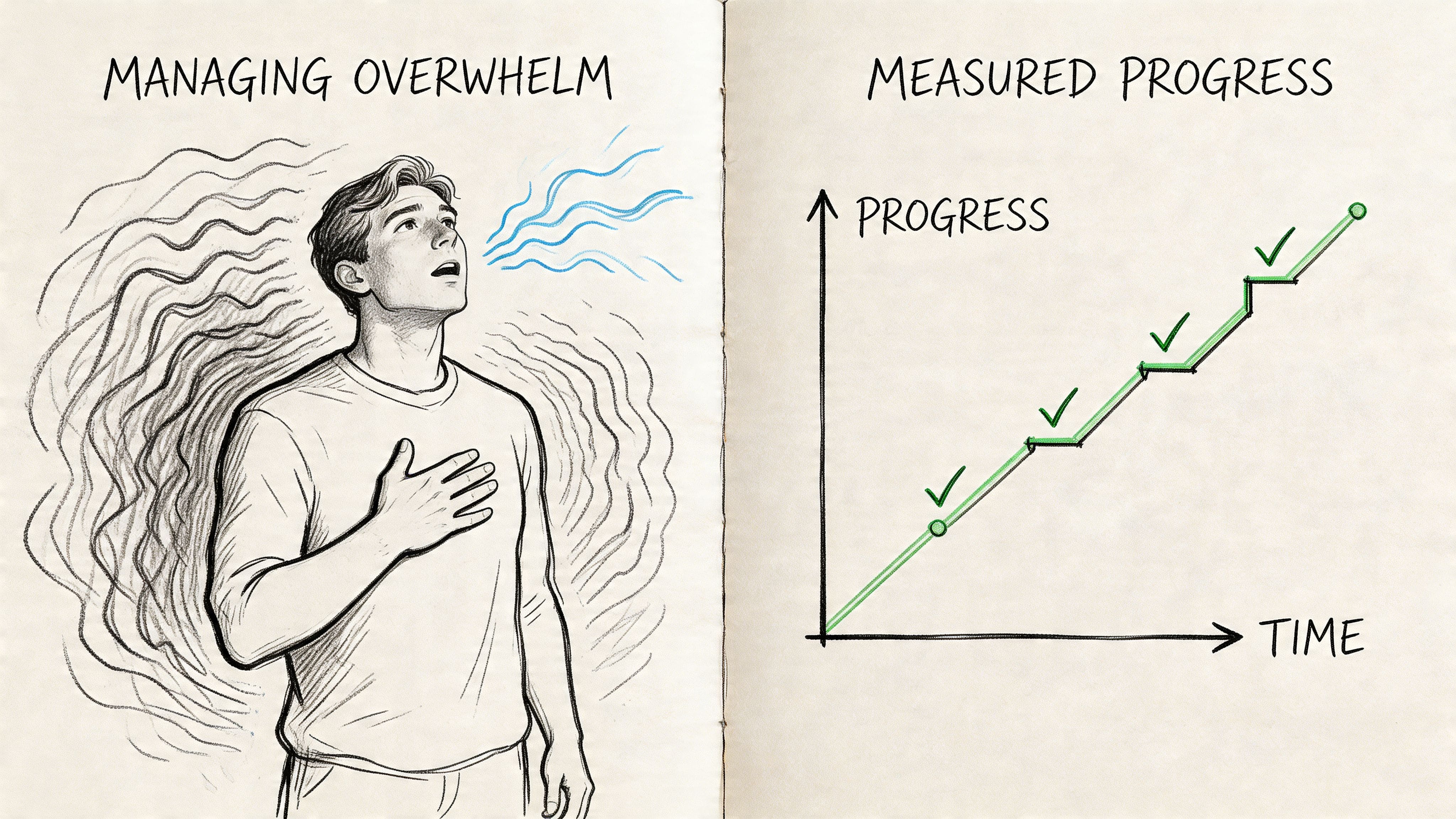
Your first job in a hard moment is not to "seem okay." It's to lower activation enough that you can choose your next move.
Quick regulation tools you can use quietly
Try a few and keep only what helps.
- Longer exhale breathing. Inhale gently, then exhale more slowly than you inhaled. The exact count matters less than making the out-breath longer.
- Sensory grounding. Name a few things you can see, feel, or hear. This helps pull attention out of spiraling thought and back into the room.
- Micro-breaks. Go to the bathroom, step outside, refill your water, or stand near a wall instead of the center of the room.
Not every social event deserves maximum effort. Sometimes the most skilled thing you can do is leave while you still feel mostly regulated.
Better ways to measure progress
Binary scoring wrecks confidence. If your only categories are "nailed it" or "was awkward," you'll miss real growth.
Use questions like these instead:
- Did I show up at all?
- Did I use one prepared line?
- Did I notice overwhelm before it became a shutdown or spiral?
- Did I recover faster than usual afterward?
- Did I respect my limits instead of bulldozing through them?
A simple mood check-in practice can help you notice patterns before and after social situations so you can adjust your plan with more self-respect and less guesswork.
How to Support a Neurodivergent Person's Social Confidence
If you're a parent, partner, manager, teacher, or clinician, you can make social growth easier without pressuring the person to mask harder.
What helps
- Give advance context. Share who will be there, how long something will last, and what the social format looks like.
- Offer specifics. "We'll have dinner, then sit outside for a bit" is easier to manage than "Come hang out."
- Respect regulation needs. Breaks, headphones, pacing, fidgeting, and early exits are support strategies.
- Ask consent before spotlighting them. Don't turn them into the spokesperson in a group without warning.
- Value direct communication. Not everyone shows warmth in a conventional way. Clear and honest often is warm.
What makes things worse
- Pushing surprise participation. "Say something to the group" can spike stress fast.
- Treating scripting as dishonesty. Preparation is often what makes authentic communication possible.
- Reading overload as rudeness. A flat tone, delayed response, or need to step away may be regulation, not rejection.
- Making endurance the goal. Staying longer isn't always progress. Sometimes leaving sooner prevents a crash.
The most supportive stance is simple: help create conditions where the person can succeed as themselves.
If you want structured support for hard conversations, tonen offers scripts, tone options, script preparation, and calming tools designed for neurodivergent users who want less stress and more clarity in everyday social situations.