You get better at how to say no without being rude by using a short script, not by waiting to feel fearless. A respectful no usually has three parts: a warm opening, a clear boundary, and a brief close. For example: "Thanks for asking. I can't take that on right now. I hope it goes well." That works because it protects your energy without attacking the other person.
If saying no makes your mind go blank, that isn't a character flaw. For many people, especially neurodivergent people, refusal is hard because it involves fast social processing, uncertainty about tone, and the emotional fallout afterward. The good news is that how to say no without being rude is a learnable skill. You can practice it, script it, and make it much easier on your nervous system.
Your Guide on How to Say No Without Being Rude
A lot of people know they need boundaries but still freeze when someone asks for a favor, an extra task, or a social commitment. The gap usually isn't knowledge. It's access to words in the moment.
The simplest version of how to say no without being rude looks like this:
- Start kindly: "Thanks for thinking of me."
- State the boundary: "I can't commit to that."
- Close briefly: "I appreciate you understanding."
That structure is clear enough to be honest and soft enough to preserve the relationship.
If you want to make it feel more natural, use language that reflects your actual capacity. "I don't have the bandwidth." "I'm keeping this evening free." "I'm not available for that." These phrases are easier to say than a long explanation, and they're easier for the other person to understand.
A lot of communication stress comes from trying to sound perfect instead of trying to be clear. That's also why it helps to build more emotional language around your limits. If naming your inner state is hard, this guide on expressing your feelings clearly in conversations can help you find words before you hit the pressure point.
> Practical rule: Kindness matters, but clarity matters more. A vague yes is usually less respectful than a clear no.
First Understand Why Saying No Feels So Hard
People often assume that if saying no feels hard, they must be weak, selfish, or bad at boundaries. That explanation misses what is happening.
For many neurodivergent people, refusal isn't hard because they don't know their limits. It's hard because the social task itself is heavy. In one moment, you may be trying to read tone, regulate your own emotions, predict the other person's reaction, choose words quickly, and avoid sounding rude. That's a lot of processing for one sentence.
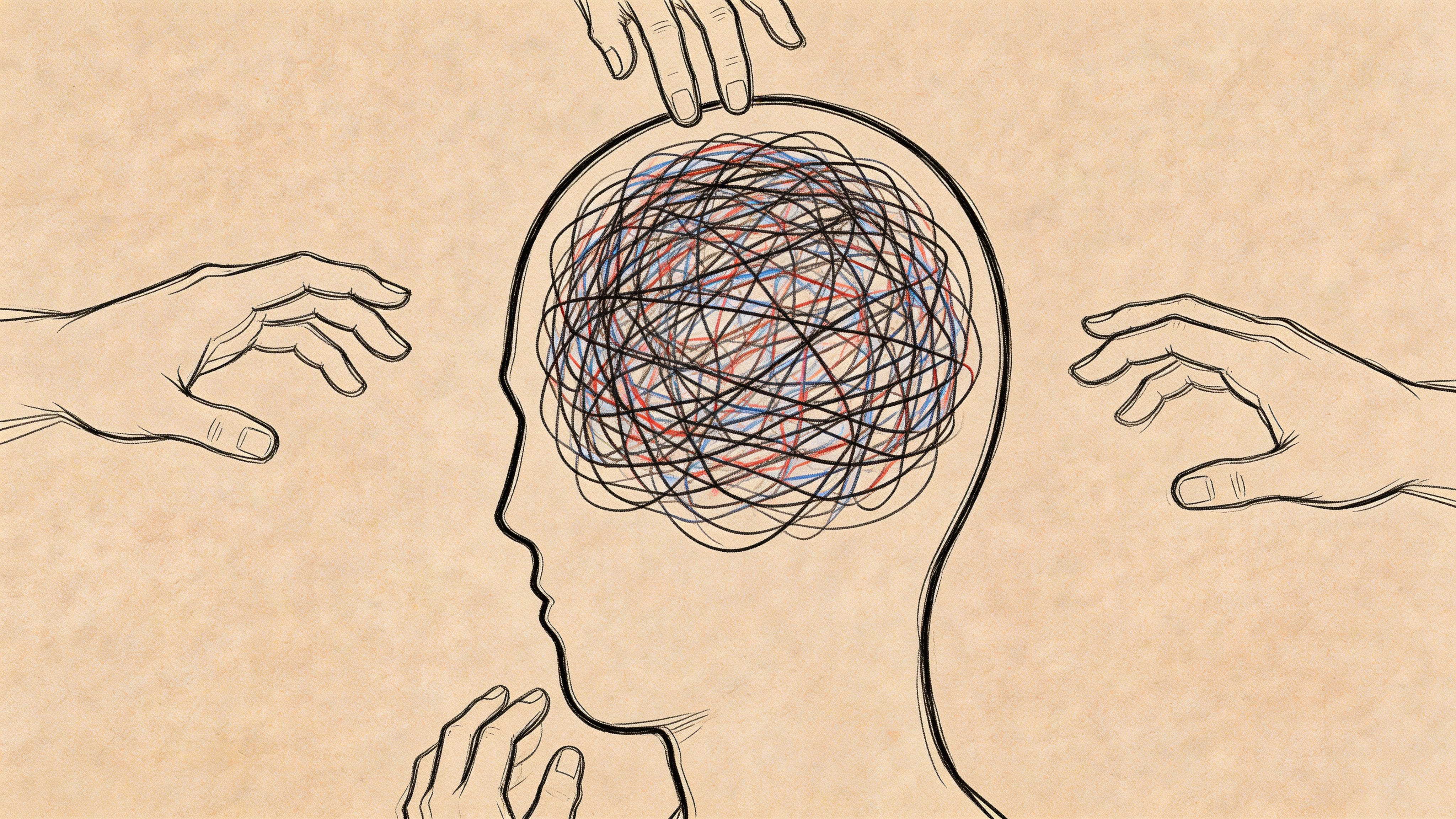
Mainstream advice often treats this like a manners issue. But neurodivergent-specific challenges in saying no are underaddressed in mainstream guidance. For people with social anxiety or autism, the cognitive load of handling politeness rules, emotional regulation, and spontaneous language at the same time creates considerable friction, as noted in this discussion of neurodivergent communication challenges and scripting needs.
Cognitive load changes the whole interaction
When someone asks something unexpected, your brain may not have enough time to sort the request. That can lead to an automatic yes, followed by dread later.
This is common when you:
- Need processing time: You understand your answer after the conversation, not during it.
- Struggle with tone selection: You know what you mean, but not how to say it without sounding too blunt or too soft.
- Mask socially: You default to agreeable responses because they feel safer.
- Go blank under pressure: The more important the relationship feels, the harder it is to access words.
If that sounds familiar, it may help to read more about why communication can feel unusually hard in everyday situations.
The emotional part matters too
Some people don't fear the sentence "no." They fear the aftermath.
You may worry that the other person will think you're lazy, angry, selfish, or rejecting them. If you have ADHD and experience rejection sensitivity, even a neutral response can feel loaded. If you're autistic, the uncertainty of what the other person really means or feels can add another layer of stress.
> When refusal feels intense, the problem often isn't your values. It's the amount of mental and emotional work required on the spot.
That shift matters. If you treat yourself like you're failing at basic adulthood, you'll keep forcing yourself into scripts that don't fit. If you recognize this as an accessibility issue, you can build support around it. You can prepare phrases in advance. You can buy time. You can choose a tone on purpose instead of improvising while stressed.
What doesn't work
A few habits usually make things worse:
- Over-explaining: Long explanations invite negotiation.
- Softening until the no disappears: "Maybe later" often becomes an accidental yes.
- Waiting to feel less guilty first: Confidence usually comes after practice, not before.
- Judging yourself for needing a script: Preparation is not inauthentic. It's support.
Learning how to say no without being rude starts with dropping the idea that this should be easy for everyone. For many people, it isn't. That doesn't mean you can't do it well.
Your Scripting Toolkit Phrases for Every Tone
The point isn't to sound robotic. The point is to have language ready before stress takes over.
Choose tone before you choose words
A lot of people get stuck because they search for the perfect sentence. It helps more to choose the tone first.
If you want help identifying subtle wording differences, this list of essential words for tone is useful for noticing why one phrase feels gentler, firmer, or more formal than another.
Here are practical templates you can adapt fast.
| Tone | Example Phrase 1 | Example Phrase 2 | Best For... |
|---|---|---|---|
| Warm | Thanks for asking. I can't make that work right now. | I really appreciate the invite, but I'm going to pass this time. | Close relationships, friendly coworkers, social plans |
| Direct | No, I can't do that. | I'm not available for that. | Clear boundaries, simple requests, low-context situations |
| Softer | I don't think I'm able to take that on. | I need to sit this one out. | Sensitive relationships, moments when you want a gentle landing |
| Firmer | I've already said I can't commit to that. | That won't work for me. | Repeated pressure, guilt-tripping, boundary testing |
Keep the script short enough to use
A script only helps if you can remember it while stressed. That means short beats clever.
Try these formulas:
- Thanks + no: "Thanks for thinking of me. I can't."
- Care + limit: "I care about this, and I can't take it on."
- No + closure: "I'm going to pass. I hope it goes well."
- No + delay if needed: "I need to check first and get back to you."
Short scripts are especially useful if your processing slows down under pressure. Saving a few go-to lines also makes it easier to stop bargaining with yourself mid-conversation.
For more examples that are easy to keep on hand, this resource on scripts for setting boundaries in everyday conversations can help you build a small personal library.
What works better than a polished excuse
The strongest refusal usually sounds ordinary. Not dramatic. Not over-defended. Just clear.
Try these:
> "Thanks for asking. I can't commit to that right now."
> "I would rather not."
> "I appreciate the invite, and I'm going to pass."
Notice what's missing. No apology spiral. No long defense. No accidental invitation to persuade you.
If you're learning how to say no without being rude, think of scripts as accessibility tools. They reduce cognitive load, give your nervous system a path to follow, and let you stay respectful without improvising.
Worried your refusals sound too harsh? tonen can help.
tonen offers conversation scripts, Reply Helper, Perspective Helper, Debrief, Phone Call Mode and Calm Kit. Start with 21 free scripts on iPhone. Optional Premium unlocks more features.
Download on the App StoreAvailable on iOS.
Saying No in Common Scenarios
Knowing a framework is helpful. Real conversations are where people get stuck.
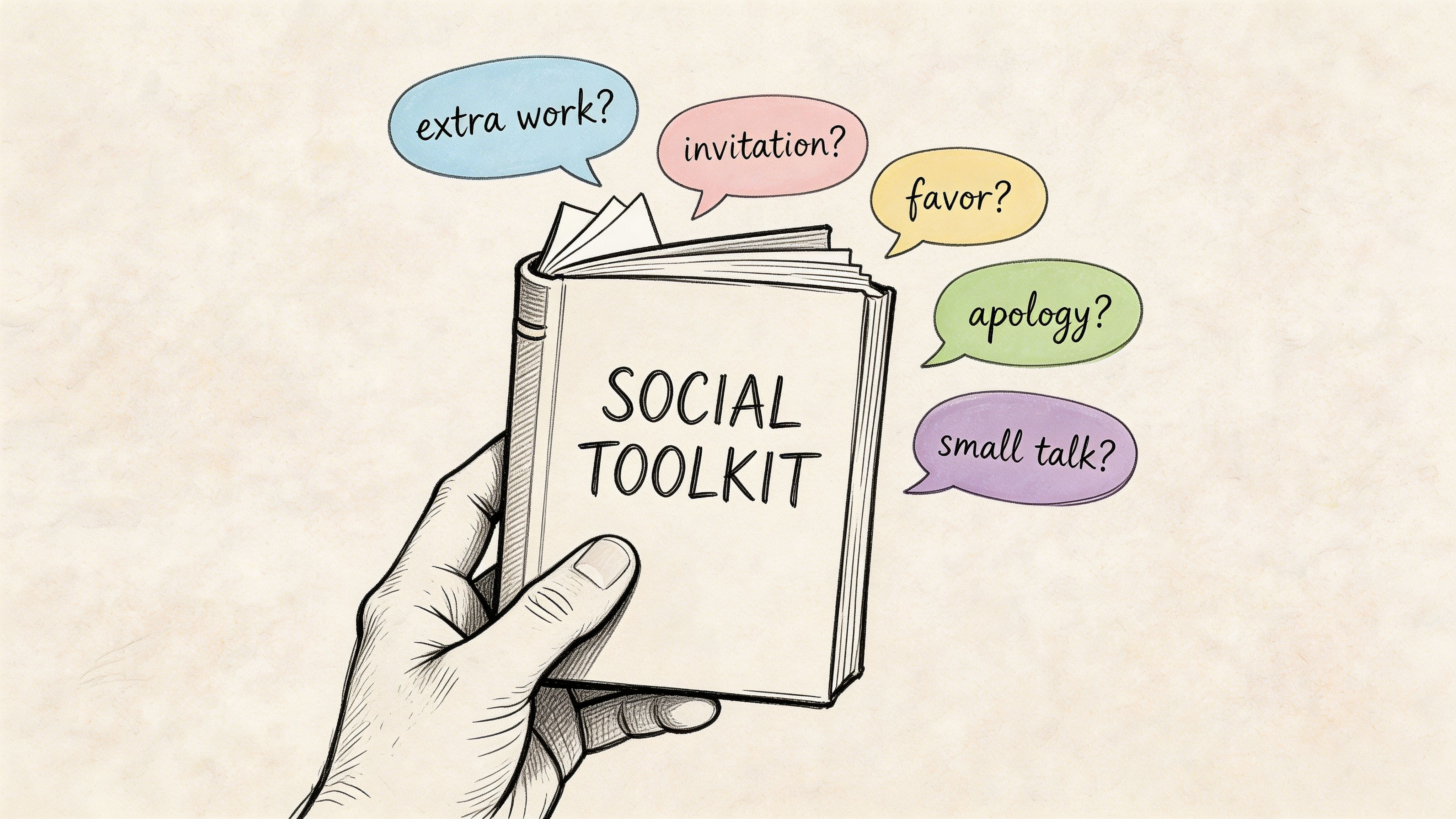
At work
A manager asks if you can take on one more project this week. You know you're already stretched, but you don't want to sound uncooperative.
Try:
- "Thanks for thinking of me. I'm not able to take on another project right now."
- "I can help later, but I can't add that this week."
- "I'm at capacity. If this is the priority, I need help deciding what should move."
That third line is especially useful because it makes the trade-off visible. It doesn't frame you as unwilling. It frames the request as a resource decision.
With family
A relative asks for a last-minute favor that will cost you your rest, your routine, or a major chunk of the day.
Try:
- "I wish I could help, but I'm not available today."
- "I can't do that on short notice."
- "I'm keeping today for recovery, so I need to say no."
Family requests often trigger guilt because they carry history. Keep your wording plain. You don't need to litigate your schedule to make the boundary legitimate.
With friends
A friend invites you out when you're already overloaded. You like them. You just don't have the energy.
Try:
- "Thanks for inviting me. I need a quiet night, so I'm going to pass."
- "That sounds nice, but I don't have the bandwidth for plans."
- "Not this time. I want to rest."
You can be warm without pretending you might come if pushed a little harder.
> A kind no is still a no. If your sentence leaves the door open by accident, many people will walk through it.
Social events and group invites
Parties, group dinners, and casual social gatherings can be especially hard because they seem optional, yet loaded. People often say yes out of fear of looking unfriendly.
Try:
1. "Thanks for inviting me. I'm not going to make it."
2. "I appreciate the invite, but crowds aren't a fit for me tonight."
3. "I'm sitting this one out. I hope you all have a good time."
If you want to decline without disappearing, send the message early. Last-minute cancellations often create more stress for everyone involved, including you.
If you need more wording for specific contexts, this guide on how to decline a request politely in everyday life gives additional examples you can adapt.
What to avoid in these moments
These responses often create more trouble:
- "Maybe." People hear possibility.
- "I'll try." You end up carrying both the request and the guilt.
- A long personal essay. The more details you add, the more openings you create for negotiation.
- Blaming language. "You're asking too much" can escalate fast, even when it's true.
If you're working on how to say no without being rude, your target isn't perfect softness. It's clean communication. That usually sounds shorter than you think.
Managing Overwhelm and Awkward Reactions
Sometimes the hardest part isn't saying no. It's the body response before and after.
You freeze when asked. Then, once you've managed to say no, your brain starts reviewing the conversation for signs that you've ruined the relationship. For people who deal with strong rejection sensitivity, guilt, or social anxiety, that emotional aftershock can be more draining than the request itself.
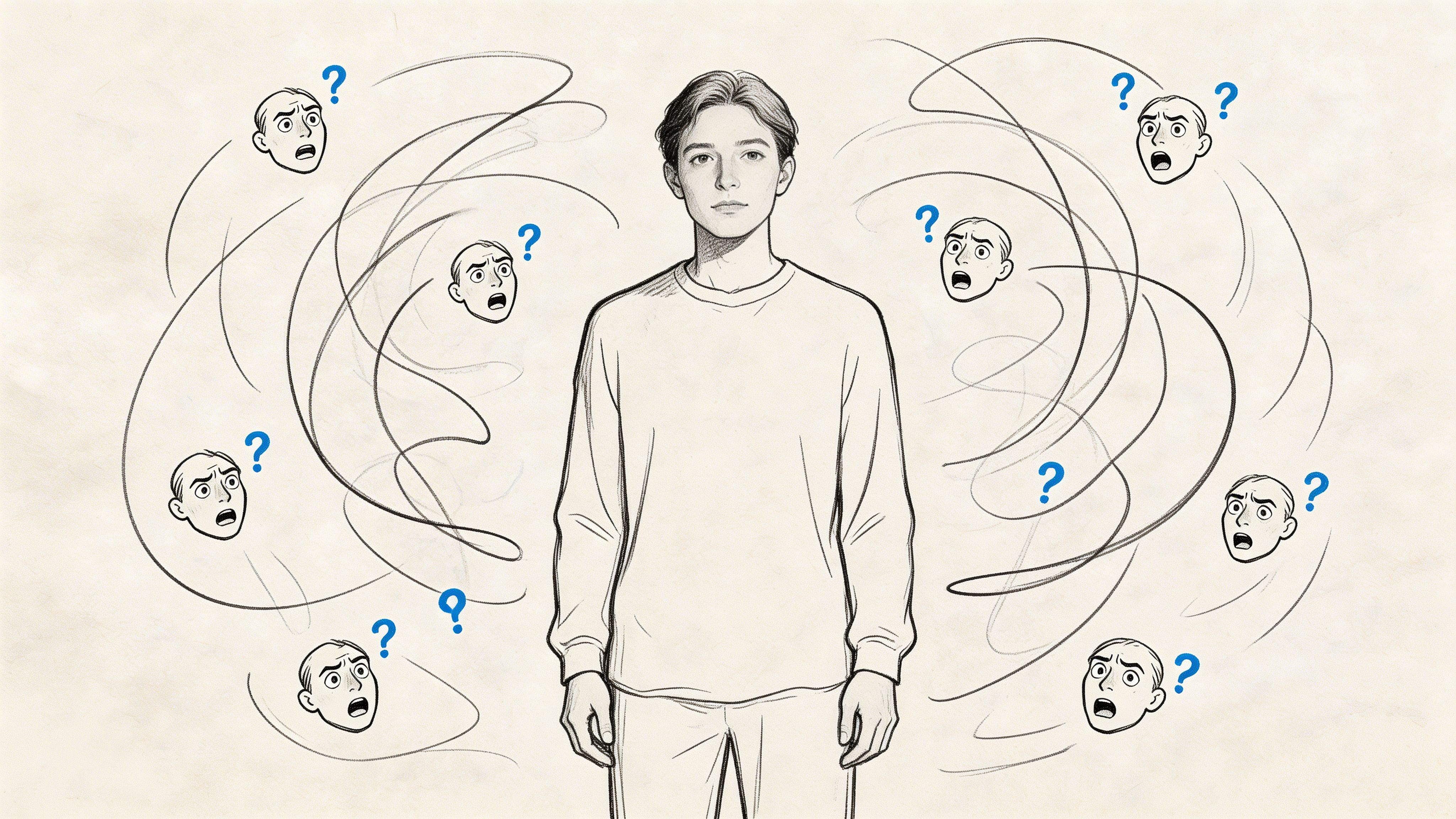
Guidance summarized by BetterUp highlights that the emotional aftermath of saying no, especially guilt and relationship anxiety, is a major barrier to boundary-setting. That matters even more for neurodivergent people who experience intense emotional spirals after disappointing someone. You can read that discussion in BetterUp's article on how to say no while managing guilt and relationship anxiety.
Use opt-out lines when your brain is overloaded
If you can't answer clearly in the moment, don't force a rushed yes. Buy time.
Try these:
- Need time: "Let me check my schedule and get back to you."
- Need processing space: "I can't answer right now. I need to think about it first."
- Need to exit: "I need to step away and come back to this later."
- Need fewer inputs: "Can you text me the details so I can look at it properly?"
These lines are not avoidance. They're regulation tools. They protect you from making commitments while dysregulated.
If overwhelm is a regular part of your communication pattern, this guide on what to do when feeling overwhelmed in conversations offers practical ways to slow the moment down.
When someone pushes back
Even a polite no can trigger disappointment. That doesn't always mean you've done something wrong.
If someone argues, repeats the request, or acts hurt, keep your response boring and steady:
- "I understand. I still can't do it."
- "I know this is frustrating. My answer is still no."
- "I can't take that on."
- "That doesn't work for me."
Don't add new explanations just because the other person is uncomfortable. Repetition is often more effective than defense.
> Their reaction belongs to them. Your job is to communicate your boundary, not to manage every feeling it creates.
Handle the guilt after the conversation
The emotional echo often sounds like this: "Was I too cold?" "Do they hate me?" "Should I text again and explain more?" That spiral can turn one healthy boundary into hours of self-criticism.
A few resets help:
- Name what happened accurately: "I said no to a request. I did not reject a person."
- Check for mind reading: You may be assuming anger or rejection without evidence.
- Resist repair texting: A second message packed with apologies often reopens the negotiation.
- Return to the reason: You said no because the request didn't fit your capacity.
If the guilt is intense, use a brief grounding routine. Sit down. Unclench your jaw. Exhale longer than you inhale. Feel your feet on the floor. Then repeat one sentence that is simple and believable, such as "It was okay to protect my energy."
What works better than trying to feel nothing
A lot of people think healthy boundaries should feel calm immediately. Often they don't. A new boundary can feel awkward, shaky, even rude, especially if you've spent years being the flexible person.
The win isn't "I felt zero guilt." The win is "I felt guilt and still stayed honest."
That's a much more sustainable standard.
How to Practice and Build Your Confidence
Confidence with boundaries usually grows the same way confidence grows anywhere else. Through repetition in situations that are manageable enough to survive.
Research-based guidance recommends starting small by declining low-stakes requests first. That matters because saying no gets easier with practice, and for neurodivergent people, scripting lowers the working memory load involved in real-time refusal. You can read more in this article on how to say no without being rude through gradual practice.
Start with low-stakes no's
Don't begin with the hardest person in your life. Start where the risk is lower.
Examples:
- Minor offers: "No thanks" to an upsell, sample, or extra add-on.
- Small invitations: "I can't this week" to a casual plan.
- Tiny preference statements: "No, I'd rather sit here" or "I don't want another serving."
- Delay instead of agree: "I'll think about it and let you know."
These moments train your nervous system to tolerate boundary-setting without the same emotional cost.
Rehearse out loud
Silent understanding isn't always enough. Saying the words with your actual voice matters.
Try one of these:
1. Mirror practice: Say one script until it sounds ordinary.
2. Text draft rehearsal: Type the message first, even if the spoken conversation will be spoken.
3. Role-play with a safe person: Ask them to make the request so you can practice the refusal.
4. Save a few default responses: Keep them in your notes app for fast access.
If medical conversations are one of the places you freeze most, it can also help to master how to talk to your doctor with confidence, since that skill overlaps with asking for space, clarifying needs, and speaking up under stress.
Build a personal no-list
Some people find it easier to say no when they've already decided their rules.
Write down a few boundaries before anyone asks:
- I don't commit on the spot.
- I keep one evening a week unscheduled.
- I don't take unpaid extra work without considering the trade-off.
- I don't explain my no more than once.
Pre-deciding reduces the amount of social math you have to do in the moment.
> Practice doesn't make you harsh. Practice makes you accessible to yourself when pressure hits.
The goal isn't to become someone who never helps. It's to become someone whose yes means yes.
Setting Boundaries Is an Act of Kindness
A clear no protects more than your calendar. It protects your trust in yourself.
When you agree to things you don't have capacity for, the cost usually shows up later as resentment, shutdown, avoidance, or burnout. A respectful refusal is kinder than a reluctant yes that you can't sustain. That's why learning how to say no without being rude matters so much. It helps you stay honest without turning every request into a crisis.
Keep the formula simple. Know your limit. Use a prepared script. Buy time when you're overloaded. Expect some discomfort if this is new. Then let the feeling pass without reopening the boundary.
You don't need to become a different personality type to do this well. You need a repeatable way to protect your energy and communicate it clearly. For neurodivergent people especially, that often means reducing the cognitive load, not trying harder to improvise.
Boundaries are not a withdrawal of care. They're how care becomes sustainable.
If you want support practicing these conversations, tonen gives neurodivergent users ready-to-use scripts across work, family, health, education, and social life, with tone options like Direct, Warm, Firmer, and Softer. It also includes script preparation tools and calming support for moments when saying no feels overwhelming.