Your phone buzzes. There's a new DM, a meeting invite, or a message that says "Can we talk?" and your whole body tightens before you even open it. If that sounds familiar, social anxiety isn't a character flaw or a lack of confidence. It's a real, manageable pattern of fear around being judged, misunderstood, embarrassed, or scrutinized. The good news is that there are practical ways to lower the fear, especially if you're autistic, have ADHD, or both. The right support often starts with understanding what your brain is reacting to, then using tools that reduce pressure instead of piling more on.
Social anxiety is common and often starts young. The National Institute of Mental Health reports social anxiety disorder affects 12.1% of U.S. adults over a lifetime and typically begins around age 13. So if social situations have felt hard for a long time, you're not "behind." You're dealing with something many people experience, and it can improve.
Understanding and Managing Social Anxiety
Social anxiety often feels like your brain is running a threat scan in situations other people call "normal." A class discussion. A team check-in. A cashier asking how your day is going. A friend taking too long to reply. The fear can show up before, during, and after the interaction. You might dread it for days, freeze in the moment, and then replay every word later.
For neurodivergent people, that cycle can get tangled up with sensory overload, masking, processing delays, rejection sensitivity, and past experiences of being misunderstood. That doesn't mean you're doomed to feel this way. It means generic advice like "just be yourself" or "stop overthinking" usually misses the point.
> Main takeaway: Social anxiety is treatable because it follows patterns. When you can spot the pattern, you can interrupt it.
A helpful way to think about it is this. Your brain makes a prediction such as "I'll say the wrong thing." Your body reacts as if that prediction is already happening. Then you avoid, over-prepare, script every line, or stay silent. That may protect you in the short term, but it also teaches your brain that the situation was dangerous.
The work isn't to become fearless. It's to become more supported, more prepared, and less trapped by the fear.
What Social Anxiety Really Is
Social anxiety disorder has a clinical meaning. The American Psychiatric Association describes it as a persistent fear lasting at least 6 months of social situations involving possible scrutiny, with distress or impairment in work, school, or other important areas.
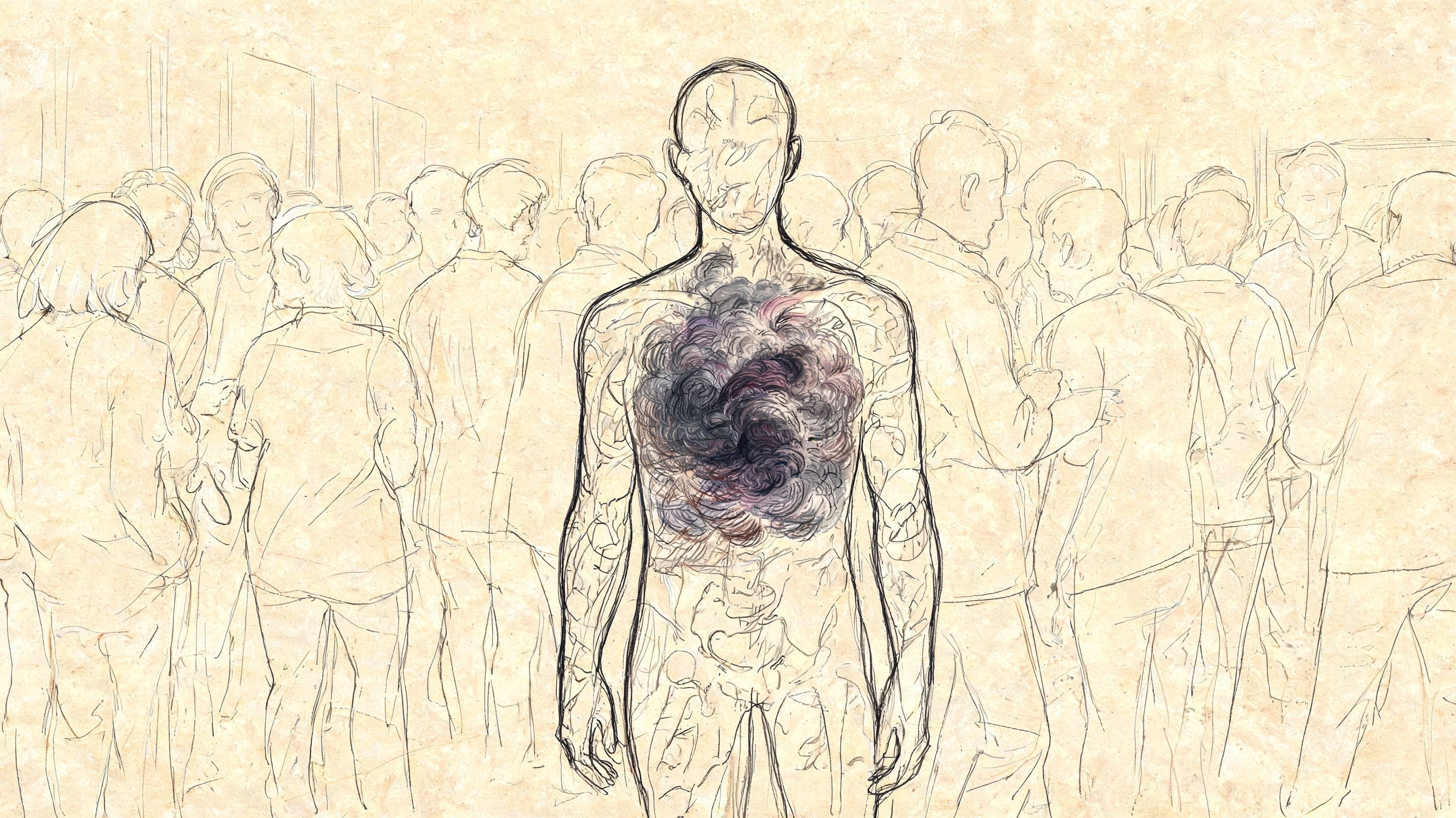
Shyness and social anxiety can look similar from the outside, but they aren't the same thing. A shy person may feel awkward at a party and warm up slowly. A person with social anxiety may spend days dreading the party, monitor every facial expression in the room, avoid speaking unless necessary, and leave feeling certain they embarrassed themselves.
If you want a plain-language overview, this guide on social anxiety explained is a useful companion.
The thinking part
The mental side of social anxiety is often the loudest. Common thought patterns include:
- Mind reading: assuming other people think you're awkward, rude, boring, or incompetent
- Catastrophizing: turning a small mistake into a social disaster
- Hyper-self-monitoring: tracking your face, voice, hands, posture, and timing so closely that conversation gets harder
- Post-event rumination: replaying the interaction and searching for evidence that you "messed it up"
These thoughts can feel factual even when they're guesses.
The body part
Social fear doesn't stay in your head. It often shows up in your nervous system first.
You might notice a racing heart, shaking, sweating, blushing, nausea, muscle tension, or your mind going blank. Some people struggle to make eye contact or get stuck trying to start a sentence. Others can speak, but it feels like they're performing through static.
> Social anxiety often feels less like "I'm scared" and more like "My whole system is malfunctioning in front of people."
That physical response can create another layer of fear. You're not only worried about the interaction. You're worried that other people will notice you're anxious.
The behavior part
The cycle gets reinforced at this point. You may:
- Avoid entirely: skip events, stay off camera, ignore messages, or leave things unsaid
- Use safety behaviors: stare at your phone, rehearse every sentence, speak very little, over-apologize, or arrive late so attention is lower
- Seek certainty: ask for repeated reassurance or rewrite one email over and over
These behaviors make sense. They're attempts to stay safe. But they can also keep social anxiety in place because your brain never gets a chance to learn, "I can handle this."
Social Anxiety and the Neurodivergent Brain
For autistic and ADHD people, social anxiety may overlap with traits that aren't anxiety in themselves. That overlap can be confusing. You might wonder, "Am I anxious, overstimulated, exhausted from masking, afraid of rejection, or all of the above?" Sometimes the answer is yes.
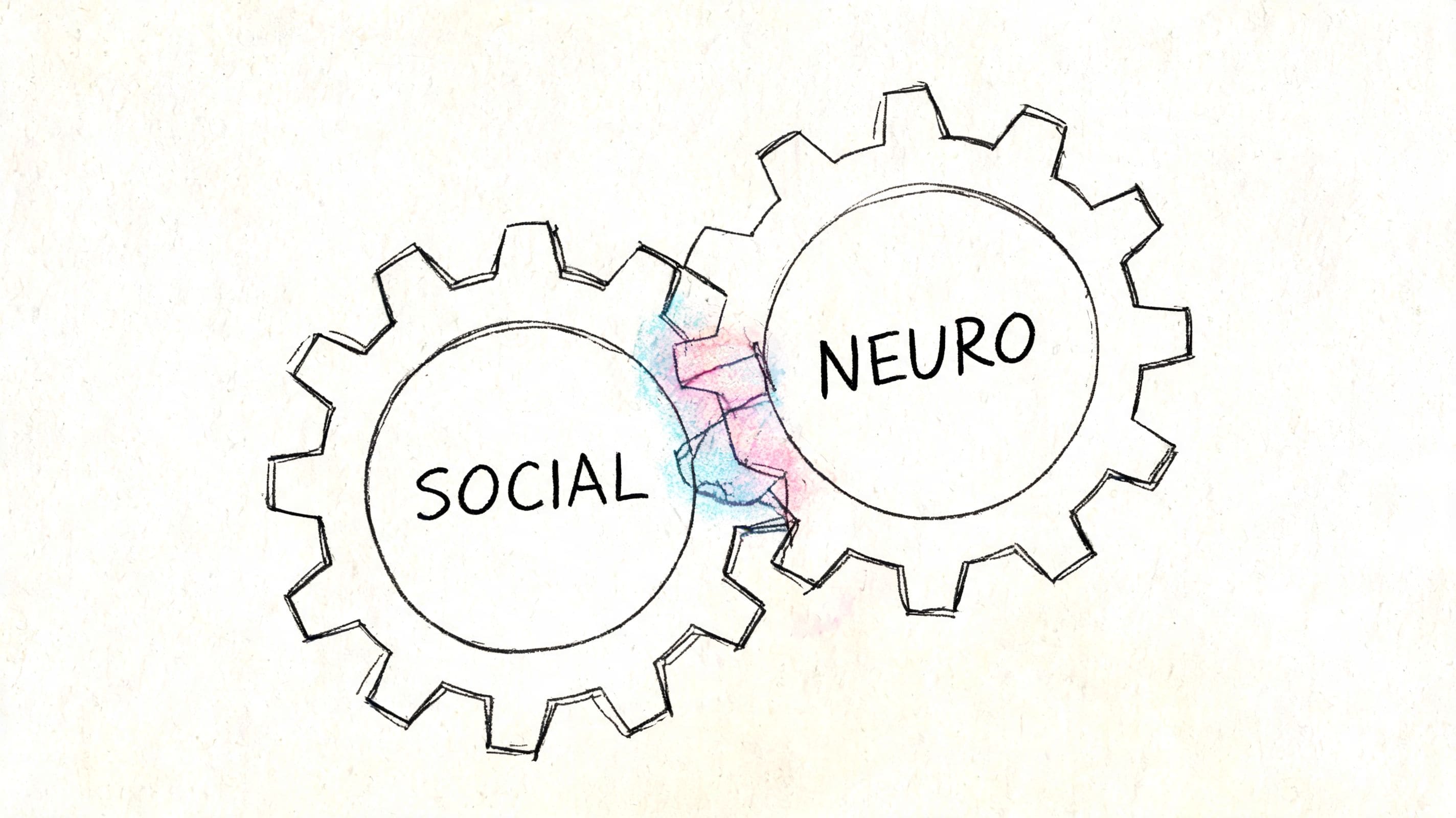
A lot of standard advice assumes social situations are hard only because of irrational fear. Neurodivergent people often deal with additional real demands. Interpreting tone. Managing sensory input. Tracking turn-taking. Deciding how much eye contact is expected. Processing spoken language quickly enough to respond before the moment moves on.
How it can show up in autism
For many autistic people, social anxiety is tied to uncertainty and overload as much as fear of judgment.
A conversation in a noisy café can require sensory filtering, language processing, facial cue interpretation, and self-monitoring all at once. If you've spent years being corrected, misunderstood, or pressured to mask, your nervous system may learn that social settings are high-risk.
Common patterns include:
- Masking fatigue: trying to look relaxed, sound natural, and respond "correctly" takes a lot of effort
- Unwritten rules stress: not knowing when to speak, how much detail is okay, or whether your tone is landing as intended
- Delayed processing: thinking of the right response after the moment has passed, then feeling embarrassed or frustrated
How it can show up in ADHD
For people with ADHD, social anxiety can be intensified by speed, impulsivity, and rejection sensitivity.
You may interrupt, lose your train of thought, talk too much when nervous, or miss part of what someone said while trying to plan your response. Then the rumination kicks in. "Did I dominate the conversation?" "Was that weird?" "Do they hate me now?"
Struggling with social anxiety in everyday situations? tonen can help.
tonen gives you 188+ conversation scripts, tone guidance and calming tools — designed for autistic adults, ADHD and social anxiety. Try it free for 7 days.
Download on the App StoreiOS only. Android coming soon.
This is one reason many ADHD people dread group chats, meetings, and class discussions. The interaction moves fast, and your brain may swing between under-filtering in the moment and over-analyzing afterward.
Why digital communication can feel just as hard
Modern communication doesn't remove social anxiety. It often reshapes it. One source notes that social anxiety can be triggered by emails, voice notes, video meetings, and even receiving praise in routine school and work settings, as discussed in this overview of overlooked social anxiety triggers.
For neurodivergent people, digital spaces can add their own strain:
- DMs and texts: pressure to reply fast, decode tone, and guess whether a short reply means something is wrong
- Video calls: seeing your own face, managing delays, and handling the "when do I jump in?" problem
- Voice notes: no visual cues, no time to process in real time, and no easy edit button
- Praise or public recognition: sudden attention can feel exposing rather than comforting
If communication often feels harder than it "should," this piece on why communication can feel so hard may help put language to that experience.
Evidence-Based Coping Strategies You Can Use Today
The most reliable coping tools for social anxiety come from Cognitive Behavioral Therapy, or CBT. The National Institute of Mental Health describes CBT for social anxiety as the "gold standard" psychotherapy because it teaches new ways of thinking and reacting and targets the loop of negative predictions and avoidance.
That sounds clinical, but the practical version is simple. Notice the prediction. Slow the body response. Test a small new behavior. Repeat.
Cognitive strategies
Start by catching the thought before you try to fight it. Individuals often jump straight to "be positive," which usually doesn't work. A better move is to get more accurate.
Try this three-part check:
1. Name the prediction.
"They'll think I'm stupid."
2. Ask what evidence you have.
"Do I know that, or am I guessing based on anxiety?"
3. Replace it with a balanced thought. "I might feel awkward, but awkward isn't dangerous. Individuals are typically focused on themselves."
If you're neurodivergent, make the thought realistic, not fake-cheerful. "I can tolerate not knowing exactly how this will land" often works better than "Everyone will love me."
> Practical rule: Don't argue with every anxious thought. Shrink its authority.
Another helpful tool is to separate discomfort from danger. A pounding heart, a pause in conversation, or a delayed reply can be very uncomfortable. That doesn't automatically mean something bad is happening.
Behavioral strategies
Behavioral work means changing what you do, not just what you think. The key is using small, repeatable experiments instead of throwing yourself into the most stressful situation possible.
Examples:
- Lower the stakes on purpose: send one short text instead of drafting the perfect paragraph
- Practice "good enough" responses: aim for clear, not flawless
- Reduce one safety behavior: if you usually over-apologize, pause before adding "sorry"
- Use graded exposure: start with a small interaction, then build slowly
A few low-pressure exposure ideas:
- ask one simple question in class or a meeting
- leave your camera on for part of a call
- message a friend first with a short check-in
- order food without rehearsing the full script several times
A useful script for exiting a conversation politely:
> "I'm going to step out for a minute, but it was good talking with you."
Or, in a work setting:
> "I need to get back to this task, but thanks for checking in."
The point isn't sounding perfect. It's teaching your brain that you can enter and exit social moments without panic running the whole show.
If you want structured ideas to practice, this collection of social anxiety activities for everyday situations can help.
Somatic strategies
When your body is flooded, logic alone won't do much. You need something that tells your nervous system, "We are safe enough right now."
Here are a few fast grounding options:
| Technique | How It Works |
|---|---|
| Box breathing | Breathe in, hold, breathe out, hold, using equal counts to slow your stress response |
| 5-4-3-2-1 grounding | Name things you can see, feel, hear, smell, and taste to anchor attention in the present |
| Unclench and drop | Relax your jaw, lower your shoulders, and soften your hands to interrupt tension signals |
| Feet on floor | Press both feet into the ground and notice the support under you |
| Script card | Read one prepared sentence to reduce blanking and decision overload |
Try box breathing before opening a message you're dreading. Try feet-on-floor grounding before speaking in a meeting. Try a script card before making a phone call.
A simple reset sequence
When social anxiety spikes, use this order:
- Pause first: don't force an immediate reply if you're flooded
- Regulate second: breathe, ground, or move your body
- Respond third: choose the smallest clear action
- Review gently: ask what helped, instead of scanning for proof you failed
That last step matters. Reflection helps. Self-attack doesn't.
How Conversation Practice Tools Can Help
When social anxiety shows up, the hardest part is often cognitive load. You're trying to interpret tone, choose words, regulate your body, and predict consequences at the same time. That's why conversation support tools can be useful. They reduce the number of decisions your brain has to make under pressure.
A good tool won't "fix" social anxiety. What it can do is provide scaffolding. That might mean ready-to-use scripts, private rehearsal, tone variations, or calming exercises you can use before replying, joining a meeting, or setting a boundary.
This same logic shows up in other communication settings too. In customer support, for example, teams use live assistance to reduce pressure during difficult conversations. This article on improving customer experience with AI assistance is about a different context, but the core idea is similar. Support is often most useful in the moment, when someone's brain is overloaded.
For individuals, conversation practice tools can help in three practical ways:
They lower the pressure to "perform naturally"
Many people with social anxiety freeze because they think every response has to be original, immediate, and socially perfect. Scripts interrupt that pressure. They give you a starting point.
They create a private practice space
Rehearsal matters, especially for autistic and ADHD users who may process better with repetition. Practicing in private can make real conversations feel less chaotic.
They support regulation, not just wording
The best tools also include grounding supports. If your nervous system is overwhelmed, the right sentence won't help much until your body settles.
One example is conversation practice for social anxiety, which includes scripts, rehearsal features, and calming tools. Used well, a tool like this becomes one part of a larger plan. Not a substitute for therapy when therapy is needed, but a practical aid for everyday moments that otherwise lead to shutdown, avoidance, or spiraling.
Supporting Someone with Social Anxiety
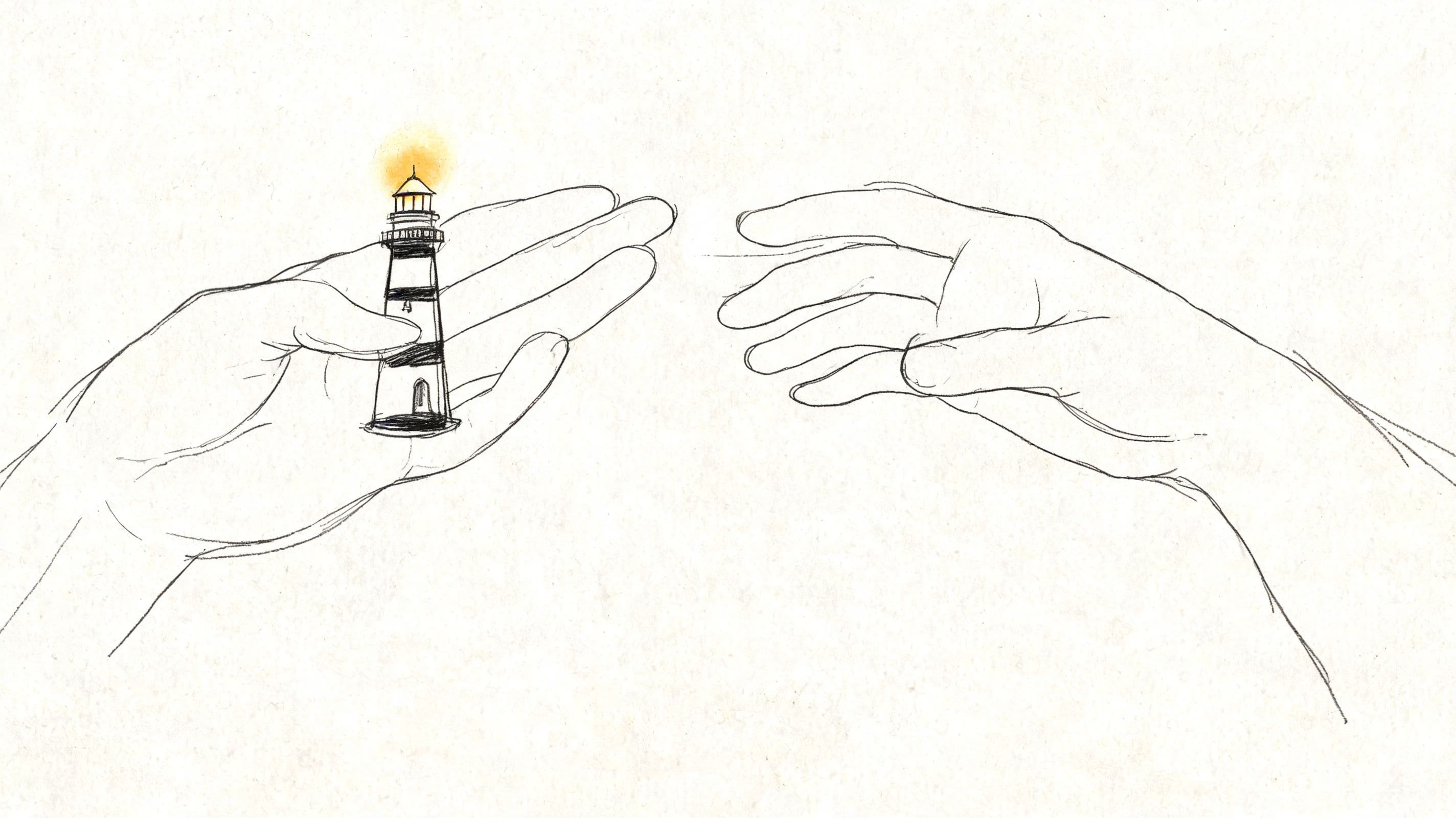
If you're a parent, teacher, partner, friend, or manager, your job isn't to force confidence into someone. It's to make social demands feel more navigable. That often means less pressure, more predictability, and more respect for how hard the situation feels from the inside.
Social anxiety often starts early. A seven-country study found 36% of young participants met criteria for social anxiety disorder, and NIMH reports a 9.1% lifetime prevalence in U.S. adolescents. Young people need support that builds safety, not shame.
What helps
Some responses reduce threat right away.
- Validate first: "That sounds stressful" works better than "It's not a big deal."
- Offer prep, not pressure: review the plan, menu, schedule, or script together before the event
- Give specific choices: "Do you want me to stay with you, check in by text, or help you leave early if needed?"
- Respect recovery time: some people need quiet after social effort, even when things went well
Celebrating small wins also helps. If someone answered one question in class or stayed on a video call for ten minutes, that counts.
> Support works best when it reduces shame. People grow more easily in environments where they don't have to defend their nervous system.
What usually backfires
Good intentions can still increase anxiety.
Avoid these common mistakes:
- "Just do it." This can make the person feel weak for struggling
- Surprise exposure. Pushing someone into a social situation without preparation often increases fear
- Over-talking for them. Stepping in constantly may send the message that you don't think they can cope
- Praise that becomes pressure. "See, that was easy" can erase how hard it was
For more concrete examples, this guide on how to talk to people with social anxiety offers supportive language that's easier to use in real life.
A better script
Try:
- "Do you want help planning what to say?"
- "It's okay if this feels hard."
- "We can make this smaller."
- "You don't have to do it perfectly."
That's often more useful than trying to talk them out of the feeling.
When to Seek Professional Help
Professional help makes sense when social anxiety keeps shrinking your life. If fear is regularly stopping you from going to school, doing your job, forming relationships, speaking up for your needs, or taking part in things you care about, it's time to get more support.
A few signs to watch for:
- Avoidance keeps growing: more situations feel off-limits over time
- Rumination takes over: you spend long stretches replaying interactions
- Daily functioning drops: work, school, or relationships are suffering
- Self-help isn't enough: strategies help a little, but you still feel stuck
A therapist can help you build a treatment plan that fits your brain and your real life. Some people benefit from therapy alone. Others may also discuss medication with a prescribing professional such as a psychiatrist or another qualified clinician.
If you want a clearer sense of what therapy may involve, this overview of cognitive behavioural therapy for social anxiety is a helpful starting point.
If social situations leave you rehearsing, freezing, or replaying everything afterward, tonen can be a practical support. It offers ready-to-use scripts, private conversation practice, tone options, and calming tools designed for neurodivergent users who want less pressure and more clarity in everyday communication.
Frequently asked questions
No. Introversion is about how you recharge and where you direct energy. Social anxiety is fear of judgment or scrutiny, with distress or avoidance that affects work, school, or relationships. You can be introverted without social anxiety, and socially anxious while still wanting connection.