A social skills app iphone users can rely on in 2026 should do more than teach greetings. The strongest options for adults help with real conversations, protect privacy, and support regulation, especially because 70% of autistic adults report daily social stress in professional settings, while only 4 of 20+ reviewed social skills apps were explicitly adult-focused.
If you're reading this after replaying a conversation in your head, drafting the same text five times, or putting off a difficult reply because you can't find the right tone, you're not failing at communication. You're probably missing the right kind of support. A social skills app for iPhone helps users handle conversations with less stress through scripts, practice modes, and real-time support. For autistic adults, people with ADHD, and people with social anxiety, the most useful apps in 2026 focus on tone customization, privacy, and anxiety-reduction tools so communication can feel clearer and more authentic, not more performative.
What Is a Social Skills App and Who Is It For
A social skills app iphone users choose today is usually one of two things. It is either a child-focused teaching tool built around basic skills, or it is an adult-facing communication aid that helps with real situations like work meetings, family boundaries, dating, follow-up texts, and saying no without panic.
That distinction matters. Many readers assume "social skills" means acting more polished or more "normal." For adults, a better definition is simpler: it means getting support for the moments when communication becomes confusing, high-stakes, or draining.
What these apps actually help with
A modern app can help you:
- Prepare wording: finding a sentence for a tough email, a boundary, or a repair attempt
- Adjust tone: sounding warmer, firmer, softer, or more direct without guessing
- Practice privately: rehearsing before a meeting, call, or message
- Reduce overwhelm: using calming tools before or after a hard interaction
- Interpret ambiguity: sorting through mixed signals without spiraling
For many neurodivergent adults, this isn't about learning social rules from scratch. It's about reducing friction. You may already know what you want to say, but not how to say it under pressure.
> Practical rule: A good app should help you communicate more clearly as yourself, not train you to hide your needs.
Who benefits most
Adults with autism, ADHD, or social anxiety often need support that is concrete, respectful, and low-pressure. That need is still not well served. A review highlighted a major gap for adult neurodivergent users, noting that 70% of autistic adults report daily social stress in professional settings, and only 4 of 20+ apps reviewed were explicitly adult-focused, with none offering a full set of features like tone scripts and calm tools, as noted in this review of social skills apps for kids and adults.
If you want broader non-app guidance too, The Grow Project social skills guide is a useful companion resource because it approaches adult social development in practical terms rather than treating it like a school-age lesson plan.
Some readers also discover that the issue isn't "poor social skills" at all, but a communication difference. If that sounds familiar, this explanation of social communication disorder in plain language can help you separate skill-building from self-blame.
Beyond Gamified Learning for Kids
Many people still picture a social skills app as something colorful, child-centered, and game-like. That image didn't come from nowhere. Early apps were often built for children and teens, especially autistic kids, and they usually focused on structured teaching through stories, choices, and visual prompts.
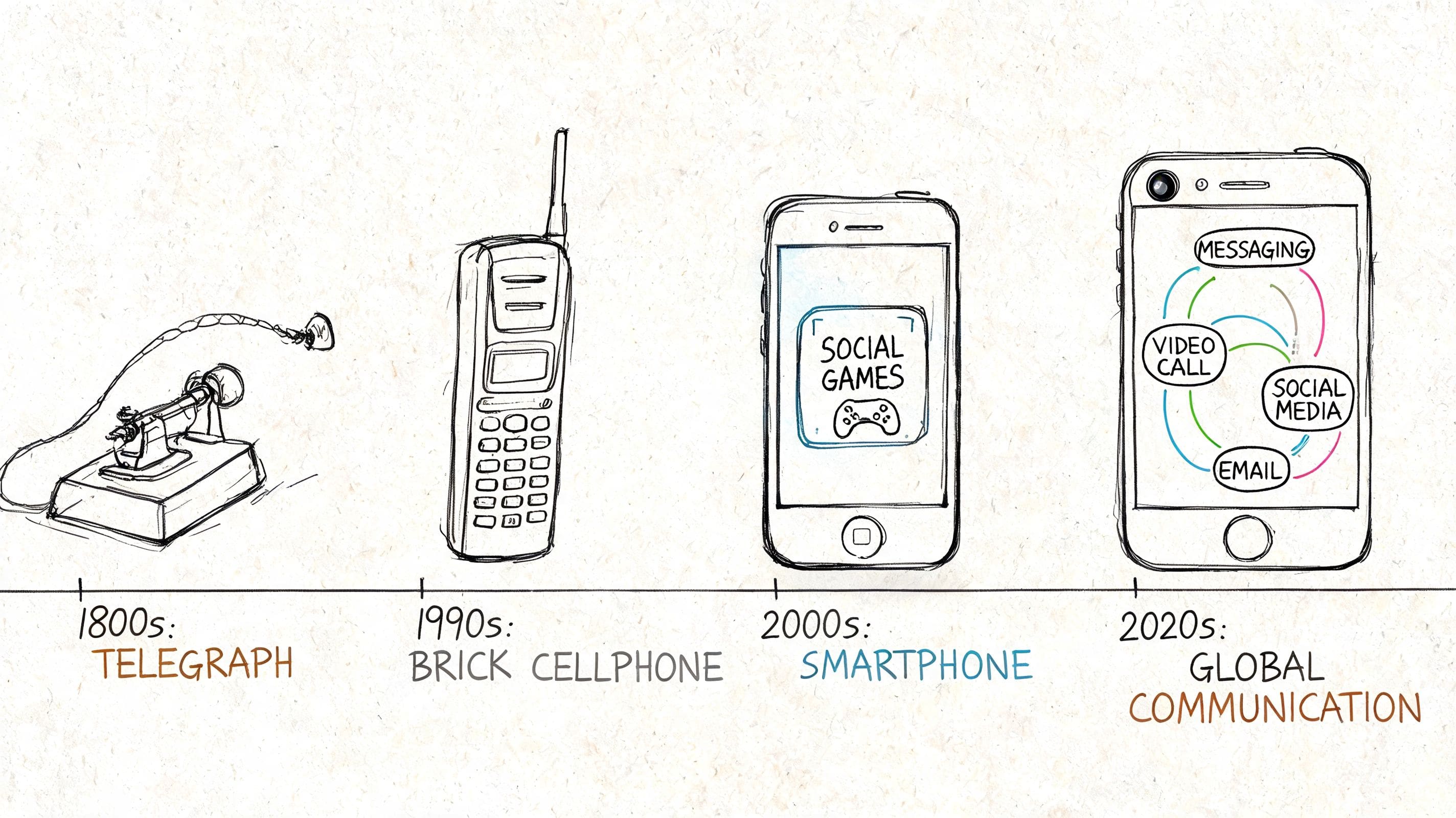
The first wave focused on teaching basics
A clear example is Social Quest. According to its App Store listing for Social Quest, it was developed by a speech-language pathologist, targets ages 8 to 17, and uses a quest format to teach pragmatic language, social-emotional learning, and problem-solving. It has been available since around 2012 and was recognized by Teachers with Apps as a "Best Educational App."
That kind of app served an important purpose. It broke social situations into smaller parts. Instead of saying "be better at conversations," it taught pieces like perspective-taking, gauging reactions, and maintaining a topic. For many children, that structure was useful and affirming.
The next wave became more real-world
Later tools moved closer to actual day-to-day life. Friendmaker is a good example. As described in this overview of Friendmaker and the UCLA PEERS approach, it works as a companion to the evidence-based PEERS program and teaches concrete steps for making friends, choosing friends, handling teasing, and staying safe online.
That shift matters because adult communication usually isn't about memorizing one correct script. It's about applying judgment in messy, changing situations.
Here is the rough evolution:
| Stage | Main style | Typical user | Common limitation |
|---|---|---|---|
| Early apps | Games, stories, multiple choice | Children and teens | Often too basic for adult life |
| Structured programs | Video modeling, role-play, step-by-step teaching | Teens and young adults | Still often framed around friendship basics |
| Newer adult tools | Practice, tone choices, privacy, regulation support | Adults with complex daily demands | Varies widely in quality |
> A child-focused app teaches the rules of a scenario. An adult-focused app should help you survive the uncertainty of one.
Why adults often outgrow older designs
If you are an adult trying to prepare for a performance review, handle a confusing friendship, or ask a family member to stop interrupting, a treasure-hunt interface or classroom-style lesson can feel off. Not because it is "too simple" in an insulting way, but because your communication load is different.
You may need help with:
- Workplace nuance: sounding clear without sounding harsh
- Boundaries: ending a conversation without over-explaining
- Recovery: calming your body after a stressful exchange
- Interpretation: understanding whether someone was annoyed, rushed, or neutral
That's why the phrase social skills app iphone now covers a much wider category than it did years ago. The field has started moving from child training tools toward adult communication support.
Key Features to Prioritize in a Modern Social Skills App
When adults ask me what to look for, I suggest ignoring flashy promises and checking for a handful of practical features. If an app doesn't support privacy, tone, and overwhelm, it may not hold up when you need it most.
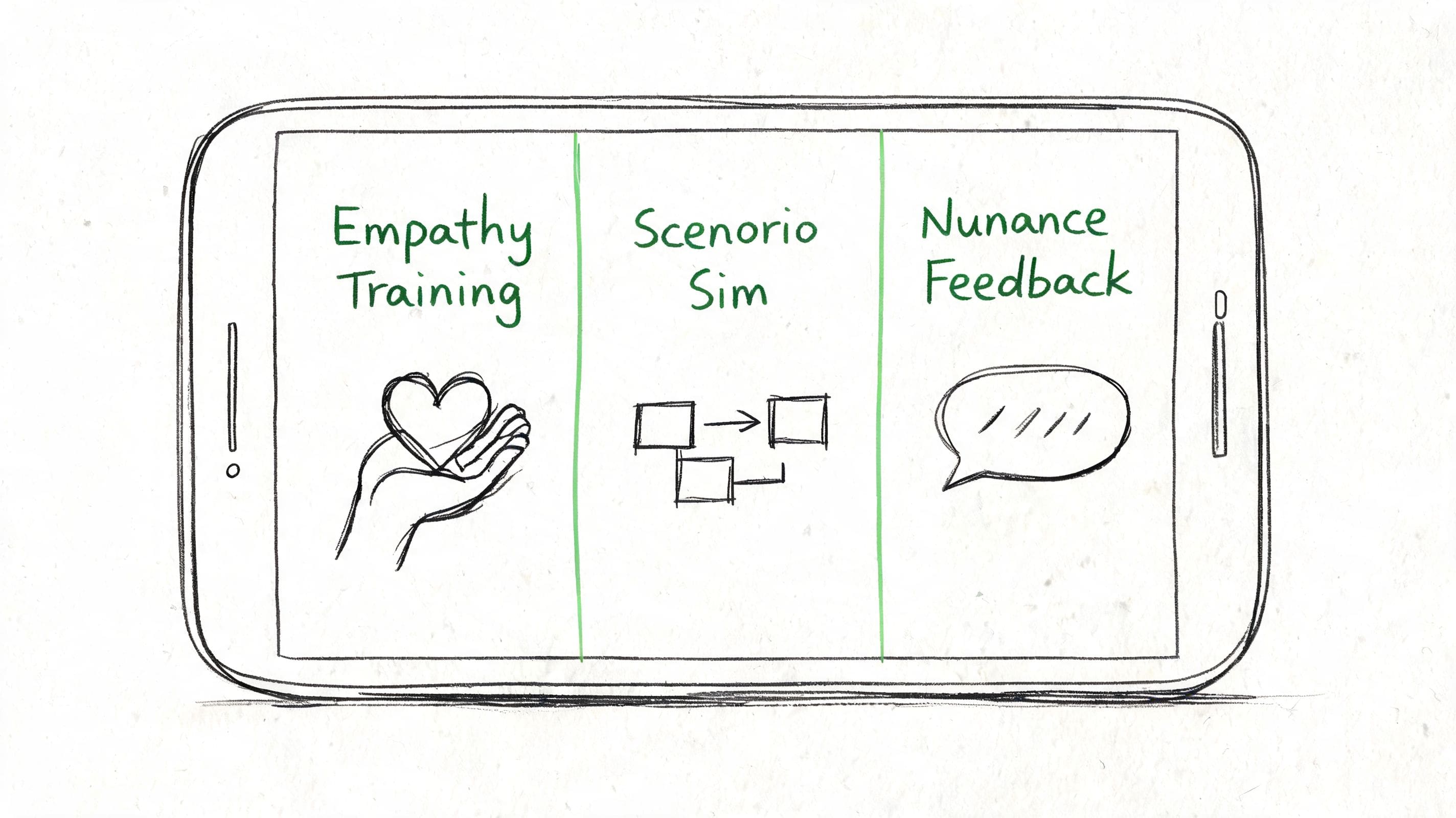
Privacy should come first
Many users skip this question until after they've already started practicing sensitive conversations in an app. That's backwards. If you're rehearsing a conflict with your boss, processing a family issue, or recording your own wording, privacy isn't a bonus feature. It's a safety feature.
According to the Socializer app privacy-related listing context, 65% of ADHD and autistic adults prioritize local data storage, and post-2024 privacy updates have increased demand for tools that keep sensitive practice sessions and personal scripts private and offline.
> If an app helps with vulnerable conversations, ask where that data goes before you ask how smart the AI is.
Looking for a social skills app that actually works? tonen can help.
tonen gives you 188+ conversation scripts, tone guidance and calming tools — designed for autistic adults, ADHD and social anxiety. Try it free for 7 days.
Download on the App StoreiOS only. Android coming soon.
Tone control matters more than people think
A lot of communication breakdown doesn't come from the main message. It comes from mismatch in delivery. "I can't do that today" can read as cold, apologetic, irritated, or calm depending on phrasing.
Useful apps make room for tone choices such as:
- Direct: for clarity and low ambiguity
- Warm: for preserving connection
- Firmer: for boundaries and repeated issues
- Softer: for fragile or emotionally charged moments
This is especially helpful for autistic adults and people with ADHD who may know their intent but struggle to predict how wording will land.
Practice should feel low-pressure
Some people don't need more information. They need rehearsal. A solid app should let you test wording privately before using it in real life. That can mean reading scripts out loud, switching tones, saving favorites, or repeating a difficult line until it feels less physically activating.
If you want an example of what private rehearsal can look like, this conversation practice feature overview shows how practice tools can support lower-pressure preparation instead of forcing live performance.
A calm interface is part of the tool
Design isn't cosmetic here. A cluttered interface can make a stressed brain shut down. The most effective apps for neurodivergent users tend to use clean layouts, clear text, and minimal visual noise. That doesn't make the app boring. It makes it usable when you're already overloaded.
A quick checklist helps:
- Low visual clutter: fewer competing buttons and dense screens
- Clear categories: work, family, dating, health, school, or daily social life
- Fast access: you shouldn't have to dig through menus during a stressful moment
- Supportive language: instructions should reduce shame, not increase it
Coaching can be useful when it stays concrete
Some newer apps use AI in ways that go beyond generic chatbot talk. Chatterfly's App Store listing for AI-supported social coaching describes guided practice with hesitation detection and contextual prompts, and notes that this kind of approach can boost skill acquisition by up to 35% through AI-driven spaced repetition.
That feature can help when it stays specific. "Try rephrasing for clarity" is often more helpful than a vague motivational message.
How People Use Social Skills Apps in Daily Life
Features sound nice on paper. They make more sense when you see where they fit in real life. Most adults don't open a social app because they suddenly want to "improve networking." They open it because a conversation is coming, and their stomach has already tightened.
Before a difficult work conversation
An autistic adult is preparing to tell a manager, "I need written follow-up after meetings." The fear isn't only the request itself. It's the possible interpretation. Will this sound demanding? Will it seem like criticism?
A helpful app gives them a few ways to phrase the same need. One version might be more direct. Another might sound warmer. A practice mode lets them say it aloud a few times before the meeting so the sentence feels familiar instead of risky.
> Try aiming for "clear and kind" instead of "perfect and impossible."
Sometimes newer apps also provide nuanced coaching during rehearsal. As described in the Chatterfly listing covered earlier, some tools analyze hesitation and offer contextual prompts, which can support stronger skill-building than static scripts alone.
During a family boundary moment
A person with ADHD has a relative who talks over them every time they visit. In the moment, their mind goes blank. Later, they think of five excellent responses, all too late.
A script library helps in these situations. Not because people should sound robotic, but because a prepared line reduces the delay between discomfort and response.
For example, they might rehearse:
- A gentle opener: "I want to finish my thought first."
- A firmer follow-up: "I need a little space to speak without interruption."
- An exit line: "I'm going to take a break and come back to this later."
That last line matters. Many adults don't need help starting a conversation. They need permission to leave one.
If anxiety spikes around practice itself, these conversation practice ideas for anxiety can help make rehearsal feel less like performance and more like preparation.
When declining without over-explaining
Someone with social anxiety gets invited to an event they don't want to attend. Their usual pattern is either saying yes and regretting it, or saying no and then writing a paragraph to soften the refusal.
An app can help them build a middle path:
1. Name the goal. Decline politely.
2. Choose the tone. Warm, but not apologetic.
3. Rehearse a short message.
4. Keep an opt-out line ready if the person pushes.
That might look like, "Thanks for inviting me. I'm going to pass this time, but I appreciate you thinking of me."
Short. Honest. Regulated.
Why this works for many adults
The core value of a social skills app iphone adults use regularly isn't that it replaces instinct. It reduces the gap between knowing and doing. Under stress, many people lose access to words they already have. Practice, scripts, and concrete prompts create a bridge back to them.
An In-Depth Look at tonen for Adult Communication
You are staring at a text from your manager, your sibling, or a friend. You know the reply needs the right tone, but your brain is running three checks at once. Is this too blunt? Too soft? Too long? For many autistic adults, people with ADHD, and people with social anxiety, that is the hard part. The problem is not a lack of care. It is needing support at the exact moment language, tone, and nervous system stress all collide.
tonen is built around that adult communication problem. It treats social support as something practical and concrete, especially for people who want help sounding more like themselves, not more rehearsed.
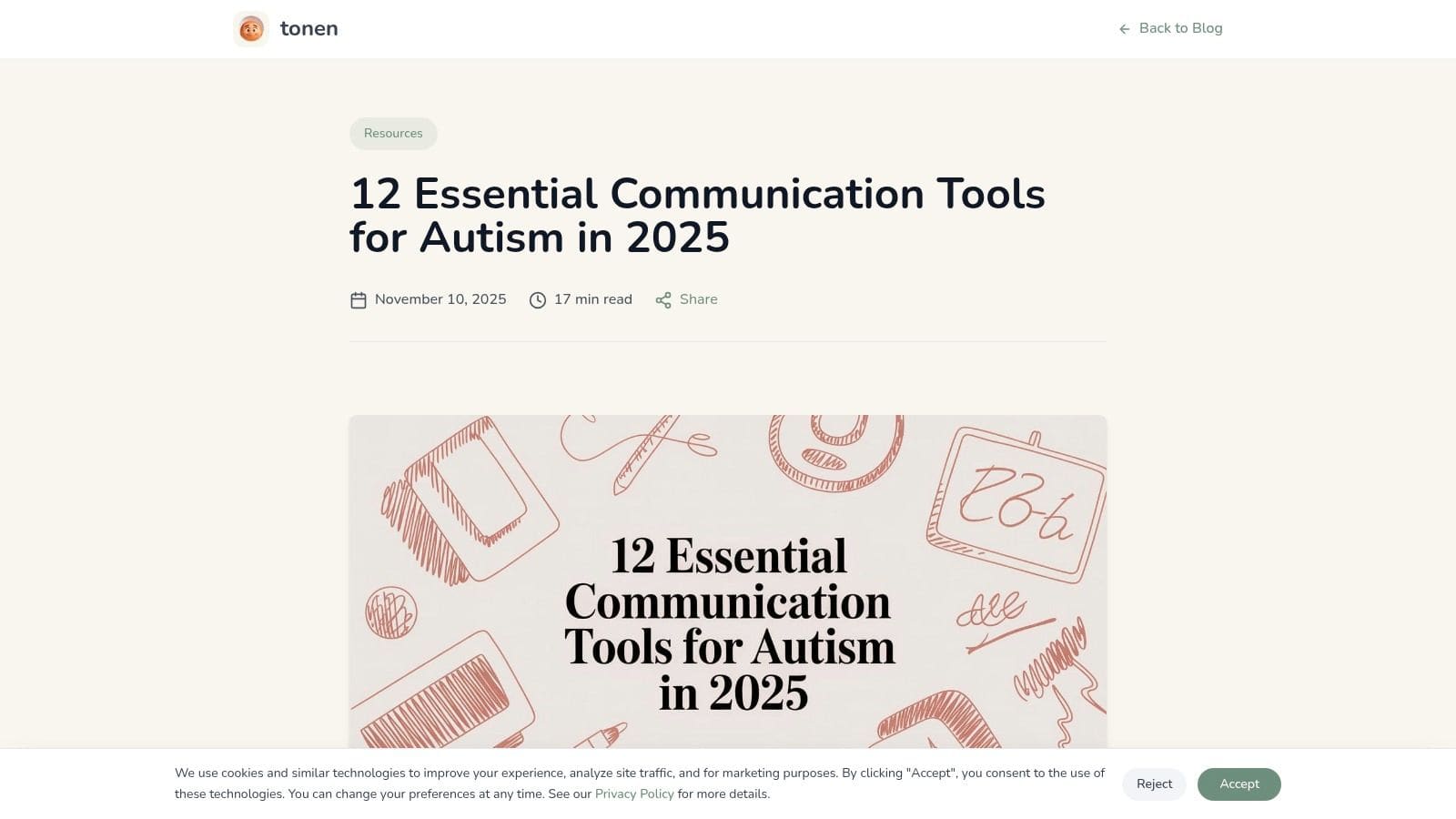
What it includes
The app includes a Scripts Library with prompts across work, family, health, education, and everyday relationships. Each script gives a few lines to try, an opt-out line, an ask-for-support option, and four tone choices: Direct, Warm, Firmer, or Softer.
That matters because adult communication usually is not about finding any response. It is about finding a response that fits the room. A boundary with a coworker needs a different shape than a boundary with a parent. Tone control works like adjusting the pressure on a faucet. The message may stay similar, but the force changes.
There is also a Perspective Helper. Users can describe a confusing interaction and get a few possible interpretations, along with phrases they could use next. For someone who gets stuck replaying a conversation, that kind of structure can turn a social blur into smaller parts: what may have happened, what matters now, and what to say next.
Why the design matters
Adults often open communication apps while overloaded, rushed, or already dysregulated. A cluttered interface adds one more task to an already crowded mental desk.
tonen keeps the layout clean and visually quiet, which can make it easier to use under stress. That is especially relevant for neurodivergent adults who lose access to words when too many inputs arrive at once. If you want more background on how that idea shaped the product, this introduction to tonen's conversation scripts for neurodivergent people explains the thinking in more detail.
Practice and regulation in one place
The app also includes Practice Mode, where users can save favorites, rehearse privately, and switch tones inside a script. That is useful for a very adult kind of question: not just "What should I say?" but "Can I say this without shutting down?"
A script helps with wording. A calming tool helps your body stay available long enough to use the wording.
That pairing is one of the stronger parts of the design. The Calm Kit includes tools such as breathing, grounding, body scan, and safe-place exercises. For autistic adults, people with ADHD, and users with social anxiety, integrated regulation support can make the difference between reading a helpful script and being able to act on it.
Privacy and access details
Privacy is another area where adult needs differ from child-focused social apps. Many users are rehearsing sensitive conversations about work, dating, family conflict, or medical care. tonen keeps conversations and scripts on the device, which will matter to people who do not want vulnerable practice stored elsewhere.
It is available on the App Store with a free trial and subscription pricing by month or year.
Who it will fit best
This kind of tool may fit well if you:
- freeze in the moment and only find your words later
- want help adjusting tone without sounding artificial
- prefer private rehearsal for difficult conversations
- get overloaded by visually busy apps
- need communication support that also accounts for anxiety or shutdown
It will likely be less useful for someone looking for child-centered lessons, broad therapy content, or a fully open-ended chatbot. Its focus is narrower than that. It is adult communication support for real situations where tone, clarity, privacy, and regulation all matter at once.
Finding the Right Communication Support for You
The right app is the one that helps you communicate with less fear and less guesswork. Not the one with the most features. Not the one that pushes you to sound polished all the time. The one that makes hard moments more manageable.
A useful social skills app iphone adults can trust should match the practical nature of adult life. That means support for work, family, conflict, follow-up messages, mixed signals, and nervous system overload. It should also respect privacy, since many people are rehearsing vulnerable conversations that they wouldn't want floating around elsewhere.
Questions worth asking yourself
Before you choose an app, it helps to ask:
- Where do I get stuck most often: starting, responding, setting limits, or recovering afterward?
- Do I need scripts, practice, interpretation help, or calming tools?
- How much privacy do I want for saved conversations and rehearsals?
- Do I want support that helps me sound more like myself, or more like a script?
Some people need a strong practice tool. Others need tone choices. Others mainly need help untangling what just happened in a confusing interaction. You don't have to pick the app that does everything. You need one that supports your actual friction points.
For a broader look at tools built around these needs, this roundup of apps for neurodivergent communication is a practical next read.
What matters most is this: communication support should help you become easier to understand, not harder to be.
If you want an iPhone app built around scripts, tone choices, private rehearsal, and calming tools for real-life conversations, tonen is one option designed specifically for neurodivergent adults. It keeps conversations on your device, offers a 7-day free trial with no credit card, and focuses on helping you communicate more clearly without pushing you toward masking.
Frequently asked questions
This guide covers best social skills app iphone: top 2026 picks for adults with practical, neurodivergent-friendly strategies—clear steps, scripts where useful, and ways to reduce anxiety or overload rather than vague "be confident" advice.