You stare at a message that says "okay," and your brain instantly starts building theories. Are they upset? Did you say too much? Should you explain more, apologize, or wait? If you've been asking why do i overthink texts, the short answer is this: texts remove tone, facial expression, timing cues, and immediate feedback, so your brain has to guess what the message means. When your brain dislikes uncertainty, it often fills those gaps with threat, not neutrality.
The good news is that text overthinking usually follows patterns. Once you can spot those patterns, you can interrupt them.
Why Overthinking Texts Is a Common Anxiety
A text message looks simple, but your brain does a surprising amount of work to interpret it. In person, you get tone of voice, pacing, eye contact, pauses, and facial expression. In a text, most of that disappears. What remains is a small set of words and a lot of room for interpretation.
That gap is where anxiety often moves in.
If you keep wondering why do i overthink texts, it often comes down to ambiguity. Your brain wants certainty. A vague message, a delayed reply, or a short answer can feel unfinished, and an anxious mind tends to "finish the story" with a worst-case explanation.
Why texting feels so loaded
Texting can trigger a very old survival system with a very modern problem. Your brain is built to notice possible social threat. When something feels unclear, it may scan for danger before it scans for harmless explanations.
For many neurodivergent people, that process gets louder because texting relies heavily on implied meaning. If reading social cues already takes extra effort, texts can feel like trying to solve a puzzle with missing pieces.
> Key takeaway: Overthinking texts is often a nervous system response to unclear social information, not a sign that you are too sensitive.
A few common moments can set it off:
- Short replies: "k," "sure," or "fine" can feel cold when you cannot hear tone.
- Delayed responses: Your brain may treat waiting like evidence.
- Unclear wording: You may start searching for hidden meanings that were never intended.
- High-stakes relationships: Messages from a boss, partner, friend, or family member often carry extra emotional weight.
If social uncertainty already drains you, tools for reducing social anxiety in everyday communication can help you build more stable habits around texting too.
The Cognitive Science Behind Overthinking Texts
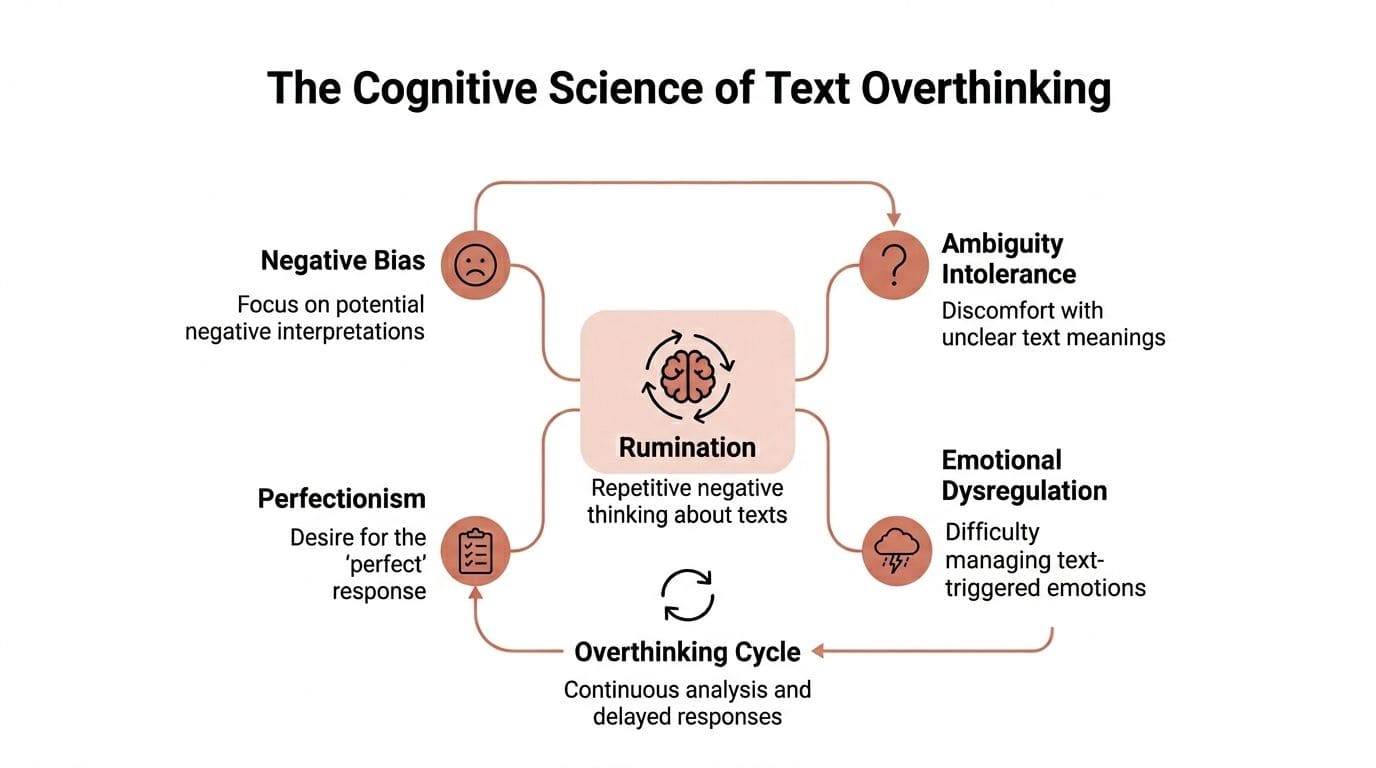
Overthinking a text is not random. It usually follows a loop. You read the message, feel a jolt of uncertainty, and then start trying to solve that feeling by analyzing the message harder. Instead of calming you, the extra analysis keeps the alarm switched on.
That loop has a name: rumination. It resembles a mental treadmill. You are moving a lot, but not getting anywhere.
Your brain hates unfinished information
One useful way to understand text anxiety is this: the brain prefers a complete picture. Texting gives it an incomplete one.
As described in this explanation of why people overthink text messages, overthinking texts stems from the brain's response to ambiguity. Without nonverbal cues, people rely more on past experiences to build a story about what the message means. Delays make this worse because they create more time for rumination, including re-reading messages in a loop.
That matters because your brain often does not ask, "What are all the possible meanings?" It asks, "What meaning would protect me if something is wrong?" Protection-focused thinking tends to lean negative.
Why re-reading feels useful even when it is not
Many people re-read because it feels responsible. If you inspect the wording enough, maybe you can prevent embarrassment, conflict, or rejection. The problem is that rumination often looks like problem-solving without functioning like problem-solving.
A rough internal sequence often looks like this:
1. You notice ambiguity
"What did they mean by that?"
2. Your body reacts
Tension rises before you have clear evidence.
3. Your mind starts filling gaps
"Maybe they're annoyed."
4. You re-read for certainty
You search punctuation, timing, and wording.
5. The uncertainty grows
Each pass creates a new possible interpretation.
This is one reason many people get stuck trying to decode "hidden meaning." If that pattern feels familiar, this guide on how to understand hidden meaning in messages can help you separate what is present from what anxiety is adding.
> Tip: If your thoughts keep circling but no new information has appeared, you are probably in rumination, not resolution.
Why texting is especially sticky
Texting has two features that make overthinking worse.
First, it is asynchronous. The other person does not respond in real time, so your mind has space to spin. Second, it is reviewable. You can scroll back, re-read, zoom in on punctuation, and analyze timestamps. In face-to-face conversation, many cues pass quickly. In texting, the record stays there, inviting repeated inspection.
That is why a tiny message can take up a huge amount of mental space.
Stuck overanalyzing every message you send? tonen can help.
tonen offers conversation scripts, Reply Helper, Perspective Helper, Debrief, Phone Call Mode and Calm Kit. Start with 21 free scripts on iPhone. Optional Premium unlocks more features.
Download on the App StoreAvailable on iOS.
Common Emotional Triggers for Text Anxiety
Thought loops do not run on logic alone. They run on emotion. A message becomes difficult when it touches a fear you already carry.
For some people, the fear is rejection. For others, it is being misunderstood, sounding rude, asking for too much, or missing an unwritten social rule. The text itself may be small, but the feeling underneath it can be big.
Fear of rejection
One of the strongest triggers is the possibility that someone's connection to you has changed. A delayed reply can feel like distance. A shorter message can feel like annoyance. A missing emoji can feel like proof that something is off.
This reaction makes sense when your brain is already alert for signs of disapproval. It does not mean the threat is real. It means your system is trying to detect one early.
Fear of getting it wrong
Texting can feel unforgiving because the words are visible and fixed. You may worry that one awkward sentence will make you seem cold, strange, needy, or careless.
That pressure often leads to behaviors like:
- Editing repeatedly: You keep changing one sentence to make it safer.
- Checking tone over and over: You worry a neutral message sounds harsh.
- Avoiding reply altogether: Silence can feel safer than risking a wrong response.
Research from 2014 found that people with social anxiety tendencies are more likely to interpret ambiguous text messages negatively, as described in this Psych Central article on text anxiety. The same piece includes Dr. Holly Schiff's explanation that without emotional cues, communication becomes more ambiguous and complex to process.
Attachment wounds can make texts feel bigger
Attachment theory can help explain why one message can affect your whole mood. If your history taught you that connection is inconsistent, your brain may monitor relationships closely. It may treat uncertainty as a sign that closeness is slipping away.
That can show up as hypervigilance:
- Reading for a "shift" in tone
- Watching how long replies take
- Comparing today's messages with older ones
- Feeling relief only briefly after reassurance
> Key takeaway: Many texting spirals are really about emotional safety. The message is the trigger, but the deeper issue is often fear of rejection, misunderstanding, or disconnection.
When you see that clearly, self-blame usually softens. You are not being dramatic. Your emotions are attaching to a real need for safety and clarity.
Why Neurodivergence Amplifies Text Overthinking
For autistic people and people with ADHD, texting can be unusually draining because it combines uncertainty, timing pressure, social decoding, and self-regulation all at once. The issue is not just "general anxiety." It is the interaction between your brain wiring and a communication format that withholds context.
Autism and the burden of implied meaning
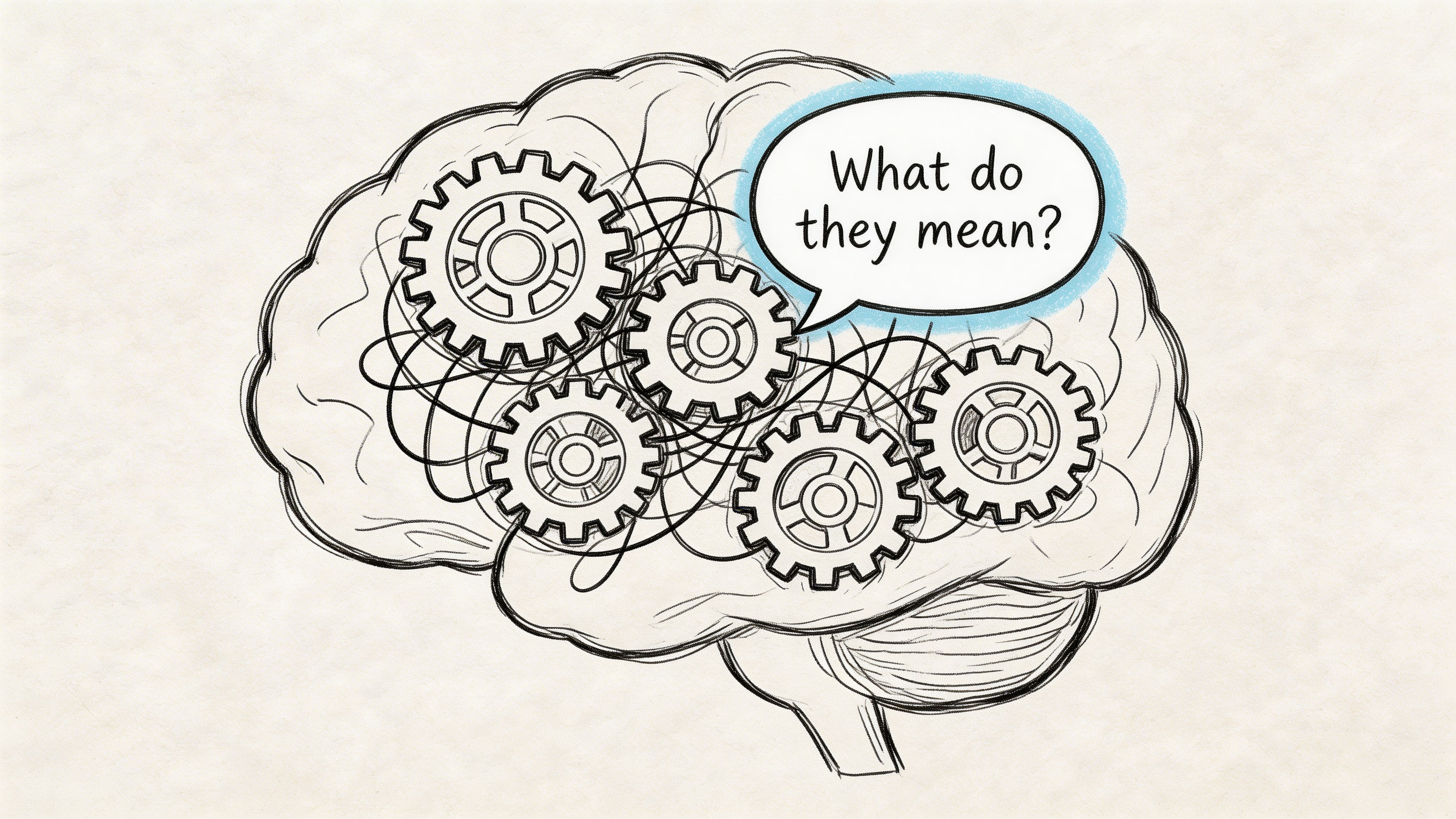
Many autistic people prefer clarity, directness, and explicit communication. Texting often offers the opposite. People hint. They soften requests. They expect you to infer tone from sparse wording. They leave emotional meaning unstated.
That can create a painful double-bind. If you read the message precisely, you may worry you missed subtext. If you search for subtext, you may become overwhelmed by too many possible interpretations.
Some autistic adults describe this as trying to solve a social equation with missing variables. You know there is an answer. You just do not have enough information to feel sure.
ADHD and emotional intensity
People with ADHD may struggle with text overthinking for different reasons. A message can interrupt focus, trigger urgency, and create a strong emotional reaction that is hard to regulate quickly. If you already have a sensitive response to perceived criticism or exclusion, a neutral text can feel much sharper than it looks on the screen.
Executive function can also play a role. Holding the full context of the conversation in mind, deciding what to say, choosing tone, and remembering what you meant to respond to can all take effort. That effort often leads to extra re-reading, stalled replies, or impulsive replies followed by regret.
Why the waiting feels so intense
Texting can also create a reward-and-stress loop. This therapy article on overthinking text messages through an attachment lens explains that texting overthinking can activate survival wiring, especially in anxious attachment styles. It also notes that unpredictable notifications can create reward-craving loops, and that in autistic and ADHD adults this may show up as scanning for rejection and filling ambiguous texts with fear-based guesses.
That pattern lands hard for neurodivergent people because the brain is not just waiting for information. It may also be trying to regulate emotion, recover from interruption, and decode social meaning at the same time.
If that experience feels familiar, resources on neurodivergent communication patterns and support can help put language to what has been happening.
> Tip: If texting routinely leaves you more confused than connected, the problem may be the format, not your character.
How Overthinking Texts Shows Up in Daily Life
Text anxiety is easier to understand when you see how it shows up in ordinary moments. It rarely looks dramatic from the outside. Inside, though, it can take over the day.
A manager sends an autistic employee a message that says, "Can we talk later?" The employee reads it, freezes, and scrolls through the last few interactions to find clues. Maybe the wording is neutral. Maybe it signals a problem. The rest of the workday gets split between actual tasks and trying to decode two short sentences.
A student with ADHD gets a brief text from a friend after lunch. "ok no worries." The student suddenly remembers talking too much earlier, wonders if they were annoying, and decides not to reply until they can think of the perfect message. Hours pass. The delay makes the conversation feel even heavier.
A parent tries to text a neurodivergent teen about plans changing after school. The parent rewrites the message multiple times, trying to sound calm, clear, and supportive without sounding controlling. By the time they hit send, they are already anxious about how it will land.
The invisible cost
Overthinking texts can lead to problems that are easy to miss:
- Delayed responses: You care so much about replying well that you cannot reply at all.
- Relationship strain: Other people may misread your caution as disinterest.
- Mental exhaustion: A tiny exchange can take up hours of attention.
- Body stress: Your shoulders tighten, your stomach drops, and your focus disappears.
Sometimes people also notice that medication changes can affect anxiety, attention, or how intensely they react to social uncertainty. If that is part of your picture, this overview of Adderall and SSRIs may help you frame questions for a clinician.
These daily examples matter because they show something important. Text overthinking is not just "thinking too much." It affects work, friendships, family life, and how safe you feel in your own relationships.
Practical Strategies to Break the Overthinking Cycle
You do not need a perfect brain to text with less stress. You need a few repeatable tools that lower ambiguity, reduce cognitive load, and help your body settle before your mind starts making stories.
Start with Fact versus Story
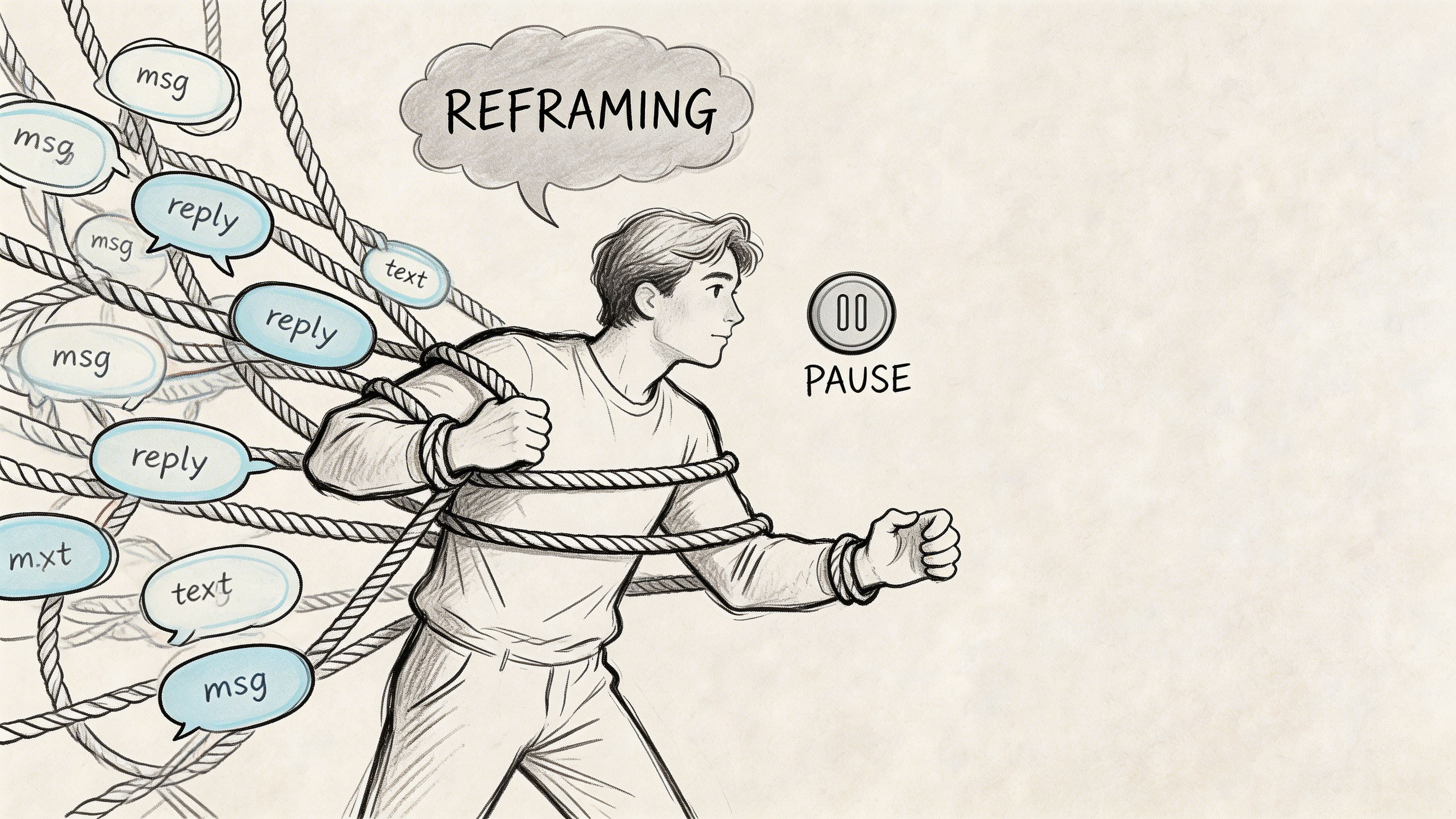
This is one of the simplest tools because it separates what happened from what anxiety added.
Try writing two lines:
- Fact: "They have not replied yet."
- Story: "They are upset with me."
Or:
- Fact: "Their message was short."
- Story: "They are pulling away."
You are not forcing a positive interpretation. You are clearing space between evidence and fear. That pause often reduces the urgency to act.
> Tip: If you cannot point to direct evidence, label it as a guess, not a fact.
Build a small texting system
Many people ask why do i overthink texts when the deeper issue is that every message feels like a fresh problem. Systems help because they reduce how many decisions you need to make.
A few practical options:
1. Set texting windows
Check and reply at planned times when possible, instead of monitoring your phone all day.
2. Use response templates
Keep short scripts for common situations such as "I need more time," "I'm not sure how to respond yet," or "Can we talk by call instead?"
3. Choose simpler wording
If you often over-edit, aim for clear rather than perfect. This guide on clarity in writing is useful if your brain tends to equate longer editing with safer communication.
4. Switch formats when needed
If a conversation is emotionally loaded, ask to move it to a call or voice note.
Regulate first, reply second
When your body is activated, your brain becomes a poor judge of tone. The goal is not to suppress the feeling. The goal is to lower the intensity enough that you can think in context again.
Helpful reset options include:
- Movement: Walk, stretch, or shake out your hands.
- Breathing: Lengthen your exhale.
- Distance: Put the phone face down and step away briefly.
- Grounding: Name a few things you can see or feel around you.
If emotional activation is a recurring issue, these ideas for how to regulate emotions during hard interactions can support the texting side too.
Use a before-and-after model
| Trigger | Typical Overthinking Spiral | Mindful Response Strategy |
|---|---|---|
| Delayed reply | "I did something wrong." Re-check message history. Monitor phone constantly. | Name the delay as uncertainty, not evidence. Put the phone down for a set period. |
| Short message | "They are upset." Rewrite your reply repeatedly. | Ask what is known for sure. Respond clearly, or wait until calmer. |
| Ambiguous wording | Search for hidden meaning in punctuation and timing. | Ask for clarification if needed. Prefer direct language over mind-reading. |
| High-stakes text | Try to craft a perfect response. Freeze and avoid sending. | Use a simple script, then edit once for clarity. |
| No response after vulnerability | Replay the interaction and assume rejection. | Notice the emotional wound being activated. Seek grounding before interpretation. |
Use tools that lower cognitive load
Sometimes a worksheet or note on your phone is enough. Sometimes you need more structure. For rehearsal, choose a script, adapt the words and read them aloud yourself if that is useful. You can also practise with someone you trust. For people who do better with scaffolding than with vague advice, that kind of structure can make texting feel more manageable.
Finding Support with Neurodivergent-Friendly Tools
General advice often fails neurodivergent people because it assumes the problem is overreacting. Usually, the problem is overload. You are trying to decode meaning, manage emotion, choose wording, predict impact, and stay socially safe at the same time.
Support works better when it matches that reality.

What useful support looks like
A neurodivergent-friendly tool should do at least one of these things well:
- Reduce ambiguity: Offer clearer ways to phrase what you mean.
- Reduce working memory load: Keep scripts or examples where you can find them quickly.
- Reduce emotional flooding: Help you pause before you answer from panic.
- Reduce mind-reading: Give you alternative interpretations that are more balanced.
That is why many people benefit from concrete supports instead of generic encouragement to "just stop overthinking." A script can be more helpful than a pep talk. A grounding prompt can be more useful than a vague reminder to calm down.
When tools are the right next step
If you often get stuck on the same kinds of texts, a repeatable support tool can save energy. This is especially true if you:
- freeze before replying
- re-read messages many times
- struggle to find the right tone
- need help asking for space or clarification
- feel wiped out after ordinary digital conversations
Some people start with notes app templates. Others use conversation apps designed for lower-stress communication. If you want to explore options built around these needs, this roundup of apps for neurodivergent communication is a useful place to look.
If you have been asking why do i overthink texts, the deeper answer is often this: your brain is trying to create safety in a format that gives very little. The goal is not to become someone who never cares. The goal is to build enough clarity, regulation, and support that a text stays a text, instead of becoming a full-body emergency.
If texting leaves you stuck between silence, spiraling, and second-guessing, tonen offers structured support built for neurodivergent communication. You can use its scripts, perspective tools, and calming exercises to make replies feel clearer and less overwhelming.