Improving communication skills as a neurodivergent person usually has less to do with confidence than with setup. A workable system lowers the amount you have to process in the moment, gives you language to reach for under stress, and makes room for regulation when your brain starts to overload.
That matters in everyday life, not just in theory. Clearer communication tends to make work easier, reduce avoidable friction, and help other people respond to what you mean instead of what they guessed.
Many standard recommendations fail because they assume a brain can improvise on demand, monitor tone, interpret subtext, and remain regulated simultaneously. For numerous autistic individuals, ADHDers, and people with social anxiety, those requirements represent too many active tasks. If you have ever wondered why communication feels harder than it seems to for other people, the difference is frequently a matter of cognitive load rather than a lack of effort.
The practical fix is a four-part system. Prepare with clear goals and a few scripts. Practice delivery and tone in low-pressure settings. Use real-time supports when overwhelm shows up. Review difficult conversations afterward so you can adjust the system instead of blaming yourself.
This approach also respects trade-offs. Sometimes direct wording is better than polished wording. Sometimes a pause, a note on your phone, or a follow-up text works better than pushing through live conversation. That kind of adjustment is not a failure of social skill. It is skill.
The same principle shows up in other kinds of high-stakes communication too, including overcoming sales gaps for creative professionals. Better results usually come from having a repeatable method, not from performing confidence on command.
Beyond 'Just Be Confident' A Neurodivergent-Friendly Approach
Most generic advice assumes communication problems come from a lack of effort or personality. They usually don't. For many neurodivergent people, the problem is that the advice itself is mismatched. Mainstream resources often emphasize active listening and body language without addressing how overwhelming or inauthentic those expectations can feel for people who process social cues differently, as noted in Coursera's overview of communication skills.
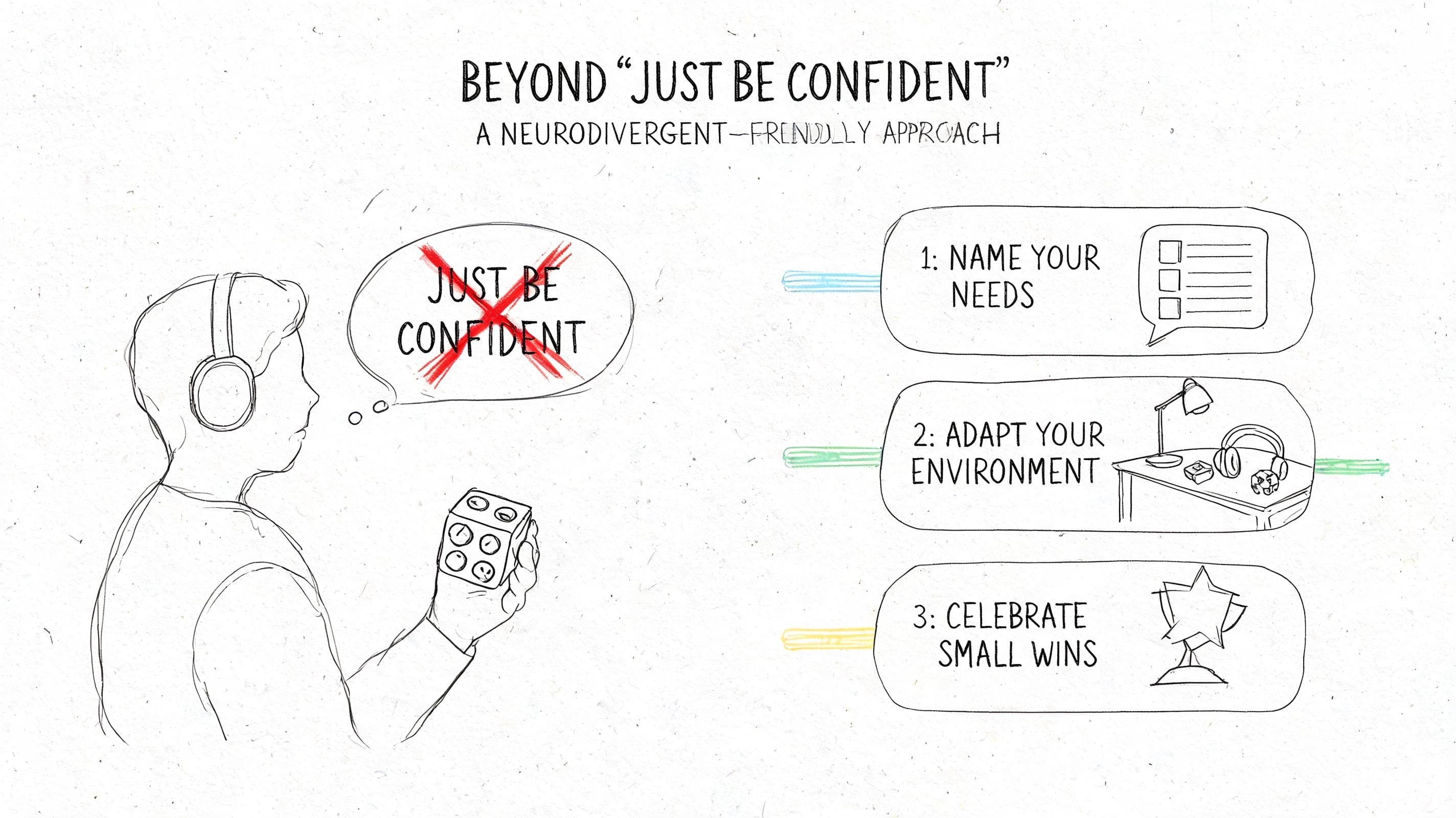
If "read the room" has ever felt like being asked to solve a puzzle with missing pieces, there's a reason. Many autistic and ADHD communicators do better with explicit goals, clear phrasing, and predictable options than with improvisation based on unwritten rules.
What works better than vague confidence advice
A useful system is much more practical than "be yourself," especially if being yourself in stressful conversations means going blank, rambling, overexplaining, or shutting down.
Here's the version that tends to work in real life:
- Prepare the interaction: Decide what you need to say, what matters most, and what can be left out.
- Use a script scaffold: Give yourself starting language so you're not building every sentence from scratch.
- Practice the delivery: Try the words out loud before the actual conversation.
- Regulate first, then speak: If your nervous system is overloaded, no communication tip will land until you feel steadier.
> Practical rule: If advice depends on mind-reading, instant improvisation, or perfect body language, it's probably not built for many neurodivergent people.
That doesn't mean skill-building is hopeless. It means the target should change. The point isn't to imitate neurotypical performance. The point is to communicate clearly, kindly, and with less friction.
Authenticity is not the same as zero structure
Some people hear "scripts" and think "masking." In practice, structure often creates more authenticity, not less. When you're not scrambling for words, you can actually say what you mean.
That's also why adjacent confidence work can help when it focuses on practical communication pressure rather than personality. A useful example is this piece on overcoming sales gaps for creative professionals, which is really about handling visibility, self-advocacy, and discomfort around asking clearly for what you need. Similar patterns show up far outside sales.
If communication has always felt harder than it "should," it can help to see that difficulty framed directly. This reflection on why communication feels so hard for many people puts language to the mismatch between common advice and real lived experience.
Prepare for Conversations to Reduce Cognitive Load
Many conversations are won before they start. Not because you've manipulated anything, but because you've removed unnecessary strain from your brain. If you often freeze mid-sentence or miss what the other person meant, preparation can give you enough structure to stay present.
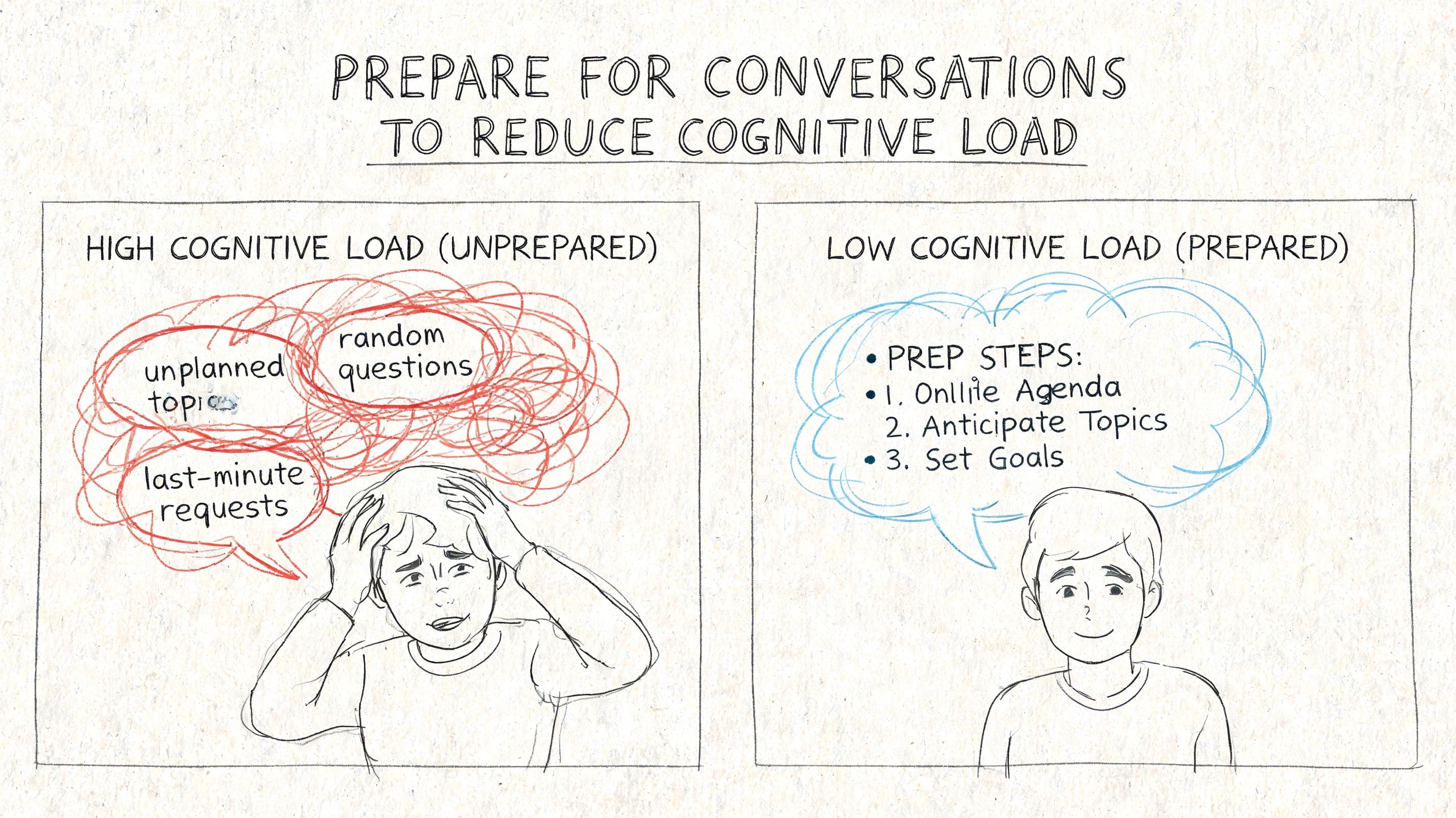
Research discussed in this paper on active listening and nonverbal communication states that only 8% of communication effectiveness comes from the words used, while 92% comes from body language and tone. For neurodivergent people who may find those nonverbal signals harder to read in real time, preparation helps manage that load before the interaction begins.
Start with one concrete outcome
Don't prepare for "the whole conversation." Prepare for the one thing you need from it.
That might be:
- A request: "I need an extension."
- A boundary: "I can't take calls after work."
- A clarification: "Can you explain what you want by Friday?"
- A repair attempt: "I think we misunderstood each other."
If you skip this step, it's easy to overtalk, wander, or leave the conversation without saying the hard part.
Build a pre-conversation checklist
When someone asks me how to improve communication skills without burning out, this is the first checklist I suggest.
- Name the point: Write one sentence that captures the core message.
- Choose the channel: Decide whether this should be said by text, email, phone, or in person.
- Reduce sensory friction: If possible, pick a quieter place, a lower-stimulation time, or a format that gives you more processing time.
- Pre-write key phrases: Draft two or three lines you can return to if you lose your place.
- Plan your exit ramp: Have a closing sentence ready if you need to pause or end the exchange.
A simple exit ramp can sound like this:
> "I want to answer properly, and I need a minute to think. Can I come back to this?"
That's not avoidance. It's a communication support.
Use external structure instead of holding everything in your head
A common mistake is trying to "remember" all the points you want to make while also tracking tone, facial expression, interruptions, and the other person's meaning. That's too much parallel processing for many of us.
Try offloading the load onto paper or notes:
Ready to communicate with less stress? tonen can help.
tonen gives you 188+ conversation scripts, tone guidance and calming tools — designed for autistic adults, ADHD and social anxiety. Try it free for 7 days.
Download on the App StoreiOS only. Android coming soon.
| Before the conversation | Write down |
|---|---|
| Main point | What I need to say in one sentence |
| Desired outcome | What I want to happen next |
| Likely pressure point | What might throw me off |
| Support phrase | A sentence I can fall back on |
| Exit ramp | How I can pause or stop |
Preparation should make things lighter, not rigid
Over-preparing can become its own stress spiral. If you write a full monologue and expect the conversation to follow it exactly, you'll probably feel worse when it doesn't.
A better standard is "prepared enough to stay oriented." You need anchors, not a script for every possible branch. A few keywords, a clear ask, and one fallback phrase are often enough.
Build Your Toolkit with Scripts and Tones
Scripting gets dismissed because people imagine stiff, unnatural dialogue. That's not what useful scripting looks like. A good script is a starting point. It gives your brain a reliable first sentence, which is often the hardest part.
For neurodivergent communicators, that first sentence matters a lot. Once you've started clearly, it's easier to stay on track. Without that support, many people either overexplain to compensate or say too little and leave the actual message hidden.
Scripts are scaffolds, not costumes
The most effective scripts are short, plain, and adaptable. They don't try to sound impressive. They help you say the thing you mean.
Useful script categories include:
- Boundary scripts: declining, limiting, postponing
- Clarifying scripts: asking what someone means, checking expectations
- Support scripts: asking for help, more time, or written follow-up
- Repair scripts: revisiting a misunderstanding without escalating it
If you want examples to adapt, this collection of conversation scripts for everyday situations is a helpful starting point.
> A script should lower pressure, not erase personality. If it sounds like someone you'd never be, rewrite it until it fits your voice.
Tone changes meaning more than people realize
The same message can land very differently depending on tone. That's why it helps to build several versions of the same script instead of searching for one perfect sentence.
Here's a practical comparison.
| Tone | Script Example | Best For |
|---|---|---|
| Direct | "I can't take that on this week." | Clear limits, low ambiguity |
| Warm | "I'd like to help, but I don't have capacity this week." | Maintaining connection while setting a limit |
| Firmer | "I'm not available for that, and I need the current plan to stay in place." | Repeated pressure, stronger boundary-setting |
| Softer | "I may not be able to do that this week. Could we look at another option?" | Delicate situations, lower-stakes negotiation |
Many people get stuck at this stage. The issue usually isn't "I don't know what to say." It's "I don't know how strongly to say it." Building tone variations solves that problem better than chasing one universal line.
Keep a small library, not a huge archive
You don't need dozens of polished scripts at first. Start with a few high-frequency situations:
- asking for clarification
- saying no
- requesting time to think
- expressing a need
- responding to a rude or abrupt message without escalating
Once those become familiar, communication starts to feel less like constant improvisation and more like choosing from tools you already trust.
Rehearse in a Safe Space to Build Confidence
Confidence usually doesn't appear before practice. It appears after your mouth has said the words enough times that they stop feeling foreign. That's why private rehearsal works better than waiting for bravery to arrive on its own.
A lot of people try to improve communication only in live situations. That's like deciding your first driving lesson should happen on a motorway at rush hour. You can do it, but it's a terrible learning environment.
Why rehearsal works
Structured communication training that uses a "record and reflect" method shows measurable improvement. Participants who video-record themselves and review those recordings with structured observation show measurable gains in verbal and non-verbal communication patterns, according to this overview of communication training strategies.
That makes sense in practice. Recording yourself closes the gap between what you think you sound like and what you sound like in reality. It helps you notice pace, sharpness, hesitation, vagueness, or places where the sentence is too long to survive a stressful moment.
A low-stakes rehearsal routine
You don't need a full training setup. Use what's available.
Try this:
1. Pick one real situation you expect soon.
2. Say your script out loud once without editing.
3. Record a second version on your phone or computer.
4. Listen back for one thing only such as clarity, pace, or warmth.
5. Adjust one line and repeat.
Keep the feedback narrow. If you try to fix everything at once, you'll turn practice into self-criticism.
> Speak the words before you need them. Your brain retrieves practiced language faster than newly invented language.
Private practice can be especially useful if real-time conversation triggers anxiety. If that's your pattern, these ideas for practicing conversations when anxiety makes speaking harder can help you build familiarity without the social exposure that often derails learning.
What not to do
A few rehearsal habits tend to backfire:
- Don't memorize long paragraphs: you'll panic if the conversation shifts.
- Don't judge your voice harshly: the point is usable feedback, not performance.
- Don't practice only in your head: spoken language behaves differently once it leaves your mouth.
A short spoken rehearsal beats perfect silent planning almost every time.
Use Real-Time Tools to Manage Overwhelm
Sometimes you prepare well, start strong, and then your body decides the conversation is suddenly a threat. Your chest tightens. Your brain empties out. You can hear the other person talking, but it stops turning into meaning. In that moment, the problem isn't a lack of insight. The problem is dysregulation.
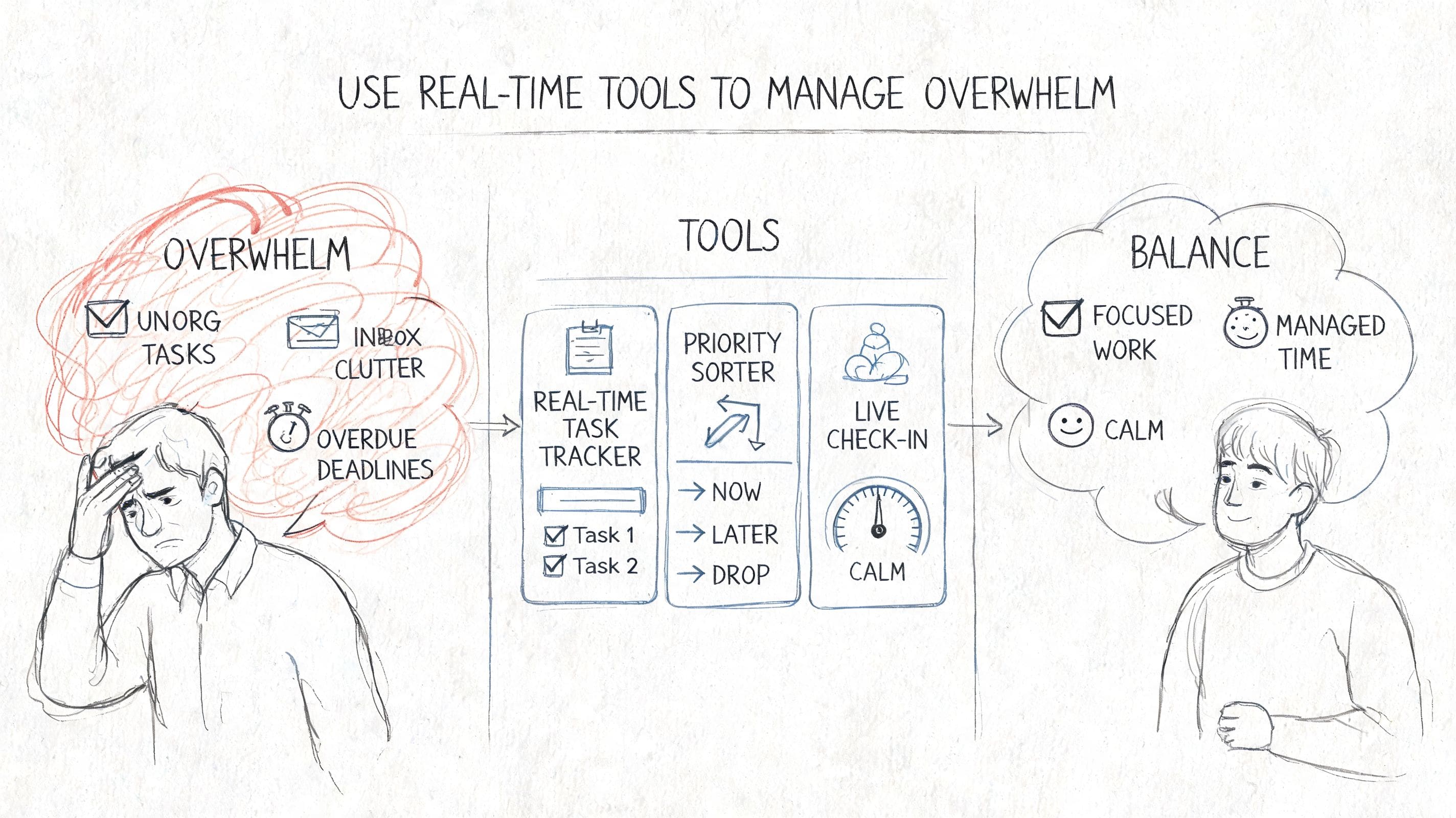
Many communication resources mention managing emotions, but they often don't offer tools for the moment when someone is already dysregulated. Harvard Division of Continuing Education's communication advice highlights emotional regulation as part of effective communication, and that matters because for anxious communicators and people with ADHD, regulation often has to come first.
What overwhelm looks like in the middle of a conversation
For one person, it looks like talking too fast. For another, it looks like going silent and nodding while missing half the meaning. Some people become overly agreeable. Others get abrupt because all spare processing power disappears.
When that happens, stop trying to become more articulate by force. Use a regulation tool first.
Simple tools you can actually use live
These work because they interrupt the stress spiral enough to bring your thinking back online.
- Box breathing: inhale for 4, hold for 4, exhale for 4, hold for 4.
- 5-4-3-2-1 grounding: identify five things you can see, four you can touch, three you can hear, two you can smell, one you can taste.
- Pause phrases: "I need a second to think," or "Can I come back to that part?"
- Body reset: unclench jaw, lower shoulders, place both feet on the floor.
These are not side techniques. They are part of communication.
Pair regulation with language support
One practical option is tonen's communication support app, which combines scripts, tone options, private practice, and calming tools such as Box Breathing, 5-4-3-2-1 grounding, body scan, and safe-place visualisation. That kind of pairing makes sense because once overwhelm spikes, people often need both nervous system support and a ready phrase.
The biggest shift here is permission. You are allowed to pause. You are allowed to regulate mid-conversation. You are allowed to buy yourself processing time instead of pushing through and hoping clarity returns on command.
Troubleshoot and Learn from Tricky Interactions
A rough conversation is not proof that you are bad at communicating. It is a record of where your system broke down under real conditions.
That distinction matters for neurodivergent people because the goal is not to perform confidence after the fact. The goal is to figure out what increased cognitive load, what pushed you out of regulation, and what support would have made the exchange easier to handle next time. Shame is loud, but it is not useful data.
Replace self-criticism with review questions
After a conversation goes sideways, run a short review while the details are still fresh. Keep it concrete.
Ask:
- What became hard first? Speed, ambiguity, interruption, tone, too many questions at once?
- What changed the interaction? A specific phrase, a facial expression, an unexpected request?
- What support was missing? More processing time, clearer wording, a boundary, a written follow-up?
- What would reduce friction next time? A shorter opener, a script, a different format, a slower setting?
This keeps the review focused on mechanics instead of identity.
> The useful question after a bad interaction is: what conditions made this harder than it needed to be?
Look for the mismatch, not just your part
Some problems come from wording. Some come from a mismatch between your processing style and the other person's expectations. Some come from the other person being vague, impatient, or rude. If you only review your own behavior, you miss half the pattern.
A few examples:
| What happened | What it might mean | Better next move |
|---|---|---|
| You rambled | You were building the point while speaking | State the ask first, then add context |
| You froze | The pace was too fast for live processing | Pause, then follow up in writing |
| You sounded sharper than intended | Your words were efficient, but the tone fit the wrong context | Save a warmer version of the same message |
| You agreed too quickly | You answered before you had processed the request | Use a delay phrase and return with a considered answer |
Scripts function as diagnostic tools rather than just safety nets. When one script consistently works while another fails, you gain something specific to adjust.
If someone's message still feels loaded after the interaction, test a few interpretations before responding. A guide on how to respond to rude comments without escalating can help you sort the difference between bluntness, genuine hostility, and a moment that needs a boundary.
Improvement comes from loops
A lot of communication advice treats one hard interaction like a personality verdict. That approach fails fast for neurodivergent people because it ignores context, processing limits, and regulation.
A better model is iterative. Try a phrase. Notice where it broke. Edit it. Test it again in a lower-stakes setting. Over time, you build a communication system that fits your brain instead of forcing you to improvise under pressure every time.
That is usually what progress looks like. Less guesswork. Faster recovery. More ways to repair when a conversation gets messy.
If you want one place to prepare for hard conversations, rehearse privately, adjust tone, and use calming tools when stress knocks language offline, tonen is built for that workflow. It gives neurodivergent users concise scripts, tone variations, a private practice mode, and in-the-moment regulation support so communication feels more manageable and less performative.
Frequently asked questions
This guide covers how to improve communication skills for neurodivergents with practical, neurodivergent-friendly strategies—clear steps, scripts where useful, and ways to reduce anxiety or overload rather than vague "be confident" advice.